English
 中文简体
 Français
 Español
 عربى



Spherical Acrylic and PP Cosmetic Packaging for Premium Baby, Teen, and Skincare Products
Packaging is a decisive part of the modern skincare market. It protects a formula, communicates product quality, supports safe daily use, and helps a brand establish an emotional connection with consumers. For baby care, teen skincare, body care, and family-oriented cosmetics, these responsibilities become even more important. Parents expect reliable protection, while young consumers often respond to friendly colors, memorable shapes, and attractive visual details. The 20g exquisite cosmetic skincare packaging bottle combines these requirements in a compact, rounded container designed to deliver safety, visual appeal, and flexible customization.
This spherical cosmetic jar belongs to the PP Cosmetic Packaging category and is developed for creams, balms, lotions, and other semisolid skincare formulas. Its concept is based on a perfect spherical silhouette, an edgeless structure, a crystal-like acrylic outer shell, and a colorful PP inner liner. Together, these elements create packaging that is playful enough for children and teenagers, refined enough for premium skincare brands, and practical enough for everyday family use.
Although the featured product is described as a 20g cosmetic container, the same design concept can be adapted for different applications and capacities. The available development information also identifies larger 70ml and 80ml versions for body creams and other products requiring more generous usage volumes. This makes the spherical format suitable for both compact facial-care packaging and expanded body-care packaging programs.
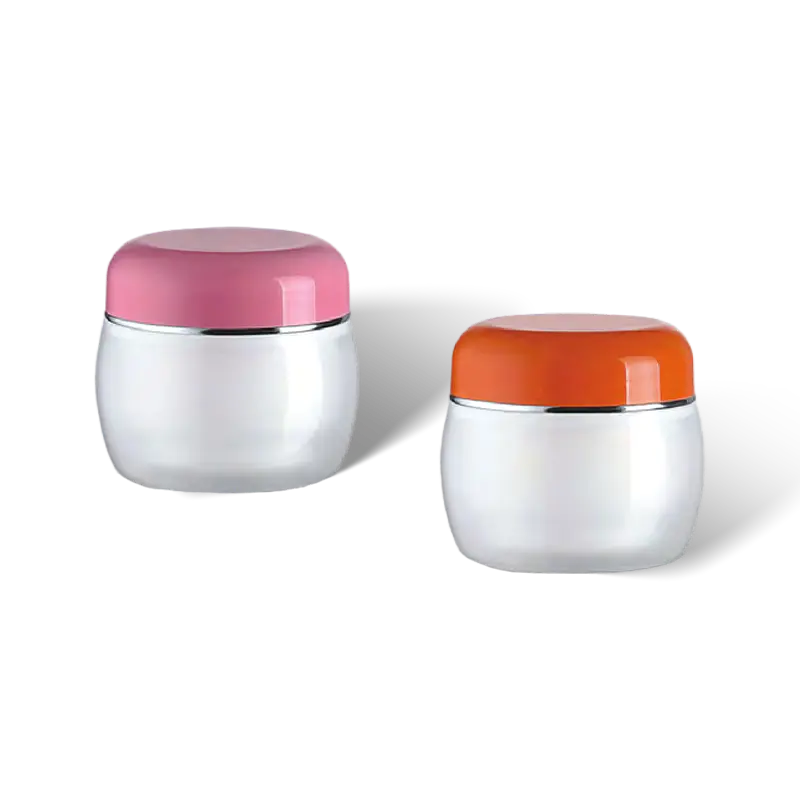
exquisite cosmetic skincare packaging bottle, 20g cosmetic container for children, small deluxe cosmetic jar
Product Concept and Market Positioning
The product is designed for brands that want to move beyond ordinary cylindrical jars and standard rectangular bottles. Conventional cosmetic containers may provide dependable functionality, but they often use familiar shapes that make products difficult to distinguish on retail shelves. The spherical cosmetic jar creates an immediate visual identity. Its rounded body suggests softness, care, playfulness, and balance, while the transparent outer wall gives the product a more luxurious and technically sophisticated appearance.
The design is especially appropriate for high-end baby care, children’s skincare, teen cosmetics, family body care, and gentle daily-care products. The absence of sharp corners supports a safer user experience in homes where products may be handled by children. The shape is also comfortable to hold, easy to recognize, and suitable for brands seeking a friendly alternative to overly clinical packaging.
For premium skincare companies, the container offers a combination that is not always easy to obtain: a charming appearance without sacrificing perceived quality. The macaron-colored inner liner introduces a soft, youthful visual language, while the thick acrylic outer shell creates transparency, depth, and a crystal-like finish. The contrast between the outer wall and the inner color allows the product to appear layered rather than visually flat.
In competitive packaging markets, differentiation is increasingly based on the complete experience surrounding a product. Consumers notice how a package feels in the hand, how it opens, how it looks in photographs, and whether it expresses the values of the formula inside. This spherical jar supports each of these touchpoints. It can help a new brand appear more distinctive and enable an established brand to create a special edition, children’s line, travel-size product, or premium gift set.
Perfect Spherical Anti-Collision Design
The most recognizable feature of the container is its rounded spherical form. Unlike traditional cream jars with square shoulders, narrow corners, or angular caps, this design uses continuous curves across the main visible surfaces. The result is a soft silhouette with fewer exposed points that could catch on clothing, scratch nearby objects, or create discomfort during handling.
For baby and children’s care products, form is closely connected to perceived safety. A container with a completely rounded profile can reduce concerns associated with sharp edges. While packaging should always be used responsibly and kept under adult supervision when appropriate, an edgeless exterior is a thoughtful design choice for products intended for family environments.
The spherical profile also provides a distinctive “roly-poly” personality. It can make a cream jar feel approachable rather than medical or industrial. This matters because baby care and teen skincare are emotional categories. Parents often prefer products that appear gentle and trustworthy, while younger users tend to appreciate packaging that feels cheerful and different from conventional adult skincare.
From a branding perspective, the shape can become a recognizable signature. A round jar displayed on a retail shelf, in an online product image, or in a social media campaign can be identified quickly. The absence of complicated structural details allows the overall silhouette to remain visually clear, even when the product is shown at a small size on a mobile screen.
The rounded body also creates a broad, continuous area for decoration. A brand logo can be placed on the top, front, or cap area, depending on the visual direction. This flexibility makes the same basic mold suitable for minimalist designs, colorful children’s collections, elegant monochrome programs, or limited-edition seasonal packaging.
Crystal-Like Acrylic Outer Shell
The exterior shell is made from acrylic, a material widely used in premium cosmetic packaging because of its clarity, rigidity, and decorative potential. In this product, the acrylic outer layer is intended to create a crystal-like appearance. The transparent wall allows the inner liner and its color to remain visible, producing a visual effect with depth and dimension.
Compared with a single-wall opaque plastic jar, a transparent acrylic outer shell can make the package appear more substantial. It helps communicate a sense of quality before the consumer opens the container. The visible thickness of the wall contributes to a premium impression, while the smooth surface supports high-quality printing, coating, and other decoration processes.
The double-layer construction is also valuable from a product-protection perspective. The outer shell forms a physical barrier around the inner container, helping reduce the direct impact of the surrounding environment on the inner package. The structure can moderate the influence of external temperature fluctuations and provide an additional layer between the formula and the outside environment.
It is important to recognize that packaging does not replace appropriate formulation stability testing, transport testing, or storage instructions. However, a well-designed outer shell can contribute to an overall protection system that includes the material, closure, inner stopper, formula, filling process, and distribution conditions. This is one reason double-layer cosmetic packaging continues to attract interest in premium skincare development.
The acrylic shell also supports visual storytelling. When paired with a sky-blue, cherry-blossom-pink, or lemon-yellow liner, the transparent wall produces a gentle color effect that can be adjusted for different product concepts. A baby moisturizer may use soft pastel colors, a teen acne-care product may use a clean blue or green tone, and a premium body cream may use a more restrained neutral or translucent colorway.
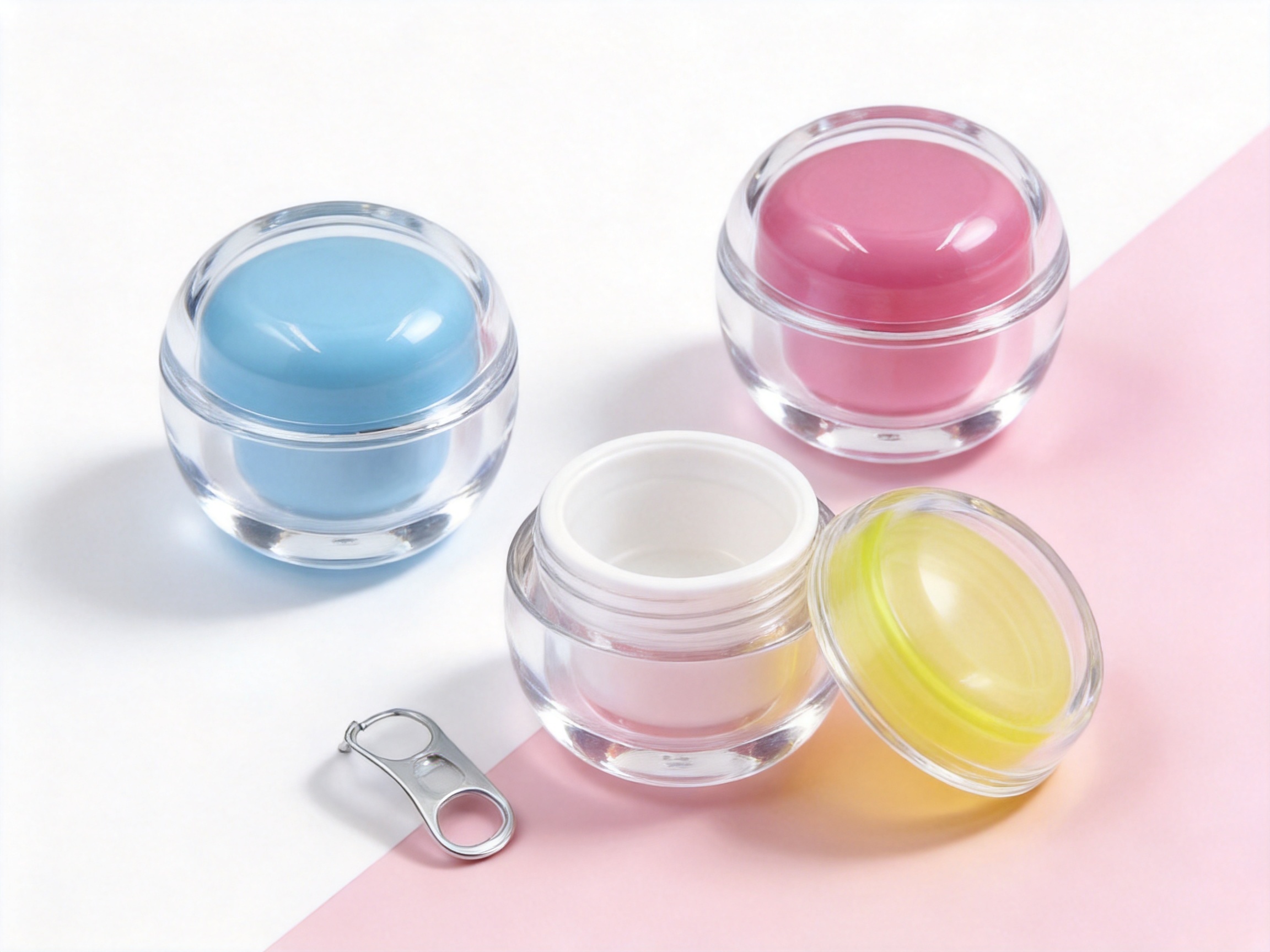
Food-Grade PP Inner Liner
The inner liner is made from PP, or polypropylene, and is described as food-grade material. PP is commonly selected for packaging components because it offers a useful balance of chemical resistance, light weight, durability, and processing flexibility. In cosmetic applications, the suitability of a particular PP grade should be evaluated together with the formula, filling temperature, fragrance system, preservatives, oils, and intended shelf life.
In this design, the PP inner liner performs several important functions. It provides the primary interior surface that comes into contact with the cream, supports the closure system, and gives the container its signature macaron-inspired color. Because the liner is visible through the acrylic shell, it is both a functional component and a major visual element.
The inner liner can be finished using a high-gloss spray coating process. This technique helps create bright, saturated colors and a polished surface. The color appears enclosed within the clear outer body, giving the package a layered effect that can be difficult to achieve with a single molded plastic container.
The use of PP also contributes to material planning and recyclability considerations. The outer shell is described as recyclable acrylic, while the inner liner is made from PP. Since recycling systems vary by market, brands should verify local collection and separation requirements before making environmental claims. Nevertheless, the use of recognized recyclable material families provides a practical starting point for responsible packaging development.
For brands working toward more efficient packaging systems, a separate inner liner and outer shell can also create opportunities for component optimization. The wall thickness, liner geometry, color, cap structure, and decoration method can be evaluated independently during development. This approach may support the creation of multiple products that share a common visual platform while differing in volume, formula, or target customer.
Freshness Protection Through the Inner Stopper
A cosmetic jar needs more than an attractive exterior. The closure system has a direct impact on leakage resistance, product cleanliness, user convenience, and the perceived quality of the package. This spherical container includes a high-precision matching pull-tab inner stopper designed to provide an additional barrier beneath the main cap.
The inner stopper helps reduce the possibility of leakage during transportation, especially when products are shipped over long distances or exposed to movement in warehouses and delivery vehicles. It also helps limit the entry of dust and airborne contaminants after the package is opened. For creams used on sensitive skin, maintaining a clean package environment is an important part of the overall consumer experience.
The pull-tab structure is intended to be practical for consumers. It provides a clear opening point and separates the primary product chamber from the outer cap. This can make the first opening feel more controlled and can help assure the user that the product has not been exposed before purchase.
For manufacturers and filling partners, the stopper must be evaluated for dimensional matching, insertion force, sealing performance, and compatibility with the formula. DEPRAG’s ability to support mold development, injection molding, product testing, and packaging production allows these details to be considered as part of a coordinated development process rather than treated as isolated components.
A well-matched inner stopper can also improve the perceived quality of a product. When the stopper opens smoothly, fits securely, and remains stable during repeated use, consumers are more likely to view the package as professional and dependable. This is particularly relevant for high-end skincare brands, where small details often influence repeat purchase decisions.
Applications for Baby and Children’s Care
The spherical container is a natural fit for baby and children’s skincare applications. Its rounded profile communicates softness and can reduce the visual severity associated with clinical or pharmaceutical-style packaging. The pastel color options can also help parents quickly distinguish products within a family-care collection.
Potential applications include baby face cream, children’s moisturizing cream, gentle body balm, diaper-area care products, hand cream, and small quantities of protective ointment. The 20g format is suitable for compact facial-care products, trial programs, gift sets, travel kits, and products that are intended to be carried in a bag.
For larger-volume products, the 70ml and 80ml capacity options identified in the product information are suitable for body creams and products used over larger areas. Infants and young children may require frequent application of moisturizing products, especially in dry climates or during seasonal weather changes. A larger container can reduce replacement frequency and provide greater convenience for parents.
Packaging for children’s products must be developed with a complete safety perspective. A rounded shape is helpful, but the final package should also be assessed for closure security, drop resistance, material safety, labeling, small-component risks, and applicable regional regulations. The container is a packaging platform, and brands remain responsible for validating the finished product for the markets in which it will be sold.
The emotional qualities of the jar are also valuable. A friendly package may make daily skincare routines easier for children to accept. Macaron colors and a soft spherical shape can transform a routine care product into something that feels comforting and familiar. For parents, that emotional advantage can support product loyalty and encourage regular use.
Applications for Teen Skincare
Teen skincare is a highly visual category. Younger consumers often discover products through digital content, peer recommendations, packaging photographs, and retail displays. A container that looks distinctive on a screen can improve recognition and help a product compete in a crowded market.
The spherical acrylic and PP structure offers several possible visual directions for teen products. Bright color combinations can support playful, trend-focused collections, while translucent or pastel finishes can create a cleaner and more sophisticated appearance. The same basic container can be adapted for moisturizers, sleeping masks, spot-care creams, lip-care products, and compact treatment formulas.
The rounded design may also appeal to teenagers who want skincare that feels less formal and more personal. Instead of resembling an adult clinical jar, the package can express optimism, creativity, and individuality. Brands can use custom color matching, decorative printing, or metallic details to create a strong identity without changing the basic container geometry.
For online sales, the product’s visual depth is an advantage. A clear acrylic wall and colored liner can create attractive reflections and layered compositions in photography. This may help brands produce stronger product imagery for e-commerce listings, social media campaigns, promotional videos, and influencer content.
Body Care and Larger Capacity Solutions
While the featured listing identifies a 20g cosmetic container, the spherical packaging concept is not limited to small-size skincare. The product information describes 70ml and 80ml options for body-care products. This broader capacity range makes the design useful for brands that want a coordinated packaging family.
Body creams, children’s moisturizing products, diaper rash creams, and face creams may require different amounts of product per application. Offering several capacities allows a brand to maintain visual consistency while matching the package to the formula and usage pattern. A 20g jar can serve as a trial or facial-care format, while a 70ml or 80ml version can be positioned for regular body use.
A coordinated family can create stronger shelf organization. When multiple sizes share the same spherical language, consumers can recognize the brand more easily. At the same time, different liner colors, labels, and capacities can distinguish product functions. This approach is useful for companies building a complete baby-care or family-skincare range.
Capacity selection should be made according to fill weight, formula density, headspace, filling equipment, and target market requirements. The listed 20g description and the larger 70ml/80ml development options should therefore be confirmed during technical consultation. DEPRAG can assist customers in matching the packaging specification to the actual formula and intended filling process.
| Format | Potential Application | Main Commercial Benefit | Recommended Development Focus |
|---|---|---|---|
| 20g compact jar | Face cream, balm, trial size, gift set, travel skincare | Portable and suitable for sampling or premium small-format products | Fill weight, portability, stopper fit, and decoration area |
| 70ml jar | Body cream, children’s moisturizer, family skincare | Convenient capacity for repeated application over larger areas | Grip comfort, filling efficiency, transport durability, and label design |
| 80ml jar | Body-care cream, diaper-area cream, larger daily-use products | Longer usage cycle and reduced replacement frequency | Formula compatibility, closure performance, and package weight |
Decoration and Brand Customization
The wide, rounded curves of the cap and body create a generous area for brand presentation. Custom decoration can transform the same packaging structure into a premium, playful, minimalist, or highly colorful product. This flexibility is important for manufacturers serving multiple skincare segments.
Hot stamping can be used to add metallic brand marks, elegant lettering, or premium decorative details. Gold, silver, and other metallic effects can contrast with pastel liners and transparent acrylic. This method is especially suitable for products positioned as luxury skincare, giftable cosmetics, or boutique family-care products.
Silkscreen printing provides another practical option. It can be used for logos, product names, simple illustrations, dosage information, and decorative patterns. Depending on the ink and surface treatment, silkscreen printing can create a clean, controlled appearance on the cap or outer body.
Color printing supports more detailed artwork. Brands can use illustrations, character graphics, floral motifs, educational symbols, or multi-color identity systems. This option is relevant to children’s packaging and teen skincare, where visual storytelling often plays an important role in product selection.
Decoration should be planned together with the surface, curvature, color, and intended handling conditions. The outer acrylic shell may create a different visual effect from the PP liner, and artwork placement should account for the spherical geometry. DEPRAG’s integrated experience in printing, gilding, UV coating, and plastic processing helps customers select a decoration method that matches their product goals and budget.
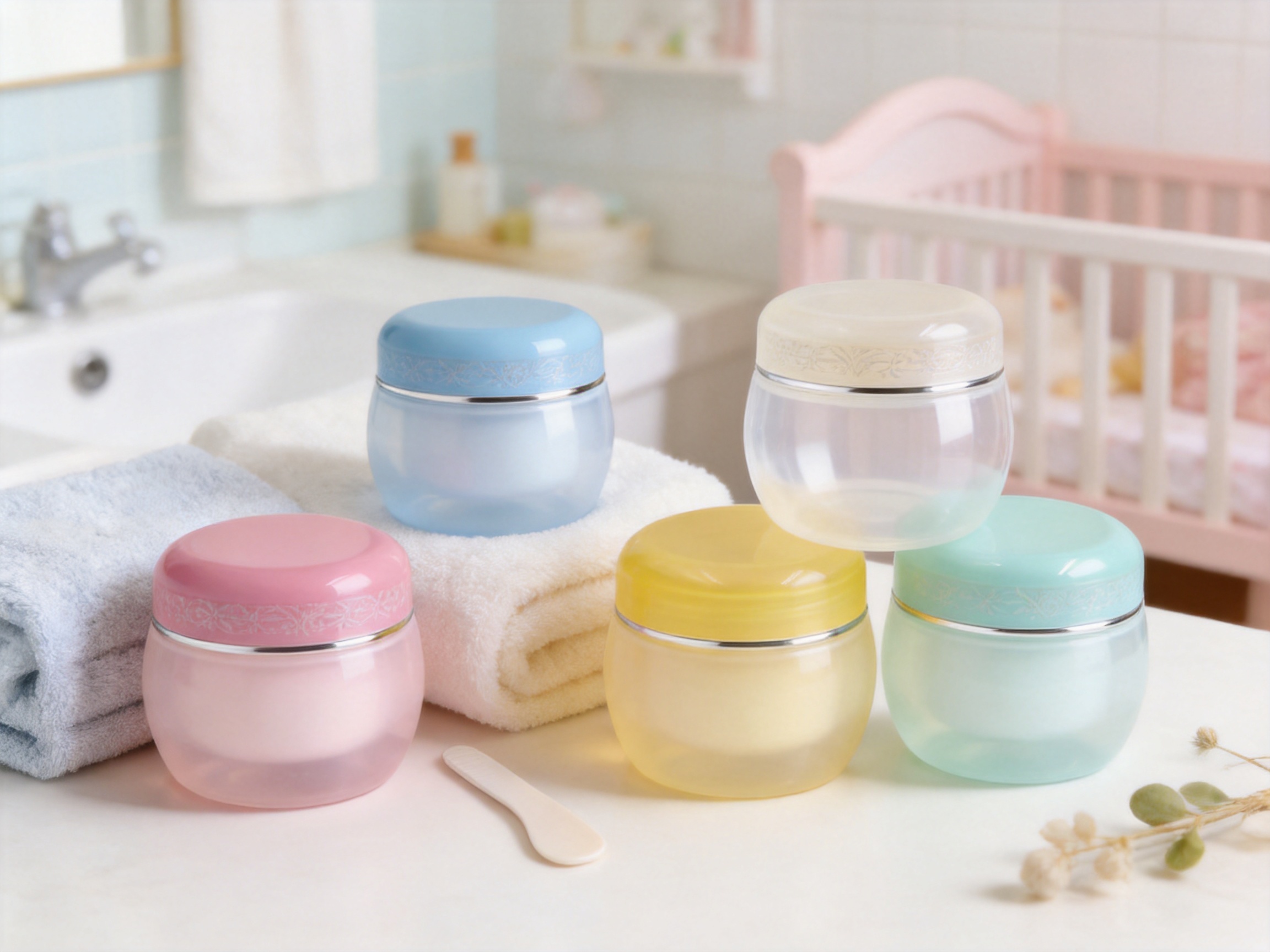
Advantages Over Conventional Cosmetic Jars
Traditional cosmetic jars remain widely used because they are familiar and easy to manufacture. However, they may not offer the same combination of safety perception, visual differentiation, and layered construction as this spherical acrylic and PP design. The first advantage is shape. A spherical jar is more distinctive than a standard round or square jar and can help a product stand out at the point of sale.
The second advantage is the reduced presence of corners. Conventional rectangular containers may have edges that feel less suitable for baby care or family use. The spherical format creates a softer and more approachable experience, which can reinforce a gentle brand message.
The third advantage is the double-layer appearance. A single-wall jar may look simple or visually flat, whereas a clear acrylic shell surrounding a colored PP liner creates depth. This can increase the perceived value of the product without requiring an excessively complicated exterior design.
The fourth advantage is customization. The product can be produced in several macaron-inspired colors, including sky blue, cherry blossom pink, and lemon yellow, while also supporting further color customization. Brands can adjust the appearance according to gender-neutral positioning, seasonal collections, product function, or regional preferences.
The fifth advantage is the inner stopper. Some simple jars rely only on a cap, but the pull-tab stopper provides an additional freshness and leakage-control barrier. This is beneficial for products transported through wholesale distribution channels and for consumers who expect a more hygienic opening system.
The sixth advantage is platform potential. A single design language can be developed across 20g, 70ml, and 80ml formats. This supports a coherent product family and can reduce the need to create a completely new visual identity for every product size.
| Evaluation Area | Conventional Single-Wall Jar | Spherical Acrylic and PP Jar |
|---|---|---|
| Visual recognition | Often familiar and less distinctive | Strong spherical silhouette with memorable proportions |
| Edge profile | May include corners or sharper transitions | Rounded, edgeless profile designed for a softer user experience |
| Perceived luxury | Depends mainly on decoration and material thickness | Transparent acrylic shell and layered liner create added depth |
| Color expression | Usually limited to the body or cap surface | Inner liner color remains visible through the clear outer shell |
| Freshness barrier | May use a cap alone | Includes a matching pull-tab inner stopper for additional protection |
| Product family development | May require several unrelated jar designs | Can be adapted to multiple capacities and coordinated product lines |
DEPRAG’s Integrated Manufacturing Capabilities
The success of a cosmetic package depends not only on its appearance but also on the manufacturer’s ability to control design, tooling, molding, decoration, testing, and delivery. DEPRAG Plastic Products Co., Ltd. provides an integrated manufacturing process for cosmetic, pharmaceutical, daily chemical, and other plastic packaging products.
The company is located in Cixi, China, an area with a developed plastics industry and convenient transportation connections. Its location near the Hangzhou Bay Bridge and within approximately one hour of Ningbo’s Beilun deep-water port and Hangzhou Xiaoshan International Airport supports efficient access to domestic and international logistics channels.
DEPRAG’s production capabilities include product research and development, industrial design, mold manufacturing, plastic injection molding, blow molding, gilding, printing, UV coating, product testing, and warehousing. Having these capabilities within one coordinated manufacturing system can simplify communication and reduce the risk of inconsistent specifications between separate suppliers.
For a spherical double-layer cosmetic package, coordinated production is particularly valuable. The acrylic shell and PP liner must be compatible in dimensions and appearance. The cap must match the body. The stopper must fit accurately. Decorative processes must be applied to the correct surface. A manufacturer with experience across the full packaging process can review these relationships during development.
DEPRAG also offers standard products and customized molds. Standard products can help brands shorten development time and reduce initial tooling investment. Customized molds can support exclusive shapes, modified proportions, unique cap details, or proprietary visual features. This combination gives customers flexibility based on budget, launch schedule, and brand strategy.
Research, Development, and Mold Engineering
A high-quality cosmetic container begins with design engineering. The visual concept must be translated into a manufacturable structure with appropriate wall thickness, draft angles, assembly tolerances, material distribution, and closure performance. Spherical shapes can appear simple, but achieving consistent roundness and reliable assembly requires careful tooling and process control.
DEPRAG’s research and development team can help customers assess the relationship between appearance and production feasibility. The development process may include concept refinement, 3D modeling, prototype evaluation, mold design, sample production, and performance testing. These steps help identify potential issues before mass production begins.
Mold manufacturing is another major strength. A well-made mold contributes to consistent dimensions, clean surfaces, stable production cycles, and repeatable decoration results. For transparent acrylic components, mold quality is especially important because surface imperfections, flow marks, scratches, and uneven gloss can affect the perceived value of the finished package.
For the PP inner liner, mold design must support accurate geometry, suitable color distribution, and reliable compatibility with the outer shell. The stopper and cap also require carefully controlled dimensions. Small deviations can influence sealing force, assembly quality, or consumer opening behavior.
Through in-house or closely coordinated mold engineering, DEPRAG can support both standard packaging supply and customized development. This is useful for customers that want to begin with an existing 20g format and later create a larger 70ml or 80ml version with a consistent design language.
Plastic Injection Molding and Component Quality
Plastic injection molding is central to the production of PP cosmetic components and many other packaging parts. The process involves melting plastic material, injecting it into a precision mold, cooling the molded part, and removing it for inspection and assembly. Consistent control of temperature, pressure, speed, cooling, and cycle time is necessary to achieve stable results.
For the PP liner, injection molding can provide accurate dimensions and a clean surface suitable for coloring or coating. The process also allows manufacturers to produce repeated units with consistent weight and geometry. These factors are important for automated filling, cap assembly, label application, and high-volume distribution.
Acrylic components require close attention to transparency, surface finish, and molding conditions. The outer shell must preserve its clear, crystal-like appearance while meeting dimensional requirements. Process optimization can help reduce visible defects and improve the consistency of the package from batch to batch.
Production control should include inspection of key dimensions, wall thickness, color, gloss, assembly fit, and appearance. For premium packaging, cosmetic inspection is not a minor step. Consumers often judge product quality through visual details such as clarity, scratches, uneven color, printing alignment, and cap fit.
DEPRAG’s modern standardized factories and advanced manufacturing equipment support repeatable production. The company’s experience with various daily chemical packaging products also provides a broad technical foundation for addressing different materials, shapes, closure systems, and decoration requirements.
Surface Treatment, Gilding, Printing, and UV Coating
Decorative processing gives packaging its final visual personality. DEPRAG provides gilding and printing services, as well as UV coating. These processes can be selected individually or combined to achieve a specific appearance.
Gilding, often associated with hot stamping, can create metallic effects that enhance a premium positioning. On a rounded cap, a carefully placed metallic logo can provide a strong focal point. On the transparent outer body, metallic details can contrast with the colored inner liner and create a refined layered design.
Printing allows brands to apply logos, text, patterns, illustrations, and functional information. Silkscreen printing is suitable for controlled, durable graphics, while color printing can support more complex artwork. The correct process depends on the substrate, curvature, ink system, order quantity, and desired visual result.
UV coating can enhance surface appearance and provide a particular gloss or tactile effect. It may be used to create a smooth, polished finish or to highlight selected areas of a design. The coating specification should be tested for adhesion, abrasion resistance, and compatibility with the intended handling conditions.
Decoration development should include sample approval before full production. Brands can evaluate color accuracy, logo scale, text legibility, surface gloss, and alignment. This stage is especially important for spherical packaging because curved surfaces can change the appearance of artwork when viewed from different angles.
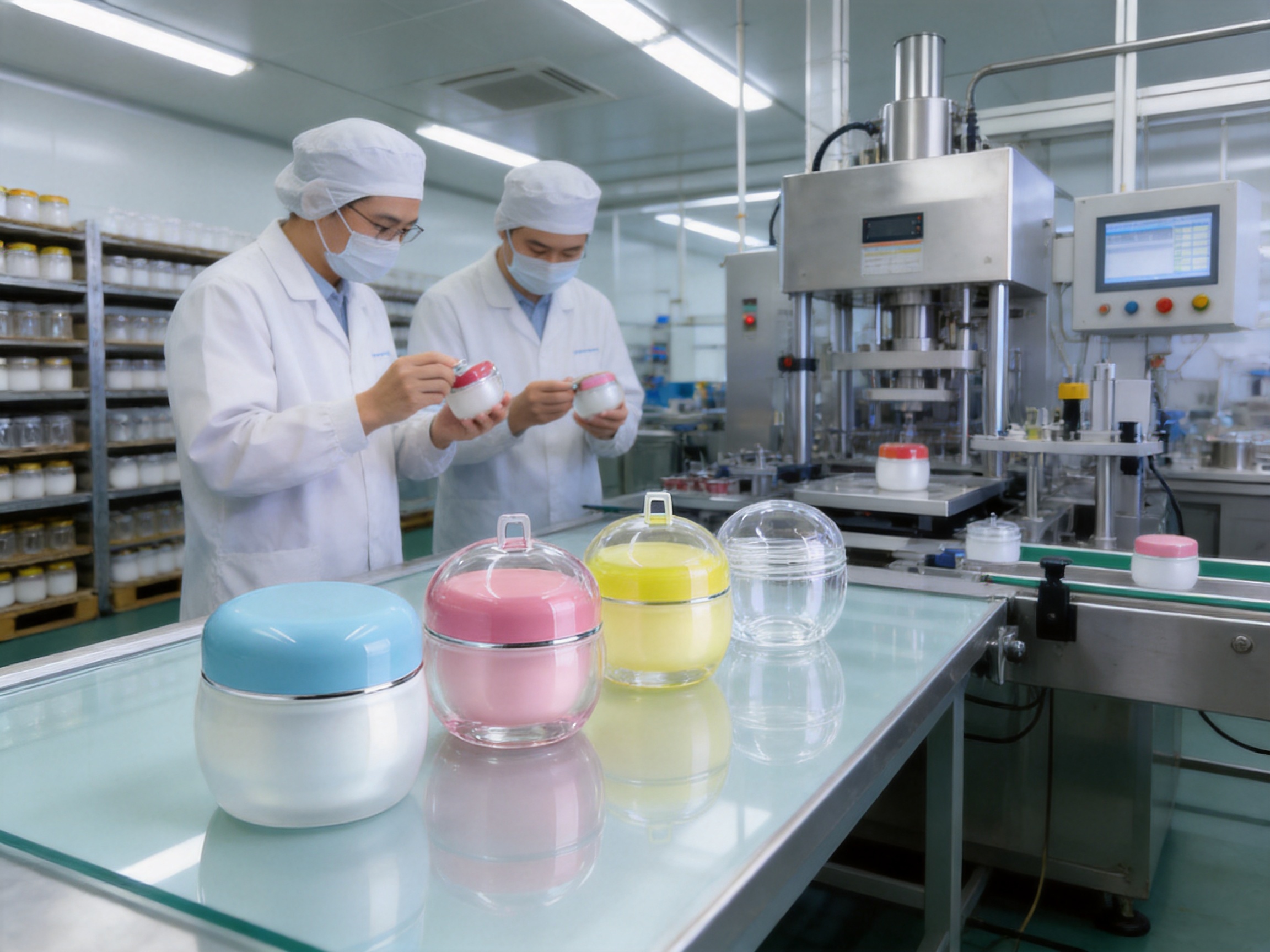
Quality Control and Product Testing
Packaging quality involves more than checking whether a component looks attractive. It includes dimensional accuracy, material performance, sealing, assembly, transportation resistance, and compatibility with the product formula. DEPRAG includes product testing within its complete production process, supporting a more systematic approach to quality assurance.
Visual inspection may identify scratches, black spots, flow marks, color differences, bubbles, printing defects, coating irregularities, or assembly damage. Dimensional inspection can verify the critical measurements of the body, liner, cap, and inner stopper. These controls help ensure that components fit together consistently.
Leakage testing is particularly important for cream jars. The package should be evaluated under appropriate conditions to determine whether the stopper and cap provide reliable protection. Transportation simulations, drop testing, vibration testing, and stacking evaluation may also be considered based on the distribution channel and product weight.
Formula compatibility testing should be performed with the actual skincare formulation. Different creams may contain oils, fragrances, active ingredients, alcohols, acids, or other substances that interact differently with plastic materials and coatings. A compatibility program may evaluate discoloration, swelling, cracking, odor transfer, weight change, seal performance, and formula quality over time.
Brands should also confirm regulatory and labeling requirements in their target markets. Material descriptions, recycling symbols, warnings, batch information, net contents, and usage instructions may require specific formats. The packaging manufacturer can provide technical information, while the brand and its regulatory partners remain responsible for final compliance.
Supply Chain and Custom Project Support
For cosmetic brands, packaging development can be challenging when design, tooling, production, decoration, testing, and logistics are handled by unrelated suppliers. Delays may occur when a dimensional change affects the mold, when decoration requirements are not communicated to the molding team, or when a component from one supplier does not assemble properly with another component.
DEPRAG’s integrated service model is intended to simplify these challenges. The company can support customers from product research and development through mold manufacturing, plastic processing, decoration, testing, and warehousing. This can help create a clearer project schedule and a more consistent technical communication process.
Warehousing capability is also useful for brands with phased launches, seasonal programs, or regional distribution plans. Finished packaging can be managed according to production schedules and shipment requirements. Exact warehousing arrangements, minimum order quantities, lead times, and shipping terms should be confirmed during quotation and project planning.
The company offers thousands of daily chemical packaging designs, including standard packaging and customized molds. This product range may help customers compare different forms, materials, capacities, and decoration options before finalizing a packaging program. It also reflects experience across multiple categories, including cosmetic, pharmaceutical, and daily chemical containers.
Long-term cooperation is especially important for brands that frequently launch new products. Once a supplier understands a customer’s quality standards, artwork requirements, preferred materials, and delivery expectations, future projects can become more efficient. DEPRAG positions technical support and long-term customer relationships as important parts of its business philosophy.
Material and Environmental Considerations
The product uses an acrylic outer shell and a PP inner liner. Both material families are widely used in packaging, and the outer acrylic is described as recyclable. The inner liner uses food-grade PP, providing a familiar material option for an interior component. These features can support a more considered packaging strategy, although environmental performance must be assessed across the full product life cycle.
Brands should consider material quantity, component count, recyclability in the destination market, decoration compatibility, transport weight, and end-of-life separation. A double-layer structure may provide visual and functional benefits, but the brand should also determine whether consumers can separate the components and whether local recycling infrastructure accepts them.
Environmental communication should be accurate and specific. Rather than using broad claims without evidence, brands can explain the materials used, provide appropriate disposal guidance, reduce unnecessary secondary packaging, and work with suppliers to optimize component weight. DEPRAG can support discussions about material selection and manufacturing efficiency as part of the packaging development process.
Durability is another environmental consideration. A package that protects the formula effectively and remains functional throughout its intended use may help reduce product waste caused by leakage, contamination, or damage. The pull-tab stopper and robust outer shell are relevant to this objective, provided that the finished package is properly tested for the intended distribution and usage conditions.
Recommended Development Workflow
A successful project begins with a clear product brief. The brand should define the formula type, target user, fill weight or volume, intended market, decoration requirements, expected annual quantity, and target launch date. For the featured container, the brand should clarify whether it requires the 20g version or a larger 70ml or 80ml format.
The next step is packaging selection and technical review. The manufacturer can evaluate the formula, material compatibility, closure requirements, filling method, and desired color. At this stage, the brand can also discuss standard packaging compared with a customized mold.
Sample development follows. Samples allow the customer to assess the shape, grip, transparency, liner color, cap fit, stopper operation, and overall appearance. If printing, hot stamping, or UV coating is required, decorated samples should be reviewed rather than relying only on digital artwork.
Mold and production planning can then be finalized. The manufacturer should confirm tooling specifications, component tolerances, mold ownership arrangements where applicable, production capacity, quality standards, inspection procedures, packaging method, and delivery schedule.
Before mass production, a pre-production approval sample is recommended. This sample should represent the final material, color, decoration, assembly, and packaging method. Any remaining changes should be documented and approved before the production order begins.
After production, the finished components may be inspected, tested, assembled, packed, and placed into warehousing or shipment according to the project plan. A structured workflow helps reduce unexpected changes and supports more reliable product launches.
| Development Stage | Key Questions | Expected Output |
|---|---|---|
| Product brief | What is the formula, fill size, target user, and market? | Clear technical and commercial requirements |
| Packaging review | Is the 20g, 70ml, or 80ml format most appropriate? | Selected package structure and capacity |
| Material evaluation | Are the acrylic shell and PP liner compatible with the formula? | Material and compatibility testing plan |
| Sample development | Do shape, color, stopper, cap, and decoration meet expectations? | Approved functional and visual sample |
| Tooling and production | What mold, quantity, tolerance, and quality requirements apply? | Confirmed production specification |
| Final inspection | Does the finished package meet appearance and performance standards? | Release approval for shipment or filling |
Why the Product Is Suitable for Premium Skincare Packaging
Luxury skincare packaging is not defined by material cost alone. It is created through the interaction of proportion, surface finish, color, functionality, and consistency. The spherical container addresses these factors through its balanced geometry, thick transparent acrylic appearance, colorful inner liner, and additional stopper.
The package can be positioned as luxury cosmetic packaging while remaining approachable. This is useful for brands that want to combine premium quality with family-friendly design. The visual language is softer than traditional luxury jars that rely heavily on dark colors, heavy metallic decoration, or rigid geometric forms.
The transparent shell supports premium product photography and in-store presentation. The inner color can become part of a brand’s product coding system. The rounded surface creates an elegant object-like appearance, while custom hot stamping or printing can add brand recognition.
Functionality reinforces the premium message. A package that opens smoothly, resists leakage, protects the cream, and remains attractive during repeated use is more likely to satisfy consumers. The inner stopper is particularly relevant because it gives the opening sequence an additional sense of control and cleanliness.
For skincare packaging suppliers and international buyers, manufacturing reliability is equally important. The visual concept must be supported by stable materials, precision molds, consistent decoration, and quality inspection. DEPRAG’s broad production capabilities provide a foundation for developing the product from concept through finished packaging.
Q&A
What type of product is this container designed for?
The container is designed for creams, balms, moisturizers, and other semisolid skincare products. It is especially suitable for baby care, children’s skincare, teen products, family body care, facial creams, diaper-area care products, and premium daily-use cosmetics.
What is the listed capacity of the featured product?
The product listing identifies a 20g cosmetic container. The same spherical packaging concept is also described as available in 70ml and 80ml capacities for body-care and larger-volume applications. Buyers should confirm the required capacity during the quotation and technical review stage.
Why is the spherical design useful for baby and children’s products?
The rounded, edgeless exterior reduces the presence of sharp corners and creates a softer visual and tactile impression. It can support a more approachable family-care experience, although finished packaging should still undergo appropriate safety, drop, closure, and regulatory evaluations.
What materials are used?
The outer shell is made from recyclable acrylic, while the inner liner is made from food-grade PP. Material compatibility should be tested with the actual formula, especially when the product contains oils, fragrances, active ingredients, or other components that may interact with packaging materials.
Does the package include an inner stopper?
Yes. The design includes a high-precision pull-tab inner stopper. It is intended to help reduce leakage during transportation and limit the entry of air contaminants after opening.
Can the colors be customized?
Yes. The product information identifies sky blue, cherry blossom pink, and lemon yellow as available color directions, while also supporting deeper color customization. Final color selection should be evaluated through physical samples because transparency, liner gloss, coating, and lighting can affect the finished appearance.
What decoration options are available?
DEPRAG supports custom logo hot stamping, silkscreen printing, and color printing. UV coating and other surface treatments may also be considered depending on the desired finish, artwork, order quantity, and technical requirements.
Can the packaging use a customized mold?
Yes. DEPRAG provides standard packaging products as well as customized mold development. A standard container may be appropriate for a fast launch, while a customized mold can create more exclusive proportions or brand-specific details.
What manufacturing processes can DEPRAG provide?
DEPRAG provides product research and development, design, mold manufacturing, plastic injection molding, blow molding, gilding, printing, UV coating, product testing, and warehousing. This integrated process can simplify project coordination and support consistent quality.
Where is the company located?
DEPRAG Plastic Products Co., Ltd. is located in Cixi, China, a developed plastics manufacturing area. The company is near the Hangzhou Bay Bridge and within convenient traveling distance of Ningbo’s Beilun port and Hangzhou Xiaoshan International Airport.
Is the container suitable for international distribution?
The inner stopper and double-layer structure are intended to support leakage control and product protection during transportation. However, each finished package should be tested under the brand’s actual shipping, storage, filling, and usage conditions before international distribution.
What information should buyers provide when requesting a quotation?
Buyers should provide the product type, formula characteristics, target fill weight or volume, required capacity, annual quantity, decoration method, color reference, preferred delivery schedule, destination market, and any regulatory or testing requirements. This information helps the manufacturer prepare a more accurate technical and commercial proposal.
Conclusion
The spherical acrylic and PP cosmetic jar is a distinctive packaging solution for brands seeking a balance between premium presentation, family-friendly design, and practical product protection. Its perfect spherical form reduces sharp visual transitions, creates an approachable identity, and offers strong shelf and online recognition. The crystal-like acrylic outer shell provides transparency and depth, while the macaron-colored PP inner liner creates a bright, customizable appearance.
The package also incorporates functional features that support everyday skincare use. The inner stopper provides an additional barrier against leakage and airborne contamination, while the available 20g, 70ml, and 80ml development directions allow the design to serve compact facial-care products and larger body-care formats.
Its advantages are strengthened by DEPRAG’s integrated manufacturing capabilities. From research and development, mold engineering, and injection molding to printing, gilding, UV coating, testing, and warehousing, the company can support a complete packaging development process. This integrated structure is valuable for brands that require consistent quality, efficient communication, customized decoration, and long-term technical support.
For baby-care, teen-skincare, body-care, and premium daily chemical products, the container offers more than a place to hold cream. It provides a recognizable product identity, a pleasant consumer experience, and a flexible platform for building coordinated packaging collections.
References
1. Product specification and development information for the spherical acrylic and PP cosmetic skincare packaging container.
2. Technical information regarding polypropylene applications in cosmetic packaging and inner-container components.
3. General packaging development principles for cosmetic formula compatibility, leakage testing, and transportation evaluation.
4. General guidance on cosmetic packaging decoration methods, including hot stamping, silkscreen printing, color printing, and UV coating.
5. Manufacturer-provided information concerning DEPRAG Plastic Products Co., Ltd.’s research and development, mold manufacturing, injection molding, surface treatment, testing, and warehousing capabilities.
Product: exquisite cosmetic skincare packaging bottle, 20g cosmetic container for children, small deluxe cosmetic jar

-
 DP-A-018 Acrylic jars for whitening and anti-aging cosmetic creams
-
 DP-A-020 120ml Green Acrylic Cream Bottle 50g Blue Acrylic Cosmetic Container 50ml Acrylic Jar and Bottles
-
 30ml/50ml/100ml high-end glass cosmetic and perfume bottles
-
 DP-A-021 50g/30g/20g Skin Whitening Cream Packaging Cosmetic Jars
-
 DP-A-009 Body Cream Jar 80ml Container 70ml Cosmetic Packaging Body Butter Plastic Jar
-
 1oz 30g empty PP plastic cream jars for skincare
- +86 13968274500
- +86 13764345885
- ysgl@vip.163.com
- No. 10-18, Gaoxiakeng, Dongputou Village, Zhangqi Town