English
 中文简体
 Français
 Español
 عربى



Black Gold Plastic Perfume Caps: A Luxury Finishing Touch for Modern Fragrance Packaging
In the fragrance market, the perfume bottle is only one part of the consumer experience. Before a customer reads the label or experiences the fragrance, the package communicates quality through its silhouette, color, surface, weight, and opening mechanism. Among these details, the cap has a particularly important role. It protects the spray assembly, completes the visual identity of the bottle, and becomes the first component that consumers touch when they begin their fragrance ritual.
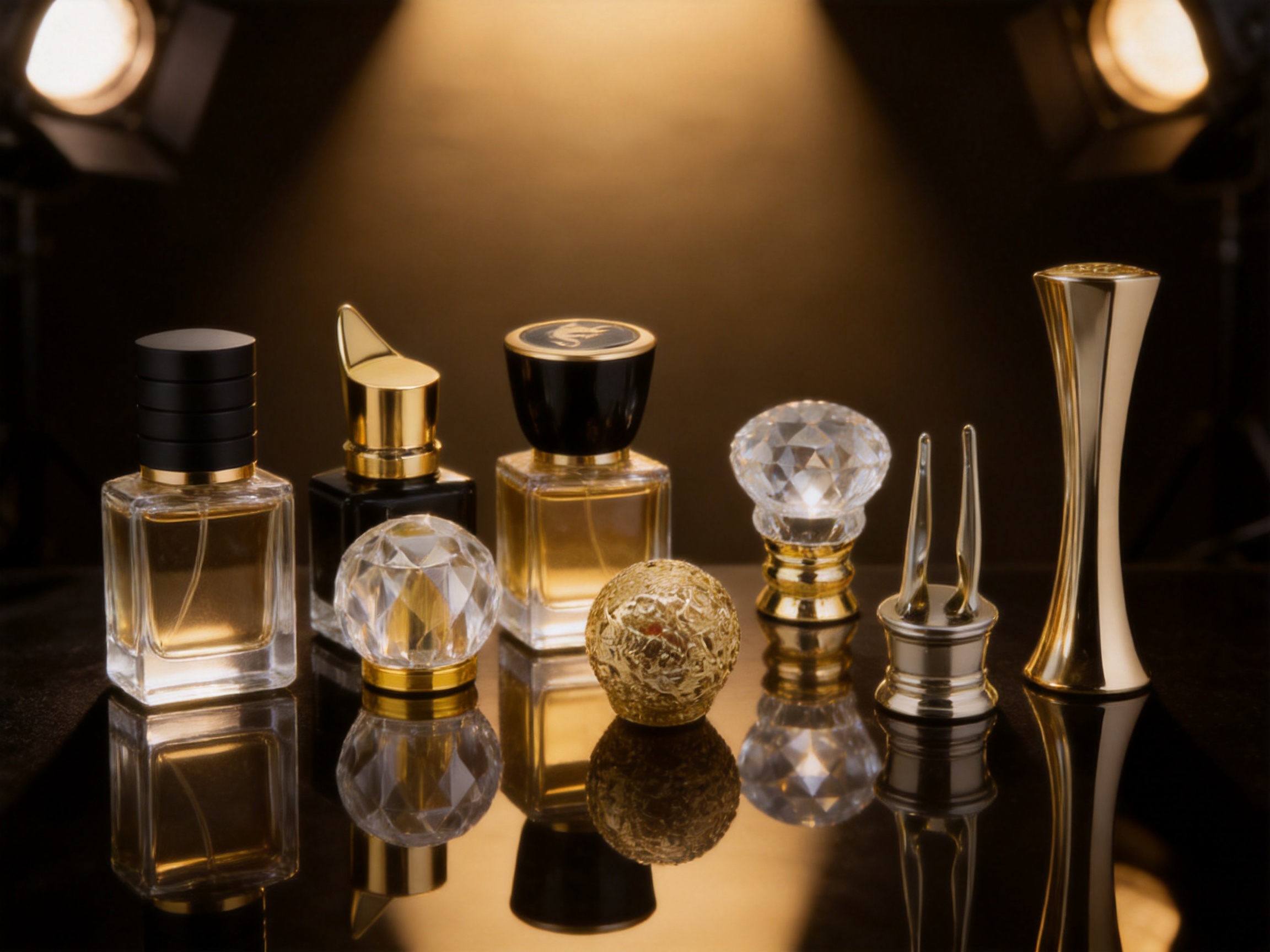
Black gold plastic perfume caps offer an effective way for fragrance brands to create a luxury appearance while maintaining the practical advantages of modern plastic manufacturing. Designed for perfume bottles, cologne bottles, and selected personal-care packaging formats, this product range combines high-quality plastic, precision injection molding, vacuum electroplating, UV coating, embossing, and other decorative techniques. The result is a collection of caps with a premium appearance, reliable fit, versatile shapes, and extensive opportunities for customization.
The collection includes diamond-cut styles, matte black and metallic black-and-gold finishes, retro embossed patterns, spherical forms, slender artistic shapes, and distinctive designs inspired by antlers, scepters, and other sculptural elements. These options allow fragrance companies to select a standard style or develop a more individualized cap that reflects their market positioning.
More than a decorative accessory, a well-engineered perfume cap must perform several technical functions. It should fit the bottle neck securely, protect the spray nozzle, help limit fragrance evaporation, resist normal handling, and preserve its appearance throughout the product’s commercial life. The black gold plastic perfume cap collection is developed around these functional requirements while also giving brands a strong visual point of differentiation.
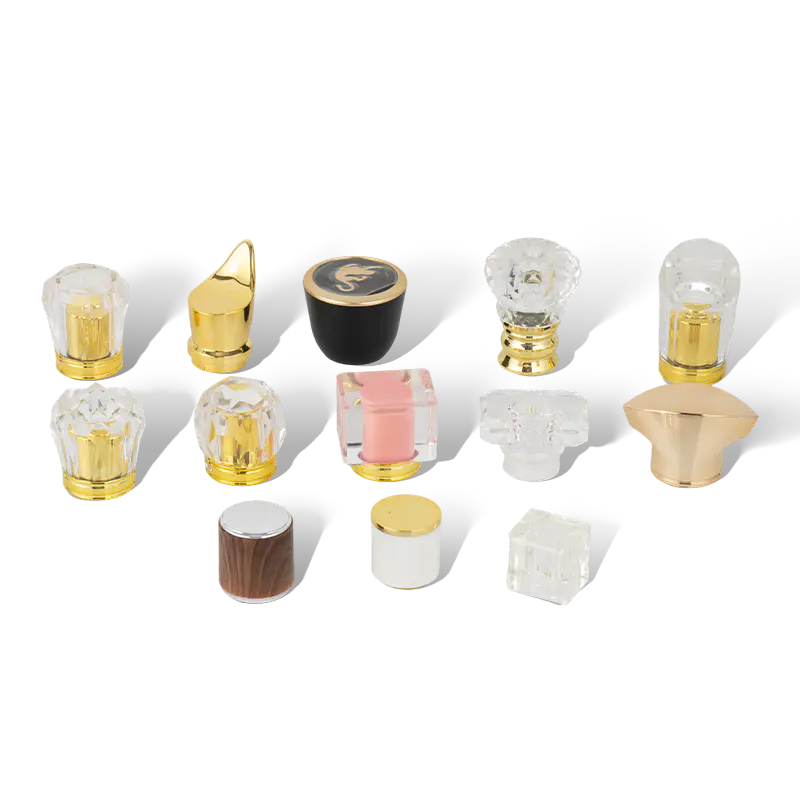
Black Gold Plastic Perfume Cap Perfume Bottle Cap Perfume Lid
The Strategic Importance of a Perfume Cap
Perfume packaging is often judged as a complete system, but consumers tend to notice specific elements first. The cap is one of those elements. It sits at the top of the package, occupies a prominent position on retail shelves, and is usually the first part of the product that a customer touches. For this reason, its design can influence perceptions of quality, sophistication, masculinity, modernity, exclusivity, or artistic value.
A basic cap may protect the nozzle, but a premium cap can also perform as a visual signature. A black cap with gold detailing can suggest elegance and confidence. A diamond-cut transparent cap can create a jewelry-like effect. An embossed spherical design can communicate heritage and craftsmanship. A slender sculptural cap can make a bottle appear more contemporary and memorable.
These impressions matter in a highly competitive fragrance market. Many perfume bottles use similar glass shapes, familiar shoulder profiles, or conventional spray components. A distinctive cap can therefore become the most recognizable feature of a new product. It may help a brand create a unique silhouette even when the bottle itself remains a standard size or shape.
The cap also supports the opening ritual. Consumers often remove the cap before spraying and replace it afterward. This repeated interaction makes tactile quality essential. A cap that feels secure, balanced, and well finished supports a stronger product experience than a component that feels loose, rough, or lightweight in an unintentional way.
Plastic technology makes it possible to engineer a cap that is light and durable while using decorative treatments to achieve a substantial visual impression. Instead of relying solely on heavy metal or expensive natural materials, brands can use advanced plastic construction to create a premium package with greater design flexibility and more manageable production costs.
Product Overview: Black Gold Plastic Perfume Caps
The black gold perfume cap collection is intended for fragrance brands seeking a refined, adaptable, and commercially practical closure solution. Its central design language combines deep black surfaces with gold or metallic accents, while the wider range also includes transparent, crystal-like, embossed, geometric, and artistic options.
The caps are manufactured from high-quality plastic selected for its light weight, durability, moldability, and compatibility with surface decoration. Plastic provides a stable base for precision injection molding and allows manufacturers to create complex contours that may be difficult or costly to produce in solid metal. It also supports repeatable production across large quantities, which is important for fragrance companies planning regional or international distribution.
The range can include several different visual directions:
Diamond-cut designs use faceted surfaces and high-transparency material to imitate the optical character of cut gemstones. When light passes through or reflects from the facets, the cap produces a prism-like sparkle that can elevate the package on a retail shelf.
Minimalist black and gold designs combine restrained geometry with luxury decoration. Matte black finishes can provide a soft, understated texture, while high-gloss metallic treatments can create a brighter, more dramatic effect. The combination is suitable for men’s colognes, unisex fragrances, premium body sprays, and contemporary personal-care products.
Retro embossed designs use raised or recessed patterns to create a tactile surface. Spherical hand-embossed effects and decorative reliefs can suggest traditional craftsmanship, heritage, or a boutique fragrance identity.
Distinctive slender shapes, including antler-inspired or scepter-inspired forms, give brands a recognizable visual feature. These designs can be used to support a particular theme, collection, seasonal launch, or luxury positioning strategy.
The collection also supports brand customization. Depending on the selected design and production plan, logos may be applied through laser engraving, embossing, or silkscreen printing on the top or side of the cap. This allows the packaging to carry a brand identity without requiring an entirely new bottle architecture.
Key Advantages Compared with Conventional Perfume Caps
1. Stronger Visual Differentiation
Conventional perfume caps often rely on simple cylindrical, rectangular, or rounded forms. While these shapes may be practical, they can make different products appear similar when displayed together. The black gold collection addresses this problem through a broad range of surface treatments and sculptural profiles.
Faceted geometry, embossed relief, metallic color contrast, and unusual silhouettes provide multiple opportunities for visual differentiation. A fragrance company can select a cap that supports its desired position instead of treating the cap as a generic accessory.
This design flexibility is especially valuable for new brands. When a company has not yet built strong recognition, distinctive packaging can help consumers remember the product. The cap may become an important part of the brand’s visual vocabulary and can potentially be repeated across several fragrances to create a recognizable family appearance.
2. Premium Appearance Without the Full Cost of Solid Metal
Solid metal caps can provide weight and a luxurious tactile sensation, but they may also involve higher material costs, more demanding machining requirements, greater transportation weight, and limitations in complex shaping. High-quality plastic provides a lighter alternative while maintaining significant design and decoration potential.
Through vacuum electroplating, UV coating, metallic finishing, and precision molding, a plastic cap can achieve a polished appearance that is visually comparable to more expensive materials. This gives brands a way to create a luxury presentation while keeping the packaging system commercially manageable.
The weight advantage can also reduce logistics pressure. Lighter components may support more efficient handling, packing, and transportation, particularly when large production quantities are shipped to distributors or filling facilities. At the same time, the cap can still be engineered to feel substantial enough for a premium fragrance experience.
3. High Design Freedom
Plastic injection molding allows the creation of complex curves, faceted sections, internal cavities, raised patterns, and carefully controlled transitions between surfaces. This freedom is particularly useful when a brand wants a cap that is more expressive than a standard round or square closure.
Designers can explore a wide range of proportions, from compact minimalist caps to tall statement forms. They can also combine different visual areas, such as a matte black body with a gold band, a transparent faceted section with a dark base, or a sculpted profile with a printed logo.
The ability to create a custom mold further extends this flexibility. A brand can develop a unique cap shape that is closely associated with its fragrance identity. Although custom tooling requires design coordination and investment, it can deliver long-term value when the cap becomes part of a core product line.
4. Reliable Fit and Sealing Performance
A perfume cap is not successful if it only looks attractive. It must also fit the bottle neck and spray assembly correctly. A well-designed internal structure helps the cap sit securely over the standard spray nozzle neck and protects the atomizer from accidental contact during storage and handling.
Precision molding supports consistent dimensions from unit to unit. Proper dimensional control can reduce looseness, excessive friction, uneven gaps, or misalignment between the cap and bottle. A secure fit also contributes to a more confident opening and closing experience for the consumer.
The cap’s internal structure is designed to support a close fit that helps preserve the fragrance by limiting exposure around the spray area. The cap is not a substitute for a correctly engineered bottle and atomizer system, but it is an important part of the overall packaging design and protection strategy.
5. Durable Decorative Finishes
Perfume packaging is handled repeatedly by consumers, retailers, warehouse personnel, and filling-line operators. Decorative surfaces must therefore be selected and applied with practical use in mind. Vacuum electroplating can create a metallic appearance, while UV coating can provide an additional protective surface layer and help support a consistent finish.
Different products may require different levels of gloss, texture, and resistance. A high-gloss surface can create a polished, reflective appearance, while matte black can offer a more subdued and contemporary effect. Embossed surfaces can provide tactile interest, but their geometry must be designed so that decoration remains consistent across production batches.
Careful process control is essential. Surface preparation, coating parameters, curing conditions, inspection standards, and packaging during shipment all influence the final appearance. An experienced packaging manufacturer can help coordinate these elements so that the decorative cap matches the intended visual standard.
Materials and Construction
The foundation of the product is high-quality plastic suitable for cosmetic and fragrance packaging applications. Plastic is valued for its balance of processing efficiency, structural performance, and design adaptability. It can be molded into accurate external and internal forms while maintaining a practical weight.
Material selection depends on the cap design, required stiffness, surface appearance, decoration method, and compatibility with the intended bottle and spray assembly. A cap with thin sculptural elements may require different design considerations from a compact cylindrical cap. Transparent or crystal-like styles also demand attention to optical clarity, flow behavior, and surface quality.
The material must be processed consistently to reduce visible defects such as sink marks, weld lines, short shots, uneven gloss, deformation, or color variation. Mold design, injection pressure, temperature control, cooling balance, and cycle management all influence the final result.
The internal structure is as important as the external appearance. The interior must provide the correct clearance and engagement around the bottle neck and spray nozzle. If the fit is too loose, the cap may wobble or detach during transport. If it is too tight, consumers may find it difficult to remove, and the cap may place unnecessary stress on the bottle or atomizer.
A professional development process therefore evaluates the cap as a complete three-dimensional component. The external design, wall thickness, internal support features, molding direction, parting line, draft angles, and decoration areas must work together. Early attention to these details can reduce tooling revisions and improve production stability.
Diamond-Cut Effects and Crystal-Inspired Design
One of the most visually expressive options in the collection is the diamond-cut series. These caps use faceted geometry to mimic the appearance of a cut gemstone. Instead of presenting a single smooth surface, the cap is divided into multiple planes that reflect light at different angles.
This design can create a sparkling effect when the product is placed under retail lighting or moved by the consumer. The changing reflections give the cap a dynamic quality and can make the bottle appear more like a piece of jewelry. Such a presentation is suitable for women’s fragrances, premium unisex perfumes, special editions, and gift-oriented products.
High-transparency material can strengthen the crystal-inspired impression. Depending on the design, the clear surface may reveal internal details, interact with metallic components, or create a layered visual effect. Transparency also allows designers to explore light transmission rather than relying only on surface color.
Faceted designs must be engineered carefully. The angle, depth, and spacing of each facet influence both the appearance and the manufacturability of the part. Sharp transitions may require careful mold polishing and appropriate draft design. The injection process must fill the geometry evenly, and the cooling cycle must be controlled to limit warpage.
When correctly developed, the diamond-cut cap offers an advantage over a plain clear cap because it actively manages light. It transforms transparency into a decorative feature and gives the product a stronger shelf presence.
Black and Gold Styling for Luxury Fragrance Lines
Black and gold is a versatile combination in luxury packaging. Black can communicate depth, confidence, minimalism, and sophistication. Gold can introduce warmth, prestige, and visual emphasis. Used together, the colors can support a wide range of fragrance identities, from classic men’s cologne to modern unisex perfume.
Matte black caps provide a quiet, tactile appearance. They can work well with understated labels, dark glass bottles, monochrome cartons, or clean typography. The matte finish reduces reflection and gives the product a contemporary feel.
High-gloss black can produce a more dramatic appearance. Its reflective surface may coordinate with glossy glass or polished metallic details on the bottle. High-gloss surfaces can also make molded curves appear deeper and more fluid.
Gold decoration can be applied in different ways depending on the required visual effect. It may appear as a complete metallic surface, a ring, an edge, a logo, a printed detail, or a selected sculptural feature. A restrained gold accent can support minimalist design, while broader gold coverage can create a more opulent presentation.
The combination can be adapted to different market segments. A men’s fragrance may use a compact matte black cap with a discreet gold logo. A luxury unisex fragrance may use a faceted black-and-gold cap with a sculptural profile. A limited-edition product may use a more elaborate embossed design and brighter metallic finishing.
Embossing, Relief, and Artistic Shapes
Embossing adds depth and touch to the cap surface. Instead of relying entirely on color or coating, the design becomes physically integrated into the molded component. Raised patterns can catch highlights, create shadows, and provide a distinctive tactile experience.
Retro-inspired embossing is useful for brands that want to communicate heritage, tradition, or artisanal character. Circular, spherical, botanical, geometric, and ornamental patterns can be developed according to the overall fragrance concept. Relief details may also be coordinated with the bottle, carton, or secondary packaging.
Unique slender designs offer another form of differentiation. Antler-inspired shapes can support nature-related, adventurous, or symbolic themes. Scepter-inspired forms can suggest authority, ceremony, or regal luxury. These references need not be literal; they can be interpreted through simplified curves, pointed profiles, or vertical proportions.
Unusual shapes create both opportunities and engineering responsibilities. The design must remain stable during production, handling, filling, packing, and consumer use. Thin projections may need to be reinforced internally or adjusted to avoid damage. The center of gravity, wall thickness, and packaging protection must be considered from the beginning.
When these factors are managed properly, an artistic cap can become a memorable brand asset. It can make a fragrance recognizable from a distance and give consumers a reason to pick up the bottle for a closer look.
Customization Options for Brand Development
Customization allows the cap to move from a standard component to a branded packaging element. The available approach depends on the design, material, production quantity, and desired visual result.
Laser Engraving
Laser engraving can create precise marks on suitable surfaces. It is useful for small logos, initials, symbols, serial references, or fine decorative details. The result may be subtle and refined, making it appropriate for premium products that favor understated branding.
Embossed Branding
A logo can be integrated directly into the mold as a raised or recessed feature. This method creates a permanent three-dimensional mark and can provide a strong tactile impression. It is particularly suitable when the brand wants the logo to appear as part of the cap structure rather than as a separate printed element.
Silkscreen Printing
Silkscreen printing can apply logos, lettering, or decorative graphics to the top or side of the cap. It supports a broad range of visual treatments and can be used for contrasting colors or metallic-looking details. The printing process must be coordinated with the surface texture and coating system to achieve a clean result.
Color and Surface Customization
Brands may select from matte, gloss, metallic, transparent, crystal-like, or textured effects. Color matching can be developed according to the brand’s packaging guidelines, subject to material and process considerations. Combining two or more surface treatments can create a layered appearance without making the design excessively complex.
Customization should be planned as part of the entire packaging system. The cap needs to harmonize with the glass bottle, collar, pump, label, carton, and shipping protection. A strong cap design can be weakened if its color or scale conflicts with the rest of the package. Early cooperation between the brand, designer, filling partner, and packaging manufacturer helps prevent these problems.
Precision Injection Molding Process
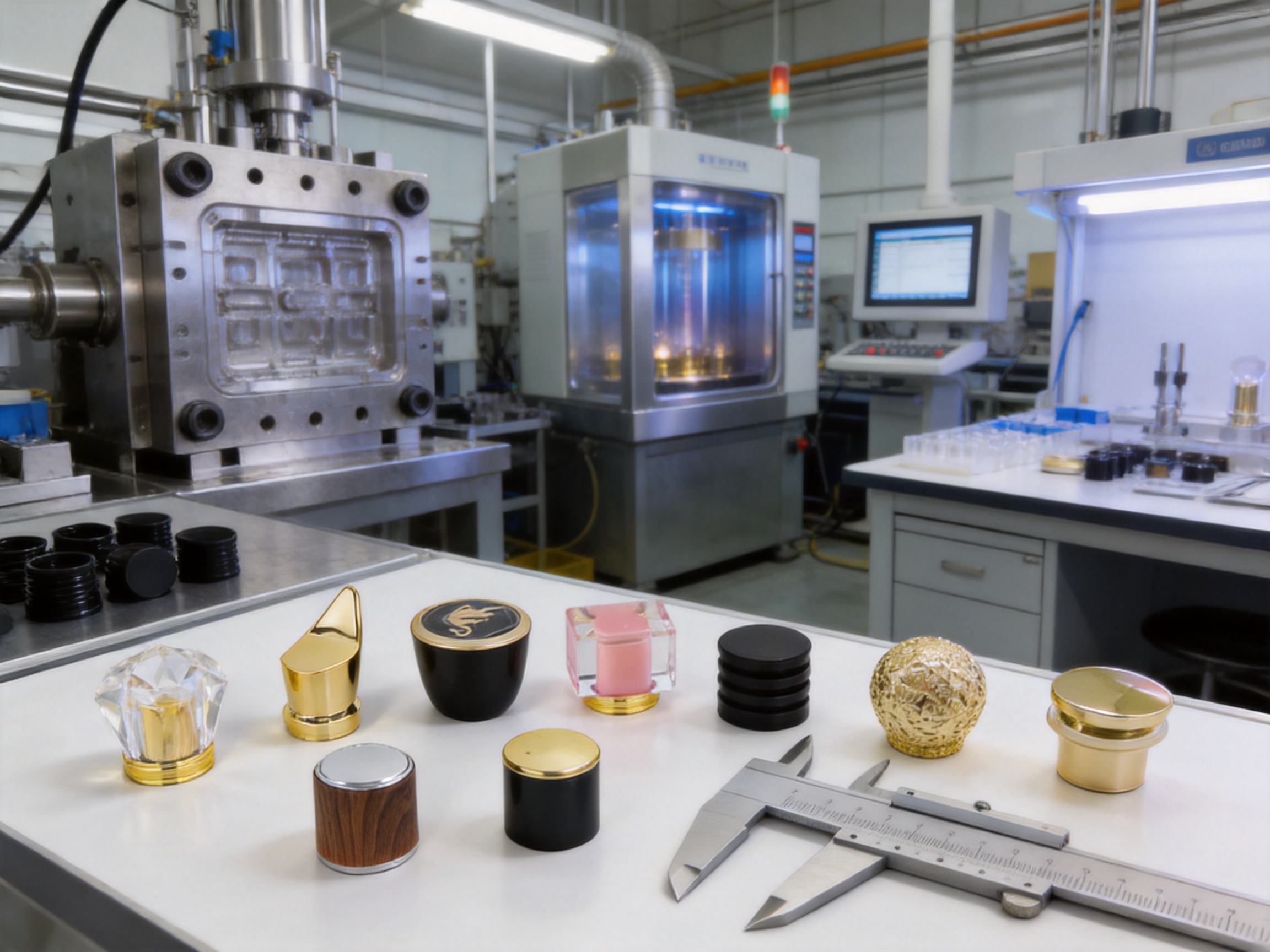
Precision injection molding is central to the production of these perfume caps. The process begins with a digital design that defines the external form, internal fit, wall thickness, decoration areas, and mold requirements. Engineering teams review the design for manufacturability before mold production begins.
Mold manufacturing determines the accuracy and repeatability of the cap. The cavity must reproduce fine contours, facets, embossed patterns, and critical fitting surfaces. Mold polishing is particularly important for transparent and high-gloss components because surface imperfections can become highly visible after molding or decoration.
During injection molding, plastic material is heated and injected into the mold cavity under controlled pressure. The machine settings must be matched to the material and geometry. Filling speed, pressure, temperature, cooling time, and ejection conditions can all affect the final product.
Complex cap shapes require balanced filling. If the material reaches one section too quickly or cools unevenly, the part may show flow marks, deformation, or dimensional variation. Mold-flow analysis and trial production can help identify these risks before mass manufacturing.
After molding, the parts are inspected for appearance and dimensions. Critical areas include the cap opening, internal engagement features, outer profile, logo area, and decorative surfaces. Consistent inspection helps maintain compatibility with the selected bottle and supports reliable assembly at the filling facility.
Precision injection molding offers several advantages over labor-intensive fabrication methods. It supports repeatable high-volume production, reduces variation between units, and makes complex designs more commercially viable. It also allows a brand to scale a successful product while maintaining a consistent visual identity.
Vacuum Electroplating and UV Coating
Vacuum electroplating is used to create metallic visual effects on plastic components. The process applies a thin decorative layer under controlled vacuum conditions. It can produce a smooth, reflective, gold-like, silver-like, or other metallic appearance while retaining the lightweight base of the plastic part.
Before electroplating, the molded component must have a suitable surface. Cleaning, preparation, and base coating can influence adhesion and uniformity. The shape of the cap also affects how evenly the decorative layer covers the component. Complex curves and recesses require controlled process parameters and suitable fixture design.
UV coating can be used to add a protective surface layer and adjust the final gloss or tactile effect. Depending on the formulation and process, it may help protect the decorative appearance from ordinary handling and provide a consistent finish across production batches.
The combination of injection molding, electroplating, and UV coating creates a practical alternative to producing the entire cap from metal. The resulting component can provide metallic depth and luxury appeal while maintaining the weight and design flexibility of plastic.
Quality control during finishing may include visual inspection, color comparison, coating uniformity checks, adhesion evaluation, and handling simulations. The exact test plan depends on the customer’s specifications and the intended use of the product.
Integrated Manufacturing Capabilities
The manufacturer behind the product specializes in packaging containers for cosmetics, medicines, daily chemical products, and other plastic applications. Its capabilities cover multiple stages of packaging development and production, including product research and development, industrial design, mold manufacturing, plastic injection molding, blow molding, gilding and printing, UV coating, product testing, and warehousing.
This integrated structure is valuable because packaging development rarely involves only one operation. A perfume cap may require design adjustment, tooling development, injection molding, surface decoration, logo application, inspection, and coordinated delivery. When these steps are managed through a connected production system, communication can be more direct and technical issues can be addressed earlier.
An experienced research and development team can help evaluate the relationship between a visual concept and its manufacturing requirements. For example, a designer may request a very thin decorative projection, a deeply embossed surface, or a high-gloss transparent section. Engineering review can determine whether the feature requires reinforcement, a modified draft angle, a different material, or a revised mold structure.
In-house mold manufacturing provides greater control over tooling development and modification. This is important for customized caps because a small change to the bottle-neck fit or external geometry may require a corresponding mold adjustment. Direct coordination between design and mold teams can shorten the response cycle and support more reliable project development.
Modern standardized factories and advanced equipment also support production organization, inspection, and warehousing. A structured factory environment helps maintain process documentation, organize batch production, and protect finished products before shipment.
Location and Supply Chain Advantages
The company is located in Cixi, China, an area known for its developed plastic manufacturing industry. The region provides access to skilled labor, plastic processing resources, supporting suppliers, tooling services, and transportation infrastructure.
The location is near the Hangzhou Bay Bridge and within approximately one hour of Ningbo’s Beilun deep-water port and Hangzhou Xiaoshan International Airport. This geographic position can support domestic and international logistics planning. For overseas customers, access to port and air transportation may help coordinate sample shipments, production deliveries, and export arrangements.
Efficient logistics are especially important for cosmetic packaging because caps often need to arrive at a filling facility in sequence with bottles, pumps, cartons, labels, and other components. Delays in one packaging element can interrupt the entire filling schedule. A manufacturer with organized warehousing and transportation coordination can contribute to smoother project execution.
Warehousing also supports inventory management. Standard designs may be produced or stored according to agreed schedules, while custom projects can be coordinated around the customer’s launch plan. Proper packaging and storage help protect decorative caps from scratching, dust, deformation, and unnecessary handling before assembly.
Quality Control and Product Reliability
Quality control should begin during product development rather than only after mass production. For perfume caps, quality includes dimensional accuracy, surface appearance, logo clarity, color consistency, coating adhesion, structural strength, and fit with the selected bottle assembly.
Incoming material checks help confirm that the plastic and decorative materials meet the required specifications. During molding, operators and quality personnel monitor process conditions and inspect parts for visible defects. After decoration, the caps are checked for color, gloss, plating uniformity, coating quality, and printing or engraving accuracy.
Dimensional inspection is particularly important for the internal cap structure. A cap may look correct externally but still fail during assembly if the internal dimensions are not controlled. Test fitting with the intended bottle neck and spray nozzle can identify issues before the product reaches the filling line.
Functional evaluation may include repeated removal and replacement, transportation simulation, visual inspection after handling, and checks for looseness or damage. The exact requirements depend on the customer’s product specification, but the basic objective is consistent performance throughout storage, distribution, retail display, and consumer use.
Packaging during shipment is another part of quality protection. Decorative caps should be arranged to minimize contact damage and movement. Protective separators, bags, trays, cartons, or other suitable methods may be selected according to the surface finish and shape of the component.
Advantages for Different Fragrance Market Segments
Men’s Fragrances
Matte black, dark metallic, and black-and-gold caps are well suited to men’s colognes that emphasize confidence, precision, strength, or understated luxury. A compact geometric cap can support a modern masculine identity, while a brushed or textured finish can add depth without excessive decoration.
Unisex Fragrances
Unisex products often benefit from balanced design. Black gold provides a neutral foundation that can be combined with transparent facets, soft curves, or minimal logos. A carefully proportioned cap can communicate sophistication without leaning too strongly toward a traditional masculine or feminine visual language.
Luxury and Boutique Fragrances
Boutique brands may use artistic silhouettes, embossed relief, or custom logos to create a strong signature. A distinctive cap can make a smaller production run feel exclusive and collectible. The ability to develop a custom mold allows the packaging to reflect the specific story or design philosophy of the fragrance.
Limited Editions and Gift Sets
Special editions can use brighter metallic treatment, diamond-cut geometry, unique embossing, or a more elaborate sculptural profile. The cap may be coordinated with a commemorative carton or special bottle color. Because plastic manufacturing supports design flexibility, it can be used for seasonal launches and promotional packaging as well as permanent product lines.
Professional and Daily-Care Products
Although the collection is positioned for luxury fragrance packaging, selected cap styles may also support premium body sprays, hair fragrances, personal-care products, or other daily chemical packaging. The suitability depends on the bottle neck, product format, decorative requirements, and intended market positioning.
Development Process for a New Custom Cap
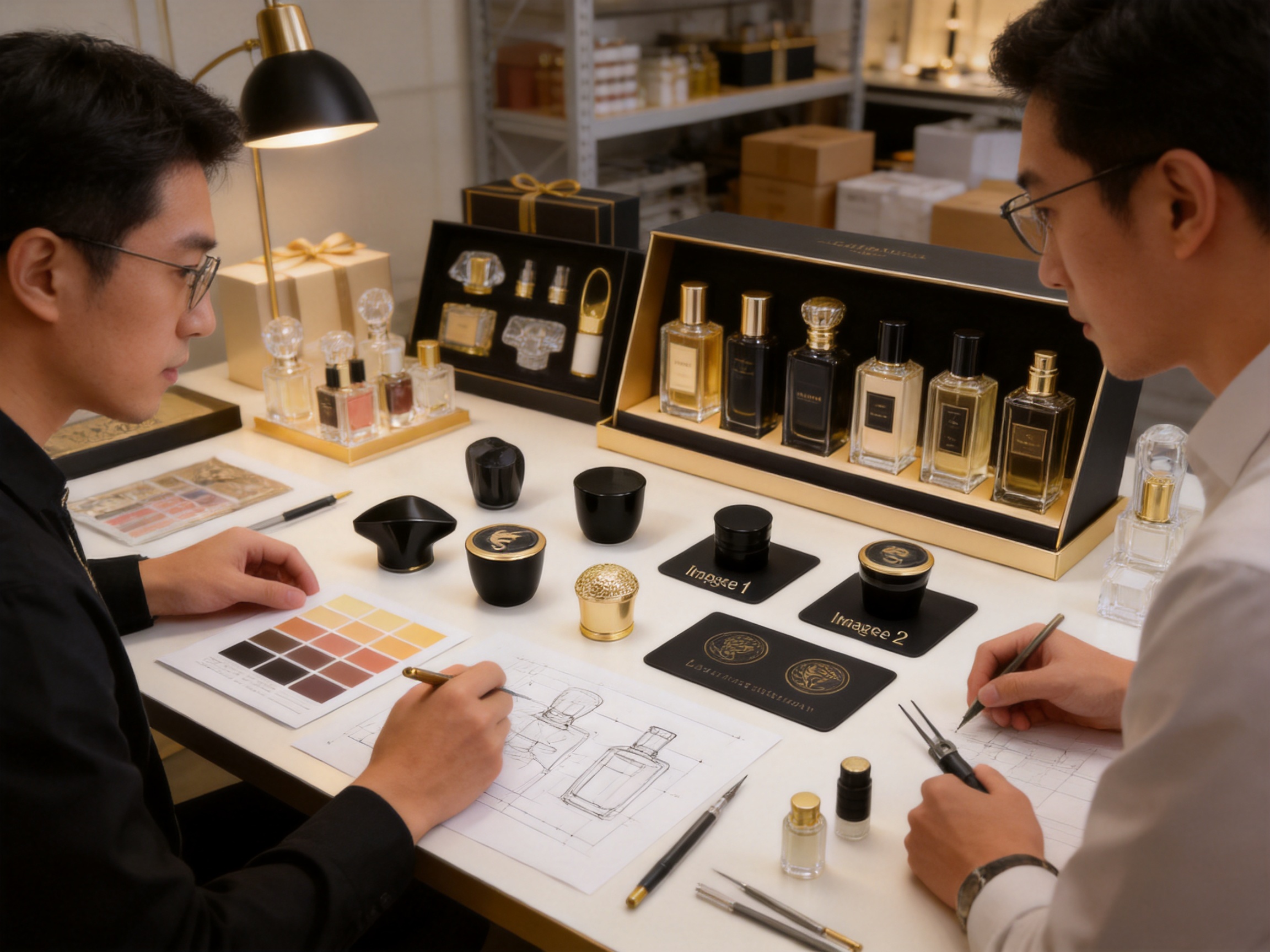
A successful custom packaging project benefits from a structured development process. The first step is to define the bottle and spray assembly. The bottle neck dimensions, nozzle type, collar structure, overall height, and available clearance determine the internal cap requirements.
The next step is to clarify the design direction. The brand should identify preferred shapes, surface treatments, colors, logo locations, finish levels, and reference products. It is also useful to define the desired consumer impression, such as modern, classic, artistic, premium, minimalist, or theatrical.
Design files can then be reviewed for manufacturability. Engineering teams assess wall thickness, draft, parting lines, undercuts, internal fit, decorative feasibility, and likely tooling requirements. At this stage, revisions are generally easier and less expensive than after mold completion.
Prototype development allows the customer to evaluate scale, ergonomics, appearance, and compatibility with the bottle. A prototype may be produced through a preliminary mold, 3D printing, or another suitable method, depending on the project. It should be assessed both as an individual component and as part of the complete package.
After approval, the production mold is manufactured and trial molding begins. Trial parts are inspected, decorated if necessary, and evaluated against the approved sample. Adjustments may be made to improve filling, fit, surface appearance, or assembly performance.
Mass production begins after the design, color, finish, and inspection standards are confirmed. Production records and approved samples help maintain consistency between batches. Communication remains important when the cap is supplied together with other packaging components or when the product is introduced in several colors and sizes.
How the Product Supports Brand Value
Packaging is an investment in perception. A fragrance may have an excellent formula, but consumers usually encounter the package first. The cap can help communicate the value of the product before the fragrance is sprayed.
A premium cap supports brand value in several ways. It can increase shelf impact, improve the opening ritual, create a recognizable silhouette, and reinforce the relationship between the fragrance and its visual story. It can also make the product appear more complete and carefully considered.
For established brands, a customized cap can strengthen product family recognition. A shared cap language across several fragrances can create continuity, while variations in color or surface treatment distinguish individual scents. For emerging brands, an original cap can provide a memorable signature from the beginning.
The cap may also influence social and digital presentation. Fragrance products are frequently photographed, displayed in short videos, or presented in unboxing content. Faceted surfaces, metallic details, embossed patterns, and unusual silhouettes can create visual interest in close-up images and help the product stand out in online marketing.
While attractive design does not replace fragrance quality, it can contribute to a stronger first impression and a more coherent brand experience. The best results come when the cap’s appearance, tactile character, bottle shape, label, carton, and fragrance concept support one another.
Practical Considerations for Buyers
Before placing an order, buyers should confirm the bottle neck specifications and request compatibility evaluation. Even when a cap is described as suitable for a standard spray nozzle neck, the exact bottle and pump combination should be tested because component tolerances can vary.
Buyers should also define the desired surface finish. Matte black, high-gloss black, metallic gold, transparent crystal-like, and embossed surfaces have different visual and production requirements. A physical sample is often useful for evaluating the actual effect under retail and studio lighting.
Logo requirements should be specified clearly. The buyer should identify whether the mark will be engraved, embossed, printed, or integrated into the mold. Artwork dimensions, position, color, orientation, and acceptable variation should be agreed before production.
Order quantity and delivery timing should be discussed early, particularly for custom molds. Tooling, sampling, approval, production, finishing, inspection, and shipping all require time. A clear project schedule helps coordinate the cap with bottle production, filling, carton printing, and product launch activities.
Packaging and shipping conditions should also be reviewed. Glossy, plated, and transparent surfaces may require more protective packing than uncoated matte components. Customers should communicate any special storage, stacking, or transport requirements before mass production.
Comparison of Common Cap Approaches
| Cap Approach | Main Visual Character | Key Advantages | Typical Considerations |
|---|---|---|---|
| Standard molded plastic cap | Simple and functional | Efficient production, low weight, broad compatibility | Limited shelf differentiation and decoration |
| Solid metal cap | Heavy and substantial | Strong tactile impression and premium weight | Higher weight, cost, and shaping limitations |
| Metallic-finished plastic cap | Luxury metallic appearance | Lower weight, flexible shaping, decorative versatility | Requires controlled plating and coating processes |
| Diamond-cut plastic cap | Crystal-like sparkle | Strong light reflection and jewelry-inspired appearance | Facets and transparency require careful mold design |
| Embossed plastic cap | Tactile and decorative | Integrated relief, heritage character, memorable touch | Pattern depth and surface consistency must be managed |
| Custom sculptural cap | Artistic and distinctive | High brand recognition and collection potential | May require custom tooling and additional development time |
Why Integrated Technical Support Matters
Packaging suppliers are increasingly expected to provide more than finished components. Brands often need assistance with design optimization, mold development, material selection, decoration, testing, and delivery planning. An integrated supplier can provide technical continuity throughout these stages.
For a perfume cap, small design decisions can have a large effect on production. A logo placed too close to a parting line may be difficult to decorate. A deep recess may trap coating material. A sharp internal corner may create stress or interfere with the spray nozzle. A slender external element may require reinforcement. Technical support helps identify these issues while changes are still practical.
The company’s experience in cosmetic, pharmaceutical, daily chemical, and other plastic packaging provides a broad manufacturing foundation. Its production capabilities include both standard products and customized molds, allowing customers to select a solution according to project scale, design ambition, and commercial objectives.
Long-term cooperation can also simplify future product development. Once a brand has established preferred materials, finishes, inspection standards, and packaging methods, later projects may move more efficiently. A supplier familiar with the brand’s expectations can help maintain consistency across launches.
Business and Manufacturing Strengths
The company has an experienced research and development team, advanced manufacturing equipment, and modern standardized factory facilities. These resources support the complete process from initial concept to finished packaging.
Its capabilities include product research and development, design, mold manufacturing, injection molding, blow molding, gilding and printing, UV coating, testing, and warehousing. This combination allows the company to serve both customers seeking standard packaging and customers requiring customized components.
The company also provides technical support for professional daily chemical packaging brands. This support can include design communication, development suggestions, mold coordination, production planning, quality control, and delivery organization.
A broad product portfolio provides additional flexibility. The company offers packaging containers for cosmetics, medicines, and other plastic products, including a large selection of daily chemical packaging designs. Although this article focuses on perfume caps, the broader manufacturing experience may help customers coordinate caps with other cosmetic packaging components.
Competitive pricing is another stated strength. Plastic production, integrated decoration, efficient tooling coordination, and organized manufacturing can help balance luxury appearance with commercial requirements. The ideal cost structure depends on design complexity, material, order volume, decoration, packaging, and logistics, so each project should be evaluated individually.
Sustainability and Material Efficiency Considerations
Packaging sustainability involves more than selecting one material. It also includes product durability, material quantity, transport efficiency, manufacturing efficiency, and the relationship between package life and product value.
The lightweight nature of plastic caps can reduce the mass transported compared with heavier alternatives. A durable cap may also remain attractive and functional throughout the product’s use, reducing the likelihood of premature replacement caused by damage or poor fit.
Efficient injection molding can produce repeatable components with controlled material use. Good mold design and process management can reduce defects and improve yield. During project development, brands may also discuss wall thickness, component weight, decoration choices, and packaging efficiency with the manufacturer.
Material and recycling requirements vary by market and product system. Buyers should review local regulations, material identification, decoration compatibility, and end-of-life expectations before finalizing a design. If sustainability is a key brand objective, it should be considered during the earliest design stage rather than added after production decisions have been made.
Applications Beyond a Single Product
A successful cap design can be adapted into a broader packaging family. For example, a brand may use the same basic black gold language for several fragrances, changing the bottle color, logo, or decorative detail for each scent. This approach creates consistency while allowing product differentiation.
The design principles may also be applied to body mists, hair fragrances, room fragrances, premium sanitizing sprays, and selected personal-care packaging formats. Compatibility must be confirmed for each application, but the combination of molded plastic and decorative finishing is suitable for many products that require a refined appearance.
Retail displays can benefit from coordinated caps. A group of bottles with related cap shapes or colors can create a stronger visual block on the shelf. In gift sets, matching caps can connect several products and make the set appear more complete.
Custom shapes may also be useful for seasonal or regional collections. A brand can develop a special profile for a cultural event, anniversary, or limited launch while maintaining the same underlying manufacturing expertise and quality approach.
Q&A: Frequently Asked Questions
What is a black gold plastic perfume cap?
It is a molded plastic cap designed for perfume or fragrance bottles and finished with black, gold, metallic, transparent, embossed, or other decorative effects. The cap protects the spray assembly, completes the package appearance, and can be customized for a specific brand.
Can these caps be used with any perfume bottle?
Compatibility depends on the bottle neck, spray nozzle, collar, dimensions, and internal cap structure. The intended bottle and pump should be provided for testing before mass production. A cap described as suitable for a standard neck still requires confirmation with the exact packaging components.
Are plastic caps less luxurious than metal caps?
Not necessarily. Plastic caps are lighter and more flexible in shape, while vacuum electroplating, UV coating, embossing, and precision molding can create a metallic or crystal-inspired appearance. Metal may provide greater natural weight, but high-quality plastic can offer a strong combination of visual luxury, design freedom, and cost control.
What finishes are available?
Common options include matte black, high-gloss black, metallic gold, black and gold combinations, transparent crystal-like effects, embossed surfaces, printed details, and other customized finishes. The available finish depends on the selected material, cap geometry, and decoration process.
Can a brand add its logo?
Yes. Logo options may include laser engraving, embossed branding, or silkscreen printing on the top or side of the cap. The most appropriate method depends on the logo size, surface, color requirements, order quantity, and desired visual effect.
What is the diamond-cut effect?
The diamond-cut effect uses multiple molded facets to reflect light in different directions. With suitable high-transparency material, the cap can resemble a cut gemstone and produce a sparkling, prism-like appearance.
Are sculptural cap shapes practical for mass production?
They can be practical when the design is engineered for molding, handling, decoration, and packaging. Thin projections, deep recesses, and unusual proportions may require reinforcement or modification. A manufacturability review and prototype evaluation are recommended before tooling.
What is vacuum electroplating used for?
Vacuum electroplating creates a metallic decorative layer on a plastic component. It can provide gold-like, silver-like, or other reflective finishes while retaining the light weight and design flexibility of the plastic base.
What does UV coating contribute?
UV coating can help create a particular gloss or tactile effect and may provide an additional protective layer over the decorative surface. Process requirements depend on the chosen material and finish.
Can the company develop a completely new cap mold?
Yes. The company provides customized mold development in addition to standard packaging designs. A new mold project normally includes design review, engineering assessment, mold manufacturing, trial molding, sample approval, and mass production planning.
What information should a buyer provide for a quotation?
Useful information includes the bottle neck drawing or sample, spray pump details, desired cap dimensions, reference images, material preference, color and finish requirements, logo artwork, estimated quantity, target delivery date, and destination. More complete information allows a more accurate technical and commercial evaluation.
How can a buyer protect glossy or metallic caps during shipping?
The caps should be packed with suitable separators or protective materials that minimize movement, rubbing, dust, and impact. The appropriate method depends on the cap shape and surface finish. Shipping and storage requirements should be discussed before production.
Does the company offer other cosmetic packaging products?
Yes. The company specializes in packaging containers for cosmetics, medicines, daily chemical products, and other plastic applications. Its capabilities include various plastic packaging designs, customized molds, injection molding, blow molding, printing, gilding, UV coating, testing, and warehousing.
Conclusion
Black gold plastic perfume caps provide fragrance brands with a practical way to combine luxury appearance, reliable function, and design flexibility. Their value comes from the complete product system: high-quality molded plastic, precision internal fitting, faceted or sculptural geometry, metallic and matte finishes, embossed details, and customizable branding.
Compared with ordinary caps, these designs offer stronger visual differentiation and more opportunities to create a memorable fragrance identity. Compared with fully metal alternatives, they can reduce weight, support more complex shapes, and provide a potentially more manageable cost structure while still delivering a premium visual impression.
The manufacturing process is equally important. Precision injection molding establishes the cap’s structure and repeatability. Vacuum electroplating creates metallic effects. UV coating supports surface performance and finish control. Laser engraving, embossing, and silkscreen printing allow the brand to integrate its identity into the component. Quality inspection, fitting tests, protective packing, and warehousing help preserve the product from factory to filling line and retail shelf.
With research and development, mold manufacturing, injection molding, decoration, testing, and logistics coordination available through one experienced packaging partner, brands can develop both standard and fully customized solutions. Whether the goal is a restrained matte black cap, a sparkling diamond-cut design, an embossed heritage style, or a distinctive antler- or scepter-inspired silhouette, the black gold collection provides a foundation for turning a perfume package into a more recognizable and collectible product.
For fragrance companies planning a new launch or upgrading an existing package, the cap should be evaluated as a strategic brand component rather than a simple protective cover. A carefully designed cap can improve shelf presence, strengthen the opening ritual, support product differentiation, and contribute to the long-term value of the fragrance line.
References
1. Cosmetic Packaging Design Principles, packaging development and brand communication reference materials.
2. Injection Molding Engineering Fundamentals, technical guidance on plastic part design, mold construction, and process control.
3. Surface Decoration Technologies for Plastic Components, reference materials covering vacuum electroplating, printing, embossing, and UV coating.
4. Fragrance Packaging and Consumer Experience Studies, research concerning tactile interaction, shelf visibility, and luxury product presentation.
5. Plastic Packaging Quality Control Practices, reference guidance on dimensional inspection, coating evaluation, assembly testing, and protective shipping.
6. Product development and manufacturing information supplied for the black gold plastic perfume cap collection and associated cosmetic packaging capabilities.
Product: Black Gold Plastic Perfume Cap Perfume Bottle Cap Perfume Lid

-
Black Gold Plastic Perfume Cap Perfume Bottle Cap Perfume Lid
-
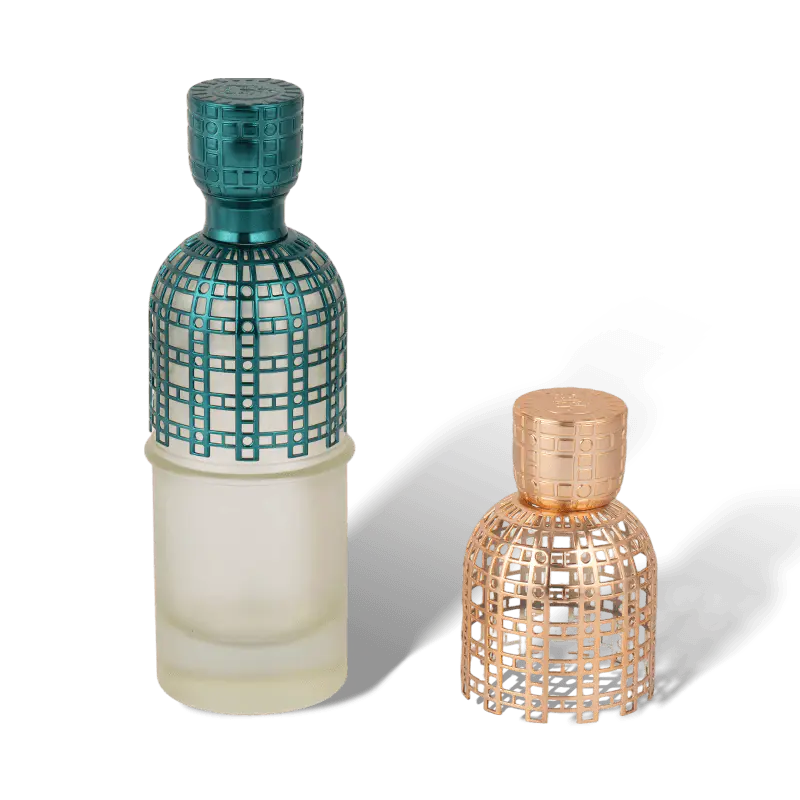 Gold 200ml/100ml/50ml/30ml Empty Arabic Dubai Glass Luxury Perfume Bottles
-
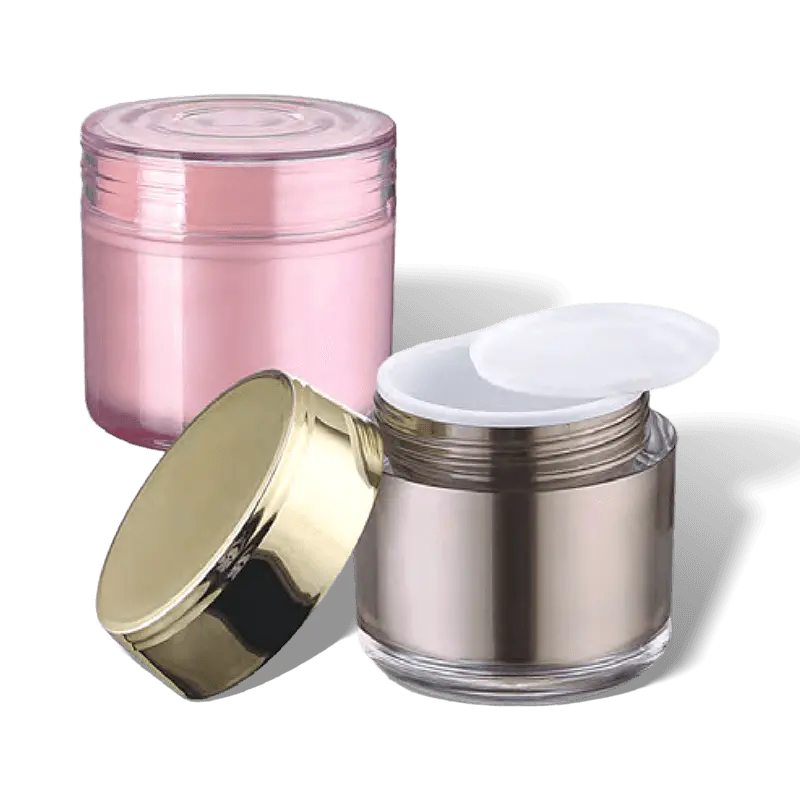 DP-A-009 Body Cream Jar 80ml Container 70ml Cosmetic Packaging Body Butter Plastic Jar
-
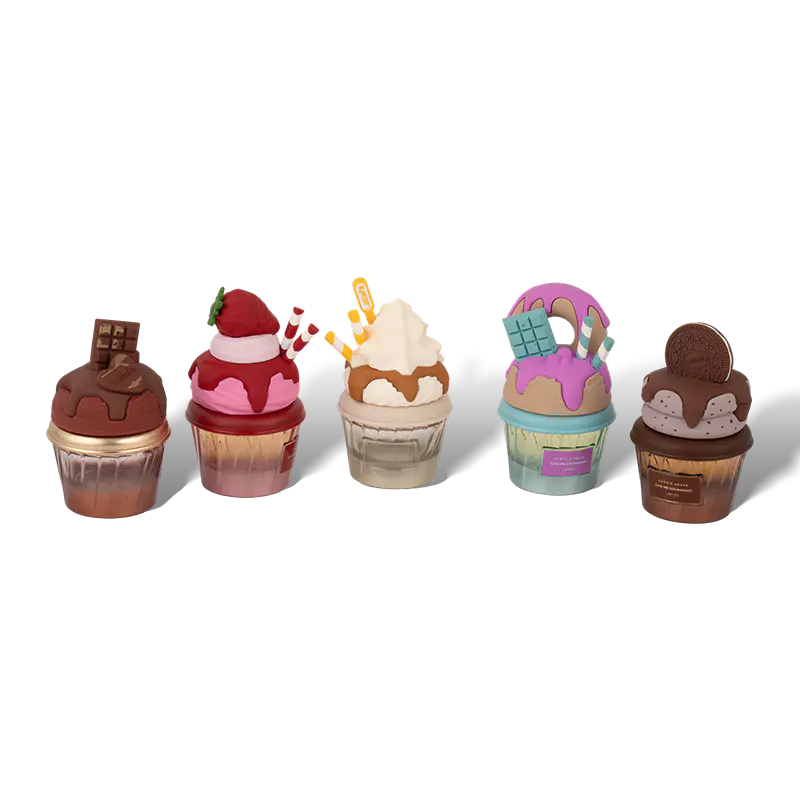 Luxury 100ml Round Perfume Bottle
-
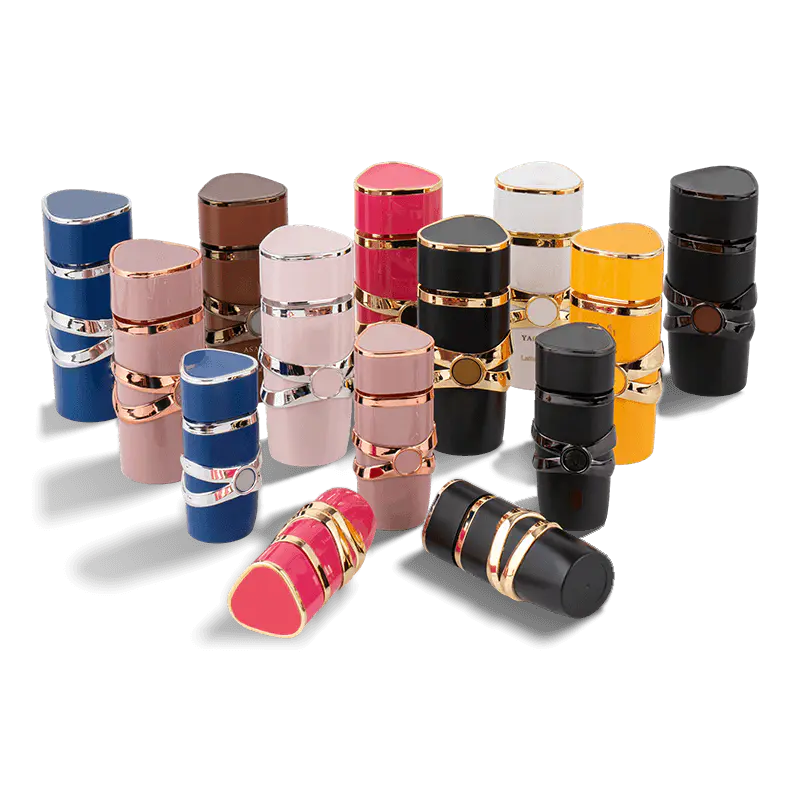 Round Luxury Empty 100ml Perfume Bottle
-
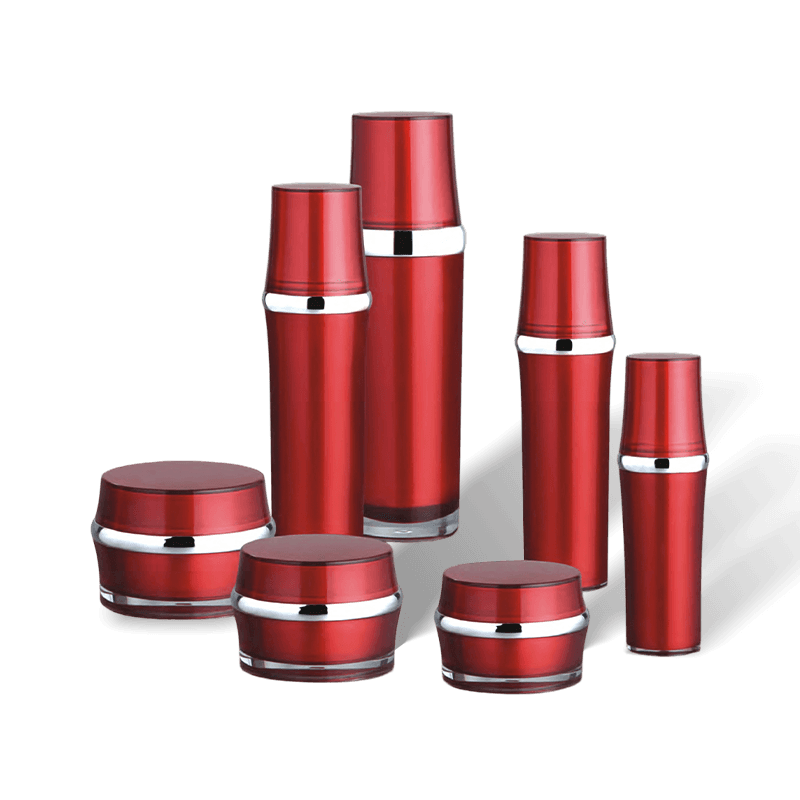 DP-A-005 Gold/red/white 15g/30g/50g cream skincare cosmetic jar
- +86 13968274500
- +86 13764345885
- ysgl@vip.163.com
- No. 10-18, Gaoxiakeng, Dongputou Village, Zhangqi Town