English
 中文简体
 Français
 Español
 عربى



Luxury Round Spray Perfume Bottles: A Complete Guide to Premium Fragrance Packaging
Introduction
In the fragrance industry, packaging is not simply a protective layer around a formula. It is the first physical expression of a perfume brand, the object that customers see before they experience the scent, and a major part of the product’s perceived value. A well-designed bottle can communicate refinement, confidence, modernity, and exclusivity before the cap is removed. For this reason, luxury perfume packaging must combine visual appeal, reliable performance, convenient use, production flexibility, and a finish suitable for demanding retail markets.
The 30ml, 50ml, 100ml, and 200ml luxury empty round spray perfume bottles offered by DEPRAG Plastic Products Co., Ltd. are designed around these requirements. Their cylindrical silhouette, thickened high-white glass base, refined metal label options, and fine atomization system create a coordinated packaging solution for premium fragrances. The collection is suitable for travel-size perfumes, standard retail products, gift editions, limited releases, and larger collector-oriented presentations.
Although the overall shape is simple, the design is carefully considered. The round profile creates a balanced and timeless appearance, while the substantial glass base gives the bottle stability and a premium hand feel. The exterior can be customized with brushed gold, matte black, or rose gold metal labels, allowing fragrance companies to establish a distinctive visual identity without changing the essential bottle structure.
This article examines the product’s design advantages, customization possibilities, user experience, manufacturing strengths, quality considerations, and commercial applications. It also explains why a coordinated packaging partner with research and development, mold manufacturing, injection molding, printing, coating, testing, and warehousing capabilities can offer greater value than a supplier focused only on producing a standard container.
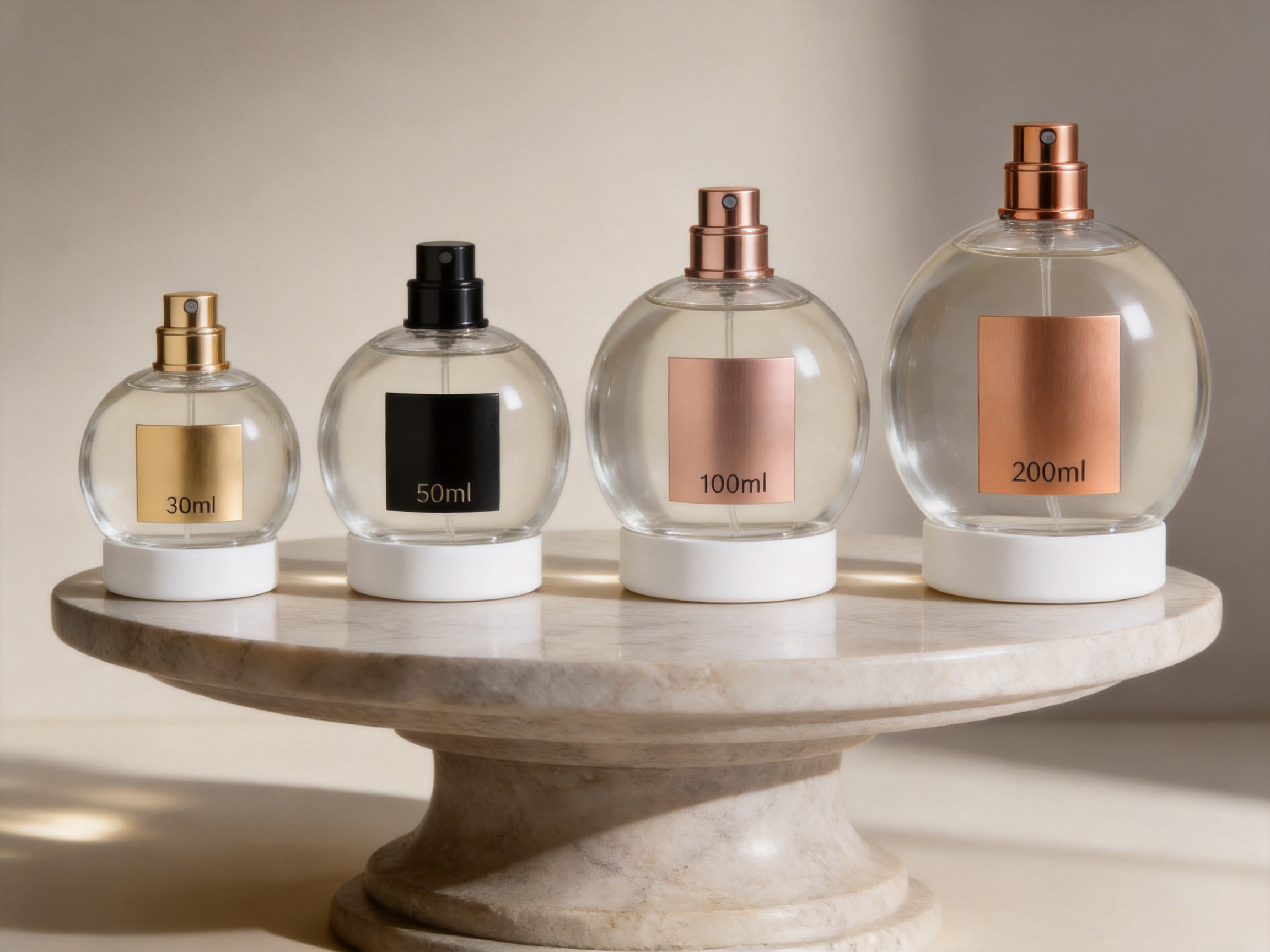
30ml/50ml/100ml/200ml Luxury empty round spray perfume bottles
1. The Role of Packaging in the Luxury Fragrance Market
Perfume is an emotional product. Customers purchase fragrance for its scent, but they also respond to the mood, lifestyle, and identity represented by the packaging. A bottle displayed on a vanity, in a boutique, or on an online product page must communicate the character of the fragrance quickly. Packaging therefore becomes an important part of branding, merchandising, gifting, and customer loyalty.
Luxury packaging has several practical responsibilities. It must protect the fragrance from contamination and accidental leakage, provide an effective dispensing experience, support transportation and storage, and remain visually attractive over time. It must also be compatible with the brand’s filling and labeling operations. If the bottle is difficult to handle, unstable on shelves, inconsistent in appearance, or poorly matched with its atomizer, the packaging can weaken the reputation of the finished fragrance.
The round perfume bottle format addresses many of these requirements through a structure that is visually familiar and operationally efficient. Its symmetrical body supports an organized label area and offers a comfortable grip from multiple directions. Compared with highly irregular shapes, a cylindrical bottle can be easier to arrange in cartons, display on shelves, and integrate into a broader product family.
The design also supports a wide positioning range. With the right surface finish, it can appear restrained and contemporary, elegant and feminine, bold and masculine, or neutral and unisex. This flexibility is particularly useful for fragrance brands that want a common packaging platform for several scents or for a collection designed to appeal to different customer groups.
2. Product Overview and Available Sizes
The collection is available in four principal capacities: 30ml, 50ml, 100ml, and 200ml. These sizes cover common fragrance market requirements, from compact products intended for handbags and travel to larger formats designed for home use, gift presentation, or premium collector editions.
| Capacity | Typical Market Application | Packaging Positioning | Main Commercial Advantage |
|---|---|---|---|
| 30ml | Travel perfume, discovery product, handbag format | Compact and accessible | Supports trial purchases and convenient portability |
| 50ml | Core retail fragrance and personal-use product | Balanced everyday luxury | Combines manageable size with strong shelf presence |
| 100ml | Standard premium fragrance and gift product | Classic full-size presentation | Offers a substantial appearance and broad market appeal |
| 200ml | Large-format fragrance, collector edition, or home display | Statement luxury | Creates a more generous and distinctive product experience |
The four-size range makes it possible for a brand to build a complete product architecture without moving between unrelated bottle styles. A company may introduce a 30ml trial size, a 50ml best-selling format, a 100ml flagship product, and a 200ml special edition while maintaining visual consistency across the collection.
The 100ml version is especially suitable for brands seeking a conventional premium perfume format. It provides enough surface area for a refined label and enough visual weight to communicate quality. At the same time, the other sizes allow brands to segment pricing, target different purchase occasions, and create gift or promotional sets without redesigning the entire packaging system.
3. Architectural Round Design
The bottle’s cylindrical construction is inspired by architectural simplicity. Rather than relying on excessive decoration, the design uses proportion, symmetry, material quality, and surface treatment to create a refined appearance. A pure round form suggests completeness and continuity, while the vertical profile produces a clean, organized presence on a retail shelf.
One of the main advantages of the round design is its visual longevity. Highly trend-driven packaging may look fashionable for a limited period, but a well-proportioned cylindrical bottle can remain relevant across changing seasons and market preferences. This is valuable for fragrance brands that want packaging capable of supporting a long-term product line.
The cylindrical form is also naturally compatible with different label arrangements. A narrow central label can create a minimalist appearance, while a wider metal plate can provide a stronger luxury statement. Logo printing, metallic details, or a restrained typographic treatment can be applied without disrupting the overall balance of the container.
From a user perspective, the round body is comfortable to hold and easy to rotate while spraying. The absence of sharp corners reduces visual and tactile harshness. The profile can also complement both modern and classic fragrance concepts, making it suitable for a wide range of brand stories.
Compared with many competitors that depend on complicated sculptural forms, this bottle focuses on elegance through controlled proportions. A simpler structure can be an advantage when the brand wants the fragrance name, label finish, or glass quality to become the main visual focus. It can also simplify the development of coordinated sizes and reduce the risk that decorative details will overwhelm the product identity.
4. Thickened High-White Glass Base
Material perception has a direct influence on how customers evaluate a perfume bottle. The thickened high-white glass base gives the bottle a clear, substantial appearance and helps create the solid feeling expected from a luxury product. When a customer lifts the bottle, the additional visual and tactile weight reinforces the idea that the fragrance is carefully made and thoughtfully presented.
A stable base is important in both retail and household environments. A bottle that stands securely is easier to arrange in displays, less likely to tip during ordinary handling, and more suitable for presentation on dressing tables, counters, and gift trays. The substantial base also provides a strong foundation for the vertical cylindrical body.
High-white glass can help preserve a clean and premium visual impression. Its neutral appearance allows different label colors and surface finishes to remain visually accurate. Brushed gold, matte black, and rose gold details can therefore be used to create different brand directions without competing with a strongly tinted glass tone.
The glass structure also supports the classic expectations associated with perfume. Consumers often associate glass with purity, durability, and quality. Compared with lightweight packaging materials that may feel less substantial, a well-formed glass bottle can offer a more memorable opening and handling experience.
For manufacturers and brands, glass packaging requires careful coordination between container design, neck finish, spray components, protective packaging, and quality inspection. The bottle must be produced and handled in a way that reduces the likelihood of cosmetic defects, dimensional inconsistency, or incompatibility during filling and assembly. This is one reason why technical support and coordinated packaging development are important when launching a premium fragrance line.
5. Brushed Metal Label Options
The metal label is one of the defining visual features of this perfume bottle. Brushed metal creates a directional texture that reflects light in a controlled manner. Instead of a highly reflective mirror surface, the brushed finish provides a more sophisticated and architectural effect. It can make the bottle look modern while retaining a sense of luxury.
Three principal color directions are available: brushed gold, matte black, and rose gold. Brushed gold is suitable for traditional luxury, festive collections, and warm fragrance concepts. Matte black creates a confident, contemporary appearance that may be appropriate for masculine, niche, or minimalist fragrances. Rose gold offers a softer and more fashion-oriented look, making it useful for feminine, romantic, or lifestyle-driven product ranges.
These finishes can be coordinated with the fragrance name, cap, outer carton, and gift box. For example, a matte black label can be combined with a dark carton and restrained white typography for a modern unisex product. A brushed gold label can be paired with cream or deep burgundy packaging for a classic premium presentation. Rose gold can be used with light neutral colors or soft metallic accents to create a more delicate visual identity.
The label area gives brands a practical customization surface. It may carry a logo, fragrance name, volume information, collection title, or other required product details. Because the main bottle shape remains consistent, a brand can introduce several variations without investing in a completely new structural design for each fragrance.
Compared with decorative elements that are permanently molded into a bottle, a metal label can provide greater flexibility during brand development. The design can evolve through different graphics, colors, and finishes while retaining the same basic container. This is useful for seasonal launches, special editions, co-branded projects, and limited production runs.
6. Unisex Design and Brand Versatility
The bottle intentionally avoids excessive ornamentation. Its restrained silhouette combines visual strength with refined elegance, making it appropriate for unisex fragrance positioning. This is increasingly relevant in a market where many consumers are interested in scent profiles and personal expression rather than traditional gender categories.
The unisex character comes from the balance between form and finish. The cylindrical body and strong base provide a sense of stability and confidence, while the smooth glass and carefully selected metal label create sophistication. Brands can move the design toward a more masculine or feminine direction through color, typography, fragrance naming, carton graphics, and cap treatment.
A versatile bottle can support a broader product portfolio. A company may use it for woody, aromatic, citrus, floral, oriental, or gourmand fragrances. The same structure can also serve different price points if the decoration and secondary packaging are adjusted appropriately. This makes the bottle a practical platform for both established companies and emerging fragrance brands.
Unisex packaging can also simplify inventory management. Rather than holding several unrelated bottle styles for different product categories, a brand may use one recognizable form across multiple collections. Consistency can strengthen shelf recognition and help customers identify products belonging to the same brand family.
From a design perspective, restrained packaging can also help the scent remain the central subject. The bottle suggests quality without making a narrow demographic claim. This gives the brand room to communicate through the fragrance itself, the naming system, and the overall campaign concept.
7. Ultra-Fine Atomization System
A perfume bottle is judged not only by its appearance but also by the quality of its spray. The collection uses a custom-designed high-pressure nozzle intended to produce an even, fine mist. A consistent spray pattern helps distribute fragrance more comfortably and contributes to the ritual associated with applying perfume.
Fine atomization is important because it can influence the user’s first impression of the product. A coarse or irregular spray may create large droplets, wet the skin excessively, or make the application feel less refined. A well-functioning atomizer creates a lighter cloud that can feel more controlled and elegant.
The nozzle should also operate with a smooth, predictable action. Users expect the actuator to respond consistently when pressed. The quality of the spray mechanism is therefore part of the complete packaging experience, not an isolated technical component.
For fragrance brands, the atomizer can support both functional performance and brand storytelling. A fine mist may be described as soft, airy, or enveloping, while the act of spraying becomes part of the consumer’s daily ritual. This matters particularly in the premium market, where customers evaluate a product through multiple senses, including touch, sound, visual appearance, and scent dispersion.
Technical coordination between bottle, pump, nozzle, and closure is essential. The components must be compatible in dimensions and assembly. They must also be evaluated for reliable operation, fit, and resistance to ordinary handling. A supplier with broader packaging development capabilities can help manage these relationships more effectively than a manufacturer that supplies only an isolated bottle component.
8. Refillable and More Responsible Use
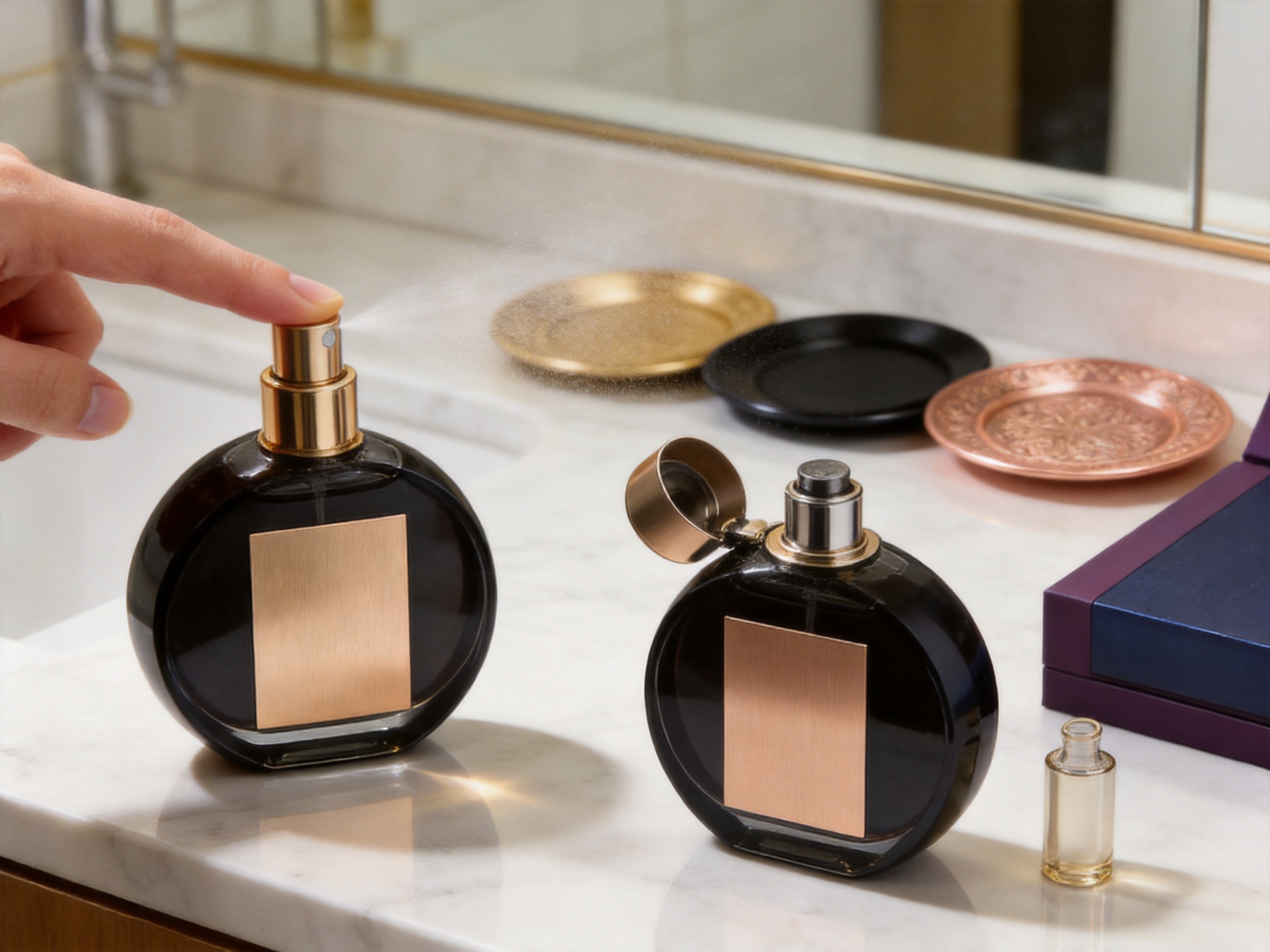
The product information identifies a rotating opening design that supports multiple refills. Refillability can contribute to a more responsible packaging approach by allowing consumers to continue using the outer bottle rather than discarding it after the original fragrance has been consumed.
A refillable design may also strengthen customer attachment to the bottle. When the container is attractive, durable, and associated with a favorite fragrance, consumers may be more willing to keep it as part of their daily environment. This creates an opportunity for brands to offer refill formats, encourage repeat purchases, and build a longer product relationship.
It is important for brands to define clear refill procedures and compatibility information. The refill system should be explained in packaging instructions or product communications so that users understand how to open, refill, and close the container correctly. Proper guidance can help reduce spills and preserve the quality of the fragrance.
Refillability does not eliminate the need for responsible material selection, efficient production, and appropriate disposal. However, it can be one element of a broader packaging strategy that considers product longevity and resource use. When combined with durable glass, a long-lasting atomizer, and carefully designed secondary packaging, the refill concept can support a more sustainable luxury proposition.
For brands communicating environmental benefits, transparency is important. Claims should be based on the actual refill system, material characteristics, and disposal options available in the target market. A professional packaging supplier can help customers understand the technical details required to present such claims accurately.
9. Customization Capabilities
Customization is essential for fragrance brands because packaging must express a particular identity rather than appear generic. The bottle collection supports several decoration and development options, including bottle color coating, brand logo silkscreen printing, gold foil stamping, metal label customization, and matching flip-top gift boxes.
Bottle Color Coating
Color coating can transform the visual character of the bottle while maintaining the same underlying structure. Opaque or translucent effects may be selected according to the fragrance concept. Dark coatings can suggest depth and intensity, while pale or transparent treatments can communicate freshness, lightness, or purity.
Coating specifications should be selected with attention to adhesion, surface consistency, color matching, and resistance to ordinary handling. A premium appearance depends on uniform coverage and accurate reproduction across production batches. Testing and controlled production processes are therefore important when a specific color is central to the brand identity.
Silkscreen Printing
Silkscreen printing can be used for logos, fragrance names, volume information, decorative lines, or other graphic details. It is suitable for brands that want direct artwork on the bottle rather than a separate label. Printing can be combined with colored glass, coated surfaces, or metallic elements to create layered visual effects.
Artwork preparation should consider the curvature of the bottle, the available printing area, the number of colors, and the desired level of detail. Clear communication between the brand’s design team and the packaging manufacturer helps ensure that the final result reflects the approved artwork.
Gold Foil Stamping
Gold foil stamping provides a traditional luxury signal and can be used for logos, borders, lettering, or selected decorative accents. When applied in moderation, it adds distinction without overwhelming the clean round structure. Gold foil may be particularly effective on dark coatings, neutral cartons, and premium gift packaging.
Because foil details are visually prominent, consistency is important. Registration, pressure, temperature, and surface preparation can influence the final appearance. Production experience and inspection procedures help maintain a stable result across multiple units.
Matching Flip-Top Gift Boxes
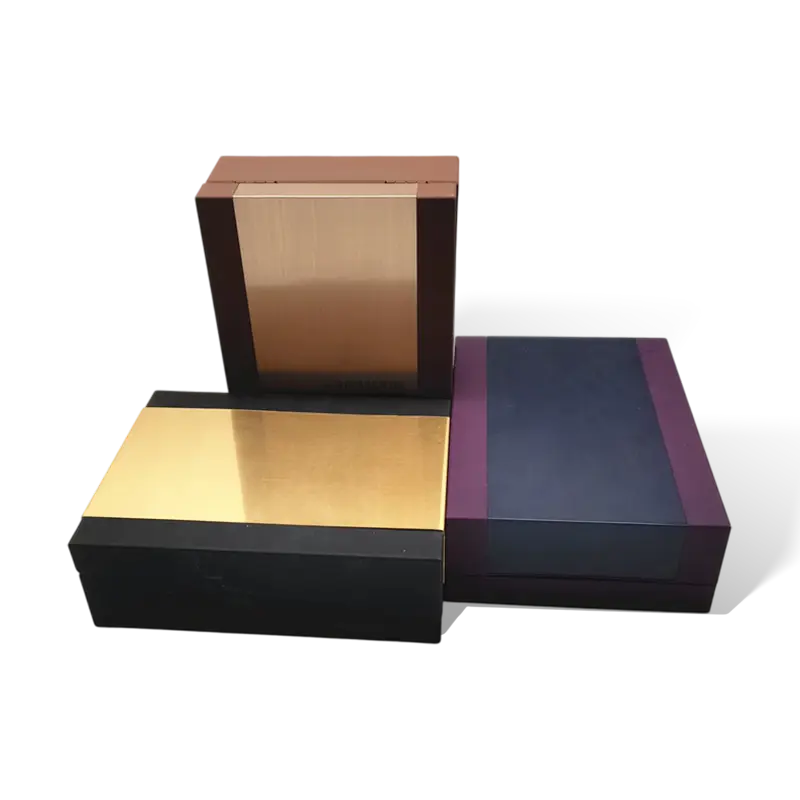
The bottle can be paired with a matching flip-top premium gift box. Coordinated secondary packaging creates a complete presentation and offers additional protection during transportation and gifting. The outer box may echo the bottle’s metal label through color, texture, or metallic decoration.
A gift box is particularly valuable for holiday collections, corporate gifting, anniversary editions, wedding favors, and luxury retail launches. It gives the brand more space to communicate its story while turning the unboxing process into part of the product experience.
10. Advantages Compared with Competing Packaging Formats
The luxury round spray bottle has several advantages over packaging formats that depend on highly complex shapes or limited size options. Its first advantage is adaptability. The same visual language can be used across four capacities and multiple decoration styles, making it easier to build a coordinated collection.
Its second advantage is balance. The cylindrical body is distinctive enough to appear premium but restrained enough to avoid rapid stylistic obsolescence. Brands can update labels, coatings, and gift boxes while retaining a recognizable bottle structure.
Its third advantage is usability. A stable base, comfortable round body, and fine atomizer support a practical and enjoyable user experience. The bottle is designed to be displayed, held, and sprayed repeatedly rather than treated solely as a decorative object.
Its fourth advantage is customization potential. Brands can combine metal labels, coating, printing, foil stamping, and gift boxes to achieve different market positions. This is more flexible than a packaging format whose identity depends almost entirely on one fixed molded decoration.
Its fifth advantage is suitability for unisex products. Many competing packages are strongly associated with a narrow style or demographic. The clean form of this bottle allows the fragrance itself and the selected finish to determine the final positioning.
Its sixth advantage is support for refill-oriented use. The rotating opening design provides an opportunity to develop a longer-term packaging relationship with customers. For brands focused on durability and repeat purchase, this can be a valuable part of the overall product proposition.
| Evaluation Area | Round Luxury Bottle Advantage | Potential Brand Benefit |
|---|---|---|
| Visual identity | Architectural cylindrical form with premium metal details | Creates strong recognition without excessive decoration |
| Handling | Comfortable round body and substantial glass base | Improves user confidence and perceived quality |
| Portfolio development | Available in four capacities | Supports travel, standard, flagship, and collector formats |
| Decoration | Coating, silkscreen, foil, and metal label options | Allows customized brand expression |
| Market positioning | Clean and unisex design | Works across multiple fragrance categories |
| Presentation | Compatible with matching flip-top gift boxes | Enhances gifting and premium retail display |
| Product life | Refill-oriented rotating opening design | Supports extended use and repeat purchasing |
11. Manufacturing and Technical Strengths
The product’s commercial value depends not only on its appearance but also on the manufacturer’s ability to deliver stable quality, practical customization, and responsive technical support. DEPRAG Plastic Products Co., Ltd. specializes in packaging containers for cosmetics, medicines, and other plastic products. Its broader manufacturing background allows the company to support customers at multiple stages of packaging development.
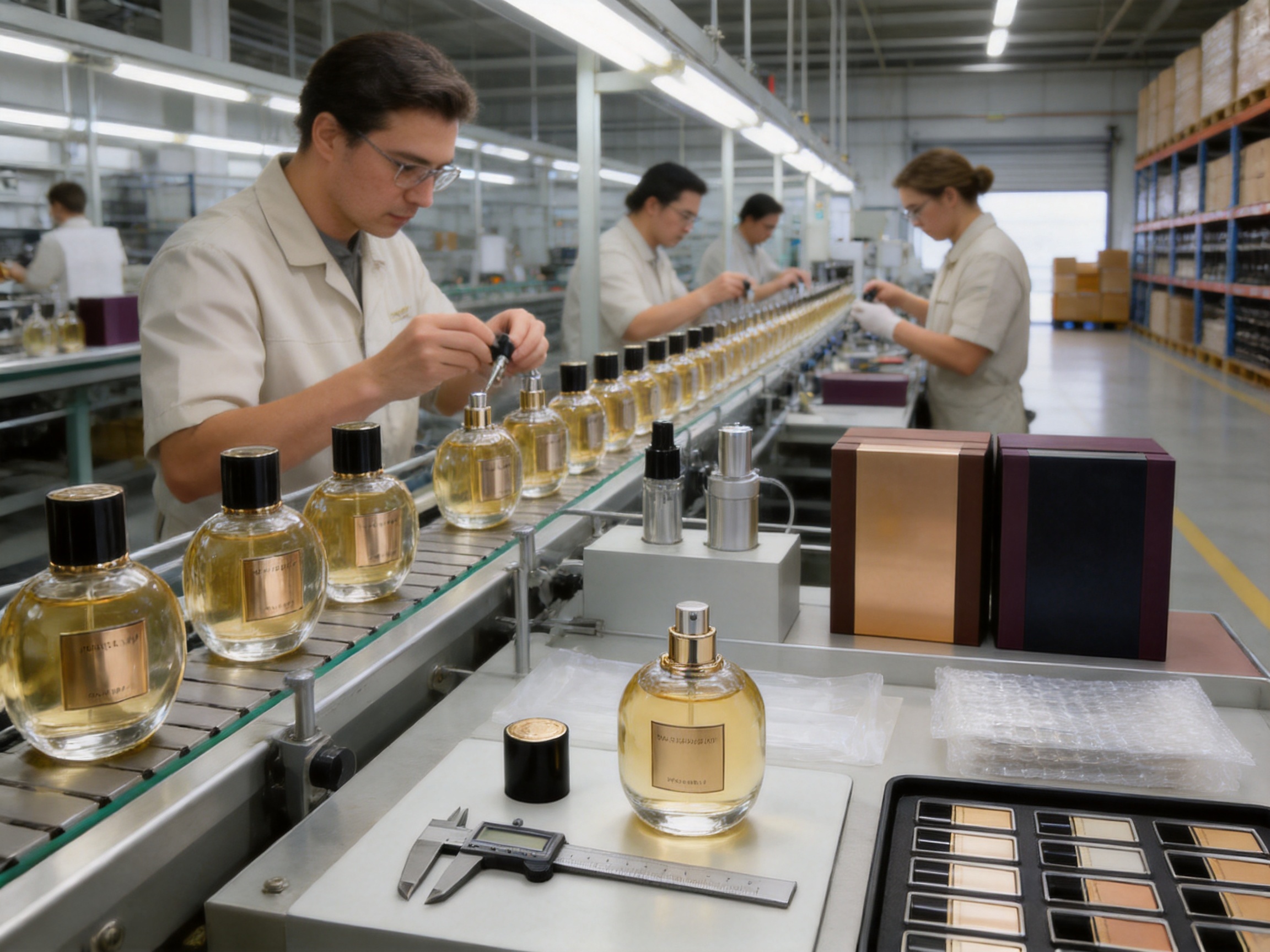
The company’s production capabilities include product research and development, design, mold manufacturing, plastic injection molding, blow molding, gilding and printing, UV coating, product testing, and warehousing. Although the perfume bottle itself incorporates glass and dispensing components, this wider packaging expertise is relevant because fragrance projects often involve several associated parts, including caps, outer packaging, decorative components, and complementary cosmetic containers.
Research and development is the first important strength. A packaging project may begin with a reference image, a rough concept, or a functional requirement rather than a finished technical drawing. An experienced development team can help translate the concept into a manufacturable structure, assess decoration options, and identify potential assembly or compatibility issues before mass production.
Design support is equally important. A bottle must look attractive from multiple angles, provide a suitable decoration area, remain stable during filling and transport, and fit the intended secondary packaging. Professional design review can identify weaknesses early, reducing the risk of expensive changes after tooling or production has begun.
Mold manufacturing provides control over customized components. For brands seeking matching caps, plastic accessories, or related cosmetic packaging, in-house or closely coordinated mold capabilities can shorten communication channels and improve consistency. It also makes it easier to develop a family of products with shared visual details.
Injection molding and blow molding support the production of a broad range of plastic packaging components. These processes may be used for closures, protective parts, cosmetic jars, bottles, or other containers in a complete packaging program. The availability of multiple processes allows the supplier to recommend a suitable manufacturing route according to the product’s shape, material, volume, and performance requirements.
Gilding, printing, and UV coating are particularly relevant to luxury packaging. Decorative processes must be integrated with the base material and evaluated for visual stability. A supplier that understands both structural production and surface decoration can better coordinate the complete appearance of the final package.
Product testing adds another layer of reliability. Testing may include visual inspection, dimensional checks, assembly evaluation, spray performance assessment, leakage considerations, and decoration adhesion review, depending on the project requirements. The exact inspection plan should be agreed upon with the customer and adjusted to the intended market and filling process.
Warehousing capability helps support production continuity and order management. Fragrance brands may require staged deliveries, coordinated packaging components, or storage before filling and shipment. Organized warehousing can reduce handling complexity and assist with more predictable supply planning.
12. Integrated Packaging Development
One of the company’s important strengths is its ability to provide more than a single container. DEPRAG offers thousands of daily chemical packaging designs, including standard products and customized molds. This product breadth can be useful for companies developing a wider personal care portfolio alongside perfume.
A fragrance brand may also sell creams, lotions, serums, cleansers, or gift sets. If these products are sourced through unrelated packaging suppliers, differences in color, finish, labeling, and quality can make the collection appear inconsistent. A supplier with experience in cosmetic packaging can help coordinate bottles, jars, caps, and boxes so that the complete product family presents a unified identity.
The company’s categories include perfume packaging, acrylic cosmetic packaging, PP cosmetic packaging, cream jars, fruit-shaped cream jars, and plastic cosmetic storage cases. This range demonstrates experience with different shapes, materials, and product requirements. For a fragrance company expanding into skincare or daily chemical products, this can simplify supplier management and support a more cohesive development process.
Integrated development may also improve communication. Instead of sending design information through several companies, the customer can discuss packaging structure, decoration, component matching, and production scheduling with one experienced partner. This can be especially valuable for smaller brands that do not have a large internal engineering or procurement team.
Technical support should remain project-specific. Every fragrance formula, filling line, closure system, and market requirement may be different. The manufacturer and customer should confirm compatibility, specifications, decoration samples, inspection standards, order quantities, lead times, and packaging instructions before production begins.
13. Location and Supply Chain Convenience
DEPRAG is located in Cixi, China, an area known for its developed plastic manufacturing industry. The company’s location near the Hangzhou Bay Bridge provides convenient regional transportation. It is also described as being within approximately one hour by road of Ningbo’s Beilun deep-water port and Hangzhou Xiaoshan International Airport.
Transport access can be valuable for export-oriented packaging projects. Efficient movement of raw materials, components, finished goods, samples, and tooling supports smoother coordination between manufacturing and logistics. Proximity to major transportation infrastructure may also help international customers organize shipments to different markets.
However, supply chain value involves more than geography. It also depends on production planning, communication, documentation, quality management, and the ability to coordinate multiple components. A capable packaging supplier should provide clear information about specifications, sample approvals, production stages, inspection arrangements, and shipping preparation.
For international fragrance brands, communication is particularly important because packaging often includes multiple approval points. These may include structural drawings, color samples, decoration proofs, spray tests, pre-production samples, and final packing details. A disciplined process reduces misunderstanding and helps keep the project aligned with the brand’s expectations.
14. Recommended Development Process for Brands
A successful perfume packaging project typically begins with a clear product brief. The brief should define the desired bottle capacity, fragrance positioning, target customer, decoration preferences, secondary packaging requirements, estimated order quantity, and intended sales markets.
The next step is sample evaluation. Brands should review the bottle’s dimensions, weight, stability, glass appearance, label area, atomizer operation, and overall handling experience. It is helpful to test the bottle both empty and filled, because the fragrance liquid may change the visual impression and the perceived balance of the package.
Decoration samples should then be assessed under different lighting conditions. Brushed gold, matte black, and rose gold may appear different in natural light, retail lighting, and photography. Brands should confirm that the selected finish supports product photography, online presentation, and physical shelf display.
Compatibility testing is also essential. The filling team should verify the neck finish, spray pump, actuator, and closure arrangement. The package should be checked for leakage, correct assembly, spray consistency, and resistance to ordinary transport conditions. If a refill system is used, the refill procedure should be evaluated by representative users.
Once the design and technical specifications are approved, the customer and manufacturer should confirm the production sample, quality standards, packing method, order quantity, delivery schedule, and documentation. Clear approval records help ensure that mass production follows the agreed design.
After production, finished goods should be inspected according to the agreed criteria. Visual appearance, decoration consistency, component assembly, and carton packing should be reviewed. For repeat orders, maintaining approved reference samples can help preserve consistency across future batches.
15. Commercial Applications
The 30ml size is suitable for travel collections, fragrance discovery programs, promotional sets, and customers who prefer compact products. It can also serve as an entry-level format for a premium brand, allowing new customers to experience the fragrance at a lower initial commitment.
The 50ml format is a practical choice for core retail products. It provides an attractive balance between volume, price, portability, and shelf presence. Many brands can use this capacity as a central format for everyday premium fragrances.
The 100ml format offers a classic full-size presentation. It is appropriate for flagship fragrances, gift products, and standard luxury retail programs. Its substantial appearance pairs well with the thickened glass base and coordinated metal label.
The 200ml version can serve as a statement product. It may be used for collector editions, home fragrance rituals, special gifts, or customers who prefer a generous supply of their favorite scent. A larger bottle can also create a strong visual anchor in a premium display.
Across all capacities, the product can be adapted for private-label perfume, niche fragrance, hotel amenities, corporate gifts, seasonal collections, and co-branded launches. The appropriate decoration and box design will depend on the intended market and price position.
16. Quality, Consistency, and Customer Confidence
Luxury packaging is judged by consistency. A single attractive sample is not enough if production units vary noticeably in color, printing position, label alignment, glass appearance, or atomizer performance. Brands therefore need a manufacturing partner that understands repeatability as well as design.
Quality expectations should be defined in measurable or observable terms whenever possible. These may include acceptable appearance standards, dimensional tolerances, color references, printing registration, foil placement, label position, spray performance, and packaging protection. Clear standards allow both the customer and supplier to evaluate production objectively.
DEPRAG’s combination of development, manufacturing, decoration, testing, and warehousing capabilities provides a foundation for this type of coordinated quality management. The customer should still communicate the exact requirements of the project, because different brands may have different priorities and inspection thresholds.
Stable quality protects the brand’s investment in marketing and retail distribution. When the bottle, label, and gift box consistently represent the approved design, customers receive a more reliable product experience. This can strengthen trust and support repeat purchase.
17. Why Choose a Specialized Packaging Partner
Choosing a packaging supplier is a strategic decision. The lowest unit price does not always produce the lowest total cost if the project later experiences decoration failures, delayed sampling, component incompatibility, or inconsistent production. A specialized partner can help reduce these risks by contributing technical knowledge before mass production begins.
DEPRAG’s experience in cosmetic, pharmaceutical, daily chemical, and plastic packaging gives it a broad understanding of container development. Its manufacturing process covers multiple stages, from research and design to mold production, molding, surface decoration, testing, and storage. This broader service structure can support brands that need both standard packaging and customized solutions.
The company’s philosophy is centered on long-term business relationships and the belief that customer success contributes to supplier success. In practical terms, this means that packaging development should be treated as a collaborative process. The manufacturer’s role is not only to produce a container but also to help the customer create a professional and commercially viable packaging system.
For the luxury round perfume bottle, this approach is especially relevant. The value of the product comes from the relationship between glass form, atomizer performance, metal decoration, optional printing, refill functionality, and secondary packaging. Each part must work together to create the expected premium experience.
18. Frequently Asked Questions
Q1: What capacities are available for the luxury round spray perfume bottles?
The collection is available in 30ml, 50ml, 100ml, and 200ml capacities. These sizes cover compact travel formats, standard retail products, full-size premium fragrances, and larger collector or statement editions.
Q2: Is the 100ml bottle the only available specification?
No. The product information highlights the 100ml format while also identifying a complete capacity range of 30ml, 50ml, 100ml, and 200ml. Brands can select the size that best matches their positioning, price structure, and customer needs.
Q3: What makes the bottle suitable for luxury fragrance products?
The thickened high-white glass base, cylindrical architectural design, premium metal label options, refined atomizer, and compatibility with gift boxes combine to create a substantial and polished presentation. Custom decoration further allows the bottle to reflect a specific brand identity.
Q4: Can the bottle be used for unisex fragrances?
Yes. The simple silhouette avoids excessive gender-specific decoration. The same bottle can support masculine, feminine, or unisex positioning depending on the fragrance concept, label finish, color coating, typography, and secondary packaging.
Q5: Which metal label finishes are available?
The main options identified are brushed gold, matte black, and rose gold. These finishes can be selected according to the fragrance’s visual identity and coordinated with the cap, carton, gift box, and other decorative elements.
Q6: Can the bottle be customized with a logo?
Yes. Available customization services include brand logo silkscreen printing, gold foil stamping, bottle color coating, and customized metal label treatments. Final options should be confirmed according to the design, surface, order requirements, and production specifications.
Q7: Is a gift box available?
Yes. The product can be paired with a matching flip-top premium gift box. This option is suitable for gift editions, holiday launches, corporate gifts, limited collections, and high-end retail presentation.
Q8: Does the bottle support refill use?
The product information identifies a rotating opening design that supports multiple refills. Brands should confirm the exact refill procedure, component compatibility, and user instructions during project development.
Q9: What is the benefit of the high-pressure atomization system?
The custom-designed nozzle is intended to produce an even, ultra-fine mist. This can provide a more controlled and refined application experience than an irregular or coarse spray. The final performance should be verified through product testing and filling-line evaluation.
Q10: What manufacturing services does DEPRAG provide?
DEPRAG provides product research and development, design, mold manufacturing, plastic injection molding, blow molding, gilding and printing, UV coating, product testing, and warehousing. The company also supplies a wide range of cosmetic and daily chemical packaging products.
Q11: Can the supplier support products besides perfume bottles?
Yes. The company’s product categories include perfume packaging, acrylic cosmetic packaging, PP cosmetic packaging, cream jars, fruit-shaped cream jars, and plastic cosmetic storage cases. This range can support brands developing coordinated fragrance and skincare collections.
Q12: What should a brand prepare before requesting a quotation?
A brand should prepare the desired capacity, estimated quantity, fragrance category, decoration requirements, logo artwork, preferred label finish, gift box requirements, target market, and expected delivery schedule. More complete information usually allows the supplier to provide a more accurate technical and commercial proposal.
Q13: How should the bottle be evaluated before mass production?
Brands should review appearance, stability, dimensions, glass quality, atomizer operation, label placement, coating consistency, printing, foil details, leakage performance, and compatibility with the intended filling process. A refillable version should also be tested for ease of opening, filling, and closing.
Q14: Why is supplier integration important for luxury packaging?
Luxury packaging often includes several coordinated parts and processes. A supplier capable of supporting design, tooling, molding, decoration, testing, and warehousing can reduce communication gaps and help maintain consistency across the finished packaging system.
Conclusion
The 30ml, 50ml, 100ml, and 200ml luxury empty round spray perfume bottles provide a flexible foundation for premium fragrance development. Their architectural cylindrical form, substantial high-white glass base, brushed metal label options, unisex styling, fine atomization system, and refill-oriented opening design combine visual refinement with practical usability.
The collection’s greatest strength is its balance between simplicity and customization. The bottle is distinctive without being overly complicated, allowing brands to express their identity through coating, silkscreen printing, gold foil stamping, metal finishes, and matching flip-top gift boxes. The four available sizes also make it possible to create a coherent fragrance family across travel, standard, full-size, and collector formats.
Equally important is the manufacturing support behind the product. DEPRAG Plastic Products Co., Ltd. provides experience in packaging research and development, design, mold manufacturing, injection molding, blow molding, printing, gilding, UV coating, testing, and warehousing. Its broad product portfolio and technical capabilities enable it to support perfume brands as well as wider cosmetic and daily chemical packaging programs.
For companies seeking a reliable luxury fragrance container, this round spray perfume bottle offers a practical combination of premium appearance, adaptable branding, comfortable handling, and scalable product development. When supported by clear specifications, careful sample approval, compatible filling procedures, and professional quality control, it can become a strong packaging platform for modern fragrance brands.
References
1. DEPRAG Plastic Products Co., Ltd. Product information for 30ml, 50ml, 100ml, and 200ml luxury empty round spray perfume bottles.
2. DEPRAG Plastic Products Co., Ltd. Company profile and manufacturing capability information.
3. General principles of cosmetic and fragrance packaging design, including structural usability, decoration coordination, and consumer presentation.
4. General packaging quality considerations for glass containers, fragrance atomizers, decorative coatings, labels, and secondary gift boxes.
5. General sustainability considerations for refillable packaging systems and extended product use.
Product: 30ml/50ml/100ml/200ml Luxury empty round spray perfume bottles

-
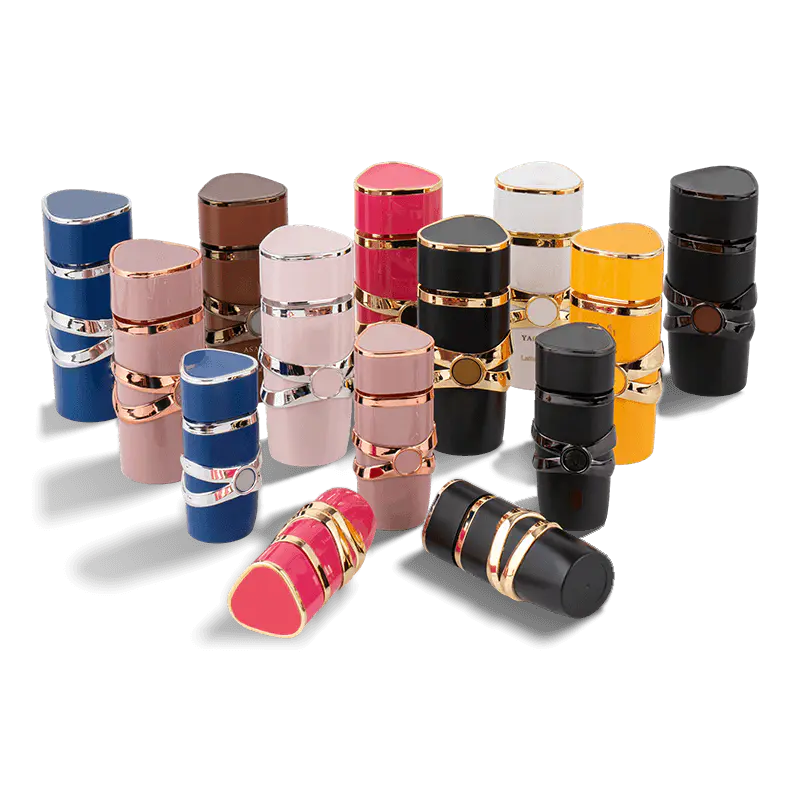 Round Luxury Empty 100ml Perfume Bottle
-
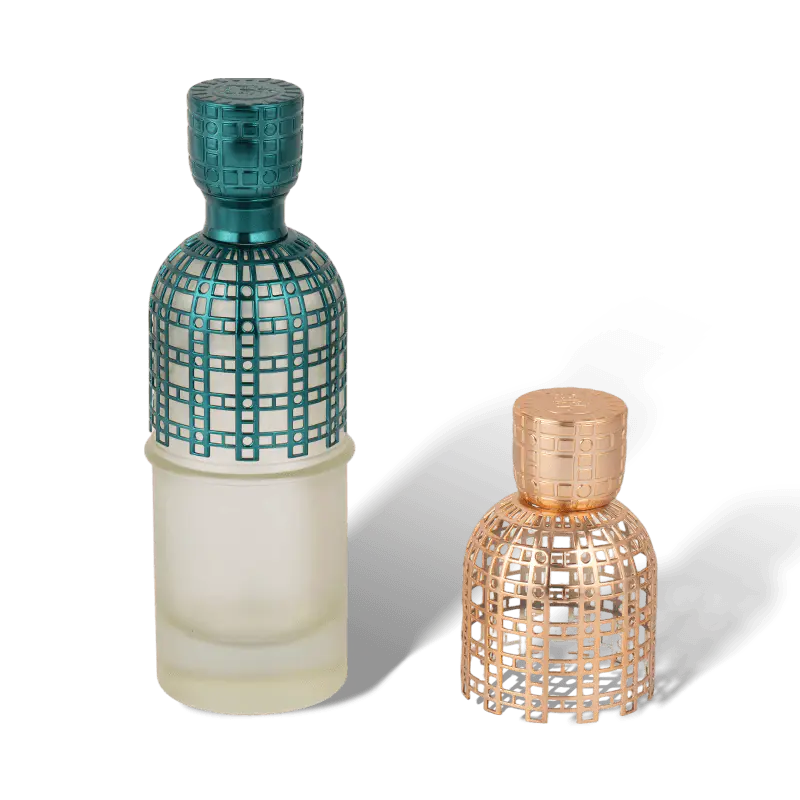 Gold 200ml/100ml/50ml/30ml Empty Arabic Dubai Glass Luxury Perfume Bottles
-
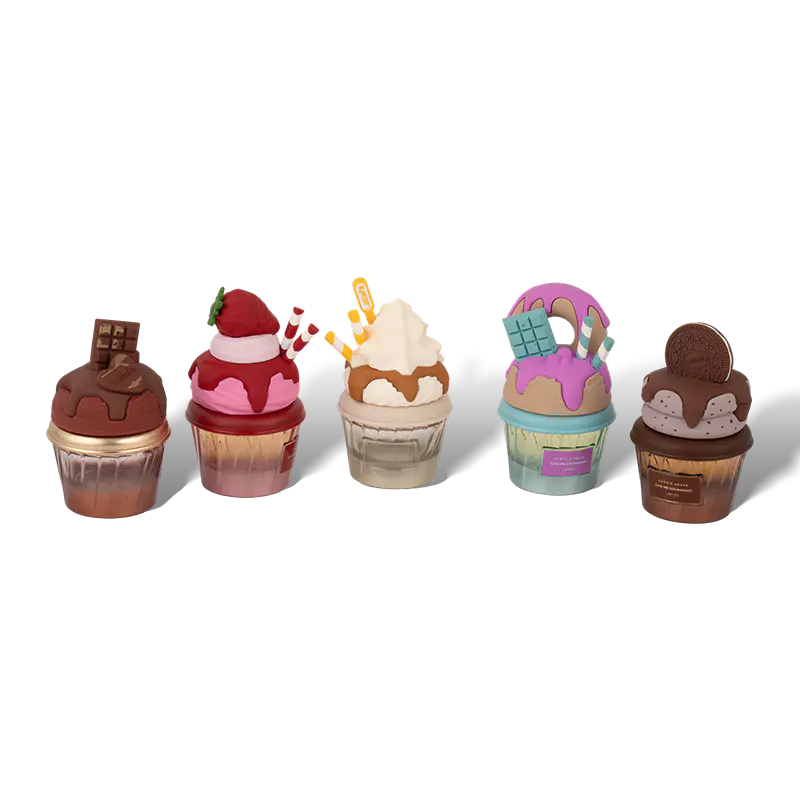 Luxury 100ml Round Perfume Bottle
-
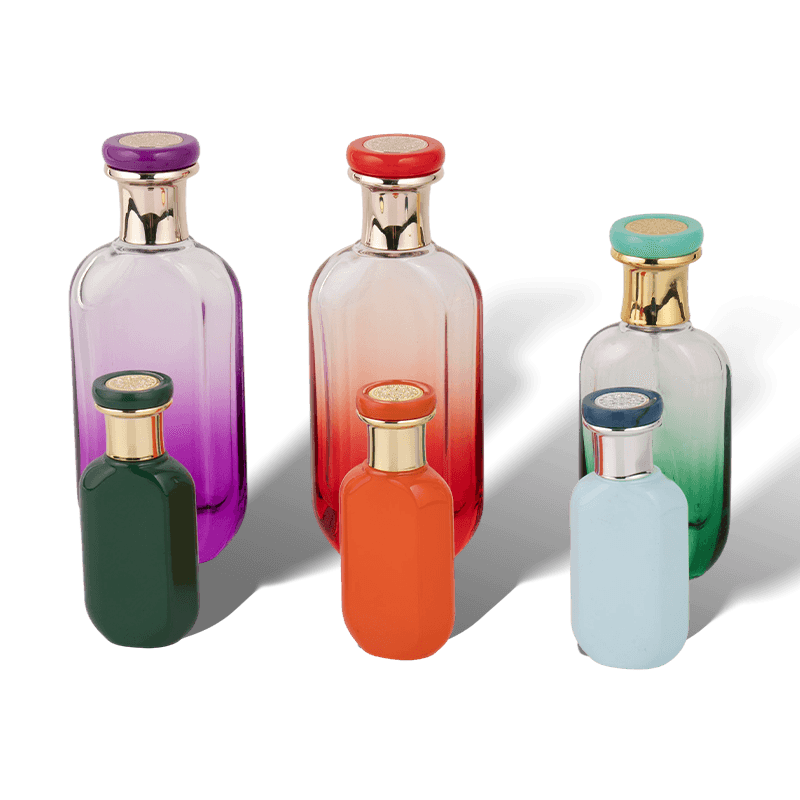 Recyclable Rectangular 30ml/50ml/100ml Glass Perfume Spray Luxury Perfume Bottle
-
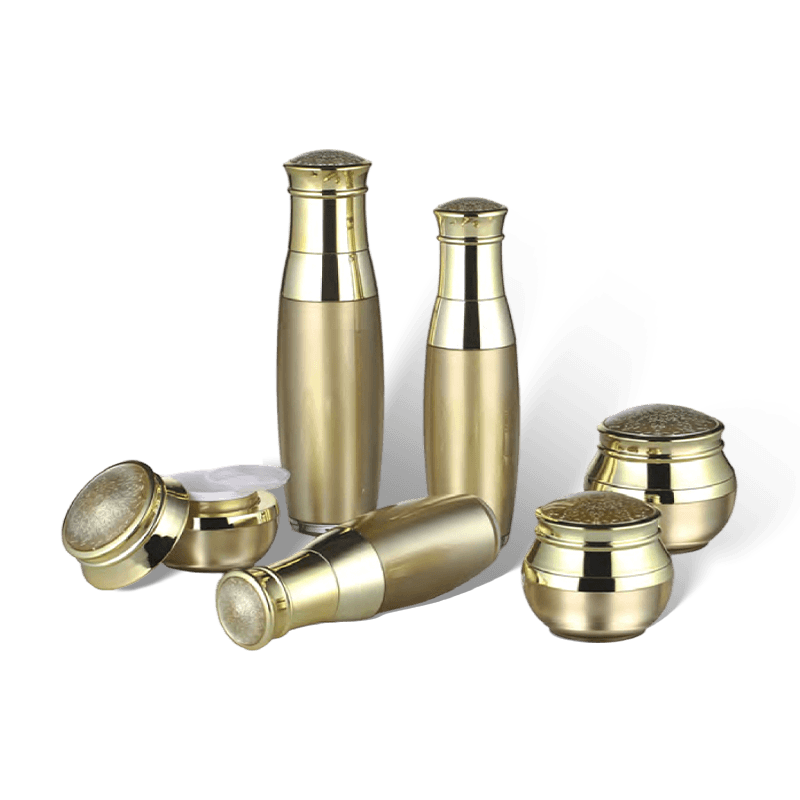 DP-A-021 50g/30g/20g Skin Whitening Cream Packaging Cosmetic Jars
-
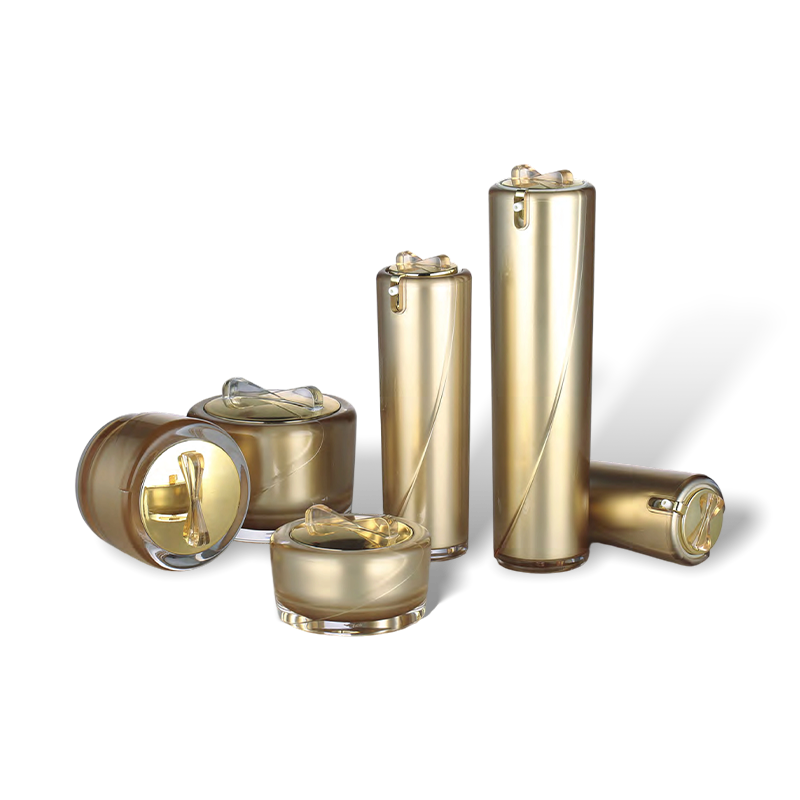 DP-A-020 120ml Green Acrylic Cream Bottle 50g Blue Acrylic Cosmetic Container 50ml Acrylic Jar and Bottles
- +86 13968274500
- +86 13764345885
- ysgl@vip.163.com
- No. 10-18, Gaoxiakeng, Dongputou Village, Zhangqi Town