English
 中文简体
 Français
 Español
 عربى



Blueberry-Shaped Luxury Cosmetic Packaging for Distinctive Skincare Brands
In the competitive skincare market, packaging is no longer limited to protecting a formula. It is an important part of the product experience, a visual expression of brand positioning, and a powerful tool for attracting attention in stores and on social media. The round blueberry-shaped empty plastic face cream container combines distinctive fruit-inspired design with practical cosmetic packaging performance, giving skincare brands a memorable way to present creams, eye treatments, lip masks, exfoliating products, and other beauty formulas.
Designed with a deep blue-purple appearance and a carefully shaped blueberry calyx cap, this packaging creates an immediate association with freshness, botanical ingredients, antioxidant care, and natural beauty. Its rounded body is visually friendly and comfortable to hold, while the recessed five-pointed calyx structure gives the cap a recognizable silhouette that separates it from ordinary round jars and conventional cosmetic containers.
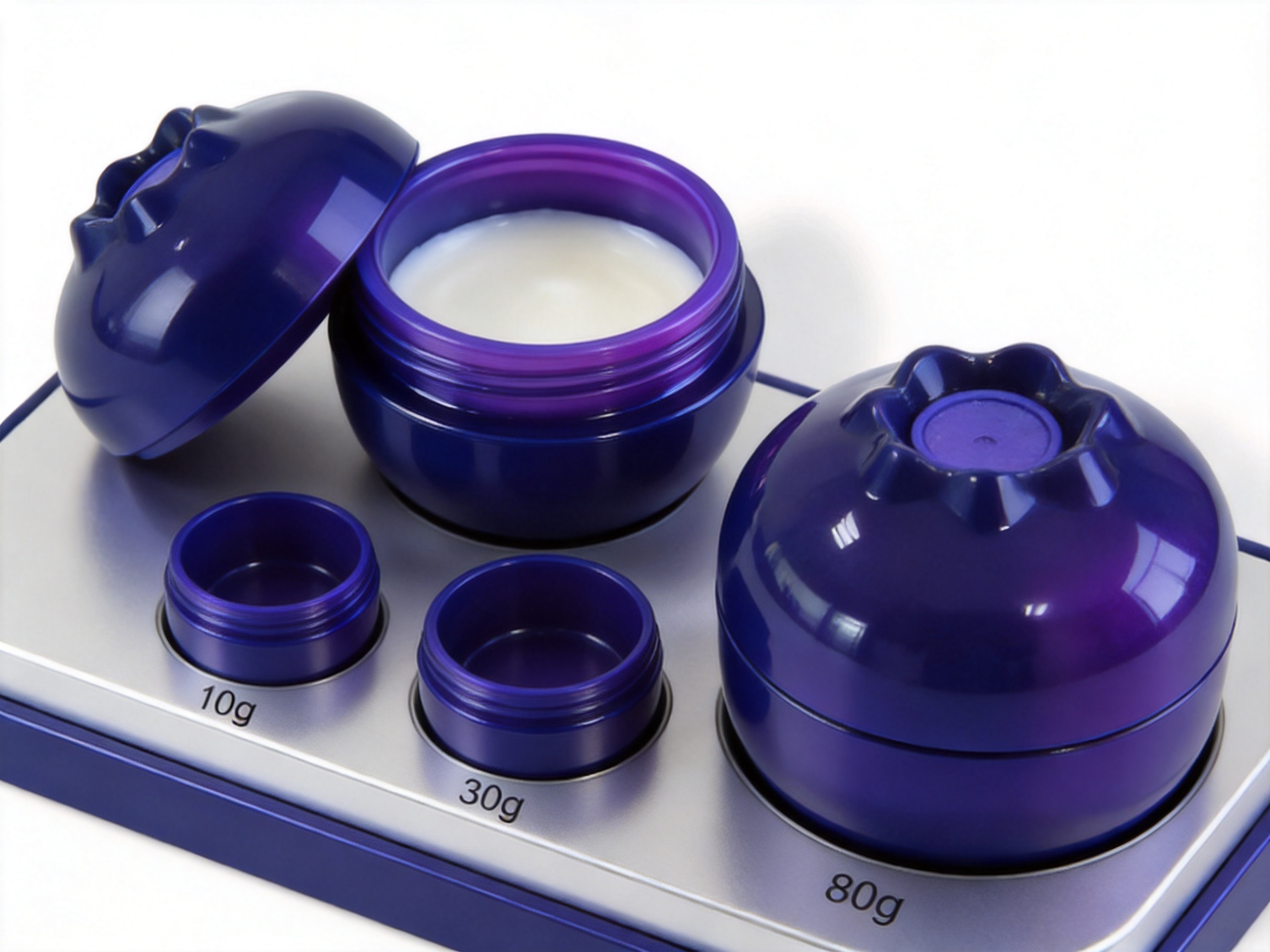
The container is available in several volume options, including 10g, 30g, and 80g formats. This range enables brands to build a coordinated product family, from compact eye creams and travel-size treatments to larger body care products and exfoliating scrubs. Combined with customized decoration options, multiple color choices, and manufacturer-supported development services, the blueberry-inspired jar offers a flexible foundation for luxury cosmetic packaging and skincare packaging programs.
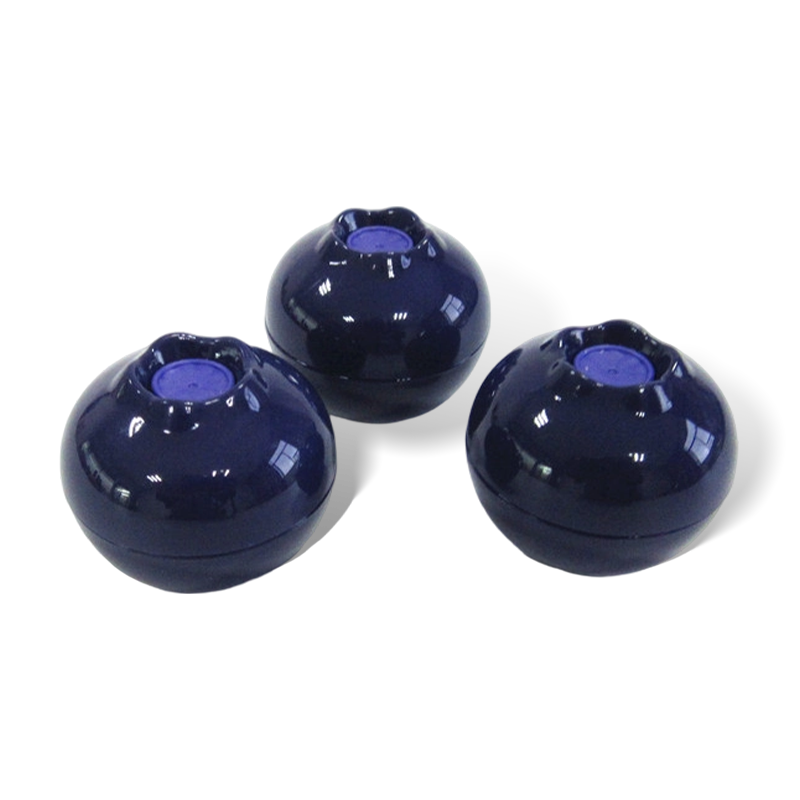
round blueberry-shaped empty plastic face cream 10ml cosmetic containers
A Distinctive Product Concept for Modern Skincare
The blueberry-shaped cosmetic jar was created for brands that want to move beyond ordinary packaging silhouettes. Many face cream containers use simple cylindrical, square, or spherical forms. Although these shapes can be practical, they may be difficult to distinguish in a crowded retail environment. A fruit-shaped container provides a more immediate visual identity and can help a new skincare product communicate its concept before the consumer reads the label.
The design takes inspiration from the natural structure of a ripe blueberry. The body is rounded and full, while the cap incorporates a recessed calyx pattern that echoes the star-shaped crown found at the top of the fruit. This combination produces an attractive biomimetic appearance without sacrificing the familiar functionality of a twist-open cream jar.
For skincare brands, the design can support a variety of positioning strategies. A blueberry visual may suggest antioxidant protection, botanical extracts, freshness, hydration, or a nature-inspired formulation. It can also be used for playful Korean-style beauty collections, premium limited editions, seasonal gift sets, or social-media-oriented product launches. The packaging therefore has value not only as a container but also as a visual communication tool.
The compact 10g format is especially suitable for highly concentrated products. It may be used for eye creams, overnight masks, lip masks, balm-like treatments, sample programs, or travel collections. The 30g version provides a practical size for facial moisturizers, sleeping masks, and targeted treatment creams. The 80g format can support larger applications, such as body creams, scrub products, or generous-use skincare formulas.
1:1 Simulated Blueberry Calyx Structure
The calyx-shaped cap is one of the product’s most important differentiating features. Instead of using a flat lid or a generic rounded closure, the cap has a carefully sculpted five-pointed recessed structure inspired by the natural crown of a blueberry. This feature gives the jar an instantly recognizable profile and reinforces the fruit-based concept from every viewing angle.
The recessed structure contributes to visual depth. Light reflects across the raised and lowered sections of the cap, creating subtle highlights and shadows that make the surface appear more dimensional. When paired with a deep sapphire blue or blue-purple finish, the calyx detail resembles the natural texture and visual richness of a berry peel.
The design also has a functional benefit. The layered recesses provide additional contact points for the fingertips when the user twists the cap. This can improve grip compared with a completely smooth round lid. The result is a closer relationship between appearance and usability: the same feature that makes the package distinctive can also support a comfortable opening experience.
Many decorative cosmetic containers focus heavily on visual novelty, but novelty alone does not guarantee good daily use. A product that is difficult to hold or open may create frustration, especially when consumers are using it with wet hands or after applying other skincare products. The calyx-inspired cap addresses this concern by creating a textured visual and tactile zone while preserving the basic convenience of a screw-style cream jar.
For brands, this design detail can become a central part of product storytelling. Marketing teams may describe the calyx as a symbol of natural origin, a crown of botanical care, or a visual representation of the fruit-inspired formula. Such storytelling can strengthen the relationship between the package, the product name, and the ingredients highlighted in promotional materials.
Deep Sapphire Blue Mirror Finish
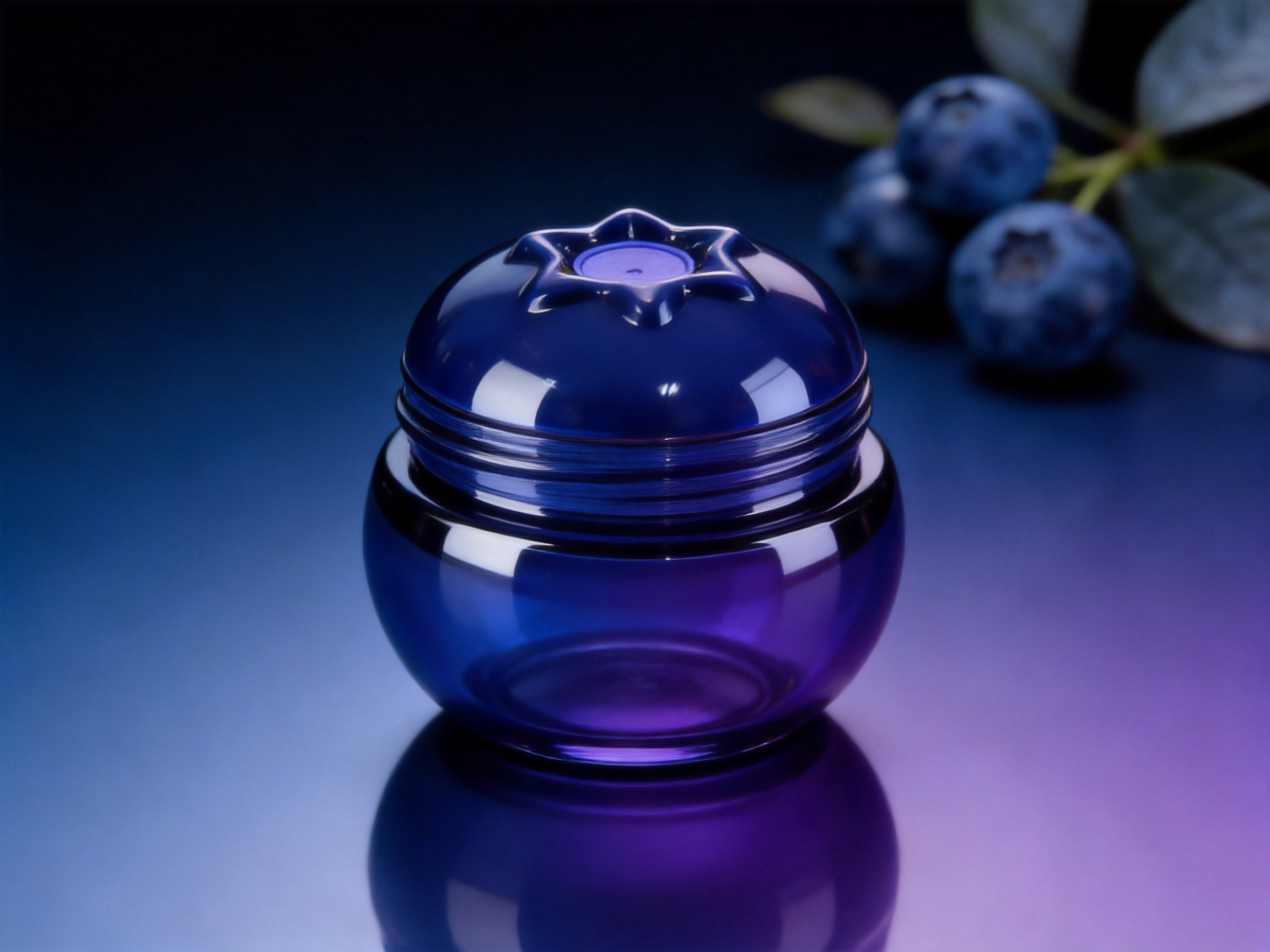
Color plays a major role in cosmetic packaging. It influences first impressions, supports product categorization, and helps consumers form expectations about a formula. The blueberry-shaped jar uses a highly saturated deep blue-purple tone with a high-gloss finish. The resulting appearance is rich, polished, and visually similar to the lustrous surface of a ripe berry.
The dark sapphire appearance can support premium skincare positioning. Deep blue is frequently associated with night care, advanced treatment, hydration, science, and calmness. Purple-blue tones may additionally suggest rarity, luxury, botanical richness, and concentrated performance. These associations make the package appropriate for facial creams, eye treatments, sleeping masks, and other products that require a more elevated visual identity.
The mirror-like gloss increases the intensity of the color. Instead of appearing flat or utilitarian, the container reflects surrounding light and creates a smooth, jewel-like effect. This can be particularly effective in product photography, e-commerce listings, beauty videos, and retail displays. A glossy curved surface can capture highlights that make the package appear more dimensional and visually premium.
The color is also adaptable. While deep blueberry blue is the signature appearance, brands can explore other shades through supported customization programs. Potential directions include light purple, pearlescent blue, soft lavender, translucent effects, or other coordinated colors selected to match a brand’s visual system. A collection may use one color for the hero product and complementary shades for related formulas.
Color customization provides an opportunity to separate product lines without changing the basic mold structure. For brands managing multiple formulas, the same blueberry-inspired shape can be used as a recognizable family design, while different colors identify day cream, night cream, eye cream, body care, or limited-edition products. This approach can improve shelf coordination and reduce the need to develop an entirely new container shape for every product.
Protection and Practical Packaging Performance
Cosmetic packaging must balance appearance with protection. A visually attractive jar is only successful when it also helps preserve the condition of the product during storage, transportation, and normal use. The blueberry-shaped container uses an ABS-grade outer shell and a chemically stable inner liner to provide a practical structure for skincare applications.
The dark exterior offers a light-shielding advantage compared with transparent packaging. Light-sensitive formulas may be affected by prolonged exposure to ultraviolet and visible light, depending on their ingredients and formulation design. By reducing direct light penetration, a dark container can contribute to a more protective packaging system. Brands should still evaluate formula compatibility, filling conditions, and product stability through appropriate testing, but the opaque color is a useful starting point for products requiring additional light protection.
The inner liner provides a separate contact surface for the cosmetic formula. This construction can support the development of a stable packaging system while allowing the exterior to focus on shape, color, decoration, and brand presentation. The precise compatibility requirements will depend on the formula, including its oils, solvents, active ingredients, preservatives, fragrances, and viscosity. For this reason, packaging samples should be tested with the intended formula before commercial production.
The jar format is well suited to creams and semi-solid products that consumers dispense with a fingertip or cosmetic spatula. It offers a broad opening compared with many narrow-neck bottles, making it easier to access thicker textures. It can also support the presentation of rich creams, sleeping masks, cleansing balms, body butters, scrubs, and other products that may not flow easily through a pump or dropper.
Packaging performance includes more than the container itself. Closure fit, liner design, filling method, sealing requirements, decoration durability, transportation conditions, and storage temperature should all be considered during project development. A professional packaging manufacturer can assist brands in evaluating these factors and selecting a suitable configuration for the intended product.
Multiple Sizes for a Complete Product Range
The availability of 10g, 30g, and 80g options makes the container suitable for several market segments and product applications. A brand does not need to limit the blueberry concept to one product size. Instead, the sizes can form a coordinated packaging family with a consistent visual language.
| Size | Recommended Applications | Commercial Positioning | Key Advantages |
|---|---|---|---|
| 10g | Eye creams, lip masks, concentrated treatments, travel products, samples | Portable, targeted, premium trial or specialty care | Compact appearance, convenient for gifting and travel, suitable for high-value formulas |
| 30g | Face creams, sleeping masks, intensive moisturizers, treatment products | Core facial skincare and boutique beauty collections | Balanced capacity, strong shelf presence, suitable for regular use |
| 80g | Body creams, exfoliating scrubs, larger masks, generous-use treatments | Extended-use skincare and body care | Higher capacity, suitable for frequent application, supports a complete range |
The 10g format may be particularly effective for brands launching concentrated or premium treatments. Eye creams and lip masks often use smaller containers because they are applied to targeted areas and sold in relatively low quantities. A compact blueberry-shaped package can make these products feel special and collectible, while also supporting sample distribution, travel kits, and gift-with-purchase programs.
The 30g format provides a familiar balance between portability and regular use. It can accommodate a daily facial moisturizer, a night cream, or a treatment mask without becoming visually oversized. For emerging brands, this size can serve as the central product format in an initial launch, with the smaller and larger options added later as the line expands.
The 80g format creates an opportunity to extend the design into body care. Body creams and exfoliating scrubs often require larger quantities per application, so a higher-capacity container can be more convenient for consumers. A coordinated 80g jar can also help a brand create a complete routine that connects facial care with body care.
Using one recognizable form across several sizes may provide advantages in product development and visual merchandising. Consumers can quickly identify products as belonging to the same collection, while the size difference communicates the intended usage. The overall result is a coherent product architecture that can support cross-selling and repeat purchases.
Advantages Compared with Ordinary Cosmetic Jars
Standard cosmetic jars continue to have an important place in the beauty market, but they often provide limited differentiation. A basic cylindrical jar may be easy to manufacture and decorate, yet it may look similar to many competing products. The blueberry-shaped container offers several advantages for brands seeking a more distinctive market presence.
First, the fruit-inspired silhouette creates stronger instant recognition. Consumers can identify the general product concept from the shape even when the container is viewed from a distance. This can be valuable in retail displays, beauty subscription boxes, online product thumbnails, and short-form social media content.
Second, the calyx cap adds an owned visual detail. A logo or printed label can be copied or overlooked, but a distinctive structural feature is more strongly connected to the product itself. The five-pointed recessed crown gives the container a signature element that can become part of a brand’s packaging identity.
Third, the deep blue-purple color offers a premium alternative to common white, clear, or plain pastel jars. The saturated gloss can make the product look more luxurious while supporting themes such as antioxidant care, deep nourishment, botanical treatment, and night repair.
Fourth, the rounded form is suitable for tactile interaction. Consumers may enjoy holding and turning a container that feels different from a standard industrial cylinder. Tactile appeal is increasingly important in beauty packaging because the opening and application process forms part of the overall product ritual.
Fifth, the range of sizes supports both product breadth and commercial flexibility. Brands can introduce a small treatment jar, a standard facial product, and a larger body care version while maintaining a unified appearance. This is more efficient than designing unrelated packaging for every item in the collection.
Finally, customization options allow the jar to be adapted to different brand strategies. Hot stamping, silver silkscreen printing, and laser engraving can add brand names, product information, decorative motifs, or minimal visual elements. These options help transform a stock-inspired container into a more specific brand asset.
Customization for Luxury Cosmetic Packaging
Luxury packaging is defined by more than an expensive appearance. It depends on the relationship between shape, color, surface treatment, decoration, usability, and consistency. The blueberry container provides several routes for customization so that brands can create a final package aligned with their positioning and target market.
Logo Hot Stamping
Hot stamping can add a reflective metallic logo or text to the curved surface. Gold, silver, and other metallic effects may be selected according to the brand’s visual identity. A small metallic logo placed on the front can create a restrained premium appearance, while larger decorative elements can produce a more expressive limited-edition design.
Hot stamping is particularly effective against a deep blue or purple background. The contrast between the dark glossy surface and the metallic decoration can create a jewel-like result. It may be used for a brand mark, product name, collection name, or a short botanical message.
Silver Silkscreen Printing
Silver silkscreen printing offers a clean and controlled way to apply text, line art, ingredient references, or fruit motifs. It can be used for a minimalist appearance when the brand wants to preserve the curved shape as the dominant visual feature. Fine silver graphics may also create a modern, laboratory-inspired look that complements advanced skincare positioning.
Silkscreen printing is useful for product information that must remain legible without overwhelming the package. Depending on the artwork and surface requirements, brands can develop simple typography, delicate botanical illustrations, or a pattern that wraps around the container.
Laser Engraving
Laser engraving can create a more understated and tactile decoration. Instead of adding an external color layer, it marks the surface with precision and can produce a refined, permanent-looking effect. This approach may be appropriate for premium collections, special gifts, or products that use minimalist packaging.
Decoration selection should be evaluated with the final color, surface gloss, logo size, artwork complexity, and production quantity in mind. A manufacturer with in-house technical capabilities can help determine which process will provide the best balance of appearance, durability, and cost.
Supporting Korean-Style and Social-Media-Friendly Beauty Concepts
Creative fruit packaging has become increasingly visible in modern beauty culture. Consumers often respond to products that are visually distinctive, easy to recognize, and attractive in photographs. The blueberry-shaped jar is well suited to Korean-style skincare concepts that combine playful forms with polished finishes and carefully considered product rituals.
The design can be presented as a fresh botanical treatment, a berry antioxidant collection, a night repair range, or a playful mask series. Its shape is sufficiently expressive to create interest, yet the deep color and glossy surface keep the appearance sophisticated rather than childish. This balance can help brands appeal to consumers who want beauty products that are both effective and visually enjoyable.
Social media content can benefit from recognizable packaging. A product that looks different in an unboxing video, shelf arrangement, or beauty routine image has a greater chance of being noticed and remembered. The rounded fruit form can become a recurring visual element in brand photography, campaign graphics, influencer content, and seasonal displays.
The container may also support collectible strategies. A brand could release multiple fruit-inspired colors or use the blueberry jar as one member of a larger botanical series. Consumers may be encouraged to collect different treatments, while the consistent structural language makes the group look unified when displayed together.
Although visual appeal is important, the product should not rely on appearance alone. The formula, claims, user experience, and compliance documentation must support the positioning communicated by the package. The strongest launch combines a distinctive container with credible product performance and clear consumer information.
Manufacturing Capabilities and Integrated Production
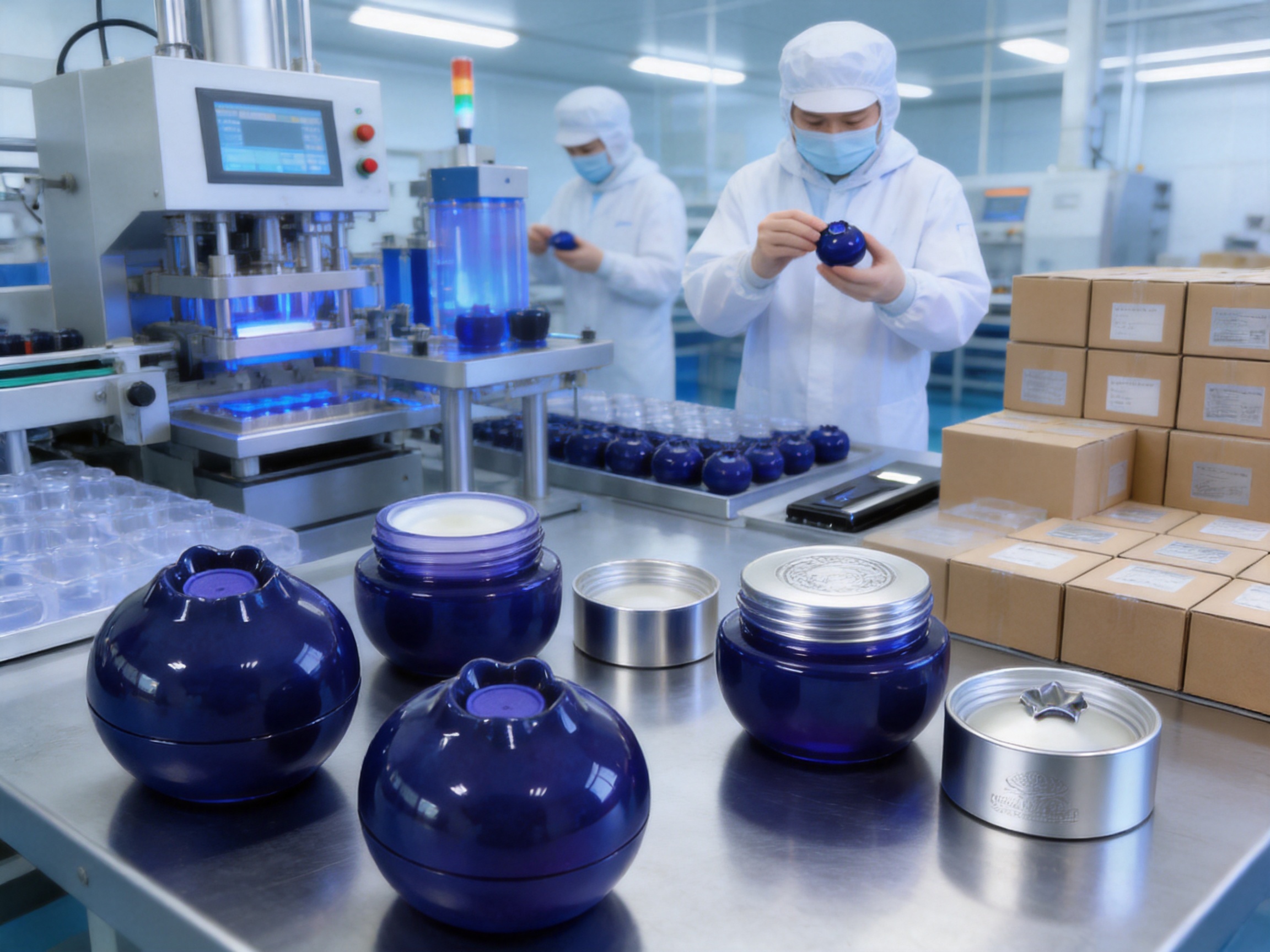
A packaging concept becomes commercially valuable when it can be produced consistently and supported throughout development. DEPRAG Plastic Products Co., Ltd. provides design and manufacturing services for cosmetic, pharmaceutical, daily chemical, and other plastic packaging applications. Its capabilities cover multiple stages of the production process, allowing customers to work with one experienced supplier from early development through finished goods.
The company’s integrated process includes product research and development, structural design, mold manufacturing, plastic injection molding, blow molding, gilding and printing, UV coating, product testing, and warehousing. This broad technical scope can improve communication between departments because product structure, decoration, and production requirements are considered together rather than in isolation.
For a specialized shape such as a blueberry-inspired jar, mold development is particularly important. The five-pointed calyx, rounded body, cap fit, liner arrangement, and decoration area must work together within the limitations of plastic processing. Experienced mold engineering helps maintain consistent dimensions and reproduce the intended details across production batches.
Injection molding enables the production of carefully defined plastic components with repeatable geometry. The outer shell and related parts can be developed according to the required appearance, wall structure, closure design, and manufacturing conditions. Process control is essential for achieving stable color, smooth surfaces, accurate assembly, and consistent cap performance.
Surface finishing also contributes to the final result. UV coating and related treatments may be used to support a high-gloss appearance and help achieve the desired visual effect. Printing and gilding services allow the manufacturer to coordinate decoration with the molded component, reducing the complexity of managing multiple external suppliers.
Product testing and inspection are important parts of a professional packaging program. Depending on the project, evaluations may include dimensional checks, appearance inspection, closure fit, decoration adhesion, assembly performance, and compatibility-related testing. Specific testing requirements should be discussed according to the formula, filling method, distribution conditions, and target market.
Research, Development, and Technical Support
Packaging development often involves more than selecting an existing item from a catalog. A brand may require a special color, a different volume, a customized logo, a new closure detail, or a coordinated set of components. An experienced research and development team can help translate these goals into a practical manufacturing plan.
Technical support may begin with product selection and application analysis. The manufacturer can review whether the intended formula is appropriate for a jar, whether the selected size provides enough headspace, whether the decoration area is suitable for the artwork, and whether the closure system meets the desired user experience. These early discussions can reduce avoidable changes later in the project.
When a custom mold is needed, the development process may include design drawings, three-dimensional modeling, prototype review, mold construction, trial production, and sample approval. Each stage provides an opportunity to assess the visual accuracy, ergonomic performance, and manufacturability of the container.
For brands entering a new market, technical support can also help with packaging coordination. A manufacturer that understands injection molding, finishing, printing, testing, and warehousing can provide practical guidance on production scheduling, packaging protection, batch consistency, and delivery preparation.
DEPRAG’s location in Cixi, China, places its operations within a developed plastic manufacturing area. The company is near the Hangzhou Bay Bridge and within convenient driving distance of Ningbo’s Beilun deep-water port and Hangzhou Xiaoshan International Airport. This transportation environment can support domestic and international logistics planning, particularly for customers ordering wholesale cosmetic packaging.
Quality, Consistency, and Production Reliability
For cosmetic brands, packaging consistency is essential. A color variation, uneven gloss level, misaligned logo, or inconsistent cap fit can affect the perceived quality of the finished product. This is especially important for luxury skincare, where consumers often expect a high level of visual and tactile refinement.
The blueberry container requires attention to several quality points. The rounded body should maintain a smooth and attractive surface. The deep blue-purple color should be controlled across production batches. The calyx detail should remain clear and symmetrical. The cap should align properly with the jar, and the opening action should feel stable and convenient.
Decoration must also be evaluated for position, clarity, and adhesion. A curved surface presents different challenges from a flat carton or label, so artwork should be developed with the container geometry in mind. Logo size, line thickness, print area, and metallic contrast can all influence the final appearance.
Production reliability is strengthened when research, mold making, molding, finishing, testing, and warehousing are managed through a coordinated system. This does not eliminate the need for customer approval and incoming inspection, but it can make project communication more direct and reduce the risk of mismatched specifications between suppliers.
Brands should establish clear quality standards before mass production. These standards may include acceptable color tolerance, surface appearance, decoration position, cap torque, component fit, packaging quantity, carton requirements, and sampling procedures. Clear documentation helps both the buyer and manufacturer evaluate the same criteria.
Applications Across Skincare and Beauty Categories
The blueberry-shaped jar is not restricted to one type of facial cream. Its broad opening and multiple capacities allow it to serve various skincare and beauty applications.
Face Creams
The 30g size can be used for daily moisturizers, intensive repair creams, brightening products, nourishing night creams, and other facial treatments. The premium color and fruit silhouette can help a new product stand out in a crowded facial skincare category.
Eye Creams
The 10g option is appropriate for targeted eye care. Its compact size supports the perception of a concentrated product and can be included in travel kits or premium routines. The dark exterior may also be suitable for formulas that benefit from reduced light exposure, subject to formula and stability evaluation.
Lip Masks
A small blueberry-shaped jar can create an attractive presentation for overnight lip masks, nourishing balms, and conditioning treatments. The distinctive format may encourage consumers to keep the product visible on a vanity rather than storing it away, supporting repeated use and brand visibility.
Sleeping Masks
Sleeping masks often use rich, gel-like, or cream-based textures that are suitable for a broad-mouth jar. The deep blue appearance can reinforce nighttime positioning, while the rounded body creates a comfortable and visually appealing container for an evening ritual.
Body Creams
The 80g size extends the packaging into body care. A coordinated body cream can connect a facial skincare range with a broader self-care collection. The blueberry concept may be used for berry-inspired fragrances, nourishing body treatments, or botanical moisturizing products.
Exfoliating Scrubs
Exfoliating scrubs commonly require a wide opening because the formula may contain particles or have a thick consistency. The larger container can provide convenient access while giving the product a premium appearance suitable for spa-inspired or fruit-themed body care lines.
Brand Storytelling Through Form and Color
Packaging helps consumers understand a product quickly. The blueberry form, calyx detail, and deep blue-purple finish work together to communicate a story of freshness, nature, and concentrated care. A brand can build on this story through naming, copywriting, ingredient imagery, and campaign design.
The calyx can symbolize the connection between the plant and the finished product. The rich color can represent the density of botanical pigments or the depth of a restorative treatment. The rounded shape can suggest fullness, nourishment, and a complete skincare ritual. These associations are not substitutes for product claims, but they can make the brand message more coherent and memorable.
Luxury packaging benefits from restraint as well as decoration. Because the jar already has a highly recognizable shape, a brand may choose a small logo and minimal text. Alternatively, the surface can support more elaborate botanical illustrations or a metallic pattern. The best approach depends on the formula, consumer profile, retail channel, and desired price positioning.
The packaging can also support seasonal campaigns. A deep blueberry shade may work well for winter skincare, nighttime collections, holiday gift sets, or limited-edition antioxidant programs. Lighter blue and lavender versions could be introduced for spring or summer products while maintaining the same recognizable silhouette.
Wholesale and OEM Development Opportunities
Wholesale buyers and private-label skincare companies often need packaging that can be adapted to different product concepts. The blueberry jar provides a strong base for OEM and brand-specific projects because the core form is distinctive while the surface can be customized through color and decoration.
A company may order a standard size with customized printing for a faster market launch. Another brand may request a coordinated set of colors, metallic decoration, and different volumes for a complete collection. Brands with more specific requirements may discuss custom molds, unique surface effects, or related components that complement the blueberry theme.
Direct manufacturer cooperation can offer advantages in pricing communication, production scheduling, technical consultation, and quality coordination. By working directly with the producer, customers may receive clearer information about available materials, decoration methods, minimum order expectations, sampling procedures, and production lead times.
Competitive wholesale pricing is especially important for emerging beauty companies. Packaging must create a premium impression without making the final product inaccessible to the target consumer. A manufacturer with established equipment and standardized processes can help balance visual impact with production efficiency.
Multi-color customization can also support market segmentation. A company may use deep sapphire blue for a flagship anti-aging product, light purple for a soothing cream, pearlescent blue for a premium mask, and a coordinated neutral shade for a body product. The consistent shape preserves brand recognition while the colors distinguish different functions.
Recommended Development Process for Brands
A successful packaging project should begin with a clear product brief. The brief should identify the formula type, target capacity, intended market, product positioning, decoration requirements, expected order quantity, and distribution conditions. These details help the manufacturer recommend an appropriate container configuration.
The next step is sample evaluation. Brands should inspect the physical sample for appearance, color, shape, opening experience, size, and overall suitability. The intended formula should be filled into the package for compatibility and stability assessment. Testing with the actual product is more reliable than evaluating the empty container alone.
Artwork should be prepared after the decoration area and production method are confirmed. The brand should review logo proportions, text readability, artwork positioning, metallic effects, and color contrast. For curved containers, a two-dimensional design may appear differently once applied to the surface, so decorated samples are valuable for approval.
Before mass production, both parties should confirm technical specifications and quality standards. This may include the approved color sample, decoration reference, component drawings, packing method, inspection criteria, and delivery requirements. Written approval helps protect consistency throughout the order.
After production, finished goods should be stored and transported in a way that protects the glossy surface and decorative areas. Carton design, internal separators, stacking conditions, and handling procedures should be considered, especially when the package has a curved shape or delicate finish.
Q&A: Blueberry-Shaped Cosmetic Packaging
What is the main advantage of this blueberry-shaped cosmetic container?
Its main advantage is the combination of a distinctive fruit-inspired silhouette and practical cream-jar functionality. The blueberry calyx cap creates strong visual recognition, while the rounded body and twist-open format remain suitable for daily skincare use.
Which product sizes are available?
The listed volume options are 10g, 30g, and 80g. The 10g size is suitable for targeted treatments and travel products, the 30g size works well for facial creams and masks, and the 80g size is appropriate for body creams, scrubs, and other products requiring a larger quantity.
Can the color be customized?
Yes. The signature appearance is a deep sapphire blue or blue-purple gloss, while additional colors such as light purple and pearlescent blue may be discussed for brand-specific projects. Final color availability should be confirmed according to the production requirements and order details.
What decoration options are supported?
Available decoration directions include logo hot stamping, silver silkscreen printing, and laser engraving. These methods can be used for brand names, product titles, botanical graphics, minimalist text, and other approved artwork.
Is the container suitable for sensitive skincare formulas?
The package uses an ABS-grade outer shell and a chemically stable inner liner, but suitability depends on the specific formula. Brands should conduct compatibility, stability, and packaging performance testing with the intended product before commercial filling.
Can the jar be used for body care products?
Yes. The 80g version can be considered for body creams, exfoliating scrubs, masks, and other larger-volume treatments. The final application should be evaluated according to formula viscosity, particle content, filling process, and consumer usage requirements.
Does the dark color provide product protection?
The dark exterior can help reduce exposure to light compared with transparent packaging. However, the required level of protection depends on the formula and its sensitivity. Product stability testing remains necessary to confirm the complete packaging system.
Is this packaging suitable for private-label brands?
Yes. The container can support OEM and private-label projects through custom colors, decoration, and potentially customized development. Brands can use the standard form for a faster launch or discuss additional requirements with the manufacturer.
What manufacturing services are available?
The manufacturer provides services covering product research and development, design, mold manufacturing, plastic injection molding, blow molding, gilding and printing, UV coating, product testing, and warehousing. This integrated capability supports projects from concept development through finished packaging.
How should a brand begin a packaging project?
The brand should prepare a product brief containing the formula type, target size, decoration requirements, estimated quantity, and intended market. It should then request samples, test the formula in the container, approve the artwork and specifications, and confirm production and quality requirements before mass manufacturing.
Why Choose an Integrated Cosmetic Packaging Manufacturer?
An integrated manufacturer can provide more than a container. It can offer development advice, technical coordination, mold expertise, decoration services, inspection, and warehousing support. This is valuable for brands that want to reduce supplier complexity and maintain consistent communication throughout a project.
DEPRAG Plastic Products Co., Ltd. specializes in the design and manufacture of containers for cosmetics, medicines, and other plastic products. Its experienced research and development team, modern standardized factories, advanced manufacturing equipment, and broad production capabilities create a foundation for both standard packaging and customized projects.
The company’s product range includes thousands of daily chemical packaging designs. Customers may select an existing design for a quicker development process or discuss customized molds for a more exclusive product. The ability to support both approaches gives brands flexibility according to budget, launch schedule, and market strategy.
Technical support is another important strength. Cosmetic packaging must coordinate material selection, mold design, color, decoration, closure performance, formula compatibility, and logistics. A manufacturer that understands these connected requirements can help customers make more informed decisions and avoid problems caused by treating each stage separately.
The company’s location in an established plastic industry area, combined with access to major transportation infrastructure, supports efficient movement of materials and finished products. Its proximity to Ningbo’s Beilun deep-water port and Hangzhou Xiaoshan International Airport is useful for domestic distribution and international export planning.
Conclusion
The round blueberry-shaped empty plastic face cream container offers a compelling combination of visual differentiation, tactile appeal, flexible sizing, and practical cosmetic packaging performance. Its five-pointed recessed calyx cap creates a signature form that ordinary jars cannot easily reproduce, while the deep sapphire blue mirror finish supports premium skincare positioning and strong product photography.
The 10g, 30g, and 80g options allow the design to serve targeted treatments, facial creams, masks, body creams, and exfoliating products. Dark coloration can provide a useful light-shielding characteristic, while the ABS-grade outer shell and stable inner liner create a structured packaging system that can be evaluated for different skincare formulas.
Customization through hot stamping, silver silkscreen printing, laser engraving, and color development gives brands the flexibility to create distinctive OEM and private-label products. The fruit-inspired appearance is especially appropriate for botanical, antioxidant, fresh, Korean-style, luxury, and social-media-friendly beauty concepts.
Supported by integrated research and development, mold manufacturing, injection molding, surface finishing, printing, testing, and warehousing capabilities, the product can move from creative concept to commercially prepared packaging through a coordinated manufacturing process. For brands seeking skincare packaging that is memorable, adaptable, and aligned with modern luxury beauty trends, the blueberry-shaped jar provides a distinctive platform for building a recognizable product range.
References
1. Cosmetic Packaging Design Principles: Form, Function, Decoration, and Consumer Experience.
2. Packaging Compatibility Evaluation for Creams, Masks, Balms, and Other Semi-Solid Cosmetic Formulas.
3. Plastic Injection Molding: Mold Design, Process Control, Surface Quality, and Dimensional Consistency.
4. Cosmetic Product Development Practices for Private-Label and OEM Beauty Brands.
5. Sustainable and Protective Packaging Considerations for Modern Skincare Products.
6. Consumer Psychology of Color, Shape, Tactile Interaction, and Premium Cosmetic Presentation.
7. Quality Inspection Guidelines for Cosmetic Containers, Closures, Printing, Coatings, and Decorative Finishes.
Product: round blueberry-shaped empty plastic face cream 10ml cosmetic containers

-
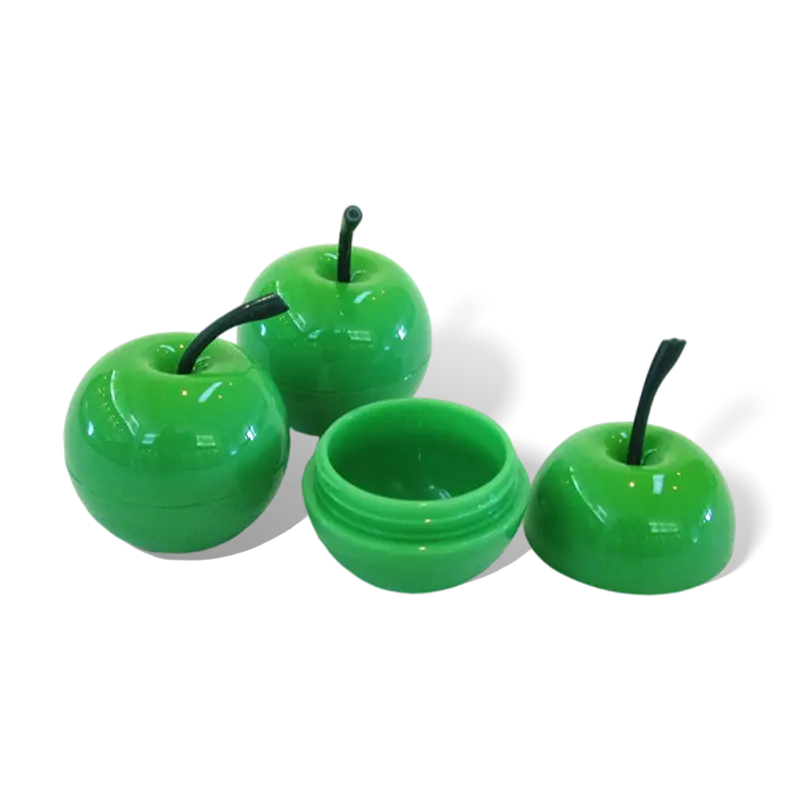 10g Luxury Creative Cherry-Shaped Face Cream Jar
-
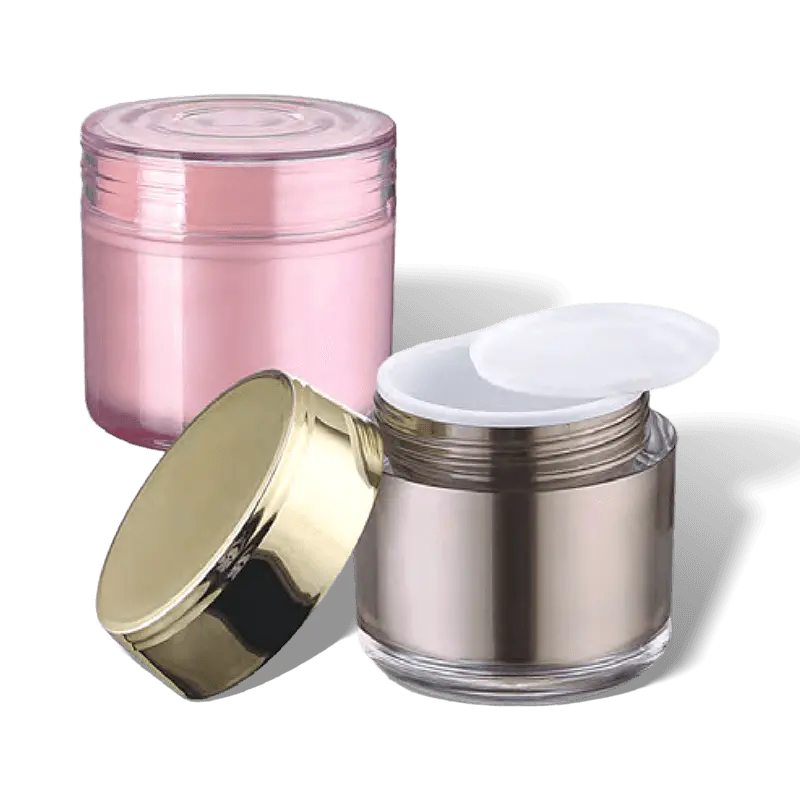 DP-A-009 Body Cream Jar 80ml Container 70ml Cosmetic Packaging Body Butter Plastic Jar
-
 Luxury glass perfume bottles 30ml/50ml/100ml/200ml
-
 Luxury 100ml Round Perfume Bottle
-
 DP-A-021 50g/30g/20g Skin Whitening Cream Packaging Cosmetic Jars
-
 DP-A-018 Acrylic jars for whitening and anti-aging cosmetic creams
- +86 13968274500
- +86 13764345885
- ysgl@vip.163.com
- No. 10-18, Gaoxiakeng, Dongputou Village, Zhangqi Town