English
 中文简体
 Français
 Español
 عربى



Luxury 180g Round Cream Jar for Professional Skincare Packaging
In the premium skincare market, packaging is more than a container. It is the first physical expression of a product’s identity, quality, and intended user experience. A well-designed cream jar must protect the formula, support hygienic application, communicate reliability, and create a refined visual impression on a retail shelf. The 180g empty round plastic cream jar is designed to meet these expectations through a combination of functional dispensing features, durable materials, clean styling, and flexible manufacturing capabilities.
Developed for skincare brands, contract manufacturers, beauty companies, and professional daily chemical product suppliers, this jar provides a practical packaging solution for face creams, body creams, moisturizing formulas, repairing products, acne-care formulations, masks, balms, and other semi-solid cosmetic products. Its 180g capacity offers a useful balance between an attractive premium appearance and sufficient product volume for regular consumer use.
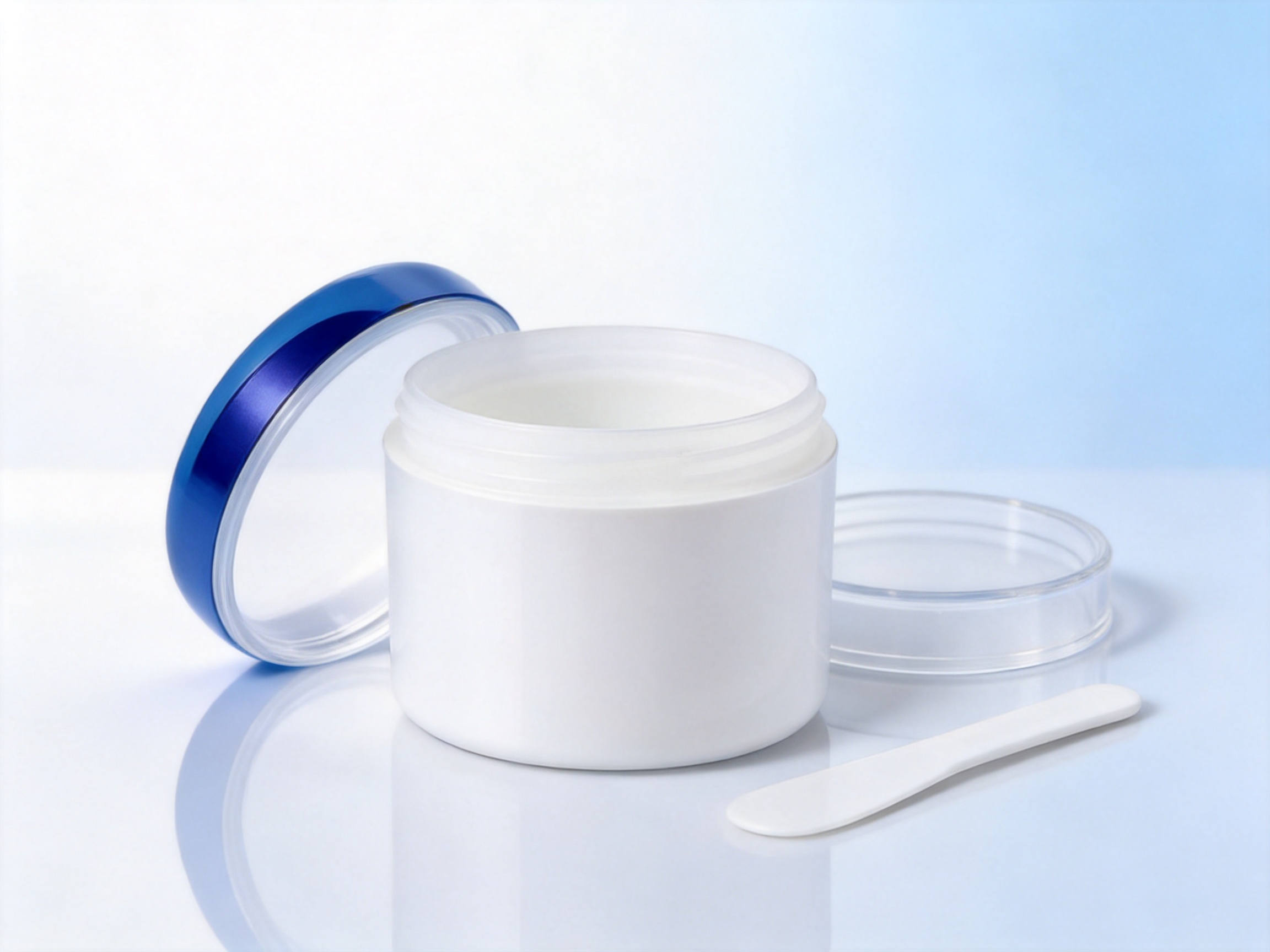
The design uses a classic cylindrical body with a porcelain-white appearance and a contrasting sapphire-blue cap detail. This visual language is intentionally direct. Instead of relying on excessive ornamentation, it presents an image of purity, efficiency, hygiene, and professional skincare. The result is a container that can support luxury cosmetic packaging programs while remaining suitable for clean, modern, and clinically inspired product lines.
The jar’s most distinctive advantage is its integrated dispensing solution. A highly transparent inner cap creates an additional protective barrier between the formula and the outer closure, while the dedicated spatula allows users to remove the cream without repeatedly placing their fingers into the container. This design helps reduce direct contact, supports a cleaner usage routine, and improves the perceived value of the finished product.
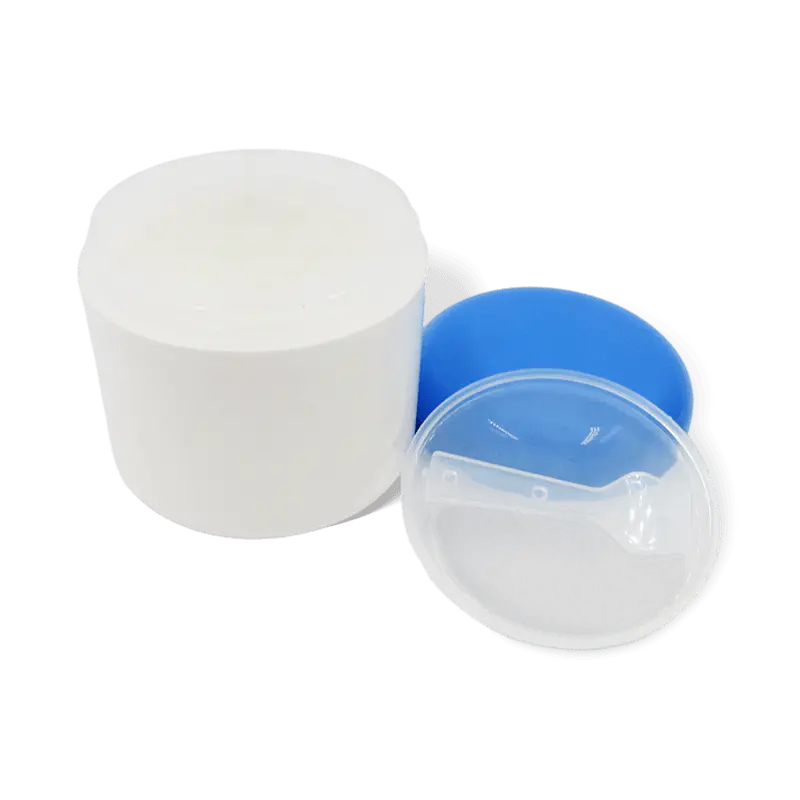
180g Empty round plastic cream jar
Product Overview and Market Positioning
The 180g empty round plastic cream jar belongs to the PP cosmetic packaging category and is designed for brands seeking a dependable container for medium-to-high-volume skincare products. Its dimensions and capacity make it suitable for products that require more than a small trial or travel quantity, while still maintaining a compact and elegant form for retail presentation.
The rounded cylindrical profile is familiar to consumers and easy for packaging designers to integrate into a coordinated product family. It can be used as a standalone cream container or combined with matching bottles, tubes, pumps, and jars in a broader skincare collection. The simple geometry also provides a practical surface for labeling, printing, coating, decoration, and brand communication.
From a product-development perspective, the jar occupies an important position between basic mass-market containers and highly decorated luxury packages. Its white-and-blue color concept conveys cleanliness and confidence, while its double-wall appearance and inner protective cap create a more sophisticated visual and tactile experience. Brands can therefore use it for products positioned around hydration, repair, sensitive skin, acne care, nourishment, anti-aging, or daily professional skincare.
The container is supplied empty, allowing customers to fill it with their own formulas and apply their own brand identity. This makes it suitable for original equipment manufacturing programs, private-label products, contract filling, salon brands, dermatological skincare concepts, hotel amenities, and retail cosmetic collections. Depending on the project requirements, the packaging can be evaluated for compatibility with a wide range of water-based, oil-based, emulsion, gel-cream, and balm-like products.
Key Product Specifications
| Item | Specification or Benefit |
|---|---|
| Product type | Empty round plastic cream jar |
| Nominal capacity | 180g |
| Packaging category | PP cosmetic packaging |
| Primary application | Face creams, body creams, masks, balms, moisturizers, repairing products, and other semi-solid cosmetics |
| Exterior style | Classic cylindrical body with a porcelain-white appearance |
| Cap design | Contrasting sapphire-blue arc detail |
| Inner protection | Highly transparent airtight inner cap |
| Application accessory | Dedicated dispensing spatula |
| Structural concept | Double-walled construction for a substantial appearance and improved insulation performance |
| Customization potential | Suitable for printing, coating, decoration, labeling, and coordinated packaging development |
These features give the product broad commercial potential. A brand can present it as a luxury skin care package, a professional salon jar, a clean beauty container, or a high-quality everyday skincare package depending on the formula, decoration, and visual identity applied to the finished product.
Clean Design with a Professional Skincare Message
Visual communication is particularly important in skincare packaging because consumers often associate appearance with product safety, formula quality, and brand expertise. The porcelain-white body creates a calm and hygienic base. White is commonly connected with purity, clinical care, softness, and transparency. It also provides a flexible background for logos, product names, ingredient claims, and regulatory information.
The sapphire-blue cap detail introduces contrast without making the container appear aggressive or overly decorative. Blue is frequently associated with freshness, trust, stability, and professional care. The arc-shaped element gives the lid a recognizable design feature while preserving the overall simplicity of the package. This combination helps the jar stand out from plain white containers without sacrificing a clean and refined appearance.
Compared with packaging that relies on metallic decoration, complex molded patterns, or heavy visual effects, this design is easier to position across multiple product categories. It can support a premium moisturizing cream, a repairing treatment, a blemish-care product, or a sensitive-skin formulation. The visual message remains adaptable because it focuses on cleanliness and performance rather than a narrow cosmetic theme.
The cylindrical form also contributes to a comfortable and familiar user experience. Consumers can hold the jar securely while opening or closing the cap, and the rounded profile avoids the sharp corners sometimes associated with rectangular containers. The broad top surface provides enough space for a visible closure design, while the body can be labeled or printed with a complete product identity.
For brands developing a product range, a consistent white-and-blue visual system can be extended to other packaging formats. Facial cleansers, toners, serums, lotions, and creams can share similar colors and decoration while using different container shapes. This helps create a unified shelf presence and makes the 180g jar an effective anchor package for a broader skincare series.
Integrated Dispensing and Hygienic Use
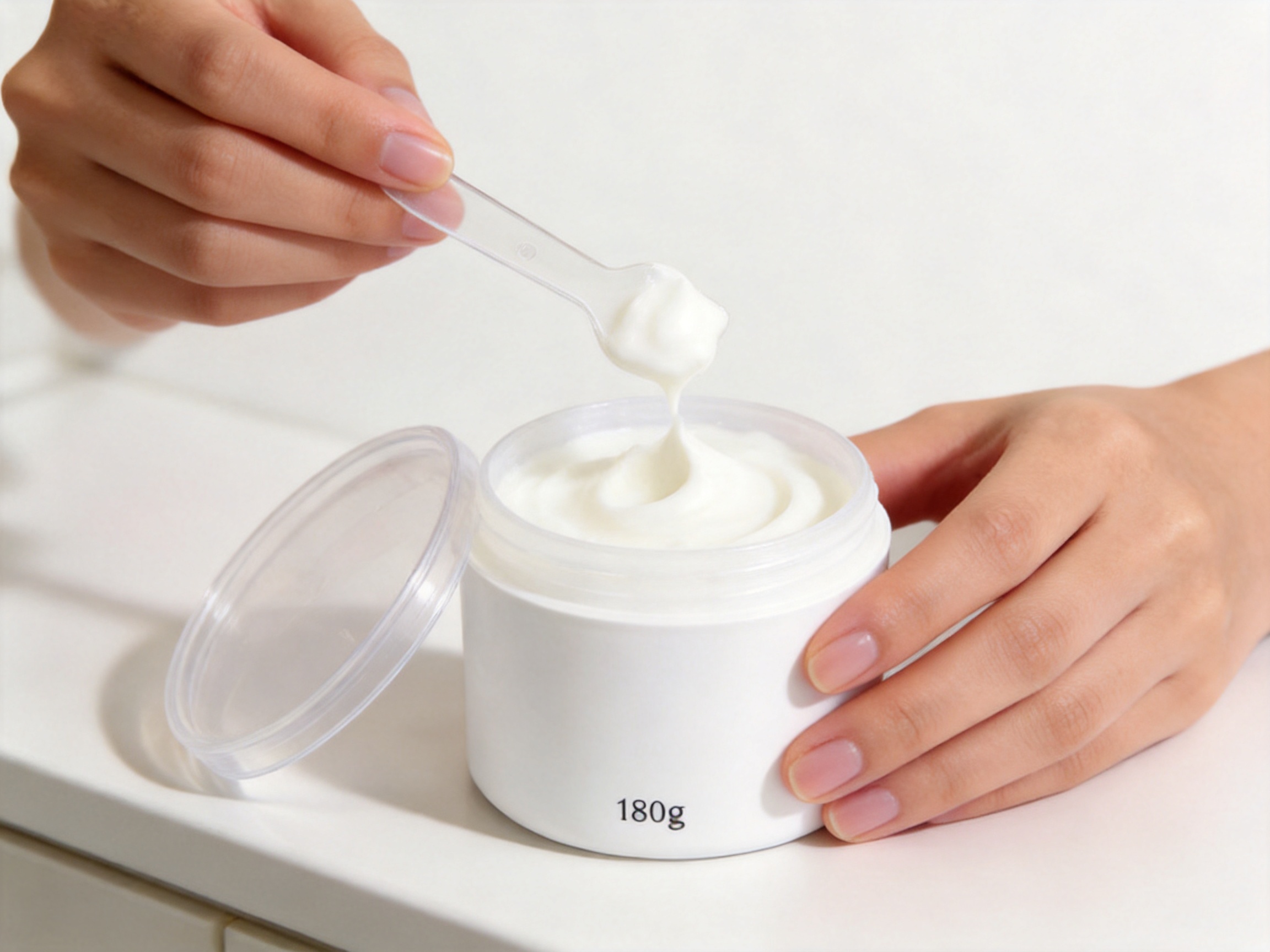
The main functional difference between this jar and a basic open-mouth cream container is the integrated dispensing solution. A highly transparent inner cap is positioned beneath the outer closure to create an additional barrier over the product. The dedicated spatula can then be used to transfer an appropriate amount of cream from the jar to the hand or directly to the application area, depending on the product instructions.
Direct finger contact is one of the common concerns associated with traditional cream jars. When users repeatedly insert their fingers into an open container, oils, moisture, dust, and other contaminants may be introduced into the formula. The amount of contamination depends on user habits, product composition, storage conditions, and the length of time the container remains open. A spatula-based dispensing routine helps reduce this unnecessary contact.
The inner cap also supports a more organized opening experience. Rather than exposing the formula immediately when the outer cap is removed, the user encounters a transparent protective layer. This additional component can help preserve a sense of cleanliness and order, which is particularly valuable for skincare products marketed around sensitive skin, repair, professional care, or high formula purity.
Although packaging alone cannot guarantee sterility, the design can contribute to improved hygiene during normal consumer use. This distinction is important for responsible product communication. Brands should validate the complete package, formula, filling process, and usage instructions before making specific preservation or microbiological claims. Nevertheless, the combination of an inner cap and spatula offers a clear practical advantage over a conventional jar with no dispensing accessory.
Benefits of the Spatula System
The dedicated spatula helps users take a controlled quantity of product, which can improve the consistency of each application. This is useful for rich creams, sleeping masks, concentrated treatments, and formulas where a small amount is sufficient. Controlled dispensing may also help reduce overuse and support a more predictable product life.
A separate applicator communicates attention to detail. When the spatula is integrated into the package concept or supplied as part of the product presentation, it can make the consumer experience feel more complete and premium. For luxury cosmetic packaging, small functional accessories often influence how users judge the overall product value.
The spatula can also be useful in professional environments such as beauty salons, spas, skincare clinics, and makeup studios. Staff can transfer the formula without repeatedly touching the contents, supporting a more disciplined service routine. In such settings, the accessory can be cleaned or replaced according to the operator’s hygiene procedures and the product manufacturer’s recommendations.
For brands, the dispensing solution is a strong selling point because it is easy to understand. Consumers can immediately see how the inner cap and spatula work together. This type of visible functionality is often more persuasive than a purely decorative feature because it addresses a practical concern during everyday use.
Material and Structural Advantages
The container combines a lightweight plastic construction with a substantial, premium-looking exterior. The supplied product information describes a high-quality acrylic-like texture and a double-walled structure, while the product category identifies it as PP cosmetic packaging. For a specific project, the final resin composition, component structure, and compatibility requirements should be confirmed with the manufacturer through technical documentation and sample approval.
The white exterior is designed to resemble the smooth visual quality of porcelain while retaining the practical advantages of modern plastic packaging. Compared with glass, plastic packaging can offer lower transportation weight, improved resistance to accidental impact, and greater flexibility in manufacturing. These characteristics are valuable for e-commerce shipping, international distribution, retail handling, and daily bathroom use.
A double-walled structure can give a container a thicker appearance and improve the hand feel without requiring the entire package to be made from a solid heavy material. It may also provide a degree of insulation against rapid external temperature changes. The actual protection offered depends on wall thickness, material selection, closure performance, filling temperature, storage conditions, and the thermal sensitivity of the formula. Product compatibility and performance testing should therefore be completed before commercial launch.
Plastic also provides broad decoration possibilities. Depending on the selected production process and surface treatment, the jar can be customized through screen printing, hot stamping, spray coating, UV coating, labeling, or other approved decoration technologies. This enables brands to create a matte, glossy, frosted, metallic, colored, or minimalist finish while retaining the basic cylindrical form.
The smooth exterior is especially suitable for clean branding systems. A logo can be printed prominently on the front, while product information can be applied to the side or bottom. A secondary label may be used for ingredients, directions, batch information, and regulatory details. The final decoration should be evaluated for adhesion, abrasion resistance, chemical resistance, and long-term appearance under expected storage and handling conditions.
Comparison with Conventional Cream Jars
| Feature | 180g Round Plastic Cream Jar | Basic Single-Cavity Cream Jar |
|---|---|---|
| Hygiene-oriented design | Includes a transparent inner cap and dispensing spatula | Often relies on direct finger contact |
| Visual positioning | White-and-blue professional appearance suitable for premium skincare | May provide a more generic presentation |
| Hand feel | Double-wall concept creates a substantial, refined impression | May feel lighter or less substantial depending on construction |
| Application control | Spatula supports measured removal of product | Users commonly scoop product by hand |
| Brand flexibility | Suitable for modern, clinical, clean, and luxury product lines | May require additional decoration to achieve a premium identity |
| Transportation practicality | Plastic construction can reduce breakage concerns compared with glass | Depends on material and design |
This comparison does not mean that every basic jar is unsuitable. Conventional jars can be cost-effective and appropriate for many products. However, the 180g design adds functional and visual features that can help a brand differentiate its product in a crowded market. The combination of a dispensing accessory, protective inner cap, strong color contrast, and substantial exterior gives it a more complete value proposition.
Applications Across Skincare and Daily Chemical Products
The 180g capacity is suitable for products used regularly over an extended period. It can hold daily moisturizing creams, nourishing body creams, overnight masks, hand creams, foot creams, barrier-repair products, and other formulas where consumers appreciate a generous quantity. The jar can also be considered for professional-use products that require repeated application in salons or treatment rooms.
Moisturizing and Hydration Products
Moisturizers are a natural application for this packaging. A white-and-blue container can support a fresh, clean, and reassuring identity for products containing hydrating ingredients. The spatula gives consumers a practical way to apply a rich cream after cleansing, while the inner cap creates a neat barrier between uses.
Repair and Sensitive-Skin Products
Repair creams and sensitive-skin products often benefit from packaging that communicates care and controlled handling. The uncluttered exterior avoids a noisy visual impression, and the dispensing system can support a more hygienic routine. Brands should still select the final formula-package combination through compatibility studies, including stability, odor transfer, color change, and closure performance testing.
Acne-Care and Targeted Treatments
Acne-care products and targeted treatments may be positioned around precision and professional expertise. The blue-and-white design naturally supports that message. A spatula can help users apply the intended quantity and avoid repeatedly touching the formula. Any product-specific claims, however, must be supported by appropriate testing and comply with the regulations of the target market.
Body Creams and Spa Products
The 180g volume makes the jar practical for body creams, spa treatments, massage products, and intensive moisturizing products. It can be used in private-label collections for hotels, wellness centers, beauty salons, and independent skincare brands. Its premium appearance helps transform a functional body product into a more polished retail experience.
Cream Masks and Overnight Treatments
Consumers often use cream masks and overnight treatments in larger quantities than serums or eye creams. The wide-mouth jar format makes it convenient to access thicker formulas, while the inner cap helps keep the package organized between applications. A brand can position the same container as a weekly treatment, recovery mask, or intensive night-care product with appropriate decoration and filling volume.
Advantages for Brand Owners and Product Developers
Packaging selection influences far more than shelf appearance. It affects filling operations, transport efficiency, product positioning, consumer behavior, and the overall cost structure of a launch. The 180g jar provides several advantages for brand owners who need a package that is visually distinctive but still adaptable to practical production requirements.
First, the existing jar design can shorten the development process compared with creating an entirely new container from the beginning. Brands can focus on formula development, decoration, labeling, and market positioning while using an established packaging structure. If a unique shape or component is required, the manufacturer’s mold-development capabilities can support a customized solution.
Second, the jar can be used across multiple product variants. A single container format may support different fragrance-free creams, scented creams, color-coded treatments, or seasonal products. Changing the label, printing, cap color, or surface treatment can create a differentiated series without redesigning the entire package architecture.
Third, the design gives brands a clear story to communicate. “Protective inner cap,” “dedicated spatula,” “professional skincare,” and “clean modern appearance” are understandable product benefits. These elements can be incorporated into packaging copy, online product pages, retail training materials, and promotional campaigns, subject to appropriate substantiation.
Fourth, plastic packaging is generally practical for shipping and handling. Reduced breakage risk compared with glass can be useful for online sales, international logistics, and distribution through multiple warehouses. The final package still requires transportation testing, drop testing, and filling-line evaluation, but the basic material direction is well suited to demanding commercial environments.
Support for Premium Positioning
Luxury does not always require elaborate decoration. Increasingly, premium consumers respond to packaging that combines restrained design with visible functionality. The white body, blue cap detail, transparent inner component, and applicator create a refined experience without making the package visually excessive.
The jar’s premium impression can be strengthened through carefully selected surface finishes. A soft-touch coating can create a velvety feel, while a glossy finish can emphasize clarity and brightness. Metallic printing or hot stamping can be used selectively for a logo or product name. A minimalist approach may be particularly effective for dermatological, clinical, clean beauty, and high-performance skincare brands.
Because the basic body is visually neutral, it can be adapted to different price tiers. A standard printed version may be appropriate for a broad retail product, while a more elaborate decorated version can support a luxury line. This flexibility helps companies manage product portfolios without abandoning a consistent container family.
Advanced Manufacturing Capabilities
DEPRAG Plastic Products Co., Ltd. specializes in the design and manufacture of packaging containers for cosmetics, medicines, and other plastic products. Its capabilities cover the complete development chain, from early product research and design to mold manufacturing, injection molding, blow molding, decoration, testing, and warehousing.
This integrated structure is important for cosmetic packaging projects because the performance of a finished container depends on the coordination of many stages. A well-designed product can still encounter problems if mold tolerances are inconsistent, components do not fit correctly, decoration lacks durability, or inspection standards are unclear. Managing multiple processes within one experienced manufacturing organization can simplify communication and improve project control.
Product Research and Development
The development process begins with understanding the intended application, filling volume, product viscosity, closure requirements, decoration plan, and target market. Engineers can assess the functional needs of the jar, including the relationship between the outer cap, inner cap, body, and spatula. This early analysis helps identify potential issues before tooling and mass production.
Research and development also support improvements in usability. For example, the opening torque of the cap, the fit of the inner barrier, the retention of the spatula, and the ease of cleaning can all influence consumer satisfaction. A packaging supplier with product-development experience can evaluate these factors as part of a complete container system rather than treating each component separately.
Industrial Design and Engineering
The cylindrical body and contrasting cap require accurate coordination between appearance and function. The design team must consider wall thickness, shrinkage, draft angles, assembly tolerances, surface quality, and decoration areas. A strong engineering process helps ensure that the final package reflects the visual concept while remaining suitable for efficient production.
Industrial design also influences the brand experience. The weight in the hand, opening motion, cap alignment, visual contrast, and accessibility of the inner cap all contribute to the impression of quality. These details are especially important in luxury cosmetic packaging, where consumers often evaluate the package before they evaluate the formula.
Mold Manufacturing
In-house or closely coordinated mold manufacturing enables better control over the transition from design to production. Precision molds help establish consistent dimensions and repeatable surface quality. They are also important when a project involves customized colors, special textures, complex cap geometry, or coordinated components.
For a packaging company, mold capability is a major competitive advantage. It allows the manufacturer to provide both standard packaging and customized solutions. Standard designs can help customers reduce development time, while custom molds allow established brands to create a more exclusive visual identity. The appropriate option depends on order volume, budget, launch schedule, and desired differentiation.
Plastic Injection Molding
Injection molding is a central process for producing accurate plastic components such as jars, caps, inner closures, and accessories. It supports repeatable dimensions, efficient cycle times, and a broad range of material and color options. For the 180g cream jar, molding precision is important because the body and closure must work together to create a reliable and attractive package.
Process controls may include monitoring material drying where necessary, melt temperature, injection pressure, cooling time, mold temperature, cycle stability, and visual defects. These controls help reduce problems such as warpage, short shots, flow marks, sink marks, flash, uneven color, and dimensional variation. Consistent molding is especially important when components must assemble smoothly and maintain a clean appearance.
Blow Molding and Broader Packaging Expertise
In addition to injection molding, the company provides blow-molding capabilities for suitable packaging products. This broader technical range allows customers to source different container formats from one manufacturing partner. A brand developing a complete skincare line may require jars, bottles, and other shapes, and a supplier with multiple processes can help coordinate the packaging system.
Surface Decoration and Finishing
Decoration is a key stage in converting a functional container into a recognizable brand package. DEPRAG’s production capabilities include gilding and printing, UV coating, and other finishing processes. These techniques can be used to create a controlled contrast between the porcelain-white body and sapphire-blue cap or to add logos, product names, decorative lines, and premium details.
UV coating can improve surface appearance and may provide additional resistance when properly selected and applied. Printing can deliver clear text and graphics, while gilding or hot-stamping effects can highlight a logo or premium claim. Each decoration method should be selected according to the material surface, design complexity, expected handling, and regulatory information requirements.
Product Testing and Inspection
Quality control should cover both individual components and assembled packages. Typical evaluation areas may include appearance, color consistency, dimensions, assembly fit, closure performance, inner-cap sealing behavior, spatula quality, printing adhesion, coating uniformity, and resistance to common handling conditions.
For a cream jar, testing may also include compatibility with the intended formula. The package should be evaluated for possible interaction between the material and the product, including swelling, cracking, odor transfer, discoloration, leakage, or changes in texture. Stability testing under different temperature and humidity conditions can provide valuable information before commercial filling.
Testing requirements vary according to the product, market, filling process, and customer quality system. A professional supplier should work with the customer to define inspection standards and approval procedures. This collaborative approach reduces uncertainty and helps establish consistent expectations for mass production.

Manufacturing Strengths and Supply-Chain Support
DEPRAG operates in Cixi, China, a region known for its developed plastics industry and established manufacturing infrastructure. Its location provides access to transportation connections near the Hangzhou Bay Bridge, Ningbo’s Beilun deep-water port, and Hangzhou Xiaoshan International Airport. These logistics advantages can support domestic distribution, export orders, raw-material movement, and international customer service.
The company’s modern standardized factories and advanced equipment support a complete workflow from development to warehousing. Having research, molding, decoration, inspection, and storage capabilities within one organization can improve coordination and reduce the number of external handoffs. This is useful for customers managing deadlines, multiple colors, decoration approvals, and repeat orders.
DEPRAG offers thousands of daily chemical packaging designs, including standard products and customized molds. This product range gives customers a broad starting point when selecting packaging for a new brand. A company can begin with a standard jar to test the market, then develop a customized version after sales performance and customer feedback have been evaluated.
Technical support is another important strength. Packaging decisions often involve more than selecting a shape. Customers may need guidance on material selection, filling compatibility, cap fitting, decoration, mold design, sample approval, and mass-production inspection. An experienced supplier can help coordinate these questions and provide practical recommendations based on the intended product.
Benefits of a Long-Term Manufacturing Partner
A long-term packaging partner can help brands improve consistency across product launches. Once a container specification, color standard, decoration method, and inspection requirement are approved, the same information can be used for future orders. This reduces the risk of visual variation between production batches and makes inventory planning more predictable.
Long-term cooperation can also support packaging innovation. A supplier familiar with a customer’s product range may recommend new finishes, coordinated bottles, alternative closure systems, or custom molds that strengthen the overall brand identity. This type of technical collaboration can be more valuable than a simple transactional purchasing relationship.
DEPRAG’s stated philosophy is that the success of its customers represents the success of the company. This customer-oriented approach is relevant to cosmetic packaging because the container directly influences the customer’s market presentation. When the package performs reliably and communicates quality, it supports the success of the finished skincare product.
Quality, Compatibility, and Commercial Evaluation
Before placing a large production order, brands should evaluate the jar through a structured approval process. The first step is to review physical samples for appearance, hand feel, component assembly, opening force, inner-cap fit, and spatula usability. The sample should be tested with the intended label or decoration whenever possible because surface treatment can affect the final impression.
The second step is formula compatibility testing. The cream or treatment should be filled into production-equivalent packaging and observed over an appropriate period. Evaluations may include room-temperature storage, elevated-temperature storage, low-temperature storage, freeze-thaw cycles where relevant, light exposure, and transportation simulation. The exact test plan should be determined by the formula and intended distribution environment.
The third step is filling-line evaluation. The jar should be tested using the intended filling equipment to confirm that the container can be loaded efficiently and that the inner cap and outer closure can be assembled without excessive variation. Filling speed, product residue, cap torque, cleaning procedures, and batch coding should all be considered.
The fourth step is transportation and handling evaluation. The package should be assessed for drop resistance, stacking, vibration, compression, and temperature exposure according to the distribution plan. Plastic construction may reduce breakage risk, but it does not eliminate the need for testing. A premium package must arrive at the consumer in the same clean condition in which it left the filling facility.
Finally, the brand should approve a documented production standard. This may include color references, acceptable appearance limits, dimensional tolerances, printing positions, coating requirements, component specifications, packaging methods, and inspection procedures. Clear documentation helps ensure that the package remains consistent during repeat orders.
Sustainability and Responsible Packaging Considerations
Modern cosmetic brands increasingly consider the environmental profile of packaging alongside appearance and function. The 180g jar’s plastic construction offers potential advantages in weight reduction and impact resistance compared with heavier fragile materials. Lower weight can help reduce transportation energy, although the overall environmental performance depends on resin selection, manufacturing efficiency, decoration, distribution, use, and end-of-life management.
Packaging sustainability should be evaluated as a complete system. Brands may consider using material quantities efficiently, avoiding unnecessary secondary packaging, selecting recyclable components where local systems support them, and providing clear disposal guidance. The final design should also consider whether the inner cap and spatula can be separated easily and how the different components affect recycling streams.
Durability is another part of responsible packaging. A container that protects the formula and survives normal handling can reduce product waste caused by leakage, breakage, or premature deterioration. The inner cap and secure closure may help preserve the package’s usability throughout the product life, provided that the package is properly matched with the formula and storage conditions.
Brands should avoid making broad environmental claims without suitable evidence. Instead, they can communicate specific, verifiable improvements such as reduced package weight, optimized component count, or the use of a material compatible with a particular recycling system. Working with the manufacturer during the design stage can help identify practical opportunities for improvement.
How to Build a Strong Product Presentation
The 180g cream jar can be presented effectively through a combination of visual, functional, and technical messages. Product photography should show the clean white body, blue cap detail, transparent inner cap, and spatula clearly. E-commerce content can explain how the dispensing system works and why it is useful during daily application.
For luxury positioning, the brand may emphasize the tactile quality of the double-wall construction, the controlled color contrast, and the neat opening sequence. For professional skincare positioning, it may focus on hygiene-oriented handling, formula protection, and precise dispensing. For clean beauty positioning, it may highlight the restrained design, clear structure, and absence of excessive visual decoration.
Packaging copy should remain accurate and responsible. Statements such as “designed to reduce direct contact” or “includes a dispensing spatula for controlled application” describe the actual package features. Claims such as “sterile,” “contamination-proof,” or “temperature-proof” require specific technical and regulatory substantiation and should not be used casually.
The jar can also be incorporated into a product education strategy. Instructions may show the user how to remove the outer cap, lift or access the inner cap, use the spatula, and close the container after application. Clear instructions improve the likelihood that the consumer will use the hygienic features correctly.
Q&A: Frequently Asked Questions
What type of product is the 180g round plastic cream jar designed for?
It is designed for face creams, body creams, moisturizing products, repairing formulas, masks, balms, acne-care products, and other semi-solid cosmetic products. The final suitability should be confirmed through compatibility testing with the specific formula.
Why does the jar include a transparent inner cap?
The transparent inner cap provides an additional protective barrier over the formula. It helps create a cleaner opening experience and reduces the chance of unnecessary exposure when the outer cap is removed. Its sealing performance should be evaluated together with the formula and filling process.
What is the purpose of the dedicated spatula?
The spatula allows the user to remove cream without repeatedly inserting fingers into the jar. It can support a more hygienic routine and help users take a controlled amount of product. Brands should provide suitable cleaning, storage, or replacement instructions according to the product application method.
Can the jar be used for luxury skin care packaging?
Yes. Its porcelain-white appearance, sapphire-blue cap detail, double-wall concept, transparent inner cap, and dispensing accessory create a premium presentation suitable for luxury skincare, professional care, and high-quality daily cosmetic products. Additional printing, coating, or gilding can further strengthen the brand identity.
Is the container made from plastic or acrylic?
The product is listed under PP cosmetic packaging, while the supplied description emphasizes an acrylic-like high-quality texture and appearance. For a specific project, the exact material composition of each component should be confirmed with DEPRAG through technical specifications and sample approval.
Can the jar be customized?
Customization may include color, printing, coating, gilding, labeling, surface treatment, and coordinated packaging development. Custom molds may also be considered for projects that require a unique shape or exclusive structure. The available options depend on order quantity, design requirements, and technical feasibility.
What types of decoration can be applied?
Potential options include printing, UV coating, gilding or hot-stamping effects, spray finishes, labels, and other approved decoration processes. The selected method should be tested for adhesion, abrasion resistance, chemical resistance, and visual consistency.
Is the 180g capacity the same as 180 milliliters?
Not necessarily. The product is described as having an 180g capacity, which refers to the nominal product weight or intended filling quantity. The relationship between weight and volume depends on the density of the formula. Brands should confirm the actual fill volume and headspace requirements with the manufacturer and filling facility.
Can the jar be used for sensitive-skin products?
It may be suitable for sensitive-skin products, especially those positioned around clean and controlled application. However, the packaging must be tested with the actual formula, preservatives, oils, fragrances, active ingredients, and storage conditions before commercial use.
What manufacturing services does DEPRAG provide?
DEPRAG provides product research and development, industrial design support, mold manufacturing, plastic injection molding, blow molding, printing, gilding, UV coating, product testing, warehousing, and technical support. These capabilities allow the company to manage a broad portion of the packaging-development process.
Where is the company located?
DEPRAG Plastic Products Co., Ltd. is located in Cixi, China, an established plastics manufacturing area near the Hangzhou Bay Bridge, Ningbo’s Beilun deep-water port, and Hangzhou Xiaoshan International Airport.
How should brands begin a packaging project?
Brands should provide the intended formula type, filling quantity, target market, decoration requirements, order forecast, preferred colors, closure expectations, and testing needs. The supplier can then recommend a sample, confirm technical details, review customization possibilities, and establish a production and quality-control plan.
Why This Packaging Solution Stands Out
The 180g round plastic cream jar stands out because it addresses both the visual and practical requirements of modern skincare packaging. Its clean white-and-blue design communicates professional care, while its cylindrical shape remains familiar and easy to integrate into a wider product range. The transparent inner cap and dedicated spatula provide a visible functional advantage over many basic cream jars.
The container also offers a balanced combination of premium appearance and manufacturing practicality. Plastic construction can support efficient production, lower breakage concerns, and flexible decoration. The double-wall concept adds substance and visual refinement, while the available printing, coating, and gilding capabilities allow the package to be adapted to different brand identities.
For customers, the strength of the solution extends beyond the individual jar. DEPRAG provides product development, mold manufacturing, injection molding, blow molding, decoration, testing, warehousing, and technical support. This integrated manufacturing model can help brands manage packaging development more efficiently and maintain better coordination from concept to finished product.
As competition in skincare continues to grow, successful packaging must do more than look attractive. It must help consumers understand the product, support convenient use, protect the formula, and reinforce the brand’s promise. The 180g jar achieves this through a focused design philosophy based on purity, efficiency, hygiene, and professional performance.
For brands searching for luxury cosmetic packaging, skincare packaging, or luxury skin care packaging with a strong functional story, this container offers a practical foundation. It is suitable for standard product development, private-label programs, contract manufacturing, and customized packaging projects. With appropriate formula testing, decoration selection, and quality approval, it can become a dependable part of a modern skincare product line.
References
1. Product information supplied for the 180g empty round plastic cream jar, including capacity, design features, dispensing system, material description, and intended cosmetic applications.
2. DEPRAG Plastic Products Co., Ltd. company information concerning cosmetic packaging design, mold manufacturing, plastic injection molding, blow molding, decoration, product testing, warehousing, and technical support.
3. General principles of cosmetic packaging development, including container-formula compatibility, closure performance, decoration adhesion, transportation testing, and quality-control approval.
4. General packaging hygiene practices concerning the reduction of direct consumer contact with semi-solid cosmetic products through inner barriers and dispensing accessories.
5. General considerations for sustainable plastic packaging, including material efficiency, transportation durability, component separation, recycling compatibility, and evidence-based environmental communication.
6. General principles of premium brand packaging design, including visual consistency, tactile quality, functional differentiation, color psychology, and user-centered product presentation.
Product: 180g Empty round plastic cream jar

-
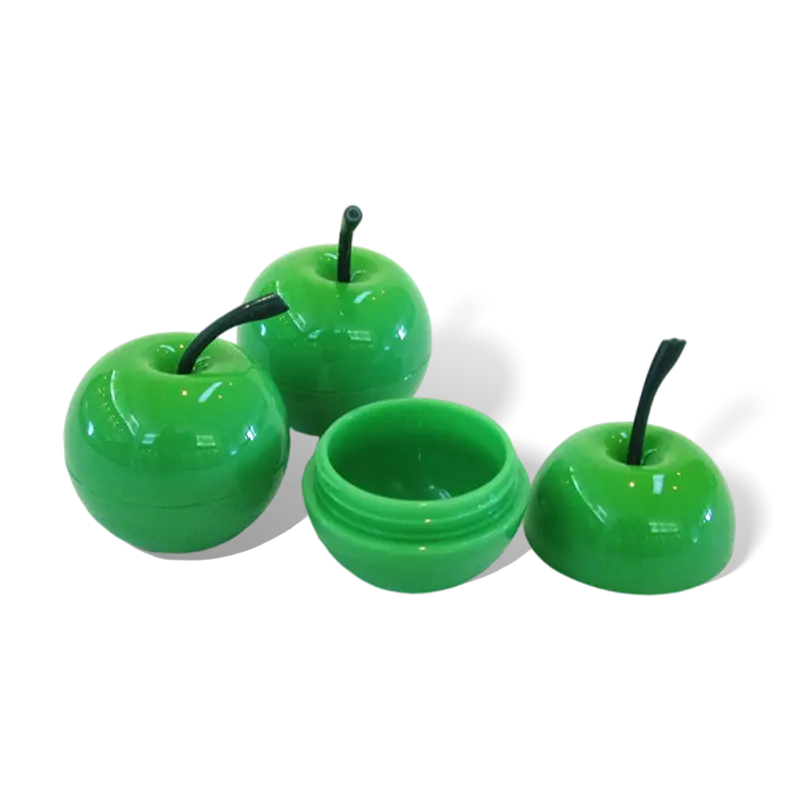 10g Luxury Creative Cherry-Shaped Face Cream Jar
-
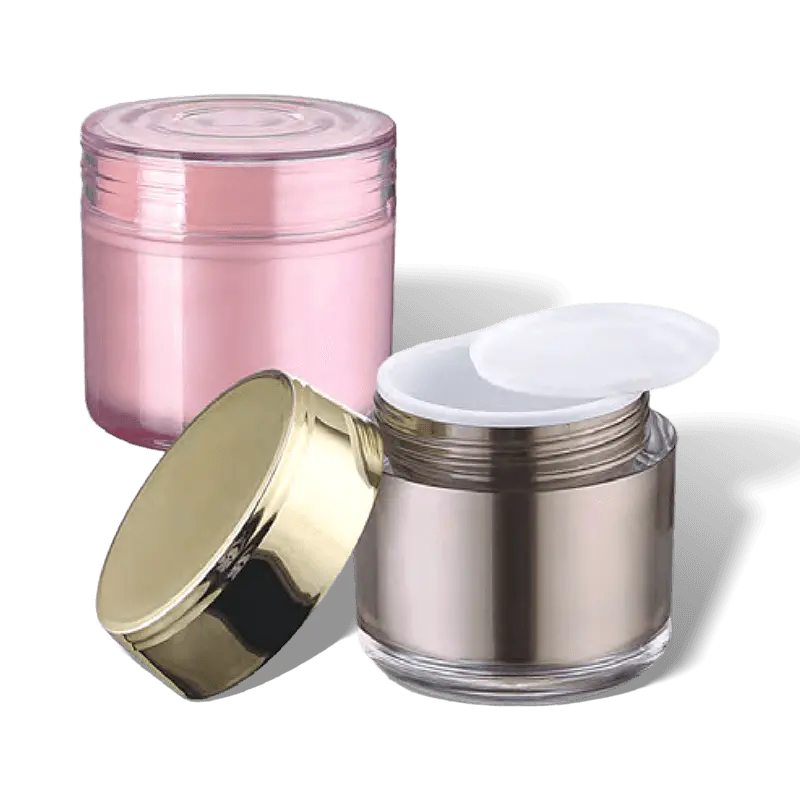 DP-A-009 Body Cream Jar 80ml Container 70ml Cosmetic Packaging Body Butter Plastic Jar
-
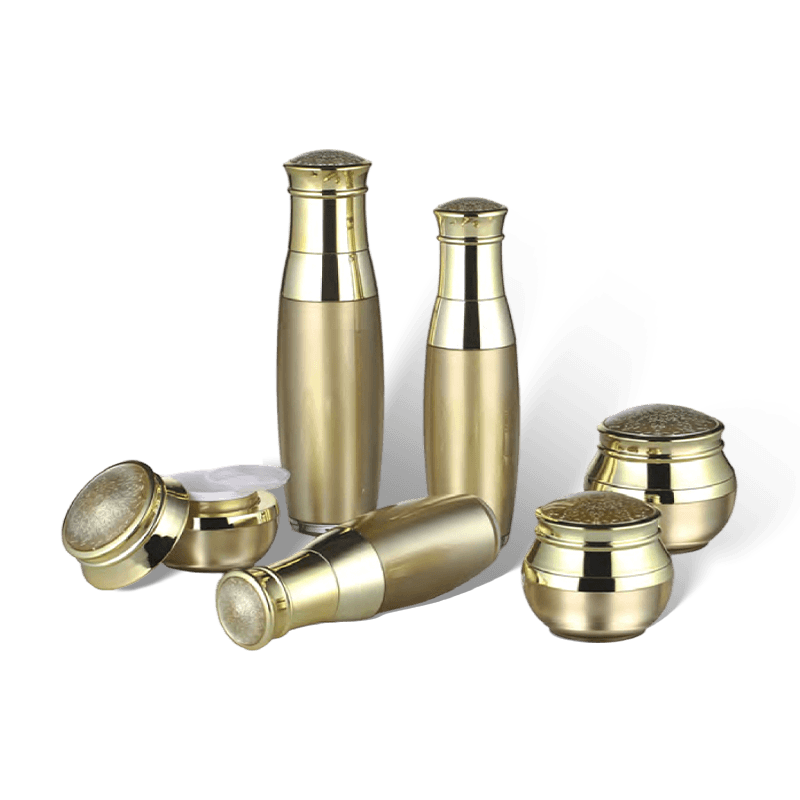 DP-A-021 50g/30g/20g Skin Whitening Cream Packaging Cosmetic Jars
-
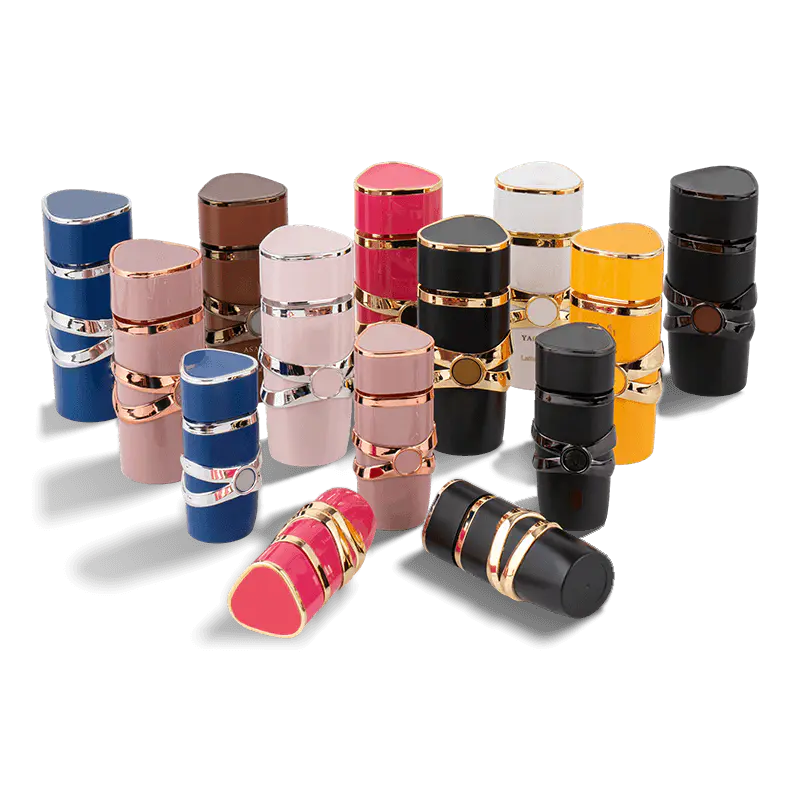 Round Luxury Empty 100ml Perfume Bottle
-
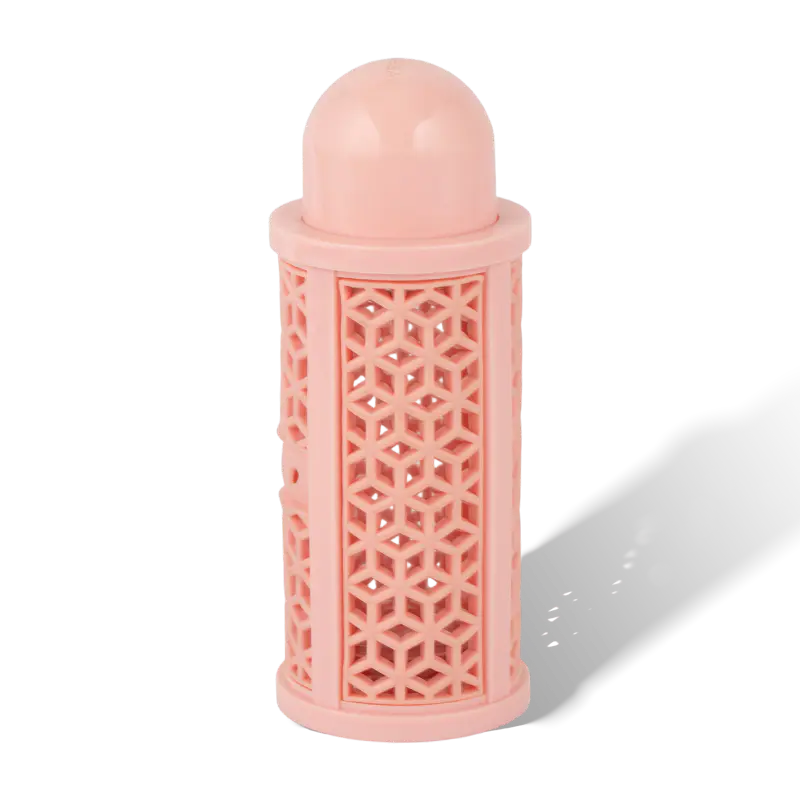 Luxury glass perfume bottles 30ml/50ml/100ml/200ml
-
 DP-A-020 120ml Green Acrylic Cream Bottle 50g Blue Acrylic Cosmetic Container 50ml Acrylic Jar and Bottles
- +86 13968274500
- +86 13764345885
- ysgl@vip.163.com
- No. 10-18, Gaoxiakeng, Dongputou Village, Zhangqi Town