English
 中文简体
 Français
 Español
 عربى



Luxury Acrylic Skincare Packaging for Premium Beauty Brands
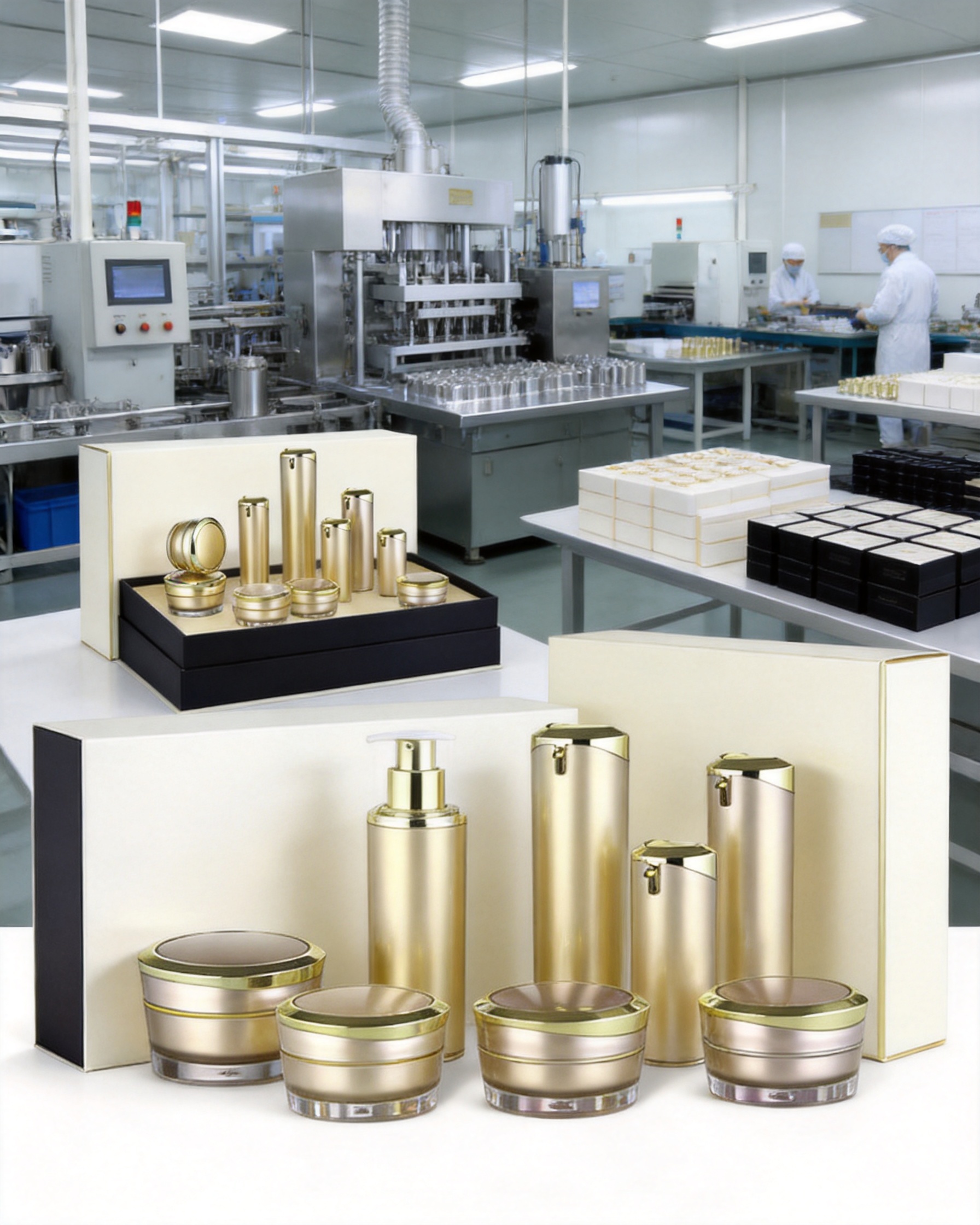
In the premium skincare market, packaging is no longer a secondary consideration. It is the first physical expression of a product’s identity, quality, and positioning. Before a customer evaluates a lotion, serum, cream, or treatment formula, the package communicates whether the product appears clinical, natural, youthful, luxurious, professional, or ordinary. For high-end beauty brands, the container must therefore perform several functions at once: protect the formula, support accurate dispensing, create a memorable visual identity, provide a satisfying user experience, and remain practical for manufacturing and supply.
The DP-A-004 high-end skincare packaging series has been developed to answer these requirements with a coordinated collection of acrylic lotion bottles and cream jars. Its design combines champagne gold decoration, double-layer acrylic construction, a crystal-like transparent base, precise dispensing components, and a range of capacities suitable for a complete skincare line. Rather than offering a single attractive container, the series provides a unified packaging system for premium creams, lotions, anti-aging treatments, whitening products, salon formulations, and other high-value skincare applications.
Available lotion bottle capacities include 30 ml, 50 ml, 80 ml, 100 ml, and 120 ml. The coordinated cream jar formats are designed for approximately 20 g, 30 g, and 50 g filling requirements. This tiered structure enables a brand to maintain a consistent shelf appearance across trial sizes, daily-use products, intensive treatments, and larger body-care or professional formats.
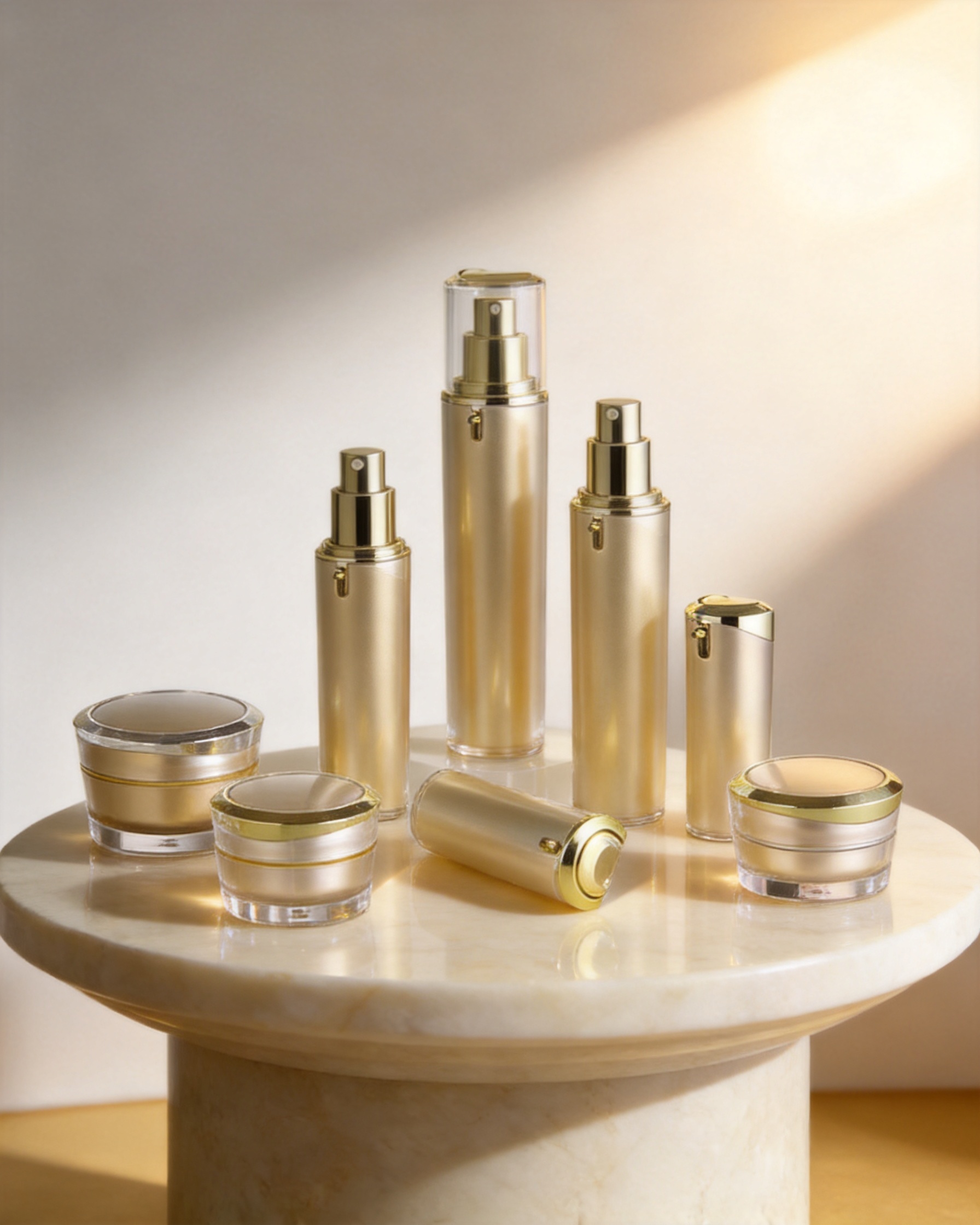
The collection is especially suited to brands seeking a visual language built around luxury, light, reflection, and modern elegance. Its champagne gold surface creates a warm premium impression, while the contrast between mirror-finish components, matte body decoration, and transparent acrylic details gives the package depth. The result is packaging that can help a skincare product stand apart in an increasingly crowded beauty market.
1. The Strategic Role of Premium Skincare Packaging
Skincare packaging must do more than hold a formula. It must support the commercial strategy of the product. A premium package can influence the customer’s first impression, communicate the expected price level, and reinforce a brand’s promise before the product is opened. In retail environments, where many competing products occupy the same shelf, a strong silhouette and distinctive finish may determine whether a customer stops to examine the item.
For online sales, the role of packaging is equally important. Product photography, unboxing videos, social media content, and customer reviews often display the package more prominently than the formula itself. A container with sophisticated proportions and high-quality surface treatment can improve the perceived value of the entire product line. This is particularly relevant for luxury skincare, where customers often expect the packaging to reflect the effectiveness and exclusivity of the contents.
The DP-A-004 series addresses this strategic role through a combination of visual impact and technical function. Its gold-centered appearance immediately communicates a premium position, but the design is not limited to decorative appeal. The acrylic construction provides a substantial, polished appearance, while the pump bottle formats support controlled use and the jar formats accommodate rich creams and treatment products.
Packaging consistency is another major commercial advantage. When a brand offers several products with different functions, inconsistent containers can make the range appear fragmented. A coordinated family of bottles and jars creates a recognizable visual system. Customers can identify the brand more easily, and retailers can present the products as a complete collection rather than as unrelated individual items.
2. Design Concept: Champagne Gold and the Art of Light
The central design concept of the DP-A-004 series is the use of champagne gold as a modern luxury color. Compared with darker gold or highly yellow metallic tones, champagne gold offers a softer and more contemporary impression. It can appear warm and rich under retail lighting while remaining refined in close-up photography. This makes it suitable for anti-aging, brightening, premium moisturizing, and professional salon skincare categories.
The design uses several surface effects rather than relying on one uniform finish. High-brightness vacuum electroplating is applied to selected components, including the cap and decorative ring. These areas can produce a mirror-like reflection that catches light and creates an immediate premium impression. The main body uses a softer champagne gold sprayed texture, introducing a matte or satin visual effect that balances the stronger reflection of the metallic parts.
This contrast between gloss and softness is important. If every surface were mirror polished, the package could appear visually aggressive or overly decorative. If every surface were matte, the container might lose some of the brilliance expected from a luxury product. By combining reflective and subdued surfaces, the series creates a layered appearance with greater visual depth.
The relationship between the gold body and transparent lower section further enhances the light-and-shadow concept. The clear acrylic base appears crystal-like and gives the container a visually grounded structure. It can also create a floating impression, especially when the upper colored section is viewed against a bright background. This effect gives the package a distinctive appearance from multiple angles rather than only from the front.
For brands, the wide champagne gold area on the bottle offers a valuable branding surface. Logos, product names, and decorative details can be applied through hot stamping, silkscreen printing, or other suitable decoration methods. The warm gold background can make a carefully selected logo treatment highly visible, allowing the package to communicate brand identity without requiring excessive graphics.
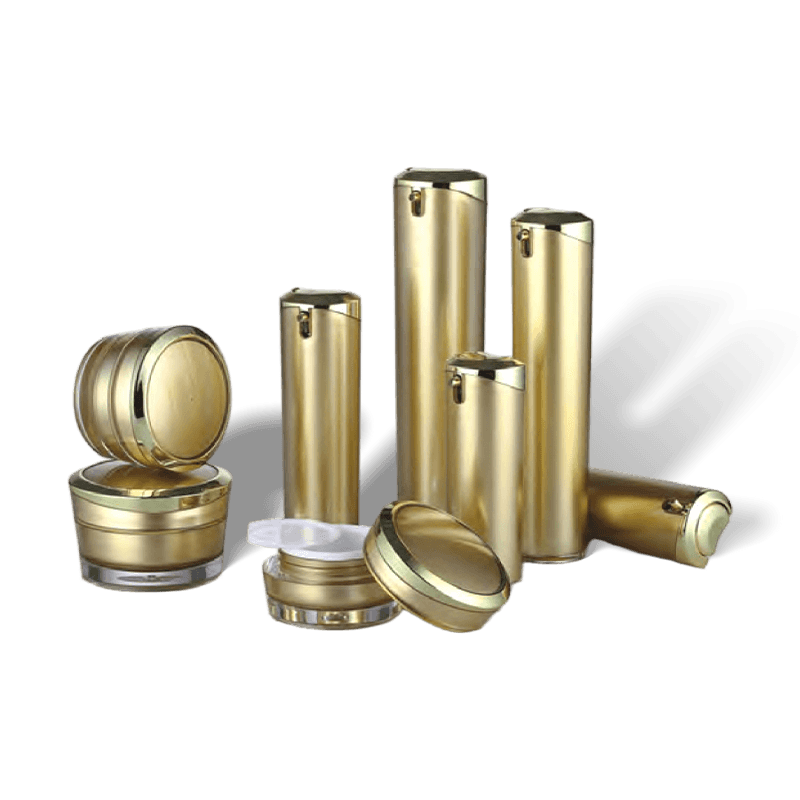
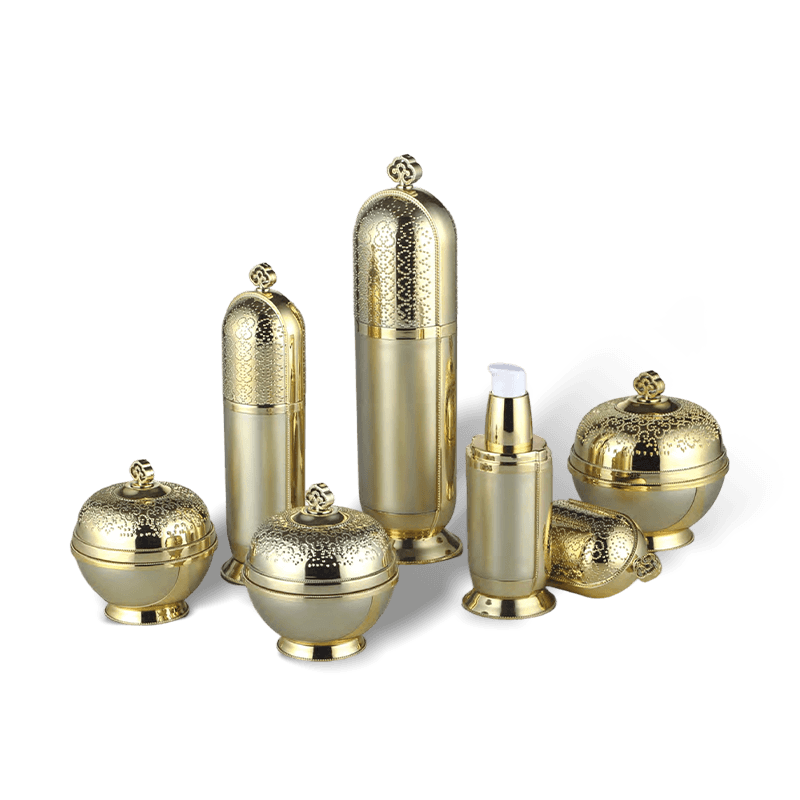
DP-A-004 30ml/50ml/80ml/100ml/120ml High-end skincare packaging
3. Acrylic Construction and Premium Tactile Quality
Acrylic is widely used in upscale cosmetic packaging because it can provide a glass-like appearance while offering the design flexibility associated with engineered plastic. High-transparency acrylic can produce clean visual edges, a polished appearance, and a substantial hand feel. These qualities are particularly valuable for brands that want the package to look solid and luxurious without relying entirely on glass construction.
The DP-A-004 series uses a double-layer acrylic concept to support both appearance and function. The outer structure can provide the decorative visual effect, while the inner structure helps form the container body and contributes to product protection. This layered approach creates more opportunities for color, transparency, and surface treatment than a simple single-wall package.
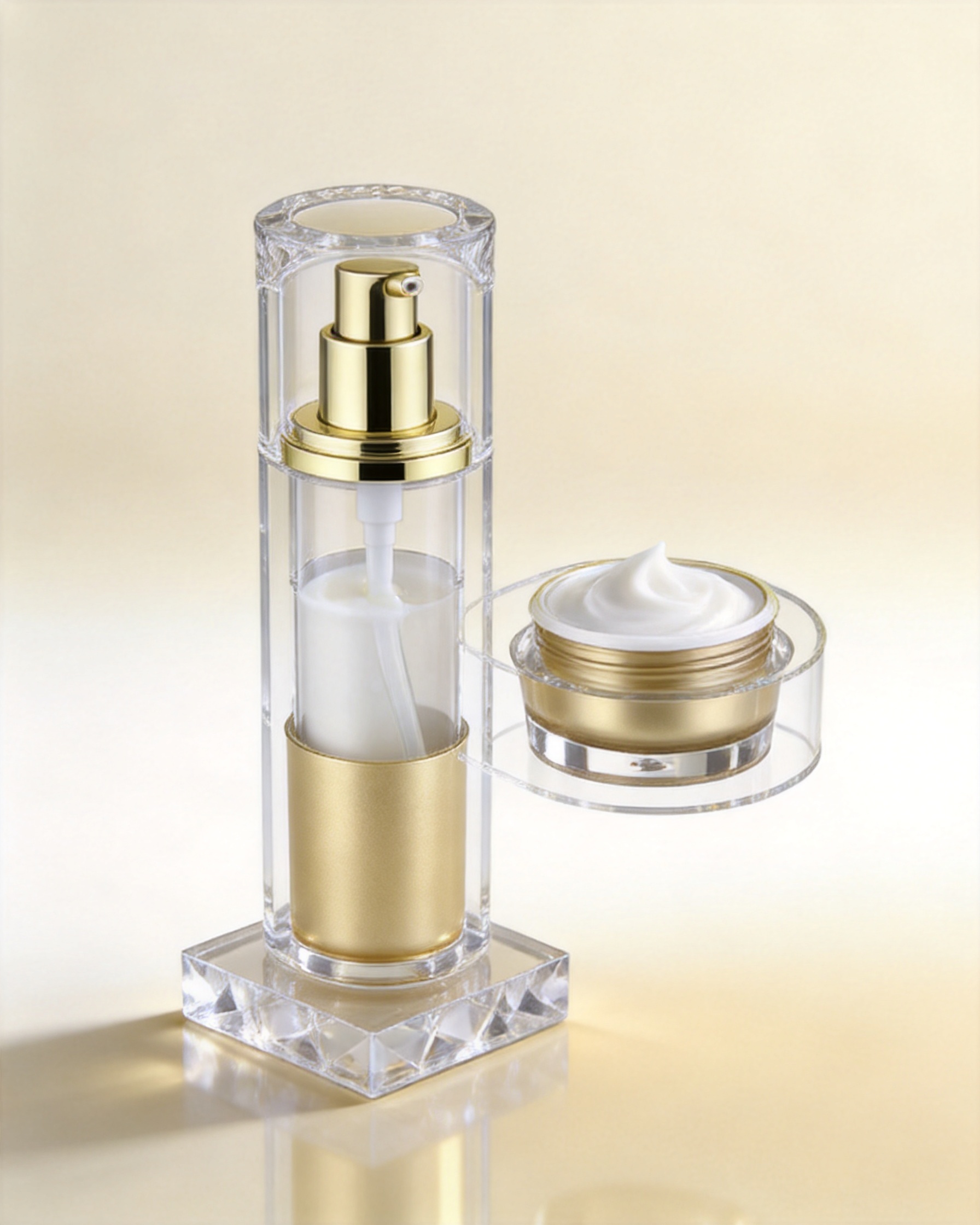
One of the most recognizable details is the crystal-like acrylic base. Instead of covering the entire container in an opaque finish, the lower section retains a high-transparency appearance. This transparent area introduces contrast and gives the package a more substantial visual foundation. It may also help the product look cleaner and more sophisticated when displayed under retail lighting or photographed for online catalogs.
The tactile experience is also important in luxury packaging. Customers often judge quality by the weight, smoothness, closure movement, and overall solidity of the container. A well-formed acrylic package can feel more substantial than a thin, lightweight plastic container. The coordinated cap and decorative ring reinforce this perception by adding precision and visual structure to the opening and closing experience.
Compared with ordinary commodity packaging, the series offers a more carefully developed relationship between proportion, material, finish, and decoration. The bottle is not simply a colored plastic vessel. Its design is intended to create a complete sensory experience, from the first visual impression to the moment the customer dispenses the formula.
4. Functional Benefits for Skincare Formulas
Luxury appearance must be supported by dependable functionality. Skincare formulas may contain botanical extracts, vitamins, brightening agents, peptides, oils, emulsions, or other active ingredients that require suitable protection during storage and use. Packaging selection can influence exposure to light, air, contamination, and repeated handling.
The double-layer structure of the DP-A-004 packaging is intended to improve the protective environment around the product. The outer decorative layer can help reduce direct exposure to light, while the inner container provides the primary product-holding function. This is especially valuable for products positioned around active ingredients or advanced treatment benefits.
Light protection is a significant consideration for many skincare formulas. Ultraviolet exposure may affect certain ingredients over time, depending on their composition, concentration, and stability profile. By using a colored and layered outer structure, the package can help limit the amount of light reaching the inner product compared with a fully transparent container.
Sealing performance is equally important. A container should reduce the risk of leakage, evaporation, contamination, and unnecessary air exchange during normal storage and transport. The bottle formats are paired with precision pump heads designed for controlled dispensing. A pump can reduce the need for users to touch the formula directly and can help deliver a more consistent amount with each use.
Controlled dispensing has several advantages. It can reduce product waste, help users follow recommended application quantities, and support a cleaner daily routine. For concentrated serums, premium lotions, and treatment emulsions, dispensing control can also reinforce the perception that the product is carefully engineered.
The cream jar formats provide a different user experience and are suitable for richer formulations that customers may prefer to access from a wide opening. They can be used for revitalizing creams, anti-wrinkle creams, intensive moisturizers, whitening creams, night treatments, and other products where a jar format is commercially or functionally appropriate.
5. A Coordinated Capacity System
A major advantage of the DP-A-004 range is its capacity flexibility. The lotion bottles are offered in 30 ml, 50 ml, 80 ml, 100 ml, and 120 ml sizes. This allows brands to create a product hierarchy without changing the fundamental design language.
| Packaging format | Available capacity | Typical product applications | Commercial role |
|---|---|---|---|
| Lotion bottle | 30 ml | Serums, concentrated treatments, travel or trial products | Entry-level, portable, or intensive-care format |
| Lotion bottle | 50 ml | Premium daily lotions, facial emulsions, treatment products | Core retail size for facial skincare |
| Lotion bottle | 80 ml | Extended-use lotions and specialized care products | Intermediate size for a broader usage cycle |
| Lotion bottle | 100 ml | Daily moisturizing products and professional skincare | Large facial-care or salon-oriented format |
| Lotion bottle | 120 ml | Body lotions and generous-use emulsions | Family-size or high-frequency application format |
| Cream jar | Approximately 20 g | Concentrated creams and premium treatment samples | Trial, travel, or high-value intensive-care format |
| Cream jar | Approximately 30 g | Facial creams and anti-aging treatments | Compact premium retail format |
| Cream jar | Approximately 50 g | Daily moisturizers, night creams, and intensive creams | Standard full-size cream format |
Capacity segmentation helps brands design a complete product architecture. A 30 ml bottle may be used for a concentrated serum, while a 50 ml bottle can serve as the principal facial lotion format. Larger 80 ml, 100 ml, or 120 ml containers can hold extended-use products or body-care formulations. Coordinated cream jars can complete the range for products with thicker textures.
This approach can simplify visual merchandising and reduce the need to develop unrelated packages for each product. It also allows a brand to introduce new formulas over time while preserving a recognizable family appearance. Customers can quickly understand that different package sizes belong to the same product universe.
For wholesalers and brand owners, a multi-capacity system can create opportunities for different sales channels. Smaller sizes may be suitable for travel retail, gift sets, sample programs, or professional treatment kits. Standard sizes can serve e-commerce and retail shelves. Larger formats may be appropriate for spas, salons, clinics, and body-care applications.
6. Competitive Advantages Over Conventional Cosmetic Containers
The cosmetic packaging market includes many standard bottles and jars that are functional but visually interchangeable. These containers may use basic white, clear, black, or solid-colored finishes with limited differentiation. While such formats can be cost-effective, they may not provide enough visual distinction for a high-value skincare launch.
The DP-A-004 series offers several advantages in comparison with ordinary packaging.
6.1 Stronger Shelf Recognition
The champagne gold color creates immediate visual recognition. Combined with the reflective cap and ring, it can attract attention from a distance. The transparent base adds another identifying feature, making the silhouette more distinctive than a conventional single-color container.
6.2 A More Premium Material Impression
High-transparency acrylic can provide a glass-like visual effect with the production flexibility of plastic. The substantial appearance, layered construction, and polished details support a higher perceived value. This is useful when the product is positioned at a premium price point and the package must justify that positioning.
6.3 Better Range Consistency
Many packaging suppliers offer individual containers that do not share consistent proportions or finishes across different capacities. The coordinated DP-A-004 formats allow lotion bottles and cream jars to work together as one collection. This can strengthen brand recognition and improve the visual presentation of a complete product line.
6.4 Improved Dispensing Experience
The lotion bottles use pump components designed for accurate and convenient dispensing. This can be more hygienic and controlled than repeatedly opening a wide-mouth bottle or pouring product from a basic container. A controlled pump also contributes to the premium user experience expected from advanced skincare.
6.5 More Decoration Potential
The large champagne gold body creates a suitable surface for brand customization. Hot stamping and silkscreen printing can be used to add logos, product names, claims, decorative lines, or other visual elements. This gives brands a better opportunity to build a proprietary appearance from a standard packaging platform.
6.6 Suitable for Multiple Product Categories
The series is not limited to one type of skincare formula. It can support lotions, emulsions, creams, anti-aging products, potent brightening products, salon care, and boutique treatment lines. This flexibility can help reduce the number of unrelated packaging systems a brand needs to manage.
7. Applications in High-End Skincare
The visual and functional characteristics of the series make it suitable for products that require a strong premium presentation. Anti-aging skincare is one natural application. Products associated with firmness, renewal, wrinkle care, and mature-skin support often benefit from packaging that communicates sophistication and treatment value.
Brightening and whitening skincare is another appropriate category. The champagne gold appearance can suggest radiance and luminosity, while the protective layered structure supports the needs of formulas that may contain light-sensitive components. Product compatibility must always be confirmed through formula and packaging testing, but the format provides a strong starting point for this market segment.
Professional salon skincare can also benefit from the range. Salons, spas, and aesthetic treatment centers often seek packaging that looks elevated in consultation rooms and retail displays. The 80 ml, 100 ml, and 120 ml formats can support products intended for frequent professional or home use, while the smaller bottles and jars can be used in treatment sets.
Luxury gift collections represent another opportunity. A bottle-and-jar combination can be arranged in a coordinated gift box, with each package sharing the same gold, transparent, and reflective visual language. The result can appear complete and intentionally designed rather than assembled from unrelated components.
The packaging may also suit private-label and contract-manufactured skincare programs. Brands that need to move quickly from concept to market can select an established structural design, then create differentiation through formula, color details, logo treatment, carton design, and product naming.
8. Custom Branding and Decoration Options
Packaging customization is central to successful private-label and branded skincare development. A stock container may provide the structure, but decoration gives the brand its visible identity. The DP-A-004 series offers a broad champagne gold surface that can be adapted to different brand styles.
Hot stamping is suitable for logos and lettering that require a refined metallic or high-contrast appearance. It can create a crisp brand mark and work effectively with minimalist design systems. Depending on the selected foil and surface treatment, the logo may either blend with the metallic theme or create contrast against the gold body.
Silkscreen printing provides another route for applying brand names, product information, patterns, and decorative graphics. It is useful when a brand wants opaque color, controlled line work, or a more graphic appearance. Several printing colors and layout approaches may be considered during the artwork development stage.
Brands can also coordinate the container with secondary packaging. A gold, ivory, cream, white, or dark-colored carton may be selected to complement the bottle and reinforce the product’s market position. Interior trays, labels, seals, and outer boxes can be developed as part of a complete packaging system.
Customization should be evaluated not only for appearance but also for durability. Decoration testing can examine adhesion, abrasion resistance, exposure to oils or alcohol-based products, storage conditions, and normal consumer handling. Proper artwork preparation and production approval help reduce the risk of visual defects during mass manufacturing.
Color management is also important. Champagne gold can appear different under daylight, warm retail lighting, studio photography, and digital screens. A professional approval process should use physical samples where possible. This helps the brand evaluate the relationship between the gold body, reflective components, transparent base, printed logo, and intended secondary packaging.
9. Advanced Manufacturing Capabilities
The quality of a luxury package depends on more than its original concept. It depends on the manufacturer’s ability to convert design intent into consistent production. DEPRAG Plastic Products Co., Ltd. provides an integrated manufacturing model that covers product research and development, design, mold manufacturing, plastic injection molding, blow molding, gilding and printing, UV coating, product testing, and warehousing.
This complete process structure can improve communication between development and production teams. Instead of transferring a design between unrelated suppliers, a coordinated manufacturer can evaluate the relationship between mold structure, material behavior, decoration requirements, assembly, and quality control at an earlier stage.
9.1 Product Research and Development
Product research and development forms the foundation of the packaging process. At this stage, technical teams assess the intended capacity, structure, wall thickness, closure method, component relationships, decoration zones, and expected application. Early engineering analysis can help identify potential production issues before molds are finalized.
For skincare packaging, research may also consider formula viscosity, filling method, pump compatibility, sealing requirements, and the expected use environment. A lotion bottle intended for a thin emulsion may require different dispensing considerations from a package intended for a thicker product. Early coordination between packaging and formula teams can improve the final user experience.
9.2 Industrial Design and Structural Design
Industrial design establishes the visual direction, while structural design translates that direction into manufacturable components. The curved surfaces, transparent base, decorative rings, and cap proportions of a premium package must be balanced with draft angles, assembly tolerances, material flow, and demolding requirements.
A package may look simple in a rendering but involve several technical challenges in production. Transparent sections must maintain clarity and minimize visible defects. Metallic components must be positioned accurately. Double-layer parts must fit together without excessive gaps or unwanted movement. These details require careful design review and sample evaluation.
9.3 Mold Manufacturing
Precision molds are essential for consistent acrylic packaging. Mold quality influences dimensional accuracy, surface appearance, transparency, parting lines, and repeatability. A well-developed mold can support stable high-volume production and reduce variation among individual components.
For a coordinated series, mold development must also maintain visual consistency between different capacities. The 30 ml, 50 ml, 80 ml, 100 ml, and 120 ml bottles should appear related even though their dimensions differ. Likewise, cream jars should share appropriate details with the bottle collection without compromising their own structural requirements.
9.4 Plastic Injection Molding
Injection molding enables the production of accurately formed plastic components at commercial scale. Process parameters such as temperature, pressure, cooling time, injection speed, and holding pressure can influence the final appearance and dimensions of acrylic and other plastic parts.
Transparent or translucent sections require particularly careful process control. Flow marks, weld lines, bubbles, sink marks, and uneven cooling may be more visible in clear materials. A capable manufacturing team must manage these factors through mold design, material handling, machine settings, and inspection procedures.
9.5 Blow Molding and Related Production Processes
Blow molding provides another production capability within the company’s broader process portfolio. Different packaging structures may require different forming technologies, and the ability to evaluate injection molding and blow molding options can help identify a suitable route for future product development.
Although the DP-A-004 series is centered on acrylic cosmetic packaging, a manufacturer with multiple forming capabilities can support broader packaging programs. This may be valuable to brands that require bottles, jars, closures, medical containers, or other plastic components across several product categories.
9.6 Vacuum Electroplating, Gilding, and Printing
The mirror-like cap and decorative ring depend on specialized surface treatment. Vacuum electroplating can create a bright metallic appearance when the substrate, coating system, equipment, and process parameters are properly controlled. The decorative result must be evaluated for uniformity, color consistency, adhesion, and resistance to normal handling.
Gilding and printing processes allow the manufacturer to complete the visual identity of the package. These processes require clean surfaces, accurate positioning, controlled registration, and suitable curing or drying conditions. A premium package can lose much of its impact if the logo is misaligned, the metallic finish is uneven, or the printed details lack clarity.
9.7 UV Coating
UV coating can be used to provide selected surface effects and additional protection, depending on the design requirements. It may contribute to gloss control, surface feel, decorative contrast, and resistance to handling. The appropriate coating must be matched to the substrate and decoration system.
For a design built around mirror and matte contrast, selective surface treatment is especially important. The manufacturer must preserve the intended relationship between high-brightness metallic elements and the softer champagne gold body. Controlled coating and inspection help ensure that the final appearance remains consistent with approved samples.
9.8 Testing and Warehousing
Product testing helps verify that packaging performs as expected before shipment. Tests may include dimensional inspection, component assembly checks, closure evaluation, pump operation, leakage testing, decoration adhesion assessment, appearance inspection, and compatibility studies conducted with the customer’s formula.
Warehousing is also part of the supply chain. Cosmetic packaging must be stored in a manner that protects it from dust, impact, excessive heat, moisture, and unnecessary handling. Organized warehousing and inventory management can support reliable delivery and reduce the risk of damage before the components reach the filling facility.
10. Quality Control for Luxury Packaging
Luxury packaging quality is judged through both objective and subjective criteria. Objective criteria include dimensions, weight, fit, pump output, leakage performance, decoration adhesion, and material consistency. Subjective criteria include perceived smoothness, visual harmony, reflective quality, color balance, and the overall impression of refinement.
Appearance inspection is particularly important for champagne gold packaging. Inspectors may check for color variation, uneven spraying, scratches, dust particles, pinholes, visible flow lines, plating defects, printing offsets, and differences between components. Transparent acrylic sections require additional attention because small imperfections can be more noticeable than they would be on an opaque surface.
Assembly quality should also be monitored. The cap, decorative ring, bottle body, inner container, pump, and base must fit together properly. Excessive looseness can make the product feel inexpensive, while excessive tightness may interfere with assembly or use. Consistent tolerances are essential when multiple components are combined into one premium package.
For pump bottles, output consistency is a key functional requirement. The pump should operate smoothly and deliver an appropriate amount without excessive splashing or interruption. The closure should remain secure during transportation and normal use. For cream jars, the lid should close firmly and maintain a clean, aligned appearance.
Packaging testing should be conducted in cooperation with the customer because formula characteristics vary. Viscosity, acidity, alcohol content, oil composition, fragrance components, preservatives, and active ingredients may affect compatibility. Long-term stability, accelerated aging, transport simulation, and repeated-use testing can provide valuable information before commercial launch.
11. Sustainability and Responsible Material Decisions
Premium appearance and responsible packaging development should be considered together. Plastic packaging can offer advantages in transport efficiency, design flexibility, and resistance to breakage, but brands and manufacturers should also consider material selection, component reduction, recycling conditions, and end-of-life handling.
Using a coordinated packaging platform can support more efficient development and reduce the need for multiple unrelated structures. Standardized components may simplify production planning and help reduce unnecessary tooling for every individual product. Appropriate wall thickness and component design can also contribute to material efficiency without compromising performance.
Brands should evaluate the complete package, including the bottle or jar, pump, cap, decorative ring, labels, coatings, and carton. Different materials or inseparable combinations may affect recycling options in a given market. Clear communication about local disposal systems and material specifications can help customers make informed decisions.
Durability is another sustainability consideration. A package that protects the formula, performs reliably, and resists damage is less likely to be discarded prematurely because of leakage, breakage, or malfunction. Premium packaging should therefore combine attractive design with practical service life.
Responsible development also includes accurate claims. Brands should avoid presenting cosmetic packaging as environmentally superior unless the relevant material, manufacturing, and lifecycle information has been verified. Collaboration between the brand and manufacturer can help identify realistic improvements while maintaining product safety and visual quality.
12. Selecting the Right Format for a Product Line
The correct format depends on the formula, dosage, market position, consumer habits, and sales channel. A 30 ml bottle may be appropriate for a concentrated serum or a high-value treatment used in small amounts. A 50 ml bottle often suits a core facial lotion or daily emulsion. The 80 ml, 100 ml, and 120 ml options can support products intended for longer use or more generous application.
Cream jars should be selected according to filling volume, formula texture, application habits, and desired product positioning. A smaller jar can be used for a concentrated night cream, sample-size program, or luxury treatment. A 50 g jar may serve as the principal size for a daily moisturizer or anti-aging cream.
The pump and jar experience should also be considered across the same product line. A brand may use the lotion bottle for fluid emulsions and the jar for rich creams, creating functional variety while preserving a unified appearance. This can make the collection easier for customers to understand.
Secondary packaging dimensions should be planned early. The transparent base, metallic cap, and decorative components may require protective inserts or suitable carton clearances. If products will be sold as sets, the package designer should evaluate how the bottles and jars are arranged together and how the gold surfaces interact visually inside the box.
13. Development Process for Brand Owners
A successful packaging project generally begins with a clear product brief. The brief should identify the formula type, filling volume, target market, preferred capacity, expected annual demand, sales channels, decoration requirements, and desired launch schedule. It should also explain whether the package will be used for facial skincare, body care, professional treatment, travel, gifting, or another application.
The next step is format selection. The brand can compare bottle and jar capacities, pump options, closure details, and decoration surfaces. At this stage, it is useful to review how the chosen package will look beside competing products and alongside the brand’s existing range.
Artwork preparation follows structural selection. Logo files, typography, color references, product information, regulatory text, and decoration positions should be supplied in suitable formats. The manufacturer can then prepare artwork layouts and production samples for review.
Sampling is essential. Physical samples allow the brand to assess color, finish, transparency, fit, pump movement, logo scale, and hand feel. Formula filling tests can then confirm whether the pump, inner container, and sealing system are suitable for the intended product.
After sample approval, the project moves toward mass production. A clear quality standard should be established before production begins. It may include approved color samples, acceptable appearance limits, dimensional tolerances, decoration requirements, packaging methods, and inspection procedures.
14. Why an Integrated Supplier Can Add Value
Working with an integrated packaging manufacturer can reduce the complexity of product development. When design, molds, molding, decoration, assembly, testing, and warehousing are managed within one coordinated organization, technical feedback can move more quickly between departments.
This structure can be especially valuable for a package with multiple visual treatments. The double-layer acrylic body, transparent base, sprayed champagne gold surface, vacuum-electroplated components, and printed logo must work together as one finished product. If each process is handled independently without strong coordination, variation or compatibility problems may occur.
DEPRAG Plastic Products Co., Ltd. operates in Cixi, China, an established plastic manufacturing area with access to regional transportation infrastructure. Its location near the Hangzhou Bay Bridge and within convenient reach of Ningbo’s Beilun deep-water port and Hangzhou Xiaoshan International Airport can support domestic and international logistics planning.
The company’s stated capabilities include an experienced research and development team, advanced manufacturing equipment, standardized factories, and a product portfolio covering thousands of daily chemical packaging designs. This combination supports both standard packaging supply and customized mold development.
For brands, the value of supplier cooperation extends beyond the physical container. Technical support can assist with structure selection, material considerations, decoration planning, sample evaluation, testing, and production coordination. A long-term packaging partner can also help a brand introduce additional products while maintaining visual consistency across its range.
15. Commercial Benefits for Wholesalers and Private-Label Brands
Wholesalers and private-label companies often need packaging that looks differentiated without requiring an entirely new design from the beginning. The DP-A-004 platform can provide a ready-made premium structure while leaving room for customization through logo treatment, product naming, printing, cartons, and formula positioning.
A coordinated series can also simplify catalog development. Instead of presenting separate unrelated bottle and jar designs, a supplier can offer a complete visual family. This makes it easier for customers to select a serum bottle, lotion bottle, cream jar, or gift-set combination based on the same design language.
For private-label brands, the champagne gold appearance can support multiple market approaches. A minimalist logo can create a quiet luxury style. A high-contrast print can create a bold treatment line. Soft cream or ivory secondary packaging can produce a gentle premium look, while dark cartons can create a stronger contrast with the metallic container.
The range may also help brands test different price tiers. Smaller capacities can support introductory products or limited editions, while larger formats can address regular-use or professional channels. This provides commercial flexibility without abandoning the recognizable package family.
16. Packaging as a Silent Salesperson
A skincare package communicates even when no salesperson is present. Its color suggests a mood, its proportions imply a level of value, and its dispensing system signals how the product should be used. A well-designed container can therefore work as a silent salesperson on a shelf, in a beauty consultation, in an online product photograph, or in a customer’s bathroom.
The DP-A-004 series is designed to make that silent communication clear. Champagne gold suggests radiance and premium value. Mirror-finish details suggest precision and luxury. The crystal-like base suggests clarity and substance. The pump suggests control and convenience. The range of sizes suggests a complete and professionally organized skincare system.
These signals are most effective when they are consistent with the formula and brand promise. Packaging cannot replace product performance, but it can establish the expectations that encourage a customer to try the product. When the formula, user experience, and package quality support one another, the overall brand impression becomes stronger.
17. Q&A: Common Questions About the Packaging Series
Q1: What types of products are suitable for this packaging?
The series is suitable for lotions, emulsions, facial treatments, serums with compatible viscosity, anti-aging products, brightening products, moisturizers, salon skincare, and rich creams. Final compatibility should be confirmed through formula testing, especially when the product contains strong solvents, high levels of essential oils, or other ingredients that may interact with packaging materials.
Q2: What bottle sizes are available?
The lotion bottles are available in 30 ml, 50 ml, 80 ml, 100 ml, and 120 ml capacities. This range supports small treatment formats, standard facial products, extended-use lotions, and larger professional or body-care applications.
Q3: What cream jar sizes are available?
The coordinated cream jars are described for approximately 20 g, 30 g, and 50 g filling requirements. The exact net content and usable fill volume should be confirmed according to the formula density, filling process, and customer requirements.
Q4: What creates the metallic appearance?
The cap and decorative ring use a high-brightness vacuum electroplating treatment designed to create a mirror-like gold reflection. The main body uses a champagne gold sprayed texture, creating a softer contrast between reflective and matte or satin surfaces.
Q5: Why does the bottle have a transparent lower section?
The transparent acrylic base creates a crystal-like visual foundation and adds contrast to the gold body. It can make the package appear more substantial and create a distinctive floating effect when displayed under suitable lighting.
Q6: Can the packaging be customized with a brand logo?
Yes. The broad body area can be used for custom branding through hot stamping, silkscreen printing, or other suitable decoration methods. Artwork, color, position, and durability should be reviewed during the sampling and approval process.
Q7: Does the packaging provide light protection?
The double-layer structure and colored exterior are designed to help reduce direct light exposure compared with a fully transparent container. However, the actual protection level depends on the material structure, formula, storage conditions, and testing results. Brands should conduct compatibility and stability studies for their specific product.
Q8: Are the lotion bottles equipped with pumps?
The lotion bottle design includes precision pump heads intended to support accurate dispensing. Pump output, viscosity compatibility, priming behavior, and formula interaction should be checked with the intended product before mass production.
Q9: Is the series suitable for gift sets?
Yes. The coordinated bottles and cream jars can be combined into gift sets, treatment kits, travel collections, or product families. The matching champagne gold and transparent details provide a unified visual appearance when several formats are displayed together.
Q10: Can the manufacturer support custom molds?
The company provides both standard packaging designs and customized mold development. Custom mold requirements depend on the requested shape, capacity, order volume, technical complexity, and development schedule.
Q11: What manufacturing processes are available?
The company’s production capabilities include product research and development, design, mold manufacturing, plastic injection molding, blow molding, gilding and printing, UV coating, product testing, and warehousing. The exact process combination depends on the selected package and decoration requirements.
Q12: How should a brand begin a packaging project?
The brand should prepare a product brief containing the formula type, target capacity, expected quantity, preferred package format, logo requirements, sales channel, and desired delivery schedule. The supplier can then recommend suitable formats, arrange samples, evaluate decoration options, and coordinate compatibility testing.
18. Final Evaluation
The DP-A-004 series represents a complete approach to premium skincare packaging. Its appeal comes from the interaction of several elements: champagne gold color, reflective electroplated details, soft body texture, double-layer acrylic construction, transparent crystal-like base, precision pump bottles, coordinated cream jars, and multiple capacity options.
Its advantages over ordinary cosmetic containers are both visual and practical. The series can improve shelf recognition, strengthen luxury positioning, support a complete product architecture, provide controlled dispensing, and create valuable opportunities for custom branding. Its design is appropriate for high-end anti-aging, brightening, moisturizing, salon, boutique, and gift-set applications.
The manufacturing capabilities behind the packaging are equally important. Integrated research and development, mold manufacturing, injection molding, blow molding, decoration, UV coating, testing, and warehousing provide a foundation for consistent production. For brands seeking a long-term packaging partner, this combination can simplify development and support future product expansion.
In a competitive beauty market, premium packaging must be more than attractive. It must be recognizable, usable, protective, customizable, and manufacturable at the required scale. By combining the art of light and shadow with engineered acrylic construction and a broad capacity system, this luxury skincare packaging range gives brands a practical platform for presenting high-value formulas with confidence.
References
1. Cosmetic Packaging Development Principles, industry guidance on material selection, closure design, dispensing systems, and product compatibility.
2. Packaging Materials and Processes for Personal Care Products, technical reference covering plastic molding, transparent materials, coatings, and decorative treatments.
3. Cosmetic Product Stability and Compatibility Practices, general guidance for evaluating interactions between formulas and primary packaging.
4. Principles of Industrial Design for Beauty Packaging, reference material on proportion, ergonomics, visual identity, and consumer perception.
5. Quality Control Methods for Plastic Cosmetic Containers, manufacturing reference covering dimensional inspection, appearance standards, leakage testing, and decoration adhesion.
6. Sustainable Packaging Evaluation for Personal Care Products, general reference on material efficiency, component design, durability, and end-of-life considerations.
Product: DP-A-004 30ml/50ml/80ml/100ml/120ml High-end skincare packaging

-
 DP-A-018 Acrylic jars for whitening and anti-aging cosmetic creams
-
 Luxury glass perfume bottles 30ml/50ml/100ml/200ml
-
 Luxury 100ml Round Perfume Bottle
-
 Round Luxury Empty 100ml Perfume Bottle
-
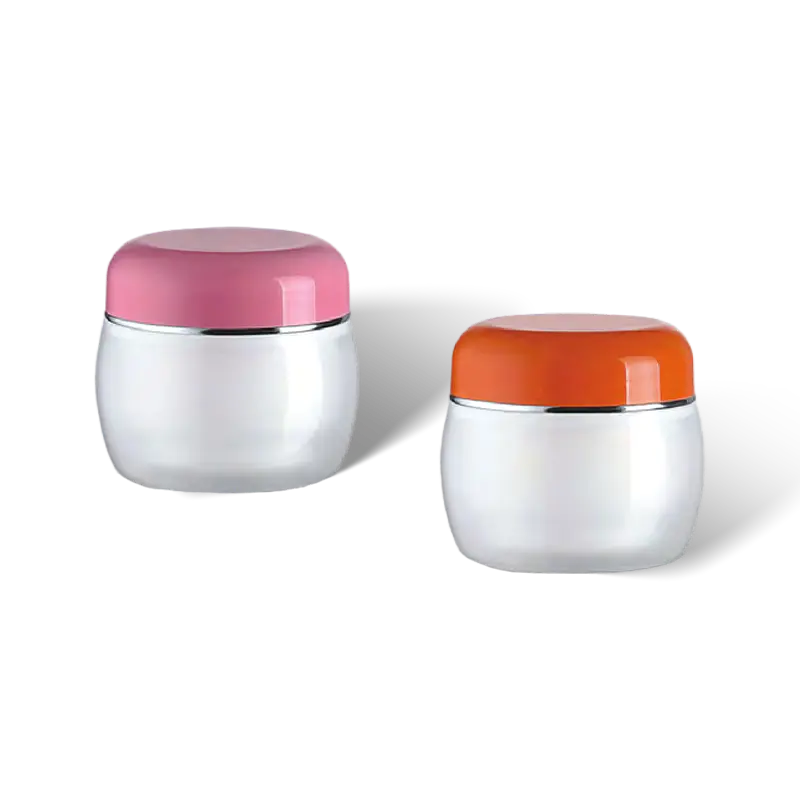 exquisite cosmetic skincare packaging bottle, 20g cosmetic container for children, small deluxe cosmetic jar
-
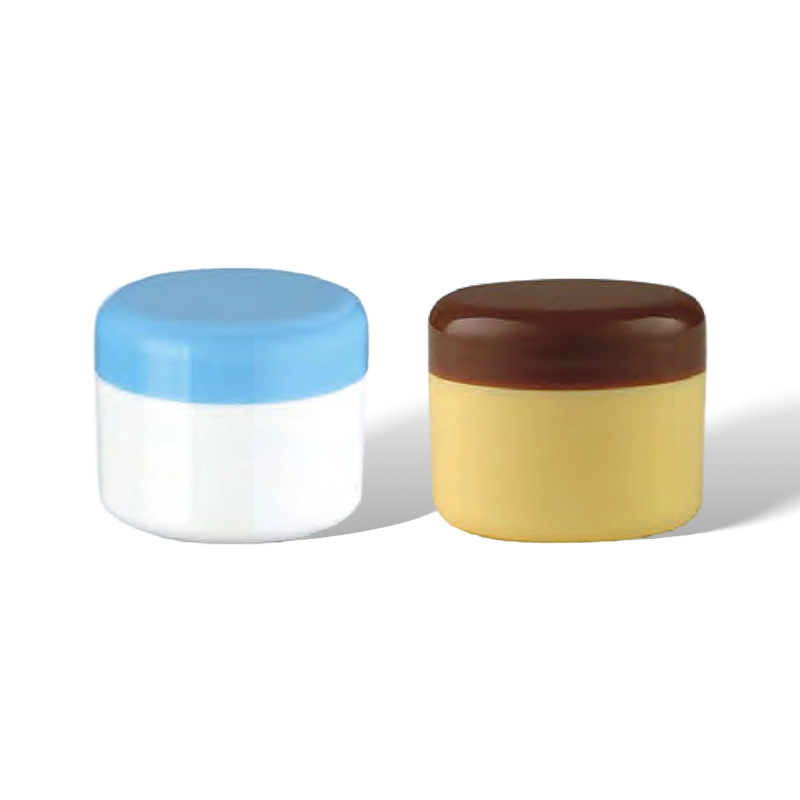 1oz 30g empty PP plastic cream jars for skincare
- +86 13968274500
- +86 13764345885
- ysgl@vip.163.com
- No. 10-18, Gaoxiakeng, Dongputou Village, Zhangqi Town