English
 中文简体
 Français
 Español
 عربى



180g Empty Round Plastic Cream Jar for Premium Skincare Packaging
Premium skincare products require packaging that does more than hold a formula. The container must protect the contents, support hygienic use, communicate quality, and create a strong visual impression at every stage of the customer experience. The 180g empty round plastic cream jar is designed to address these requirements through a balanced combination of practical dispensing features, refined visual styling, durable plastic construction, and flexible manufacturing support.
Developed for professional skincare, moisturizing creams, acne-care products, repair formulas, body creams, and other daily chemical applications, this round cream jar presents a clean white-and-blue appearance that communicates purity, freshness, and reliability. Its cylindrical silhouette is familiar and easy to handle, while the contrasting sapphire-blue cap detail gives the package a distinctive appearance on retail shelves and in online product photography.
The jar belongs to the PP Cosmetic Packaging product range and is also presented with a high-quality acrylic appearance and structure. This combination allows brands to pursue the visual appeal associated with luxury acrylic cosmetic packaging while retaining the practical advantages of a lightweight plastic container. The result is a packaging solution suited to brands that want a premium presentation without the unnecessary weight or fragility of traditional glass.
With an approximate capacity of 180g, the container offers sufficient space for face creams, sleeping masks, body creams, moisturizing balms, repair treatments, and other medium-volume skincare products. Its empty format gives manufacturers, filling companies, and brand owners the freedom to select their own formulas, labels, decoration methods, and product positioning.
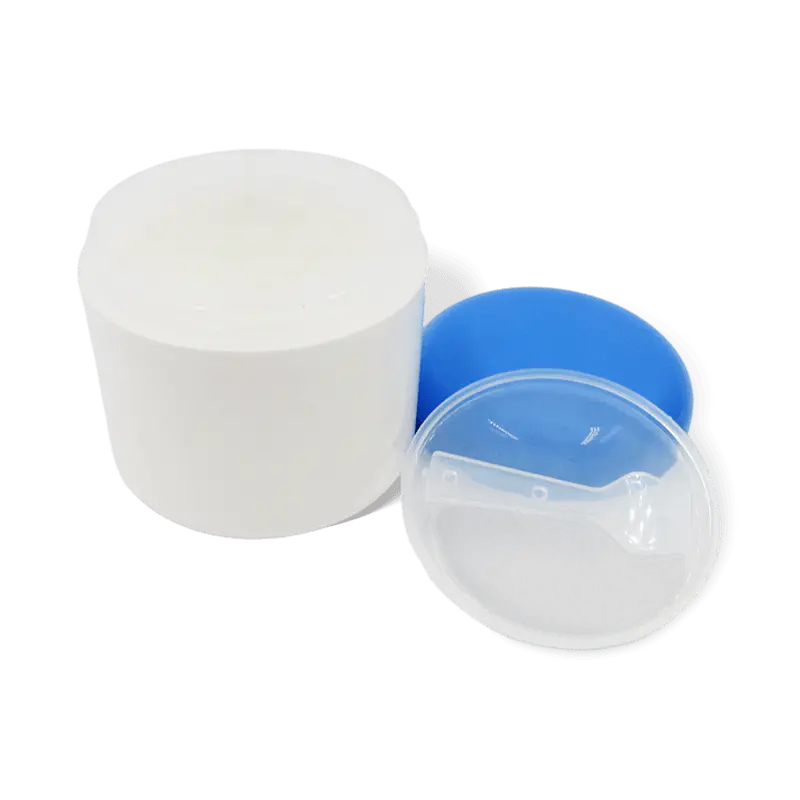
180g Empty round plastic cream jar
Product Overview
The 180g empty round plastic cream jar is built around a classic cylindrical body. This shape provides a broad, stable base and a generous surface area for labels, printed graphics, and brand communication. The round profile also supports comfortable handling, allowing consumers to hold the jar securely while opening the cap or applying product with a spatula.
The main body uses a clean porcelain-white visual effect. White is widely associated with cleanliness, skincare expertise, medical confidence, and formula purity. In this design, the white body is not overloaded with decorative elements. Instead, it creates a restrained foundation that can work with different brand identities, from professional dermatological skincare to modern natural beauty lines.
A bright deep-blue accent is used on the cap. The blue arc shape creates a strong contrast against the white body, helping the package remain recognizable from a distance. Blue can also suggest calmness, freshness, trust, and technical competence. These associations make the color combination appropriate for moisturizing products, anti-acne collections, soothing treatments, barrier-repair creams, and other formulas that depend on a clear promise of care and reliability.
The container is supplied empty, making it suitable for contract fillers, cosmetic manufacturers, private-label brands, and established skincare companies that need a ready-made packaging platform. The jar can be paired with different formulas and branding concepts while maintaining a consistent physical format across a product range.
| Product Attribute | Specification or Feature | Packaging Benefit |
|---|---|---|
| Product type | Empty round plastic cream jar | Suitable for filling with a wide range of skincare formulas |
| Nominal capacity | Approximately 180g | Appropriate for medium-size face and body care products |
| Product category | PP Cosmetic Packaging | Provides a practical plastic packaging option for daily chemical products |
| Visual design | Porcelain-white body with deep-blue cap accent | Creates a clean, modern, premium shelf appearance |
| Container shape | Round cylindrical construction | Offers stable placement, easy handling, and broad decoration space |
| Inner packaging feature | Transparent airtight inner cap | Helps protect the formula and supports hygienic product use |
| Accessory | Dedicated dispensing spatula | Reduces the need for direct finger contact with the cream |
| Construction | Double-walled plastic design | Improves the premium feel and helps moderate external temperature effects |
| Application areas | Face cream, body cream, repair cream, moisturizing products, and similar formulas | Supports multiple skincare positioning strategies |
Designed for Hygiene-Conscious Skincare
One of the most important advantages of this packaging is its integrated dispensing concept. Many cream products are packaged in open-mouth jars, requiring users to place their fingers directly into the formula. Although this format is familiar and convenient, repeated direct contact can introduce impurities, moisture, or microorganisms into the remaining product. It can also make the consumer experience feel less controlled, especially for premium formulas with carefully developed active ingredients.
The 180g jar addresses this concern with a highly transparent inner cap and a dedicated dispensing spatula. The inner cap creates an additional barrier between the product and the outer environment after the main lid is removed. The spatula enables the user to collect the desired quantity without repeatedly touching the formula with their fingers.
This design does not replace appropriate product testing, filling controls, preservation systems, or regulatory validation. However, it can support a more hygienic usage routine when used correctly. For brands, this is an important selling point because consumers increasingly pay attention to cleanliness, contamination control, and the overall quality of the application experience.
The transparent inner cap also allows users to understand that the package contains an additional protective component. Transparency can reinforce the perception that the product is carefully engineered rather than being a basic jar with a decorative exterior. The accessory spatula adds a practical element that consumers can immediately understand without extensive instruction.
For high-value creams, the dispensing system can also help control dosage. A spatula allows the user to remove a measured amount instead of scooping excessively with their fingers. More consistent dosing may reduce unnecessary product waste and create a more orderly application process. Brands can reinforce this benefit through printed usage instructions or a small illustrated guide included in the carton.
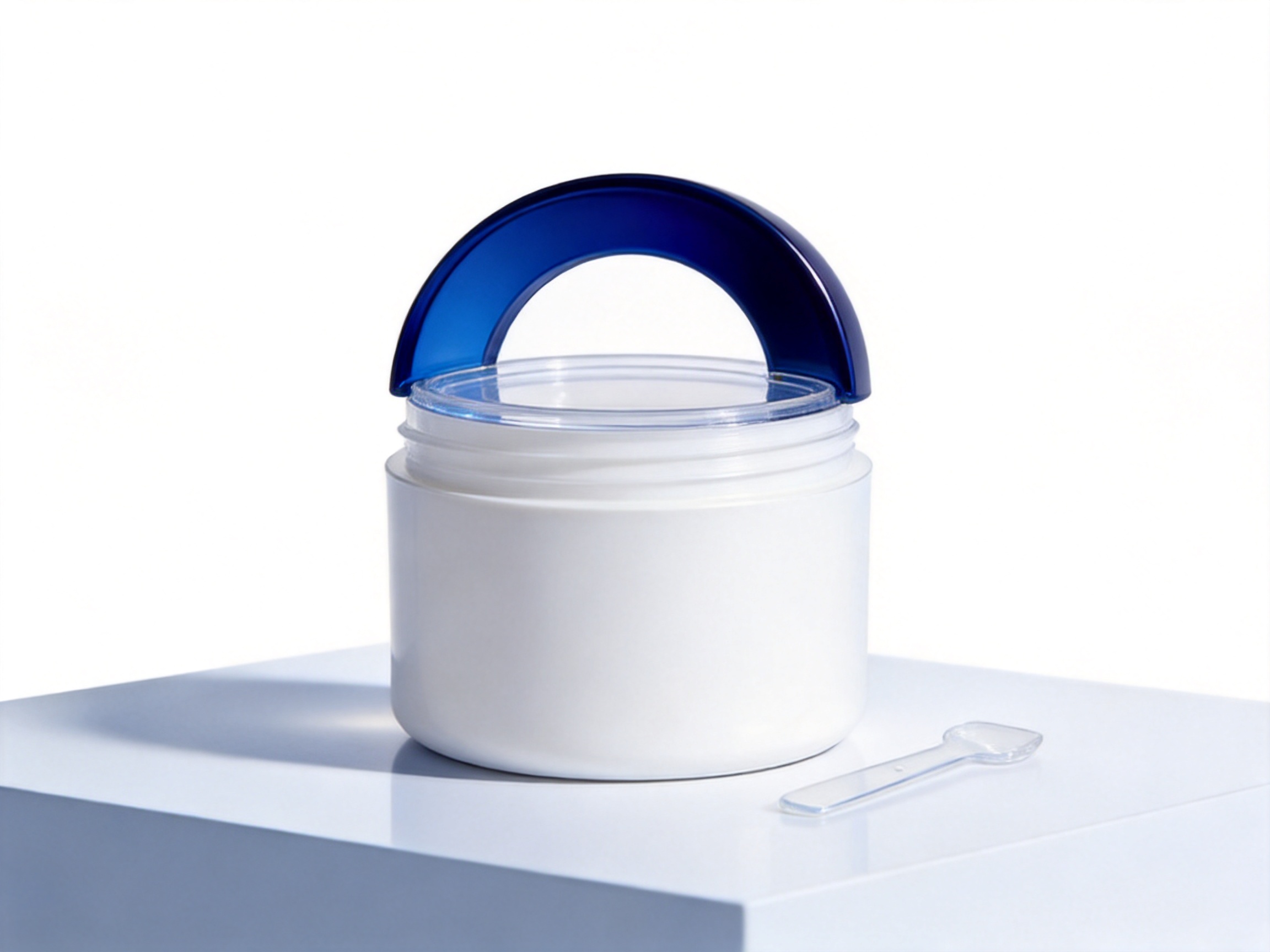
Premium Appearance Without the Weight of Glass
Luxury packaging is often associated with substantial weight, thick walls, and rigid materials. While glass can create a high-end impression, it may also increase transportation costs, breakage risks, and handling challenges. A high-quality plastic jar provides an alternative for brands that want visual refinement and structural confidence with lower overall weight.
The white exterior of this jar is designed to resemble a smooth porcelain surface. This appearance gives the product a clean and substantial visual character while keeping the package suitable for daily use. The material is lightweight and drop-resistant compared with many conventional glass containers, which can be especially valuable for products carried in handbags, used in bathrooms, or shipped through parcel delivery networks.
The double-walled construction contributes to the jar’s premium feel. It can make the container feel more substantial in the hand and create visual depth around the body. Double-wall packaging is also useful for helping moderate the influence of external temperature changes. It should not be interpreted as a substitute for validated temperature-controlled logistics or formula stability testing, but it can support a more protective packaging structure in normal cosmetic use.
The combination of a rounded shape, smooth white finish, transparent inner protection, and blue cap detail allows the container to compete visually with more expensive packaging formats. The package can be used for premium retail ranges, professional skincare collections, spa products, and gift-oriented beauty sets.
Another important benefit is design consistency. The neutral white body can be used with minimalist typography, blue-and-white medical styling, silver or gold decorative details, or a more colorful label system. This gives brands room to create different product families while retaining the same underlying jar platform.
Advantages Over Conventional Open-Mouth Jars
Improved Product Separation
A conventional single-wall open-mouth jar generally provides one primary container and a screw cap. The inner surface of the cap may come into close contact with the cream, and users often reach directly into the formula. By contrast, the inner cap in this design creates a dedicated separation layer. This can help keep the cream more isolated from external contact during storage and daily use.
More Controlled Application
The included spatula gives consumers a simple tool for removing product. This is particularly helpful for thicker formulas that are difficult to dispense from a pump or squeeze tube. It also helps brands position the jar as a more complete system rather than just a container.
Stronger Premium Communication
Functional features can strengthen the perceived value of a skincare product. When a package includes an inner protective cap and application accessory, consumers may see greater attention to detail. This can support premium pricing when the overall formula, brand story, and product performance are also aligned with that positioning.
Better Shelf Recognition
The blue-and-white color contrast offers more visual distinction than a plain white jar. Many skincare packages use white, clear, or neutral tones, so the deep-blue accent can help a product establish its own recognizable appearance. A consistent color system can be extended to cartons, labels, tubes, promotional displays, and digital marketing graphics.
Reduced Fragility Compared with Glass
Plastic construction can provide greater resistance to everyday drops and impacts than conventional glass. This is beneficial during filling, packing, warehousing, transportation, and consumer use. Lower fragility can also reduce the risk of sharp fragments if accidental damage occurs, although all packaging should still be handled according to appropriate safety procedures.
Flexible Product Positioning
The 180g capacity and broad jar opening make the package suitable for multiple product categories. A brand can use it for a moisturizing cream, overnight mask, body butter, repair balm, or professional treatment. This flexibility can simplify product development when a company wants to launch several formulas using a common packaging family.
Suitable Product Applications
Moisturizing Creams
Moisturizing creams often require packaging that conveys comfort, protection, and daily reliability. The smooth white body and blue accent support these messages. The wide opening also accommodates rich creams and formulas with a relatively high viscosity.
Acne-Care Products
Acne-care packaging benefits from a clean, controlled appearance. The blue-and-white combination can suggest freshness and professional skincare expertise. The spatula and inner cap are especially relevant for formulas where brands want to emphasize a careful, hygienic application routine.
Barrier-Repair and Soothing Treatments
Repair creams and soothing treatments are commonly positioned around skin comfort, protection, and restoration. The container’s double-walled structure and protective inner component support a message of thoughtful formula care. Brands should select compatible materials and verify formula interaction through appropriate packaging compatibility tests before commercial use.
Night Creams and Sleeping Masks
Night creams and sleeping masks are often packaged in jars because consumers expect a rich texture and a generous application area. The 180g format provides a larger volume option for products used regularly or for formulas intended for both face and neck application.
Body Creams and Professional Spa Products
The jar can also be used for body creams, massage creams, spa treatments, and salon products. Its cylindrical form is easy to arrange in treatment rooms, retail displays, and gift boxes. A unified package design can help a professional skincare brand create a coordinated collection.
Private-Label and Contract-Filled Products
Private-label brands often need packaging that looks differentiated without requiring the time and expense of developing an entirely new container. A standard 180g jar can shorten the packaging selection process while allowing customization through labels, printing, surface finishes, and outer cartons.
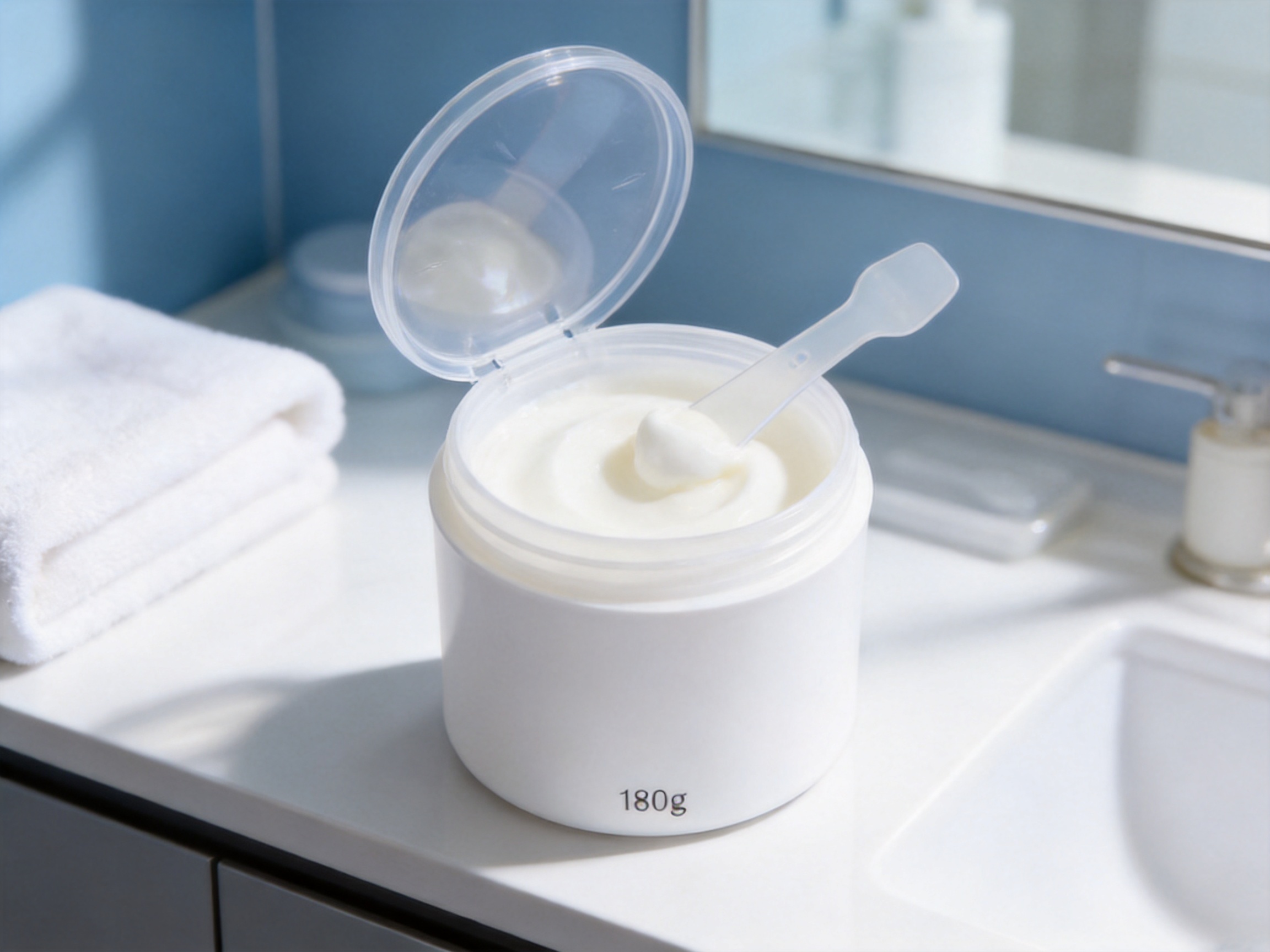
Material and Structural Considerations
The product is categorized as PP Cosmetic Packaging, while its product information emphasizes a high-quality acrylic texture and a porcelain-like exterior. In practical terms, buyers should confirm the exact material specification, component structure, wall thickness, closure details, and compatibility requirements during the quotation and sampling stages. Cosmetic packaging performance depends not only on the general material family but also on the grade, molding conditions, additives, colorants, and assembly method.
Plastic materials are widely used in cosmetic packaging because they can be molded into detailed shapes, produced in multiple colors, and combined with different decorative finishes. They also support efficient transportation and are generally easier to handle than fragile glass. The selected material should be evaluated against the formula’s oil content, alcohol content, active ingredients, fragrance components, pH, viscosity, and storage conditions.
The double-walled body is an important structural feature. A double-wall design can create a more substantial appearance and help protect the inner container from direct external contact. It may also create a smooth surface for decorative treatment. Depending on the final specification, the exterior may support printing, coating, labeling, metallized effects, or other surface decoration methods.
The inner cap is described as highly transparent and airtight. Buyers should define the required sealing performance, fit tolerance, closure torque, and leak-testing standards for their specific filling process. The exact sealing result can depend on the interaction between the cap, jar neck, gasket or sealing edge, formula viscosity, filling volume, and storage conditions.
The spatula should also be reviewed as part of the complete package. Its size, shape, stiffness, surface finish, and material must be appropriate for the intended product. Brands may choose to place the spatula inside the carton, attach it to an internal holder, or include a dedicated recess in the cap or package insert. The final arrangement should prevent movement, scratching, contamination, or damage during transport.
Manufacturing Capabilities and Technical Strengths
The manufacturer behind this packaging solution specializes in packaging containers for cosmetics, medicines, and other plastic products. Its capabilities cover the full development cycle, from early product research and design through mold production, molding, decoration, inspection, and warehousing. This integrated approach can reduce communication gaps between separate suppliers and give customers a more coordinated path from concept to finished packaging.
Product Research and Development
A capable research and development team is essential when a packaging project includes multiple components such as a jar, outer cap, inner cap, and spatula. The components must work together in terms of dimensions, appearance, function, and assembly. Research and development activities may include evaluating the container structure, refining the cap fit, improving the tactile experience, and adapting the package to different filling requirements.
For buyers, early technical communication is especially valuable. It can help identify potential problems before tooling begins. Important questions include the target filling volume, formula characteristics, closure method, decoration requirements, packaging line speed, carton dimensions, and desired delivery schedule.
Mold Manufacturing
In-house or closely coordinated mold manufacturing allows a packaging supplier to manage critical dimensional details more effectively. Cosmetic jars require accurate mold design to achieve smooth surfaces, consistent wall thickness, clean parting lines, and reliable assembly. The mold also influences the final appearance of the blue cap accent, the roundness of the body, and the precision of the inner cap.
Custom molds can be developed for brands that need unique dimensions, special logos, differentiated silhouettes, or a proprietary closure structure. Standard products can be more economical for an initial launch, while custom tooling may be appropriate for a long-term flagship range. A supplier with both options can support different stages of brand development.
Plastic Injection Molding
Plastic injection molding provides efficient production for high-volume cosmetic components. Proper control of injection temperature, pressure, cooling time, mold temperature, and cycle conditions helps produce consistent parts. Cosmetic packaging requires particular attention to appearance because small defects, flow marks, sink marks, flash, or color variation can affect the customer’s perception of product quality.
The manufacturing process must also account for component fit. The jar, cap, and inner seal need to maintain appropriate dimensional relationships. Consistent molding supports smooth opening and closing, proper protection of the formula, and reliable assembly during production.
Blow Molding and Related Plastic Processes
The company provides multiple plastic manufacturing processes, including injection molding and blow molding. While the specific process for this round cream jar depends on the final component design, access to different technologies expands the supplier’s ability to develop complementary packaging products. This is useful for brands that need jars, bottles, closures, and related containers from one manufacturing partner.
Gilding, Printing, and UV Coating
Surface decoration plays a major role in luxury cosmetic packaging. The manufacturer offers gilding and printing capabilities that can be used to add logos, product names, patterns, usage information, or metallic accents. UV coating can create a refined surface finish and may help produce different visual effects across the same basic container design.
For the white-and-blue jar, decoration can be kept minimal to preserve the clean appearance, or expanded with silver lettering, dark-blue typography, a metallic logo, or a subtle pattern. The best treatment depends on the brand’s target market, positioning, budget, and desired production volume.
Product Testing
Packaging testing is an important part of reliable commercialization. The manufacturer provides product testing as part of its production process. Depending on the agreed specification, testing may include dimensional inspection, appearance inspection, closure fit evaluation, leak testing, drop testing, color consistency checks, assembly inspection, and compatibility-related support.
Customers should establish a written quality standard before mass production. This standard may define acceptable cosmetic defects, color tolerance, component measurements, closure performance, printing position, packaging cleanliness, and sampling procedures. Clear standards help both the buyer and supplier evaluate the finished goods consistently.
Warehousing and Logistics Support
Finished packaging must be stored and shipped in a way that protects the surface, prevents deformation, and maintains component cleanliness. The manufacturer’s warehousing capability supports organized handling after production. Packaging arrangements should be reviewed for the jar body, cap, inner lid, spatula, and any assembled or unassembled components.
The company is located in Cixi, China, a developed plastic manufacturing area. Its location near the Hangzhou Bay Bridge and within convenient driving distance of Ningbo’s Beilun deep-water port and Hangzhou Xiaoshan International Airport supports domestic and international logistics planning. For overseas buyers, transport access can simplify coordination between factory production, port handling, and final delivery.
Quality Control for the 180g Jar
Quality control should begin before the first production order. A buyer should request technical drawings, material information, color standards, closure samples, decoration proofs, and packaging details. A physical sample should be filled with the intended formula whenever possible, because the practical performance of a container can change depending on the product inside.
Dimensional inspection confirms that the jar body, cap, inner cap, and spatula meet the agreed specifications. This is particularly important when the components are produced separately or when automatic filling and capping equipment is used. Even small deviations can affect assembly, sealing, and line efficiency.
Visual inspection is also essential for a premium package. The white body should have a consistent appearance without unacceptable discoloration, scratches, black spots, excessive flow marks, or other visible defects. The deep-blue cap should maintain consistent color from batch to batch. Printed or gilded elements should be checked for position, adhesion, clarity, and resistance to normal handling.
Functional testing should evaluate how easily the cap opens and closes, whether the inner cap remains securely positioned, and whether the spatula is retained safely during transport. Leak testing can help identify sealing problems. Drop and transportation simulations can provide useful information about how the package performs under realistic handling conditions.
Cosmetic packaging quality is not limited to appearance. Clean production conditions, appropriate packaging of empty components, and protection from dust are also important. Brands selling premium skincare need the container to arrive at the filling facility in a condition that supports efficient and hygienic production.
Customization Opportunities
The standard white-and-blue design can be used as supplied, but the packaging platform also offers opportunities for brand customization. Customization may include color changes, logo printing, product-name printing, surface coating, metallic decoration, label application, carton design, and accessory presentation.
Color customization can help a brand establish different variants within one product family. For example, a blue accent may identify hydration, green may suggest botanical care, lavender may represent calming treatment, and amber may indicate intensive repair. The exact color should be evaluated through physical samples because screen colors and printed color references may not match the final molded component.
Logo placement is another important decision. A logo can be printed on the cap, body, inner lid, or label. The broad cylindrical body offers a useful area for product information, while the cap can carry a small emblem or concise brand mark. The design should remain legible at the intended viewing distance and should not interfere with the clean visual balance of the package.
Surface finishes can shift the perception of the same container. A high-gloss finish may create a polished, contemporary appearance, while a matte finish can communicate softness and understated luxury. UV coating, selective gloss, metallic details, or a combination of smooth and textured areas can help a brand create a more distinctive package.
Custom tooling is possible for customers seeking a proprietary jar. A custom project may involve changes to capacity, diameter, height, wall structure, cap geometry, logo integration, or accessory storage. However, custom development normally requires additional tooling investment and a longer project timeline. Brands should compare the expected sales volume and long-term strategic value before choosing this route.
Commercial Benefits for Brands and Buyers
A packaging supplier should provide more than a visually attractive item. It should help customers manage product development, manufacturing, quality, and logistics. The manufacturer associated with this jar offers thousands of daily chemical packaging designs, including standard products and customized molds. This broad product range can help brands coordinate multiple packaging needs through one source.
Using a standard jar can shorten the development cycle because the basic structure already exists. The brand can focus on formula filling, graphic design, decoration selection, testing, and market launch. This may be especially valuable for emerging skincare companies that need to control development costs and respond quickly to market opportunities.
The 180g format also supports product-line planning. A company may use the same jar for several cream formulas, changing only the label, color accent, or carton graphics. Shared packaging components can simplify purchasing, storage, and brand recognition across the collection.
For established companies, the jar can function as an additional premium format within an existing range. It can be positioned as a professional treatment size, a gift set component, a salon-exclusive product, or a larger-value option for loyal customers.
Plastic construction can further support cost management through reduced weight and efficient production. The final commercial advantage depends on material selection, order volume, decoration, tooling, shipping method, and other project variables. Buyers should request a detailed quotation based on their actual specifications rather than evaluating the container price alone.
Ordering and Development Process
Step One: Define the Formula and Fill Requirement
Before selecting the final package, the buyer should provide information about the formula’s texture, density, oil phase, active ingredients, fragrance, pH, and expected fill weight or volume. A nominal 180g package should be evaluated against the actual product density and required headspace.
Step Two: Confirm the Component Structure
The buyer and supplier should confirm the jar body, outer cap, inner cap, spatula, sealing features, and assembly arrangement. At this stage, it is important to clarify the material specification because product descriptions may use both category terminology and appearance-related terminology.
Step Three: Review Samples
Physical samples should be inspected for appearance, dimensions, closure function, tactile quality, and compatibility with the proposed formula. Samples should also be reviewed by the brand’s design, quality, filling, and marketing teams so that commercial and technical expectations are aligned.
Step Four: Approve Decoration
Artwork should be prepared according to the selected printing, gilding, coating, or labeling process. The supplier can provide guidance regarding printable areas, minimum line thickness, color limitations, registration tolerances, and surface preparation.
Step Five: Conduct Testing
Filled samples should undergo suitable stability and compatibility evaluation. The package should also be assessed for leakage, closure performance, handling, transport, and appearance after storage. The testing plan should reflect the brand’s sales channels and expected distribution environment.
Step Six: Confirm Mass Production Standards
Before production begins, the buyer should approve a golden sample or signed reference sample. The agreed standard should include color, appearance, decoration, dimensions, assembly, packaging method, and inspection requirements. This document can provide a clear reference for future batches.
Sustainability and Responsible Packaging Considerations
Plastic packaging decisions should consider the complete product life cycle, including material quantity, production efficiency, transport weight, durability, consumer use, and end-of-life handling. A lightweight jar that resists breakage may reduce losses during distribution, but brands should still evaluate whether the double-wall construction is appropriate for the formula and market requirements.
Material selection and component design should be reviewed with recycling guidance in mind. The jar includes multiple elements, including the body, outer cap, inner cap, and spatula. Clear component identification and responsible consumer instructions may help improve disposal practices, depending on local recycling systems.
Brands can also reduce unnecessary environmental impact through right-sized cartons, efficient secondary packaging, concentrated formulas where appropriate, and optimized shipping configurations. These decisions should be made together with the packaging supplier so that protection is maintained without excessive empty space or avoidable materials.
For companies with sustainability commitments, the supplier should be asked to provide available material information, production data, and options for reducing packaging weight or simplifying components. Any environmental claim used in marketing should be supported by appropriate evidence and should reflect the actual package specification.
Why Choose an Integrated Packaging Manufacturer
An integrated manufacturer can support the customer through multiple phases of the project. Instead of coordinating separate companies for design, molds, molding, decoration, inspection, and warehousing, the buyer can work with one experienced packaging partner. This may improve accountability and make it easier to resolve technical issues.
The company’s experience covers cosmetic packaging, pharmaceutical packaging, and other plastic products. This cross-sector background can contribute to a stronger understanding of container structure, production precision, and quality requirements. Its research and development team, manufacturing equipment, standardized factories, and technical support services provide a foundation for both standard and customized projects.
The company’s philosophy is based on long-term customer relationships and the belief that customer success is closely connected with supplier success. For a skincare brand, this relationship can be valuable beyond the initial order. Future support may include new capacity requirements, additional colors, packaging updates, complementary containers, or custom mold development.
Technical communication is especially important for products with an inner cap and accessory. An experienced supplier can help identify suitable assembly methods, packaging arrangements, sealing expectations, and decoration limitations. This type of support can reduce the likelihood of expensive changes after mass production begins.
Product Positioning in Luxury Cosmetic Packaging
Luxury cosmetic packaging is not defined solely by expensive materials. It is created through the combined effect of appearance, function, reliability, proportion, tactility, and brand consistency. The 180g round plastic cream jar supports this approach by pairing a restrained visual language with useful dispensing features.
The porcelain-white body creates a calm and clean foundation. The deep-blue cap accent adds recognition and modernity. The transparent inner cap demonstrates additional attention to product protection, while the spatula turns the package into a more complete user experience. The double-walled construction adds visual and tactile substance without depending on heavy glass.
These features can help brands communicate a professional skincare identity. The package is suitable for companies that want to emphasize formulation quality, hygiene-conscious use, technical development, and dependable daily care. It can also work for brands that want a premium appearance while maintaining efficient shipping and practical consumer handling.
Successful luxury positioning still requires a complete brand system. The formula, fragrance, label design, carton, photography, retail display, and customer service must support the same quality message. The jar provides a strong foundation, but the final market impression depends on how all elements are integrated.

Frequently Asked Questions
What is the capacity of the cream jar?
The product is described as an approximately 180g empty round cream jar. The final fill quantity should be confirmed according to the density, texture, headspace, and filling requirements of the customer’s formula.
What type of products can be filled into this jar?
The jar is suitable for many skincare products, including moisturizing creams, acne-care creams, repair treatments, night creams, sleeping masks, body creams, balms, spa products, and other medium-viscosity or high-viscosity cosmetic formulas. Compatibility testing is recommended for every formula.
Does the package include an inner cap?
Yes. The design includes a highly transparent inner cap intended to provide an additional protective layer between the cream and the external environment.
Is a spatula included?
The product information identifies a dedicated dispensing spatula as part of the dispensing solution. Buyers should confirm the final quantity, material, placement, and packaging method during the order process.
Does the inner cap make the product sterile?
The inner cap and spatula are designed to support a more hygienic application method and reduce direct contact with the cream. They do not by themselves guarantee sterility. Sterility claims require appropriate manufacturing controls, testing, preservation systems, and regulatory validation.
What is the main visual design?
The package features a porcelain-white cylindrical body with a vibrant deep-blue arc-shaped cap detail. This contrast creates a clean, modern, and professional appearance.
Is the jar made of glass?
No. It is a plastic cosmetic jar. The product information describes a high-quality acrylic texture and a lightweight, drop-resistant construction, while the product category identifies it as PP Cosmetic Packaging. The exact material specification should be confirmed with the supplier before production.
Can the color be customized?
Customization may be available depending on the production plan, order quantity, and selected component. Customers should request color samples and confirm the approved color standard before mass production.
Can the logo be printed on the jar?
Printing and other decoration services are available as part of the manufacturer’s capabilities. The customer should provide artwork and confirm the selected process, printable area, color requirements, and surface finish.
Is a custom mold available?
The manufacturer provides standard packaging designs and customized molds. A custom mold can support changes to the capacity, dimensions, cap design, logo integration, or other structural details. Tooling cost and development time should be evaluated before approval.
What testing should be completed before filling?
Recommended evaluations may include formula compatibility, leakage, closure performance, dimensional inspection, appearance inspection, drop resistance, transport simulation, and storage testing. The final testing program should reflect the formula and distribution conditions.
What makes this jar different from a basic open-mouth cream jar?
Its main differentiators are the transparent inner cap, dedicated spatula, double-walled construction, porcelain-white appearance, deep-blue cap accent, and premium plastic structure. These features combine hygiene-conscious dispensing, visual differentiation, and practical handling.
Can the jar be used for export products?
Yes. It can be considered for domestic and international skincare products. Export buyers should confirm applicable packaging, labeling, material, transportation, and regulatory requirements for their destination markets.
How should the package be stored before filling?
Empty components should be stored in clean, dry conditions away from excessive heat, moisture, dust, direct sunlight, and chemical contamination. The supplier and filling facility should agree on protective packaging and handling procedures.
How can buyers request a quotation?
Buyers should provide the required quantity, formula type, decoration needs, color preferences, delivery destination, and any custom specifications. They can contact DEPRAG Plastic Products Co., Ltd. by telephone at +86 13968274500 or +86 13764345885, or by email at ysgl@vip.163.com.
Conclusion
The 180g empty round plastic cream jar provides a practical and premium packaging platform for modern skincare products. Its clean white cylindrical body, deep-blue cap accent, transparent inner cap, dispensing spatula, and double-walled construction create a package that combines visual appeal with functional value.
Compared with a basic open-mouth jar, the design supports a more controlled and hygiene-conscious dispensing routine. Compared with traditional glass packaging, its plastic construction can offer lighter handling and improved resistance to everyday impact. The jar also provides broad decoration space and flexible product positioning for moisturizing, acne-care, repair, body-care, spa, and private-label products.
The manufacturer’s integrated capabilities in product research and development, mold manufacturing, plastic molding, printing, gilding, UV coating, testing, warehousing, and technical support provide additional value for buyers. This complete manufacturing structure can help customers move from an initial packaging concept to a finished commercial product with clearer coordination and stronger quality control.
For brands seeking Luxury Cosmetic Packaging, Skincare Packaging, or Luxury Skin Care Packaging, this container offers a balanced solution. Its success in the market will depend on correct formula compatibility, approved quality standards, professional filling, effective decoration, and consistent brand communication. When these elements are managed together, the 180g jar can help skincare products present a stronger, cleaner, and more reliable image from the first customer impression through everyday use.
References
1. Cosmetic Packaging Development Principles: Container Design, Material Selection, and Product Compatibility.
2. Personal Care Product Quality Management: Filling, Closure Testing, Packaging Inspection, and Storage Control.
3. Plastic Injection Molding for Cosmetic Containers: Dimensional Accuracy, Surface Quality, and Production Consistency.
4. Packaging Hygiene and Consumer Use: Reducing Direct Contact in Cream and Lotion Applications.
5. Luxury Beauty Packaging Design: Color Contrast, Tactile Experience, Functional Differentiation, and Brand Communication.
6. Sustainable Packaging Evaluation: Material Efficiency, Transportation Performance, Component Design, and End-of-Life Considerations.
7. Cosmetic Product Stability and Packaging Compatibility: Practical Evaluation Methods for Cream and Emulsion Formulas.
Product: 180g Empty round plastic cream jar

-
 DP-A-009 Body Cream Jar 80ml Container 70ml Cosmetic Packaging Body Butter Plastic Jar
-
180g Empty round plastic cream jar
-
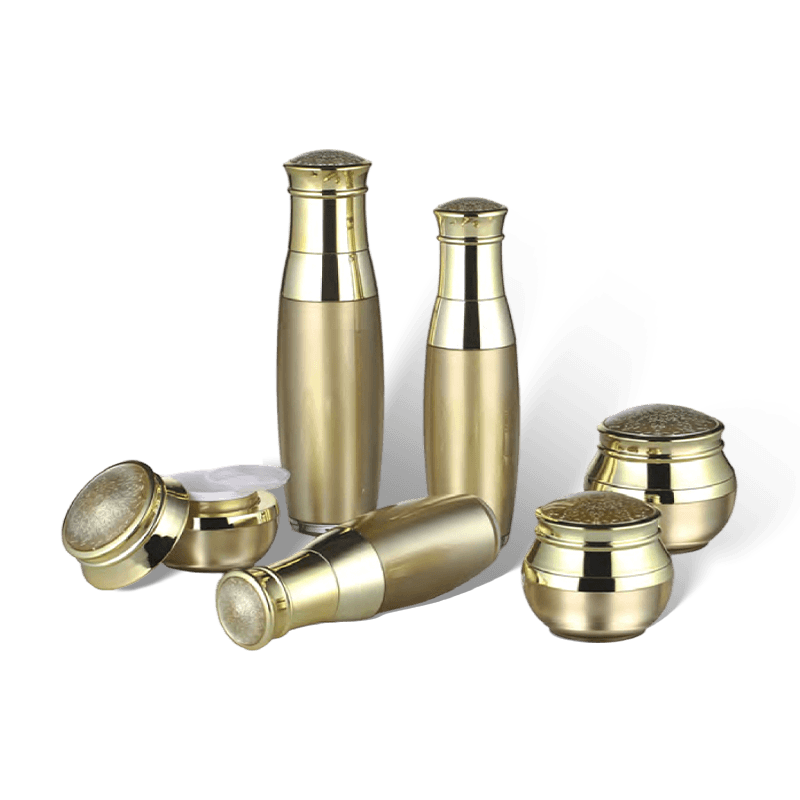 DP-A-021 50g/30g/20g Skin Whitening Cream Packaging Cosmetic Jars
-
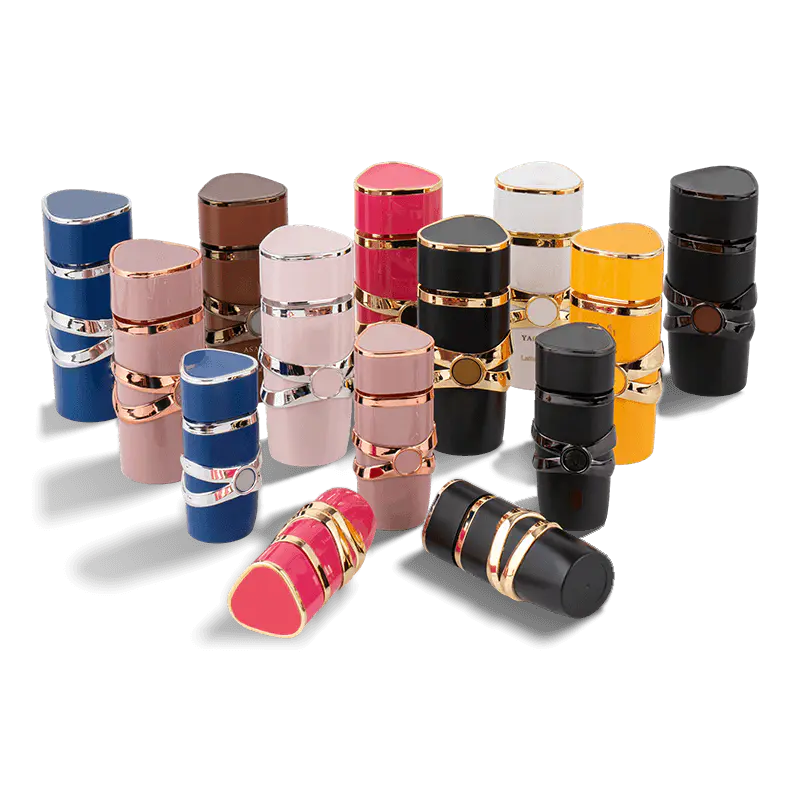 Round Luxury Empty 100ml Perfume Bottle
-
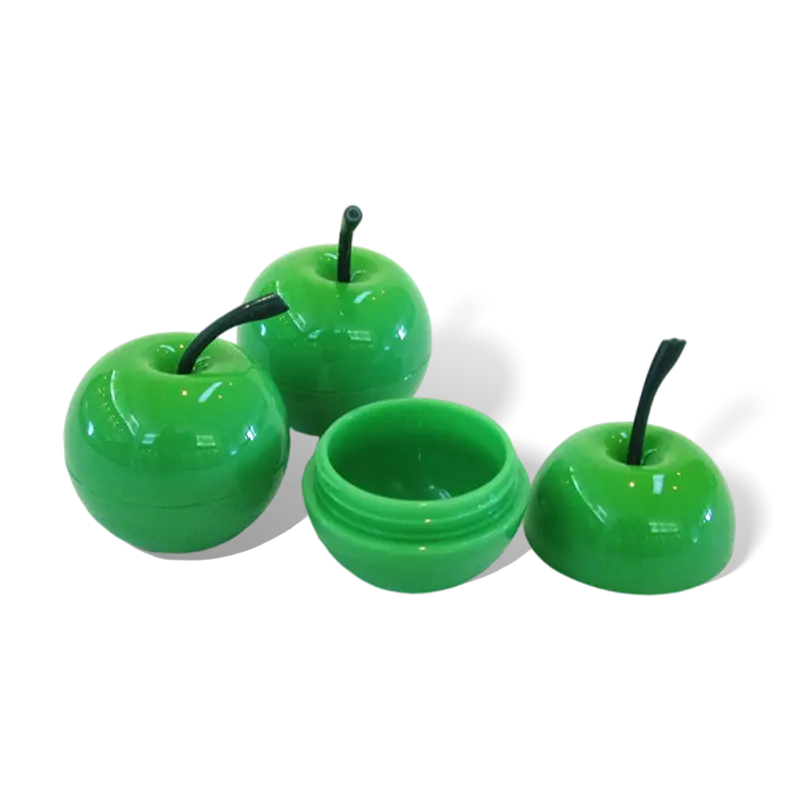 10g Luxury Creative Cherry-Shaped Face Cream Jar
-
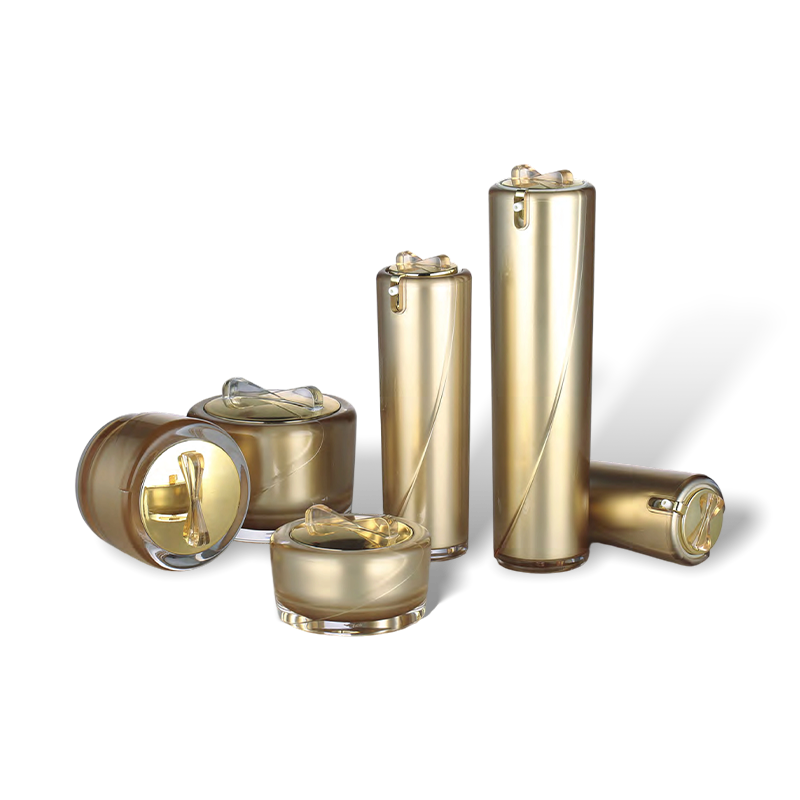 DP-A-020 120ml Green Acrylic Cream Bottle 50g Blue Acrylic Cosmetic Container 50ml Acrylic Jar and Bottles
- +86 13968274500
- +86 13764345885
- ysgl@vip.163.com
- No. 10-18, Gaoxiakeng, Dongputou Village, Zhangqi Town