English
 中文简体
 Français
 Español
 عربى



Spherical Luxury Skincare Packaging for Premium Creams and Lotions
In the competitive skincare market, packaging is no longer limited to protecting a formula. It is a visible expression of product quality, brand positioning, and consumer experience. The DP-A-001 spherical cosmetic packaging collection is designed for skincare brands that want to move beyond ordinary cylinders, rectangles, and conventional jars. Its rounded silhouette, rich aurora red finish, metallic gold detailing, and double-layer acrylic construction create a distinctive presentation for whitening creams, repairing products, anti-aging formulas, eye creams, scrubs, lotions, and professional skincare sets.
The collection combines decorative impact with practical packaging performance. A 15ml spherical cream jar offers a compact option for travel products, trial sizes, eye creams, and premium gift sets, while larger spherical jars and coordinated lotion bottles extend the visual identity across a complete skincare range. The available product descriptions include spherical cream and scrub jars in sizes such as 30g and 50g, together with lotion bottles from approximately 30ml to 120ml.
For buyers seeking luxury cosmetic packaging, the most important advantage is balance. Packaging must be attractive enough to command attention, reliable enough to protect the product, comfortable enough to use, and adaptable enough to support different filling and branding requirements. This collection addresses those needs through a combination of design development, acrylic technology, surface finishing, customization options, and integrated manufacturing capabilities.
A New Direction in Premium Skincare Presentation
Many cosmetic containers are based on familiar geometric forms. Straight-sided jars and cylindrical bottles are efficient to manufacture, but they can make different products appear similar on retail shelves. In contrast, a sphere immediately creates a recognizable visual identity. It suggests softness, fullness, vitality, and balance, all of which are closely connected with the communication goals of skincare products.
The spherical body also changes how the container feels in the hand. Its continuous curves avoid sharp corners and provide a naturally comfortable grip. This is particularly suitable for face creams and body products because the shape visually communicates richness and elasticity. The rounded form can make a compact container feel more approachable and more memorable during the daily skincare routine.
For premium brands, the emotional effect of packaging is especially important. Consumers often encounter a product before they experience its formula. The color, weight, shape, opening mechanism, and surface treatment can influence whether the product is perceived as ordinary, professional, luxurious, or gift-worthy. A well-executed spherical jar helps create a stronger first impression and gives the product a more distinctive presence in e-commerce photography, retail displays, professional salons, and skincare gift boxes.
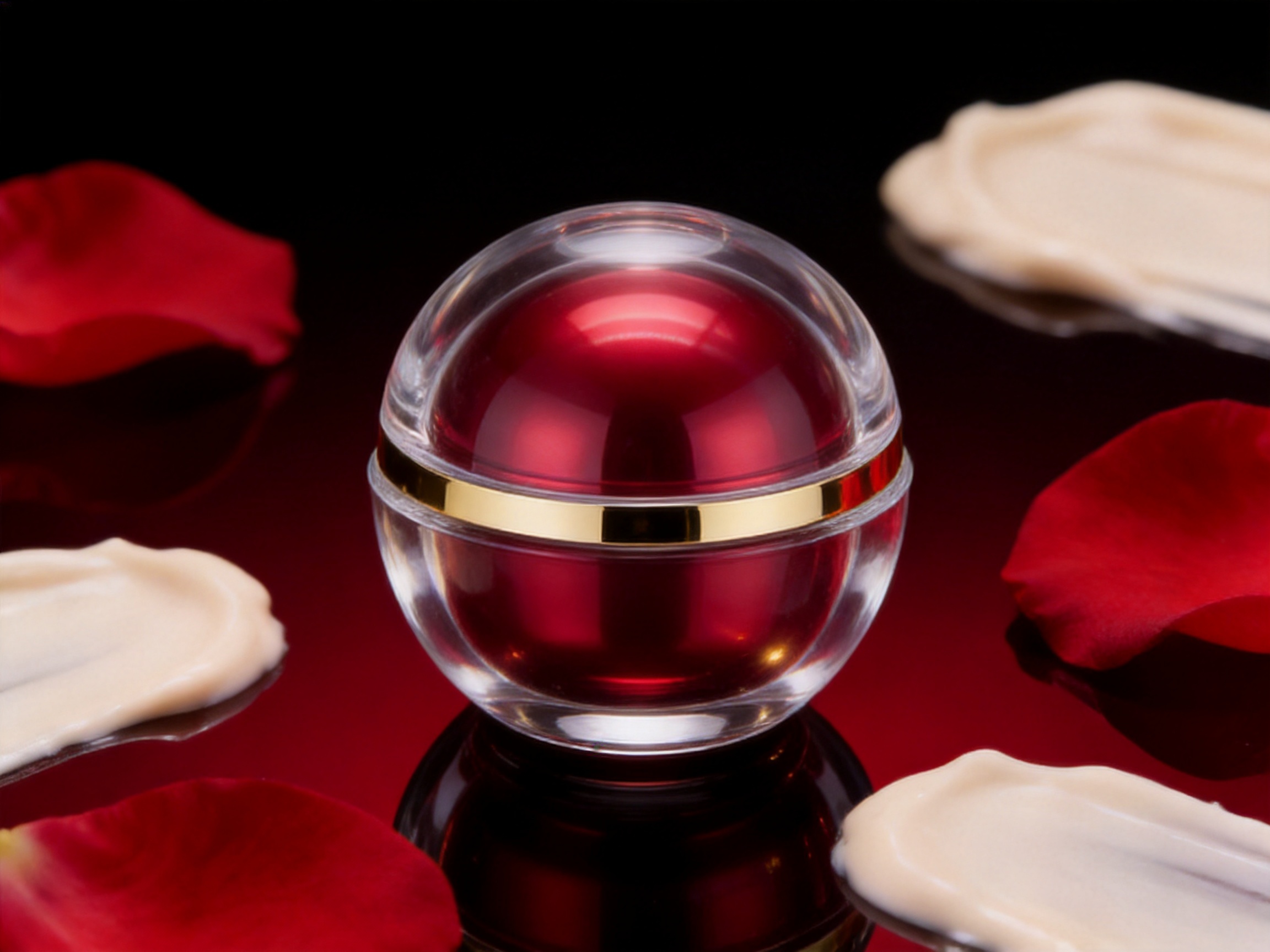
The DP-A-001 design uses a metallic aurora red appearance with mirrored gold decoration around the neck. Red communicates energy, confidence, warmth, and vitality, while gold is traditionally associated with value and premium quality. Together, the two colors create a dramatic contrast that can support high-end whitening, brightening, repairing, anti-aging, and festive skincare collections.
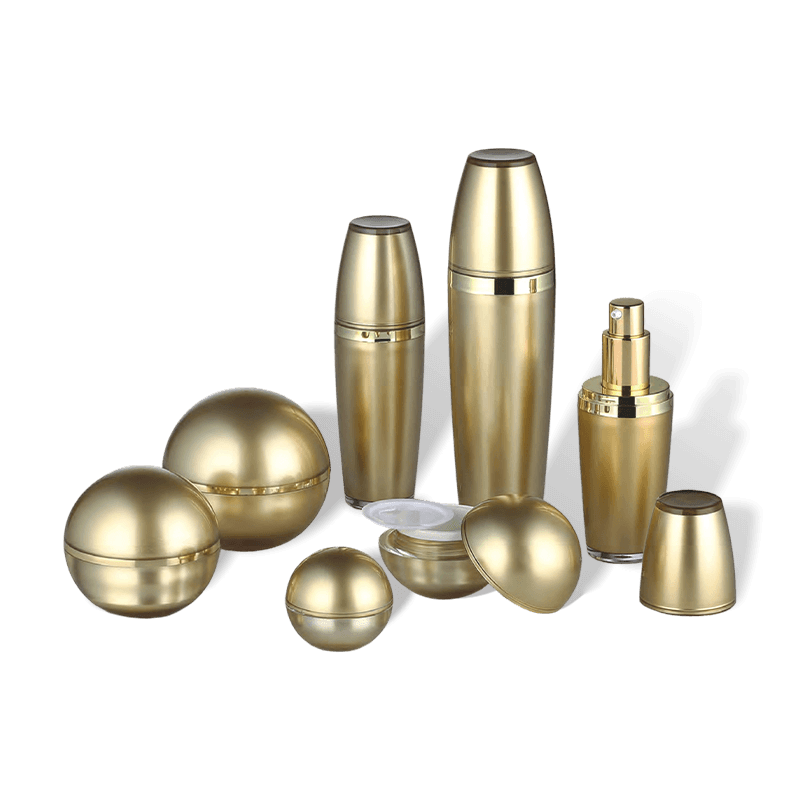
DP-A-001 15ml spherical small whitening cream jar/lotion bottle
Core Product Advantages
Distinctive Spherical Aesthetics
The most visible advantage of the collection is its spherical silhouette. Rather than relying on a standard jar profile, the container creates a strong three-dimensional statement. The shape can help a product stand apart from competing skincare lines that use more common packaging structures.
A spherical design is also highly adaptable from a visual branding perspective. It can be used for modern luxury concepts, professional salon products, festive limited editions, premium gift sets, or skincare lines inspired by vitality and renewal. The same basic structure can support different logo treatments, color combinations, and surface effects without losing its recognizable form.
The rounded body gives the product a soft and elegant appearance. This makes it suitable for creams and balms that need to communicate nourishment, moisture, comfort, and a rich texture. It is equally useful for scrubs and body-care products because the shape provides a more tactile, lifestyle-oriented impression than a basic industrial container.
Compact 15ml Format for Specialized Products
The 15ml spherical jar is suitable for products that require a smaller capacity. Eye creams, concentrated treatments, travel-size face creams, sample products, professional trial packages, and premium gift-set components can all benefit from a compact format.
A small container can also help brands build a multi-step skincare experience. For example, a product line may include a 15ml eye cream, a 30g face cream, and a larger 50g treatment jar, all using the same spherical design language. This creates consistency across the range while allowing each product to serve a different usage occasion.
Smaller packaging is increasingly relevant for consumers who travel frequently or prefer to test a product before purchasing a full size. It can also support promotional strategies, seasonal boxes, subscription programs, salon consultations, and coordinated skincare rituals. The compact format therefore has commercial value beyond simple capacity reduction.
Coordinated Cream Jars and Lotion Bottles
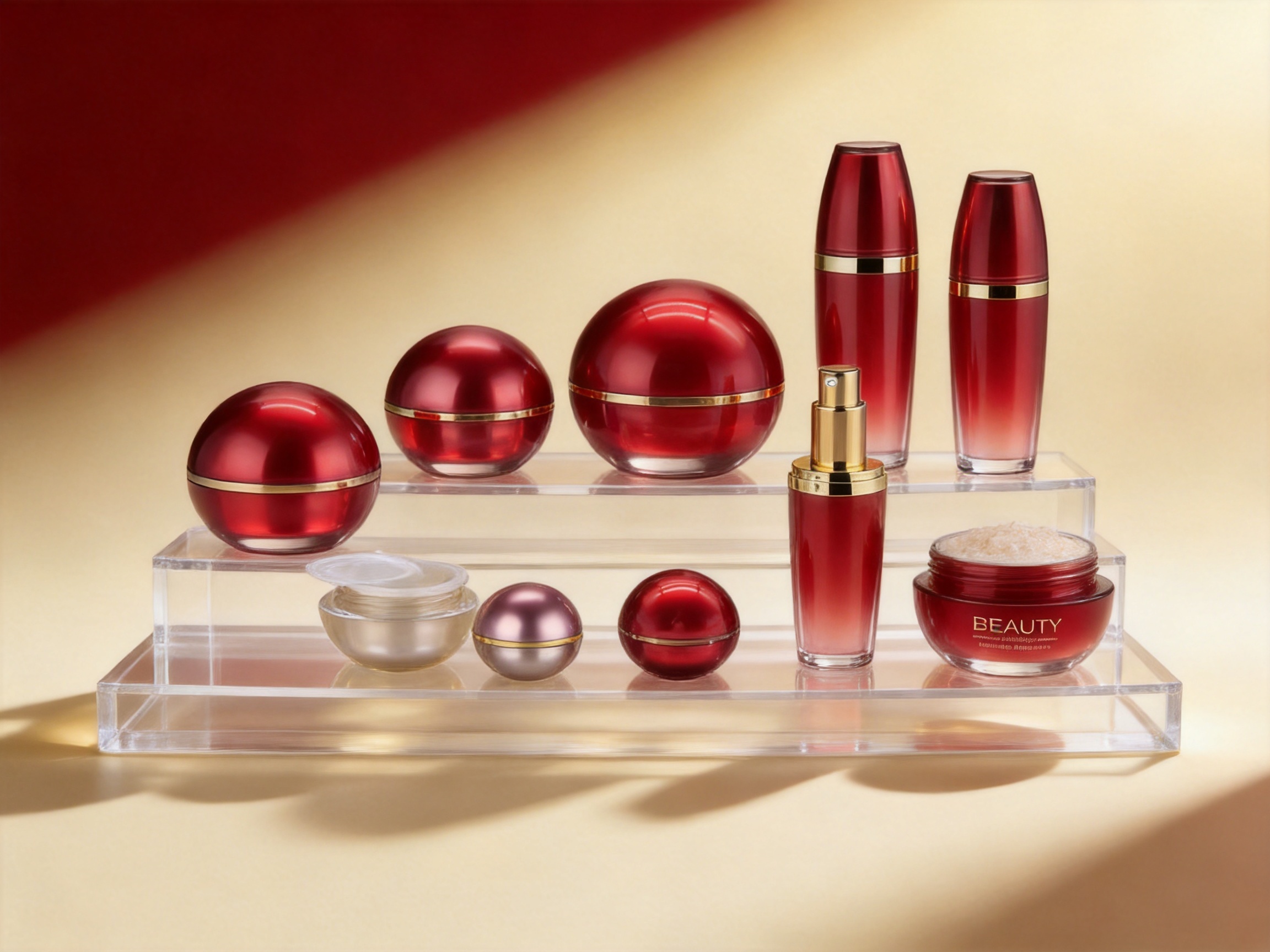
A major strength of the collection is its broader product line. The design concept is not restricted to one jar size. Spherical cream and scrub jars are available in several formats, including approximately 30g and 50g options. Coordinated lotion bottles are also offered in short and long styles, with capacities ranging from approximately 30ml to 120ml.
This range enables a brand to create a complete visual system instead of selecting unrelated containers for each formula. A cleanser, toner, lotion, serum, cream, eye treatment, and body product can be presented with related proportions, colors, decorative elements, and finishing techniques.
The lotion bottles use a streamlined upper section combined with a rounded lower body. This creates a visual balance between movement and stability. The tapered top gives the bottle a more elegant profile, while the spherical base keeps the overall design connected to the cream jar family.
For buyers managing multiple stock-keeping units, a coordinated range can simplify brand development. The same color story and decoration strategy can be carried across multiple capacities, helping consumers identify products as part of one collection. It also gives packaging buyers more flexibility when planning launch sizes, gift sets, and professional-use formats.
Luxury Red and Gold Color Contrast
The metallic ruby red appearance is designed to create immediate visual impact. Its deep tone can communicate richness and intensity without relying on excessive decorative elements. When paired with a mirrored gold neck treatment, the result is a high-contrast package that is easy to recognize.
Red and gold can be especially effective for seasonal campaigns, celebratory product lines, premium Chinese-inspired aesthetics, and skincare ranges positioned around radiance and renewal. At the same time, the color combination can be adapted for international markets through different label designs, typography, and supporting carton graphics.
The decorative contrast also supports product hierarchy. Gold detailing can draw attention to the neck and opening area, while the red body remains the main visual anchor. This gives the container a layered appearance and can make the package look more refined than a single-color molded container.
Double-Layer Acrylic Construction
The product uses a double-layer acrylic structure. The outer layer is described as crystal clear, while the inner layer carries the rich color. This construction creates visual depth and produces an appearance that can resemble the delicacy of ceramic while retaining the practical advantages of plastic packaging.
Double-layer acrylic technology offers several presentation benefits. The exterior can provide a smooth, polished visual surface, while the inner colored layer creates a fuller and more substantial appearance. The color is not dependent only on a thin external coating, which may help the container maintain a more integrated visual effect.
Acrylic is commonly selected for premium cosmetic packaging because it can provide clarity, smoothness, and a refined surface appearance. Compared with ordinary single-layer plastic containers, a properly engineered double-layer design can create greater visual richness and improved structural presence.
The material combination is also intended to support impact resistance and chemical stability. These characteristics are important in daily chemical packaging, where containers may encounter creams, lotions, oils, fragrances, preservatives, cleaning agents, transport vibration, and repeated consumer handling. Final compatibility should always be confirmed through product-specific testing, but the material approach provides a practical foundation for premium skincare applications.
How the Packaging Supports Brand Differentiation
Skincare packaging competes for attention in several environments at once. It must work on a physical shelf, in a product photograph, inside an online marketplace listing, in a social media post, and during the consumer’s daily routine. The spherical format is effective in each of these settings because it has a clear outline and recognizable proportions.
In online images, unusual shapes can improve product recognition. A round red container with gold detailing can be identified quickly even when displayed beside conventional white, clear, or cylindrical packages. In a physical retail setting, the silhouette can create a focal point within a group of products.
Packaging differentiation is also valuable for private-label businesses. A brand using a standard stock jar may find it difficult to create a distinctive identity unless it invests heavily in graphics. A visually strong container reduces the burden placed on labels and cartons. The package itself becomes part of the brand’s design language.
The collection can support several brand directions:
Premium whitening and brightening products can use the red and gold color scheme to suggest radiance and value.
Anti-aging and repairing formulas can use the rounded body to communicate fullness, comfort, and intensive care.
Eye creams and concentrated treatments can use the 15ml format to emphasize precision and exclusivity.
Professional salon products can use coordinated jars and bottles to create a unified treatment program.
Gift sets can combine different capacities while retaining a consistent visual identity.
Body scrubs and body lotions can use the spherical shape to create a more tactile and lifestyle-oriented presentation.
The result is a packaging system with both decorative and strategic value. It does not simply hold a formula; it helps define how the formula is positioned in the consumer’s mind.
Customization Opportunities for Cosmetic Brands
Logo and Surface Decoration
The smooth curved surface provides a suitable area for customized branding. Available decoration methods include silkscreen printing, hot stamping, and pad printing. Each method can produce a different visual and tactile effect, allowing buyers to select an approach that matches their brand identity and budget.
Silkscreen printing is suitable for direct application of logos, product names, ingredient positioning, and simple decorative graphics. It can be used for clean, modern designs and is available in a range of colors depending on the required result.
Hot stamping is useful when a brand wants a metallic effect. Gold, silver, and other foil appearances can reinforce a luxury position and coordinate with the mirrored gold trim already present on the package. Hot stamping can be applied to selected text, logos, borders, or decorative motifs.
Pad printing is helpful when the design needs to follow a curved or less accessible surface. It can support detailed branding on areas where a flat printing method may be less suitable. The correct technique depends on the logo size, artwork complexity, position, color requirements, and order quantity.
Color and Finish Coordination
Although the featured product uses an aurora red and gold combination, packaging development can involve additional color and finish discussions. Brands may request a color direction that aligns with an existing identity, a seasonal campaign, or a product category.
Color matching should be evaluated through physical samples because the appearance of a color can vary according to the base material, inner layer, outer layer, gloss level, lighting, and decorative process. A sample approval stage is recommended before mass production.
Surface finish can also affect the perceived value of a container. Glossy surfaces tend to emphasize color depth and reflect light, while more muted or satin effects can create a softer and quieter appearance. The selected finish should be considered together with the carton, label, cap, and secondary packaging.
Capacity Selection
The collection offers broad capacity coverage, from approximately 15ml travel-size containers to larger 120ml lotion bottles. This gives brands the ability to develop multiple product tiers without changing the entire packaging concept.
| Packaging Format | Approximate Capacity | Potential Applications | Primary Packaging Benefit |
|---|---|---|---|
| Spherical cream jar | 15ml | Eye cream, travel cream, treatment sample, gift set | Compact luxury presentation |
| Spherical cream jar | 30g | Face cream, repairing cream, concentrated treatment | Balanced size for premium skincare |
| Spherical cream jar | 50g | Face cream, body scrub, intensive mask | Suitable for full-size cream products |
| Short lotion bottle | Approximately 30ml–50ml | Serum, lotion, travel skincare | Compact and coordinated with jar formats |
| Long lotion bottle | Approximately 80ml–120ml | Lotion, body care, daily treatment | Higher capacity with an elegant profile |
The capacities listed are based on the supplied product information and should be confirmed with the manufacturer during technical development. Formula density, filling equipment, headspace, closure selection, and regulatory requirements may influence the final usable volume.
Manufacturing Strengths Behind the Product
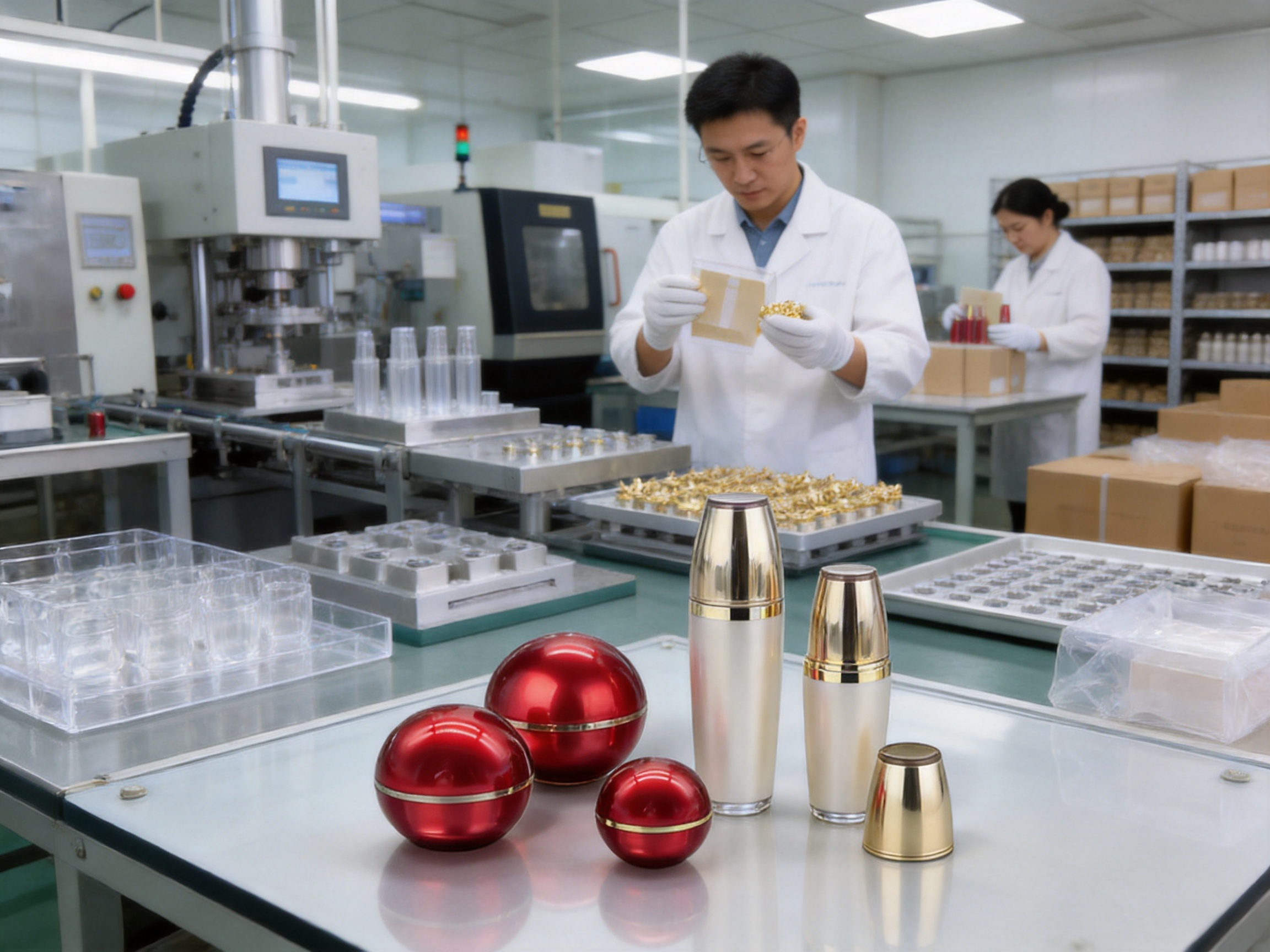
The quality of a cosmetic container depends on more than its visible design. Mold precision, material control, injection parameters, decoration accuracy, assembly, inspection, and warehousing all influence the final result. DEPRAG Plastic Products Co., Ltd. provides an integrated manufacturing process covering product research and development, design, mold manufacturing, plastic injection molding, blow molding, gilding and printing, UV coating, product testing, and warehousing.
This broad process capability is valuable for buyers who want to reduce coordination between separate suppliers. When design development, mold production, molding, decoration, testing, and storage are connected within one manufacturing system, communication can be more direct and production decisions can be managed more efficiently.
Product Research and Development
Product research and development is the first stage in converting a packaging idea into a manufacturable container. A spherical package requires careful attention to wall thickness, parting lines, neck dimensions, closure fit, decoration area, stability, and filling requirements.
Development teams must consider both appearance and function. The container should look symmetrical, maintain a stable base, allow suitable assembly, and provide enough surface area for branding. The opening and closure must also be compatible with the intended formula and user experience.
An experienced research and development team can identify potential production challenges before tooling begins. This may reduce the risk of repeated mold modifications, uneven color appearance, deformation, decoration misalignment, or assembly problems.
Design and Mold Manufacturing
Complex curved packaging requires accurate mold design. A spherical or near-spherical body must be engineered so that the final molded component has consistent dimensions and a clean appearance. Mold manufacturing affects the precision, repeatability, and surface quality of every production run.
DEPRAG’s stated capabilities include mold manufacturing, allowing the company to manage an important part of the product development process internally. This can support closer cooperation between packaging designers and tooling technicians. It may also improve the company’s ability to develop customized molds for clients seeking a distinctive package beyond the standard product range.
Tooling decisions can influence production efficiency, cooling behavior, gate location, part ejection, surface marks, and the consistency of double-layer components. For premium cosmetic packaging, mold quality is especially important because minor imperfections can be visible on smooth, reflective surfaces.
Plastic Injection Molding
Plastic injection molding is a key process for producing precise cosmetic packaging components. The process involves melting selected plastic material, injecting it into a mold, allowing it to cool, and removing the finished part for further processing or assembly.
For double-layer acrylic packaging, process control is essential. The inner and outer layers must be formed and aligned correctly so that the visual color, transparency, wall structure, and overall appearance meet the intended design. Temperature, pressure, cooling time, material flow, and mold condition can all influence the final result.
Stable injection molding can help maintain consistency across large quantities. This is important for brands that require multiple containers to have the same color depth, surface gloss, dimensions, and closure fit. Consistency is particularly visible when products are arranged together in a retail display or packed into a gift set.
Blow Molding for Suitable Bottle Components
The company also provides blow molding capabilities. Blow molding is commonly used for selected bottle structures and can be considered when developing lotion packaging with specific wall forms or capacity requirements.
The availability of both injection molding and blow molding expands the range of packaging solutions that can be developed. Different product shapes and material requirements may call for different manufacturing methods. A manufacturer with multiple process capabilities can recommend a more suitable route according to design, capacity, material, order quantity, and performance requirements.
Gilding, Printing, and UV Coating
Decoration is a major part of premium cosmetic packaging. Gilding and printing can add logos, product information, metallic accents, and visual hierarchy. UV coating can provide additional surface effects and may help create a more polished presentation when used appropriately.
Integrated decoration capability can help reduce inconsistencies between the molded component and its printed or coated surface. It also gives the manufacturer greater control over registration, color application, curing, and handling.
For the DP-A-001 collection, decorative work is particularly important because the design depends on the relationship between the aurora red body and gold detailing. The quality of the metallic effect, alignment around the neck, and cleanliness of the printed logo can strongly influence how luxurious the final product appears.
Product Testing and Warehousing
Product testing is necessary to verify that packaging meets defined quality and performance requirements. Testing may include dimensional inspection, appearance inspection, closure compatibility, decoration adhesion, drop or impact assessment, and compatibility evaluation with the customer’s formula.
Specific tests should be agreed upon according to the application. A face cream jar may require different evaluation priorities from a lotion bottle. The formula’s acidity, oil content, fragrance, solvents, pigments, active ingredients, and storage conditions can all influence packaging compatibility.
Warehousing is another important part of the supply process. Proper storage helps protect finished components from dust, excessive heat, moisture, deformation, and handling damage before shipment. Organized warehousing can also support batch management and more reliable order fulfillment.
Why Integrated Production Matters to Wholesale Buyers
Wholesale buyers often manage multiple challenges at the same time: product positioning, formula development, regulatory preparation, packaging artwork, launch schedules, order quantities, quality control, and logistics. A packaging supplier that can support several stages of the process can make project management more efficient.
When mold manufacturing, molding, decoration, testing, and warehousing are handled through an integrated system, the buyer may benefit from fewer handoffs. This can simplify communication about artwork, sample approvals, color matching, dimensional specifications, and production schedules.
Integrated manufacturing can also improve accountability. If a problem occurs, the supplier has access to more information about the material, mold, molding conditions, decoration process, and inspection records. This can make root-cause analysis more direct than when multiple unrelated vendors are involved.
DEPRAG is located in Cixi, China, an area known for its developed plastic manufacturing industry. The company is near the Hangzhou Bay Bridge and within approximately one hour by road of Ningbo’s Beilun deep-water port and Hangzhou Xiaoshan International Airport. This location can support domestic and international logistics planning, especially for buyers who need coordinated shipping from a manufacturing center with access to major transportation routes.
The company states that it operates modern standardized factories, advanced manufacturing equipment, and an experienced research and development team. It also offers thousands of daily chemical packaging designs, together with standard products and customized mold services. These capabilities are relevant to brands that need both speed and flexibility: a standard product can support a quicker launch, while a customized mold can support a more exclusive market position.
Applications Across the Skincare Market
Whitening and Brightening Creams
The red and gold appearance can support whitening and brightening products positioned around radiance, refinement, and premium care. A 15ml format can be used for a concentrated eye treatment or trial-size brightening cream, while 30g and 50g jars can serve regular face-care products.
Brands should ensure that all product claims and packaging text comply with the regulations of the destination market. The container can support the visual positioning of a whitening or brightening line, but claims must be based on the formula, testing, and applicable legal requirements.
Anti-Aging and Repairing Products
The rounded shape is well suited to anti-aging and repairing products because it visually communicates fullness and comfort. Premium creams, overnight masks, intensive balms, and restorative treatments can benefit from a package that feels substantial and tactile.
The product range also makes it possible to coordinate a treatment collection. A 15ml eye cream, 30g face treatment, 50g night cream, and 100ml lotion can use related packaging while maintaining a clear size hierarchy.
Eye Creams and Concentrated Treatments
Eye creams are often sold in smaller quantities because they are applied to a limited area and are positioned as concentrated products. The 15ml spherical jar can give an eye-care product a premium and specialized appearance.
Small packaging is also useful for high-value active formulas, professional consultation products, and introductory kits. The compact body can fit conveniently into gift boxes and travel collections while preserving a luxury visual effect.
Body Scrubs and Body Lotions
The spherical jars are suitable for body scrubs, especially when a brand wants a more decorative alternative to a basic wide-mouth tub. The 50g format can be used for smaller treatment products, while larger coordinated lotion bottles can support a complete body-care ritual.
Because body products are often displayed in bathrooms or used as part of a self-care routine, the tactile and decorative qualities of the package can have a meaningful influence on perceived value.
Professional Salons and Gift Sets
Professional salons and beauty clinics can use the coordinated packaging range for treatment programs, retail shelves, client gifts, and take-home maintenance products. Consistent packaging helps a professional environment look organized and premium.
Gift sets can combine several sizes and formulas. For example, a set may include a 15ml treatment, a 30g cream, and a coordinated lotion bottle. The spherical design gives the set a strong visual theme, while the different capacities create a complete usage sequence.
Comparing the Spherical Collection with Conventional Packaging
Traditional cylindrical jars and bottles remain practical and widely used. They are often easy to label, stack, fill, and source. However, their familiarity can become a disadvantage when a brand is trying to create a memorable premium identity.
The spherical collection offers a stronger silhouette and a more expressive tactile experience. It can reduce visual similarity with competing products and help a new skincare line appear more distinctive from its first launch.
Compared with glass, double-layer acrylic can provide a lighter and potentially more impact-resistant alternative while retaining a substantial visual appearance. This may benefit shipping, handling, and consumer convenience. However, the final choice should consider the formula, target market, sustainability goals, filling process, and regulatory requirements.
Compared with simple single-layer plastic, double-layer acrylic can provide greater visual depth and a more refined appearance. The inner color and clear outer layer create a layered effect that can support premium positioning.
Compared with heavily labeled packaging, the product’s shape and color perform more of the communication work. This can allow a brand to use cleaner graphics and maintain a less crowded appearance. The final design should still provide all required consumer and regulatory information through printing, labels, cartons, or secondary packaging.
| Evaluation Area | Conventional Basic Jar | Spherical Double-Layer Acrylic Jar |
|---|---|---|
| Shape recognition | Familiar and functional | Distinctive and immediately recognizable |
| Hand feel | Usually based on straight or rounded sides | Continuous curves designed for a comfortable grip |
| Visual depth | Often dependent on surface color or label | Created through clear outer and colored inner layers |
| Luxury positioning | Requires strong decoration and secondary packaging | Supported by form, color, metallic detailing, and decoration |
| Product range development | May require several unrelated stock formats | Supported by coordinated jars and lotion bottles |
| Brand customization | Usually includes label or direct printing | Supports silkscreen, hot stamping, pad printing, and other decoration |
This comparison does not mean that one package is suitable for every formula or business model. Instead, it demonstrates where the spherical collection creates a competitive advantage: visual differentiation, tactile appeal, premium positioning, and coordinated product-line development.
Important Development Considerations for Buyers
Before placing a wholesale order, buyers should provide the manufacturer with detailed information about the formula, target capacity, closure requirements, decoration artwork, expected order quantity, destination market, and intended application.
Formula compatibility should be confirmed through testing. Ingredients such as essential oils, alcohol, solvents, strong acids, pigments, and certain active compounds may interact differently with different packaging materials. A compatibility test under realistic storage conditions can help identify changes in color, odor, viscosity, leakage, swelling, cracking, or decoration adhesion.
Filling trials are also recommended. The actual formula should be filled into production-intent packaging to evaluate filling speed, product residue, wiping requirements, closure performance, and consumer dispensing behavior.
For spherical jars, buyers should review the stability of the container on the intended surface. The base design, jar dimensions, cap structure, and filled product weight all contribute to stability during storage and use.
Artwork should be prepared according to the supplier’s decoration specifications. Logo size, printing position, metallic effect, color references, and minimum line thickness should be confirmed before production. A physical decorated sample is preferable to approval based only on digital images.
Capacity should also be discussed carefully. Nominal capacity, overflow capacity, and usable filling capacity may differ. The product’s density and required headspace can affect how much formula is filled into a container. Buyers should confirm the final specification in writing.
Packaging regulations vary between countries and product categories. Required information may include product name, ingredients, net contents, responsible party, batch code, period-after-opening symbol, warnings, country of origin, and recycling or disposal information. The container, label, carton, and product formula should be reviewed as a complete compliance system.
Quality and Supply Chain Benefits
A premium package must maintain consistent quality across every unit. Variation in color, gloss, dimensions, printing position, metallic decoration, or closure fit can weaken the perceived quality of the finished skincare product.
Quality control should therefore include incoming material checks, first-piece approval, in-process inspection, decoration inspection, assembly inspection, and final sampling. The exact inspection plan depends on the order and technical requirements, but the goal is to identify defects before products reach the customer.
For large-volume orders, batch consistency is essential. A brand may purchase the same package several times over an extended period. Maintaining records of materials, colors, decoration specifications, mold conditions, and approved samples can help ensure that future orders remain visually compatible with earlier production.
Packaging protection during shipment is equally important. Smooth acrylic surfaces can be affected by scratches, dust, friction, and impact if components are not packed appropriately. Suitable inner packaging, separation, cartons, and palletization can help protect finished products during transportation and storage.
DEPRAG’s stated warehousing and integrated production capabilities can support a more organized supply process. Buyers should still confirm packaging methods, shipping marks, carton dimensions, pallet requirements, lead times, and inspection procedures before mass production.
Building a Complete Luxury Skincare Packaging Program
The greatest value of the collection appears when the jars and bottles are treated as a complete packaging program rather than isolated items. A brand can create a visual hierarchy through capacity, product type, and decoration while maintaining a unified color and shape language.
For example, a premium facial-care range may use the 15ml jar for eye cream, the 30g jar for day cream, the 50g jar for night cream, a short lotion bottle for serum, and a long lotion bottle for daily lotion. Each package can receive its own product name and decoration while using related red, gold, and transparent visual elements.
A salon brand may use smaller containers for treatment packages and larger formats for retail products. A gift-focused brand may combine several capacities inside a rigid presentation box. A travel brand may emphasize the compact 15ml size while using the same spherical appearance for future full-size products.
This modular approach can help a company expand its product range without rebuilding its packaging identity each time. It also supports product storytelling. Consumers can recognize the same family of products across different shelves, websites, and promotional campaigns.
Q&A: Spherical Luxury Skincare Packaging
What is the main product featured in this collection?
The featured product is a 15ml spherical cosmetic jar designed for whitening creams, eye creams, concentrated treatments, and other premium skincare products. It belongs to a broader collection that also includes larger cream jars and coordinated lotion bottles.
What other capacities are available?
The supplied product information identifies spherical cream and scrub jars in approximately 30g and 50g sizes, together with lotion bottles ranging from approximately 30ml to 120ml. Final capacities and specifications should be confirmed with the manufacturer for each project.
What makes the packaging different from a standard cosmetic jar?
The main differences are the spherical form, the aurora red color effect, the mirrored gold neck decoration, and the double-layer acrylic structure. These features create stronger visual differentiation and a more luxurious tactile experience than many conventional straight-sided jars.
Why is a spherical shape suitable for skincare products?
The rounded shape provides a comfortable hand feel and communicates softness, fullness, balance, and vitality. These associations are relevant to creams, repairing products, anti-aging treatments, body scrubs, and other skincare categories.
Is the 15ml format suitable for full-size face cream?
A 15ml container is generally more suitable for eye cream, travel-size cream, concentrated treatment, sample packaging, or a premium gift set. Full-size face creams may be better suited to the approximately 30g or 50g jar formats, depending on the product and market.
Can the logo be customized?
Yes. The supplied information identifies silkscreen printing, hot stamping, and pad printing as available customization methods. The best option depends on the artwork, position, color requirements, order quantity, and desired visual effect.
Can different products use the same design family?
Yes. The collection includes coordinated cream jars and lotion bottles in several sizes. This allows a brand to build a unified line for creams, lotions, serums, eye treatments, scrubs, and gift sets.
What are the advantages of double-layer acrylic?
Double-layer acrylic can create a clear outer appearance combined with a rich inner color. It provides visual depth and a more substantial look while supporting the impact resistance and chemical stability expected from suitable cosmetic packaging materials. Product-specific compatibility testing remains necessary.
Is the packaging appropriate for professional salon products?
Yes. The premium appearance, coordinated formats, and customization options make the collection suitable for professional skincare programs, salon retail products, treatment sets, and high-end beauty services.
What manufacturing processes are available?
The company states that its capabilities include product research and development, design, mold manufacturing, plastic injection molding, blow molding, gilding and printing, UV coating, product testing, and warehousing.
Can customized molds be developed?
The company offers customized mold services in addition to standard packaging designs. Buyers should provide their required shape, capacity, product application, closure specifications, artwork, and expected order quantity for technical evaluation.
What should be tested before mass production?
Buyers should consider formula compatibility, filling performance, leakage, closure fit, decoration adhesion, dimensional consistency, drop or impact resistance, storage stability, and transport protection. The exact test plan should be agreed upon according to the product and destination market.
Does the color look exactly the same in digital images and physical samples?
Not necessarily. Lighting, photography, monitor settings, material layers, gloss, and decoration can affect perceived color. Physical samples should be reviewed and approved before mass production.
How can buyers create a complete product line with this collection?
A brand can assign the 15ml jar to eye cream or travel treatments, the 30g and 50g jars to face creams or scrubs, and the 30ml to 120ml lotion bottles to serums, lotions, or body-care products. Related colors, printing, and metallic accents can connect all formats visually.
Where is the manufacturer located?
DEPRAG Plastic Products Co., Ltd. is located in Cixi, China, a developed plastic manufacturing area with access to the Hangzhou Bay Bridge, Ningbo’s Beilun deep-water port, and Hangzhou Xiaoshan International Airport.
Conclusion
The DP-A-001 spherical packaging collection offers a distinctive solution for brands seeking luxury skincare packaging with a strong visual identity. Its 15ml spherical jar provides a compact format for eye creams, concentrated treatments, travel products, and gift sets, while the broader range of approximately 30g and 50g cream jars and 30ml to 120ml lotion bottles supports complete product-line development.
The collection’s main competitive advantages include its recognizable spherical silhouette, comfortable hand feel, aurora red and gold appearance, double-layer acrylic construction, and broad customization potential. These qualities help the packaging perform both as a protective container and as a brand communication tool.
The manufacturing platform adds further value. Product research and development, mold manufacturing, injection molding, blow molding, printing, gilding, UV coating, testing, and warehousing provide a connected production system for standard and customized packaging projects. This integrated capability can help buyers manage quality, consistency, decoration, and supply coordination more effectively.
For skincare companies competing in a crowded market, distinctive packaging can strengthen first impressions and improve the overall opening experience. A carefully developed spherical container can make a product feel more memorable, more premium, and more connected to the values of vitality, balance, and intensive care.
References
1. Product specification materials for the DP-A-001 spherical cream jar and coordinated lotion bottle collection.
2. Manufacturer-provided information on double-layer acrylic cosmetic packaging technology.
3. Manufacturer-provided information on product research and development, mold manufacturing, injection molding, blow molding, printing, gilding, UV coating, testing, and warehousing.
4. General principles of cosmetic packaging development, including material compatibility, decoration adhesion, filling trials, dimensional inspection, and transport protection.
5. General packaging design principles concerning product differentiation, tactile experience, color psychology, capacity planning, and coordinated product-line architecture.
Product: DP-A-001 15ml spherical small whitening cream jar/lotion bottle

-
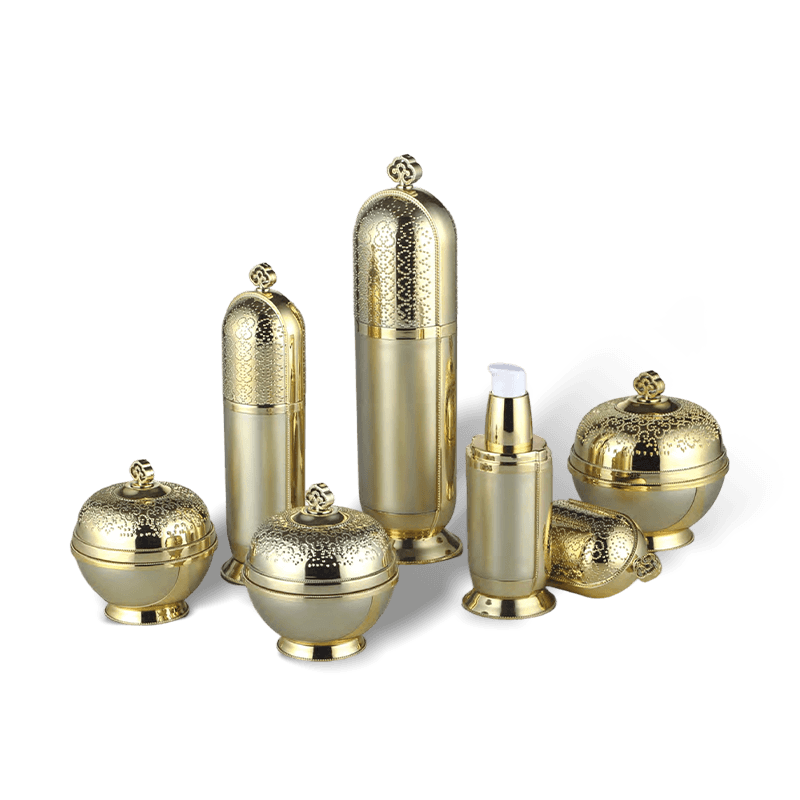 DP-A-018 Acrylic jars for whitening and anti-aging cosmetic creams
-
 Luxury glass perfume bottles 30ml/50ml/100ml/200ml
-
 Luxury 100ml Round Perfume Bottle
-
 Round Luxury Empty 100ml Perfume Bottle
-
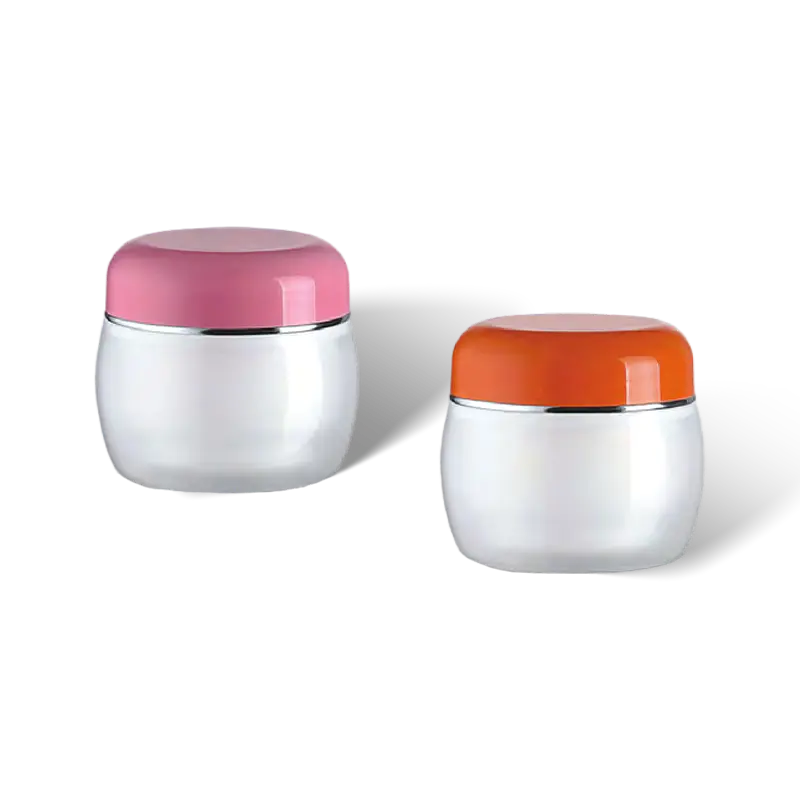 exquisite cosmetic skincare packaging bottle, 20g cosmetic container for children, small deluxe cosmetic jar
-
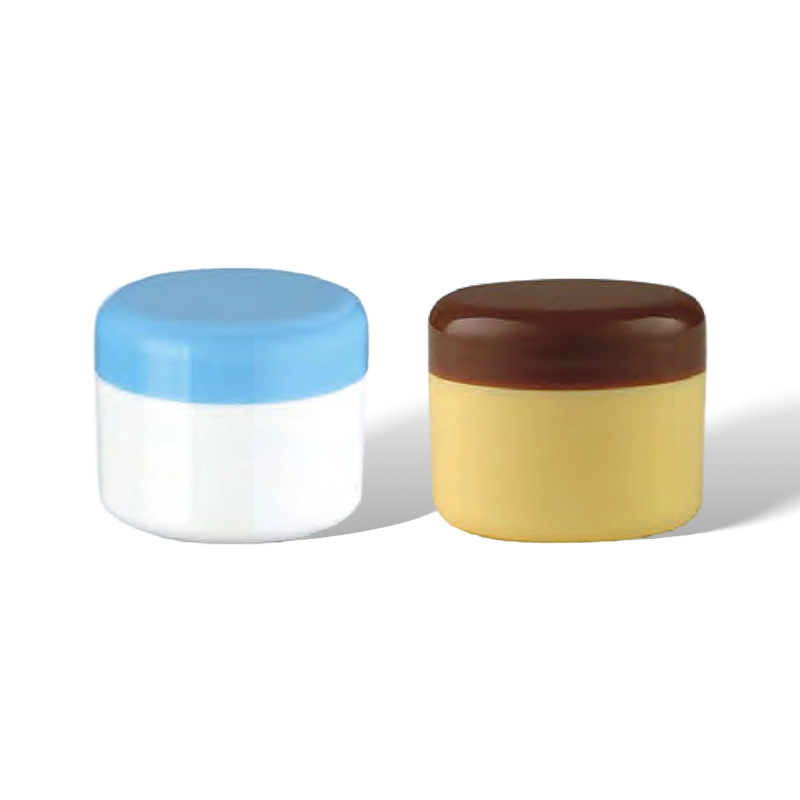 1oz 30g empty PP plastic cream jars for skincare
- +86 13968274500
- +86 13764345885
- ysgl@vip.163.com
- No. 10-18, Gaoxiakeng, Dongputou Village, Zhangqi Town