English
 中文简体
 Français
 Español
 عربى



100ML Classic Elegance Glass Fragrance Container Bottle: A Modern Classic for Luxury Perfume Packaging
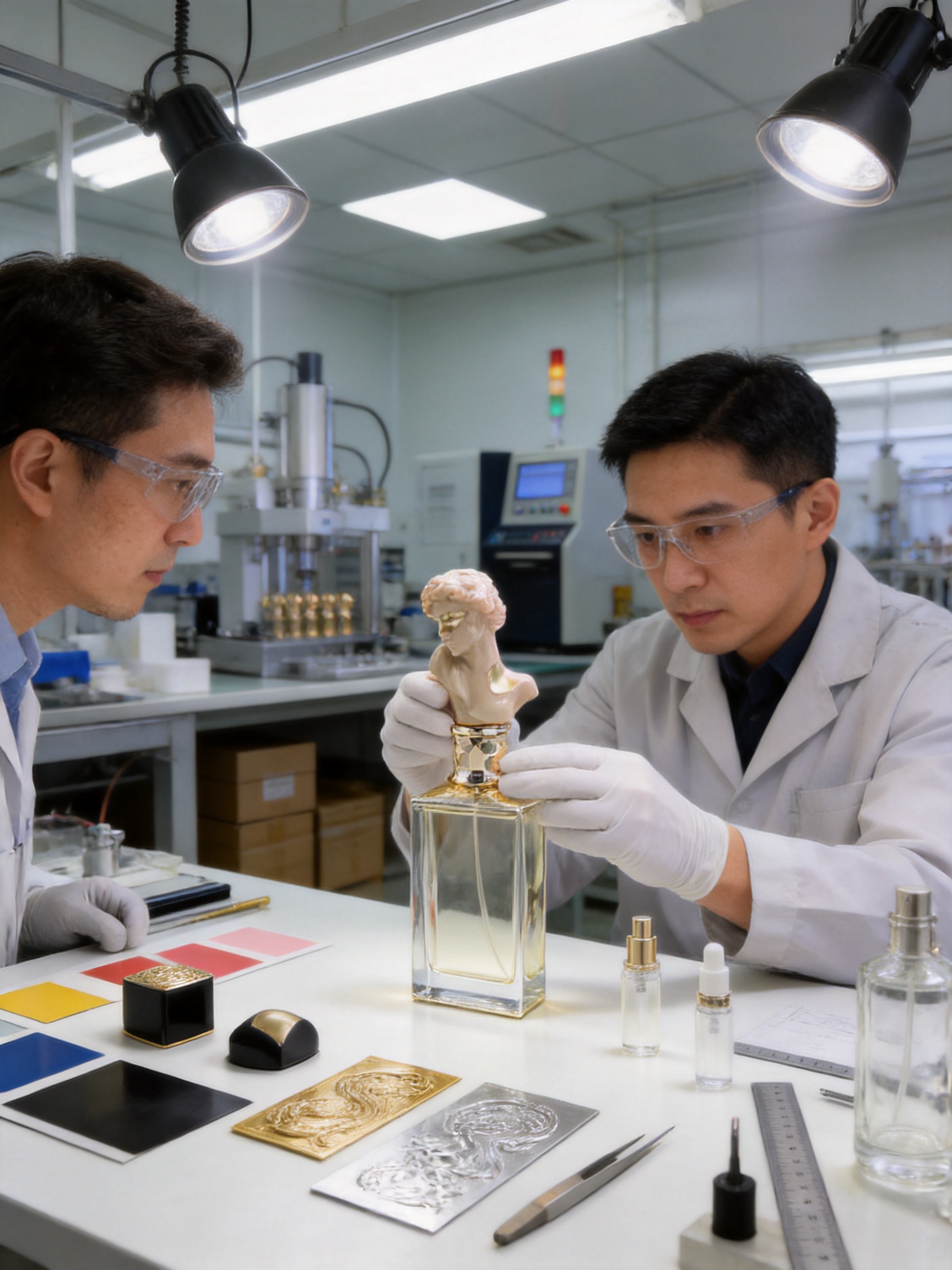
Luxury perfume packaging is no longer limited to protecting a fragrance. In today’s competitive beauty market, the bottle must communicate a brand’s identity, create an emotional connection, support a memorable unboxing experience, and perform reliably throughout storage, transportation, and daily use. The 100ML Classic Elegance Glass Fragrance Container Bottle answers these requirements by combining a stable rectangular glass body, sculptural portrait-inspired cap designs, liquid-metal relief decoration, and a high-precision fine mist sprayer.
Designed for perfume brands seeking a distinctive presentation, this 100ML fragrance container turns a conventional perfume bottle into a display-worthy object. Its design language draws inspiration from the Renaissance statue of David, translating the visual strength of classical sculpture into a modern fragrance package. The result is a product that balances historical artistic references with contemporary geometry, color development, decoration, and functional performance.
This combination makes the bottle suitable for luxury perfume collections, couples’ fragrance ranges, limited-edition launches, boutique fragrance houses, gift sets, and private-label perfume projects. It is also supported by the professional development and production capabilities of DEPRAG Plastic Products Co., Ltd., a China-based packaging manufacturer with experience in cosmetic, pharmaceutical, and daily chemical packaging.
A Fragrance Bottle Designed to Be Seen
Many perfume bottles are visually attractive when first displayed but become indistinguishable when placed beside competing products. The 100ML Classic Elegance Glass Fragrance Container Bottle takes a different approach. Its most recognizable feature is the sculpted portrait cap, which gives the package an immediate artistic identity. Instead of using an ordinary cylindrical, square, or metallic closure, the cap transforms the top of the bottle into a miniature sculptural composition.
The portrait concept is inspired by classical human form and heroic Renaissance aesthetics. Powerful facial lines, carefully shaped contours, and decorative color treatments make each cap appear expressive and collectible. This feature can help a fragrance brand create a stronger visual memory because consumers are more likely to remember a bottle with a recognizable character than a standard package with limited differentiation.
The sculptural cap also adds value to the bottle after the fragrance has been used. Consumers may retain the package as a decorative object on a vanity, dressing table, shelf, or bathroom counter. This extended display life can support brand visibility in the consumer’s home and can reinforce the perception that the fragrance is a premium lifestyle product rather than a disposable container.
The bottle body uses a rectangular structure that provides a sense of stability and architectural strength. Its straight lines create a controlled visual foundation for the more complex curves of the portrait cap. This contrast between geometric simplicity and artistic detail is central to the product’s modern classicism. It allows the package to appear refined without becoming visually chaotic.
For fragrance brands, the design can serve several positioning strategies. A brand may present the bottle as an artistic object, a luxury gift, a collector’s item, a gender-paired fragrance package, or a statement product for consumers who appreciate fashion, sculpture, and interior styling. This flexibility gives the container a broader commercial application than a package tied to only one trend.
Core Product Specifications and Design Elements
The bottle is designed for a nominal 100ML fragrance capacity, a size widely used in retail perfume collections. This capacity is large enough to support a substantial product presentation while remaining familiar to consumers in the prestige fragrance market. The format is suitable for eau de parfum, eau de toilette, perfume oils, and other compatible liquid fragrance formulations, subject to appropriate compatibility testing and filling validation.
| Feature | Product Information | Brand Benefit |
|---|---|---|
| Nominal capacity | 100ML | Suitable for full-size fragrance collections and premium retail presentation |
| Primary container | Glass fragrance bottle | Provides a substantial, premium hand feel and strong visual clarity |
| Body structure | Stable rectangular design | Creates a modern architectural appearance and reliable shelf presence |
| Closure concept | Sculpted portrait-inspired cap | Offers a recognizable artistic signature and collectible appeal |
| Decoration | Liquid gold or silver relief effect | Adds reflective luxury and tactile visual interest |
| Color direction | White, deep blue, candy pink, gray, brown, purple, peach, and other options | Supports men’s, women’s, unisex, seasonal, and limited-edition collections |
| Dispensing system | High-precision fine mist pump | Delivers an even and delicate spray experience |
| Customization | Silkscreen printing, hot stamping, and embossing | Allows brand identification and bespoke packaging development |
The glass body offers the weight, clarity, and tactile quality commonly associated with premium perfume packaging. Glass is also an established material for fragrance containers because it can provide an effective barrier for many liquid formulations when correctly selected, processed, and tested. The substantial feel of glass in the hand can influence perceived product value, especially in a category where sensory presentation is closely connected to purchase decisions.
The rectangular body is particularly valuable for shelf merchandising. Straight sides can make products easier to align in retail displays and can create a clean, orderly visual block when several color variants are presented together. The flat surfaces also provide opportunities for decoration, labeling, brand communication, or additional visual treatments.
The Portrait Cap as a Distinctive Luxury Feature
The cap is the most expressive element of the package. Each cap is shaped as a stylized portrait, bringing human character and sculptural detail into a compact packaging component. The cap design suggests strength, individuality, and artistic confidence. These qualities are highly relevant to fragrance products because perfume is often purchased as an extension of personal style.
Available color directions include classic pearl white, deep blue, sweet candy pink, matte gray, chocolate brown, alluring purple, and bright peach. These colors can be organized into coordinated fragrance families or used to distinguish separate scents within a collection. A brand may assign darker tones to a men’s line, softer or brighter tones to a women’s line, or combine multiple color groups in a unisex collection.
Details such as gold eye accents or partial metallic embellishments create an additional layer of visual interest. The use of a focused metallic detail rather than excessive decoration can help preserve the character of the portrait. It can also create a contrast between the sculpted surface and the reflective finish, making the cap appear more dimensional under retail lighting.
From a marketing perspective, a portrait cap may communicate several messages at once. It can suggest heritage, craftsmanship, theatricality, individuality, or artistic ambition. It also gives a fragrance house more content for product photography, social media presentation, gift packaging, and in-store display. The cap itself can become part of the storytelling system used to explain the inspiration behind a fragrance.
Compared with a standard smooth cap, the portrait cap provides more opportunities for differentiation. Many competing fragrance packages rely on conventional rectangles, cylinders, transparent caps, or generic metallic closures. While those formats can be effective, they may require extensive secondary decoration or advertising investment to become distinctive. An expressive cap builds differentiation directly into the physical structure of the package.
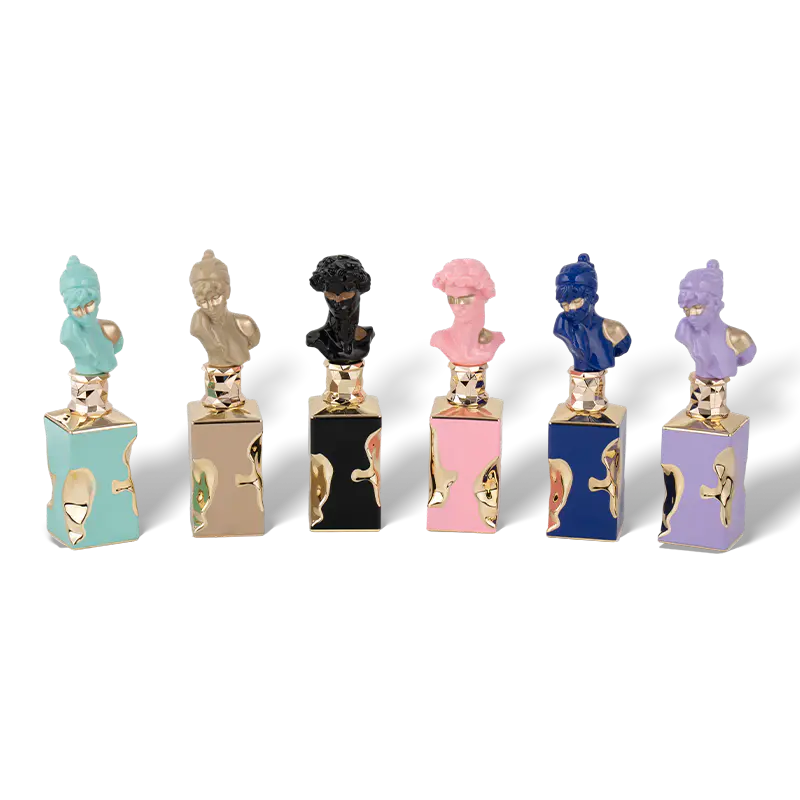
100ML Classic Elegance Glass Fragrance Container Bottle
Liquid-Metal Relief and Surface Decoration
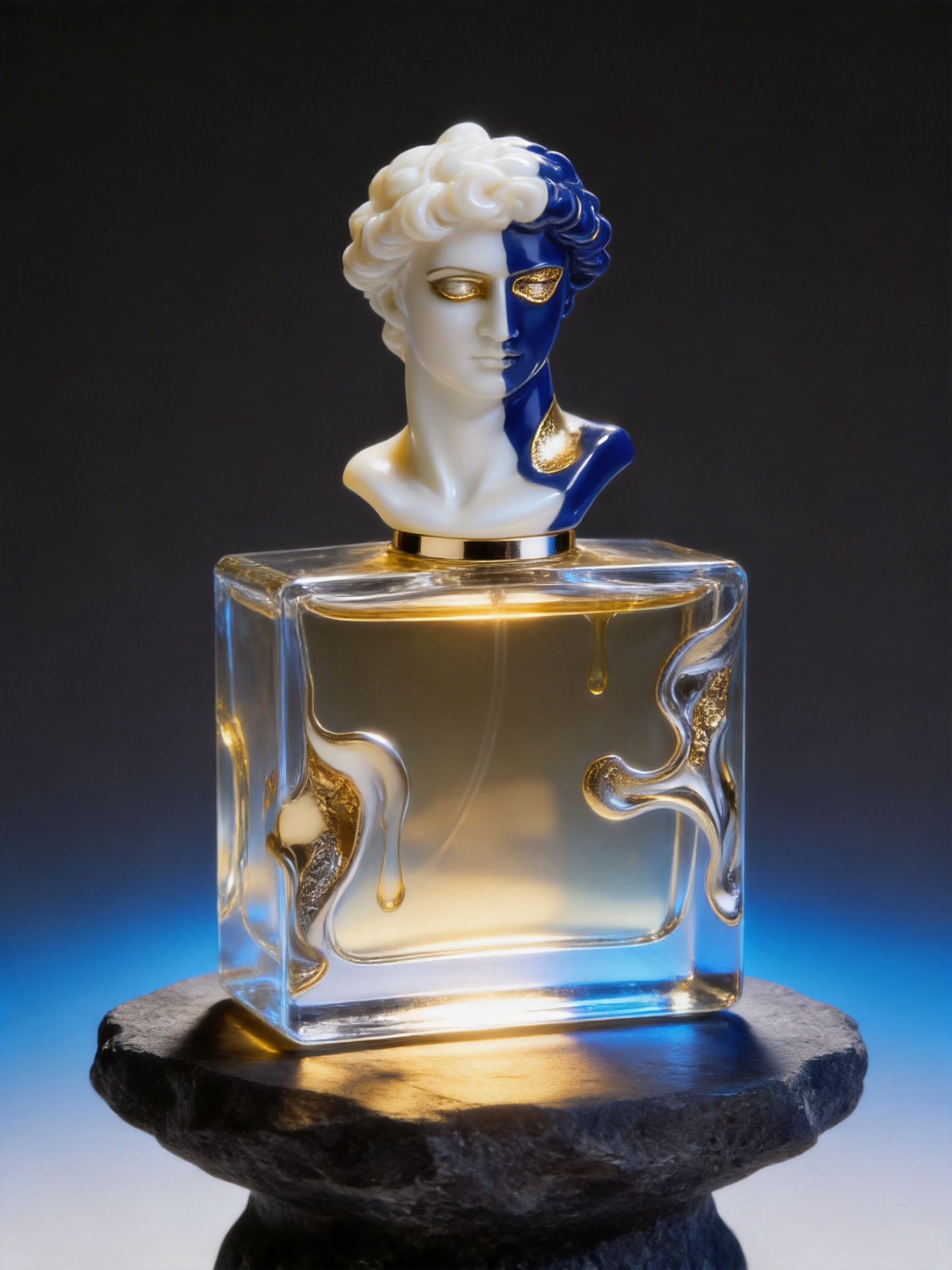
The bottle includes a special liquid gold or silver relief effect on the sides. This treatment is intended to create the visual impression of metal flowing across the glass surface. The relief decoration adds dimensionality to the otherwise stable rectangular structure and gives the package a more luxurious appearance from multiple viewing angles.
Traditional printed decoration is often limited by its flat visual quality. Although printing remains valuable for logos, text, and graphics, a relief effect introduces a more tactile and sculptural impression. The viewer can perceive highlights, shadows, and changes in surface depth as the bottle moves or as lighting changes across the display. This helps the package remain visually engaging in both bright retail environments and softer vanity lighting.
The liquid-metal concept also supports the product’s artistic theme. The cap represents the human figure and classical portraiture, while the metallic treatment introduces movement and contemporary energy. The package therefore combines a static sculptural form with a flowing decorative surface. This balance prevents the bottle from appearing like a purely historical reproduction and instead positions it as a modern interpretation of classical design.
Gold and silver offer different brand impressions. Gold can communicate warmth, exclusivity, richness, and ceremonial luxury. Silver can suggest modernity, cool elegance, precision, and a more restrained premium identity. A brand can select the most appropriate metallic direction according to fragrance notes, target audience, price positioning, or seasonal collection theme.
The side relief may also help the bottle catch attention when arranged in groups. As consumers walk past a display, reflective accents can create small points of light that distinguish the product from packages with plain surfaces. For e-commerce photography, the decoration can provide additional texture and depth, especially when photographed against a simple background.
For production planning, decorative effects must be evaluated for adhesion, uniformity, abrasion resistance, compatibility with filling and handling processes, and long-term appearance. DEPRAG’s manufacturing capabilities include gilding and printing, UV coating, product testing, and other finishing processes that can support the development of coordinated decorative solutions. Final specifications should be confirmed through samples and testing for each selected finish.
Men’s, Women’s, and Couples’ Fragrance Applications
The product concept is well suited to coordinated fragrance collections. A couples’ fragrance range can use the same rectangular bottle architecture and portrait-cap language while differentiating individual products through color, metallic treatment, and fragrance identity. This creates a clear family relationship without forcing every product to look identical.
The men’s series is described with deep sea blue, matte gray, and chocolate brown tones. These colors can create impressions of strength, depth, mystery, and composure. Deep blue may be associated with oceanic freshness or evening sophistication. Matte gray can suggest modern minimalism and technical refinement. Chocolate brown can introduce warmth, richness, and a more intimate character.
The women’s series includes cherry blossom pink, alluring purple, and bright peach. Cherry blossom pink may support a delicate, romantic, or youthful fragrance story. Purple can communicate creativity, sensuality, and confidence. Bright peach can create a cheerful, energetic, and approachable appearance. These color directions are not restrictive; they can be adapted for seasonal, regional, or unisex positioning.
The same package can also support a unisex or gender-neutral strategy. Deep blue, pearl white, silver relief, or carefully balanced combinations of warm and cool tones can be used for fragrances marketed around personality, lifestyle, or scent profile rather than gender. The portrait cap reinforces individuality, making it possible to position the collection around self-expression.
A coordinated collection can improve the consumer shopping experience. When bottles share a recognizable structural language, customers can immediately identify that they belong to the same fragrance family. At the same time, color and cap variations make it easier to distinguish one fragrance from another. This can support cross-selling, gift purchases, discovery sets, and collection-based merchandising.
Applications for Different Brand Types
Independent fragrance brands can use the bottle to establish a strong visual signature at launch. A distinctive package may help a smaller brand compete for attention against larger companies with greater advertising budgets. The sculptural cap and metallic relief can provide a premium visual story that supports direct-to-consumer campaigns and boutique retail placement.
Established fragrance houses may use the package for an artistic capsule collection, anniversary edition, special collaboration, or limited seasonal release. Because the bottle already contains a strong design concept, it can function as a platform for a themed launch without requiring an entirely new structural direction.
Private-label perfume companies can use the customization options to create differentiated products for retailers, fashion labels, hotels, salons, gift companies, and lifestyle brands. Silkscreen printing, hot stamping, and embossing can help adapt the container to different visual identities while preserving the core bottle shape.
Gift and promotional product developers may also find value in the display quality of the package. A 100ML bottle with an artistic cap can be presented as a high-value gift, especially when combined with a matching carton, coordinated fragrance story, and premium finishing details.
Advantages Over Conventional Perfume Containers
The most important advantage of this bottle is its integrated design approach. Instead of treating the bottle, cap, color, and decoration as separate elements, the concept connects them through one visual language. The geometric body, human-inspired cap, and metallic relief work together to create a complete presentation.
Conventional bottles can appear interchangeable when they use familiar silhouettes and generic closures. A rectangular body alone is not necessarily distinctive, and a standard cap may not provide enough visual interest. This product improves differentiation by adding a sculpted portrait form at the point consumers naturally notice first: the top of the package.
Another advantage is the balance between artistic expression and practical shelf stability. Highly irregular bottles can be difficult to display, pack, palletize, and transport. The rectangular body of this design maintains a controlled footprint and straightforward orientation. The artistic complexity is concentrated in the cap and surface treatment, allowing the package to retain a stable base and organized retail presence.
The design also offers stronger collection potential than a single-format novelty bottle. Color variations, metallic options, and different portrait treatments can produce a family of products while preserving recognizable brand continuity. This is valuable for brands that intend to release multiple fragrances rather than only one product.
The 100ML format provides another commercial advantage. It is familiar to fragrance consumers and suitable for full-size retail offerings. Brands can build a standard collection around one established size while using scent, color, cap treatment, and decorative details to create product-level differentiation.
The fine mist sprayer further strengthens the package from a user-experience perspective. A fragrance bottle should not only look premium; it should also deliver the formula in a consistent and comfortable manner. A high-precision pump designed to produce an even, delicate mist can help reduce uneven application and support a refined spraying ritual.
Customization capability is also important when comparing suppliers. Some packaging manufacturers offer only standard stock products with limited decoration. DEPRAG provides support for brand logo silkscreen printing, hot stamping, and embossing on the bottle base, allowing buyers to develop a more tailored presentation. These options can be coordinated with bottle colors, cap finishes, cartons, labels, and secondary packaging.
Fine Mist Sprayer Performance and User Experience
The spraying mechanism is a critical component of any perfume package. Consumers often judge the quality of a fragrance bottle through the sensation of the first spray. A pump that produces a rough, uneven, or overly wet discharge can reduce confidence in the product, regardless of the bottle’s appearance. The specified high-precision fine mist pump is intended to create a delicate and uniform spray pattern.
An even mist can support more controlled application to the skin, clothing, or surrounding air. It may also help the fragrance disperse smoothly, allowing the user to experience the opening notes in a more refined manner. For luxury products, this moment is part of the overall brand experience and should be considered alongside visual design and fragrance formulation.
During development, the pump should be evaluated with the intended fragrance formula. Alcohol content, oils, colorants, additives, viscosity, and other formulation characteristics can influence dispensing performance. Compatibility tests should examine spray pattern, actuation force, leakage resistance, priming behavior, output consistency, and performance after storage.
The bottle and pump should also be assessed as a complete package rather than as isolated components. The neck finish, crimping or assembly method, dip tube length, actuator fit, collar design, and cap retention all contribute to final performance. A professional packaging supplier can help coordinate these elements during sample development and production preparation.
Customization for Brand Development
Customization allows the same packaging structure to serve different brand identities. Silkscreen printing can be used for logos, product names, collection marks, decorative lines, ingredient-related information, or minimal graphic elements. It is suitable for brands that prefer a clean and direct visual statement on the glass body.
Hot stamping can introduce metallic branding in gold, silver, or other suitable finishes. It can coordinate with the liquid-metal relief on the bottle sides or create a deliberate contrast. For example, a silver relief may be paired with a restrained black logo, while a gold relief may be supported by a warm metallic brand mark.
Embossing can add a raised or recessed tactile element to selected areas, subject to the applicable packaging design and production method. A discreet embossed emblem may be particularly effective for heritage-inspired brands or products positioned around craftsmanship.
Customization may also include color matching, cap finish development, decorative pattern adjustments, and coordinated secondary packaging. Buyers should define their brand objectives early, including target retail price, fragrance audience, expected order quantity, launch timing, decoration requirements, and shipping markets. Early alignment can reduce revisions and help the manufacturer recommend a practical production path.
Before mass production, buyers should review physical samples under different lighting conditions. Metallic effects, pearl colors, matte treatments, and relief details can appear different in digital renderings than they do on a completed bottle. Sample approval is therefore an important stage for confirming color, finish, assembly, logo position, and overall appearance.
Manufacturing Capabilities Behind the Product
DEPRAG Plastic Products Co., Ltd. specializes in the design and manufacture of packaging containers for cosmetics, medicines, and other plastic products. Although this fragrance container uses a glass bottle as its primary body, the overall packaging system may involve multiple materials and components, including caps, pumps, collars, decorative parts, cartons, and accessory elements. A manufacturer with broad packaging experience can help coordinate the complete development process.
The company provides technical support for customers developing professional daily chemical packaging brands. Its stated production capabilities include product research and development, design, mold manufacturing, plastic injection molding, blow molding, gilding and printing, UV coating, product testing, and warehousing.
These capabilities are important because premium packaging is rarely created through one isolated operation. The product must move from concept development to structural design, tooling, material selection, decoration, assembly, inspection, and delivery. A coordinated manufacturing process can help improve communication between these stages and reduce the risk of mismatch between the cap, bottle, pump, and external decoration.
Research and Development
Research and development provides the foundation for adapting an artistic concept into a manufacturable package. The portrait cap requires attention to sculptural form, surface definition, draft angles, material behavior, part separation, assembly, and finishing. The rectangular bottle and relief treatment require their own structural and decorative considerations.
An experienced R&D team can help translate visual references into production-ready specifications. This may include refining proportions, adjusting the cap’s visual expression, identifying critical dimensions, selecting suitable materials for non-glass components, and evaluating how the final parts will be assembled.
Development work should also consider the complete consumer experience. The cap must be comfortable to remove and replace, the pump must operate smoothly, the bottle should stand securely, and decorative surfaces should remain attractive during normal handling. Design decisions that look impressive in a rendering must be reviewed for practical performance before production.
Mold Manufacturing and Injection Molding
For plastic caps and related components, mold manufacturing and injection molding are essential processes. The quality of the mold directly influences the consistency of the finished part. Portrait-inspired components can contain complex curves and fine surface transitions, making tooling accuracy particularly important.
Injection molding can support repeatable production of cap components, collars, pump-related parts, and other packaging accessories. Process control can influence dimensional stability, surface quality, color consistency, and assembly fit. When a product is manufactured in multiple colorways, controlled molding and material handling are especially important for maintaining a coherent collection appearance.
Tooling development should be linked to expected order quantities and customization requirements. A standard component may be appropriate for an initial launch, while a custom mold may be justified for a larger collection or long-term program. DEPRAG’s ability to provide customized molds can give brands more flexibility when developing proprietary packaging concepts.
Blow Molding and Broader Packaging Experience
The company also lists blow molding among its production capabilities. Blow molding is widely used for suitable plastic packaging structures and demonstrates experience with different container manufacturing methods. While the featured fragrance body is described as a glass bottle, broad process knowledge can still be beneficial when a brand develops an entire line that includes plastic bottles, jars, closures, or complementary products.
A supplier familiar with multiple packaging technologies may be able to support broader product portfolios. For example, a brand could use the glass fragrance bottle for a premium perfume and coordinate it with plastic skincare packaging, cream jars, cosmetic storage cases, or travel formats from the same manufacturing partner. This can simplify supplier management and help maintain visual consistency across a brand’s daily chemical products.
Gilding, Printing, and UV Coating
Decoration is one of the main factors that separates a basic container from a luxury package. Gilding and printing can add logos, patterns, metallic highlights, and product information. UV coating can contribute to surface protection and visual enhancement when appropriately selected for the component and intended use.
Decoration processes must be managed with attention to registration, color accuracy, adhesion, curing, surface cleanliness, and handling. On a premium bottle, even a small alignment error can affect the perceived quality. A manufacturer with in-house or closely coordinated finishing capabilities can improve control over the transition from molded component to decorated product.
For the 100ML fragrance container, the relief treatment and branding elements should be considered as one composition. The metallic side decoration should not overwhelm the logo, and the cap’s color and embellishments should complement rather than compete with the bottle body. Sampling and production inspection are essential for maintaining this balance.
Testing, Warehousing, and Delivery Preparation
Product testing helps confirm whether the package meets the intended functional and visual requirements. Testing may include dimensional inspection, assembly checks, pump performance, leakage assessment, decoration adhesion, color evaluation, cap retention, and compatibility review. The specific test plan should be based on the final specification, fragrance formula, filling process, and distribution conditions.
Warehousing is also an important part of packaging supply. Finished components must be protected from dust, impact, moisture, excessive heat, and unnecessary handling. Proper storage and packing methods can help preserve decorative surfaces and reduce damage before filling or shipment.
DEPRAG’s stated production process includes warehousing and provides a foundation for coordinating production with delivery requirements. For international buyers, shipment planning should take into account carton configuration, palletization, export documentation, lead times, inspection schedules, and the protection of glass components during transport.
Quality and Supply Chain Considerations
Luxury packaging quality is measured across the entire product, not only by its appearance in a catalog image. Buyers should evaluate the consistency of the glass body, the clarity and finish of the surface, the stability of the bottle base, the fit of the pump and cap, the accuracy of decoration, and the overall relationship between components.
Glass packaging requires careful handling because it can be vulnerable to chips, scratches, cracks, and breakage. Packaging design for transportation should provide appropriate separation and cushioning. The cap and decorative surfaces should also be protected from rubbing against one another during shipment.
Color consistency is especially important when a collection includes multiple batches or several product variants. Pearl white, deep blue, candy pink, matte gray, chocolate brown, purple, and peach can each display variations depending on material, lighting, coating, and production conditions. Approved standards and retained samples can help support consistent future orders.
Decoration should be inspected for position, coverage, adhesion, clarity, and resistance to normal handling. If the bottle includes a relief effect, the raised areas should be reviewed for uniformity and adequate visual definition. The cap should be checked for fine details, paint coverage, metallic accents, and surface cleanliness.
Brands should also confirm that the fragrance formula is compatible with the bottle, pump, dip tube, cap interior, and any coatings or decorative materials that may come into contact with the product. Compatibility testing is a shared responsibility between the fragrance developer, packaging buyer, filling facility, and packaging manufacturer.
Branding and Retail Presentation Opportunities
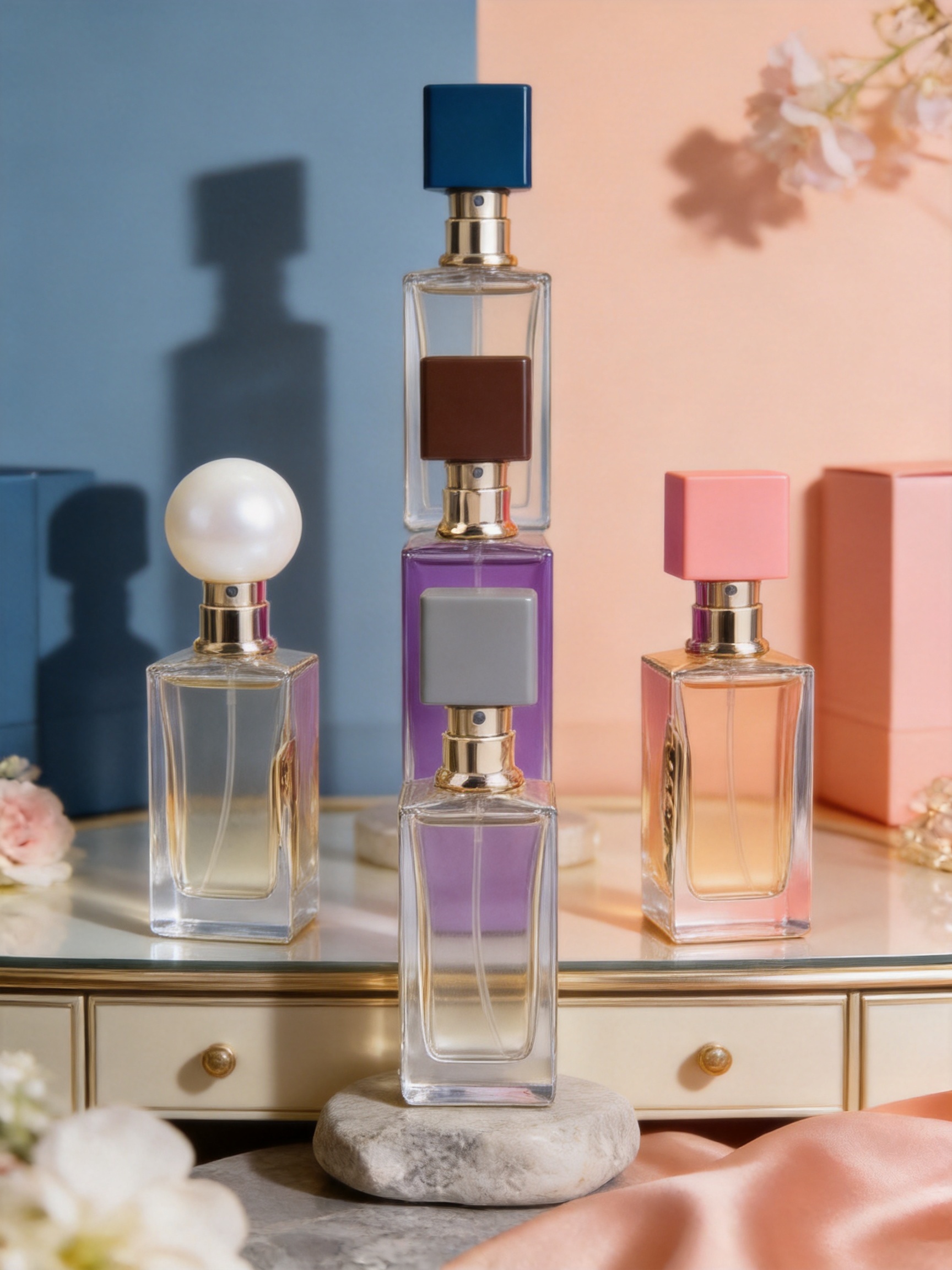
The visual structure of this bottle supports several retail presentation strategies. A single bottle can be displayed as an art object on a premium counter. A couples’ collection can be arranged symmetrically, using complementary colors to create a visual dialogue. A larger fragrance family can be organized by color, scent category, or portrait variation.
The bottle’s rectangular base allows a stable presentation in display trays and gift boxes. Its vertical profile can also make effective use of shelf height. When combined with a coordinated outer carton, the package can create a layered unboxing experience in which the consumer first encounters the printed box, then the decorated glass body, and finally the sculptural cap.
For online retail, the design provides multiple photography angles. Front-facing images can show the bottle’s overall silhouette, while side views can emphasize the liquid-metal relief. Close-up images can highlight the portrait cap and metallic eye details. A rotating product presentation can communicate the relationship between the geometric bottle body and the sculptural upper section.
In physical retail, lighting can significantly enhance the package. Reflective gold or silver accents may catch directional light, while matte cap colors can provide visual contrast. Brands should test displays under actual store lighting because the perceived balance between reflective and non-reflective surfaces may differ from studio conditions.
The design also has potential for social media storytelling. A brand can discuss the Renaissance inspiration, the transformation of classical form into packaging, the meaning of each cap color, the relationship between paired fragrances, or the technical process behind the metallic relief. These stories can add value beyond the physical container and help consumers understand why the package is different.
From Concept to Commercial Production
A successful packaging project usually begins with a clear product brief. The brief should identify the fragrance type, nominal fill volume, target market, expected order quantity, retail positioning, preferred colors, decoration requirements, pump specifications, and delivery schedule. It should also state whether the package will be used for one fragrance or a larger collection.
The next stage is design confirmation. Buyers should review the bottle proportions, cap silhouette, color direction, relief pattern, branding location, and packaging compatibility. If the brand requires a unique logo or a special cap treatment, this should be defined before final tooling decisions are made.
Sampling allows the brand to evaluate the physical result. Samples should be checked for appearance, hand feel, stability, cap fit, spray behavior, decoration quality, and compatibility with the fragrance formula. It is advisable to assess the bottle both empty and filled because the liquid level and fragrance color can influence the final presentation.
After sample approval, the production plan can be finalized. This may include mold confirmation, material preparation, glass production or sourcing, decoration scheduling, assembly instructions, inspection standards, packing configuration, and shipment planning. Clear approval records can help prevent confusion during mass production.
For repeat orders, retained samples and documented color standards can support consistency. Brands may also benefit from maintaining a packaging specification file that records approved dimensions, finishes, decoration positions, pump details, carton requirements, and inspection criteria.
Why DEPRAG Is a Suitable Manufacturing Partner
DEPRAG Plastic Products Co., Ltd. combines product development, manufacturing, decoration, testing, and warehousing capabilities. This integrated structure can be valuable for buyers seeking more than a standard catalog bottle. The company’s experience includes cosmetic, pharmaceutical, and daily chemical packaging, giving it a broad understanding of containers used in regulated and consumer-facing product categories.
The company is located in Cixi, China, an area known for its developed plastic industry. Its stated location provides access to transportation connections near the Hangzhou Bay Bridge, Ningbo’s Beilun deep-water port, and Hangzhou Xiaoshan International Airport. These connections can support domestic and international supply planning.
DEPRAG operates with an experienced research and development team, advanced manufacturing equipment, and modern standardized factories. Its production capabilities cover product research and development, design, mold manufacturing, plastic injection molding, blow molding, gilding and printing, UV coating, product testing, and warehousing.
This range of capabilities can reduce the need for a buyer to coordinate many separate suppliers. A brand developing a fragrance package may require structural design, cap production, decoration, inspection, and delivery support. A packaging partner that understands the full development process can help improve communication and reduce avoidable delays.
The company offers thousands of daily chemical packaging designs, including standard products and customized molds. This combination allows buyers to select a proven packaging direction or develop a more proprietary solution. For a visually distinctive fragrance bottle, the availability of customization support is particularly relevant.
DEPRAG’s stated business philosophy emphasizes technical support, long-term relationships, and the belief that customer success represents company success. For perfume brands, this relationship-based approach can be useful when packaging programs involve repeated orders, new colorways, additional fragrance launches, or future product categories.
Commercial Benefits for Fragrance Brands
The 100ML Classic Elegance Glass Fragrance Container Bottle can support premium positioning without relying solely on external advertising. Its sculptural cap creates immediate recognition, while the metallic relief gives the bottle a richer appearance. These physical features can help communicate value at the point of sale.
The bottle is also appropriate for collection building. Brands can launch a single hero fragrance and later introduce complementary scents using different cap colors or metallic treatments. This strategy can increase the value of the original design investment and create a consistent visual system for future products.
For wholesale and private-label buyers, the package offers a balance between a distinctive appearance and customization flexibility. A buyer can retain the core structure while applying a custom logo, color palette, and decorative treatment. This can shorten the creative development path compared with designing an entirely new package from the beginning.
The bottle’s artistic character may support higher perceived value in gift channels. Consumers often look for fragrance products that feel special when given as presents. A display-worthy container can contribute to this perception, particularly when the outer carton and fragrance story reinforce the same level of quality.
For boutique and niche fragrance brands, the package can communicate originality and craftsmanship. The Renaissance-inspired concept gives the brand a story, while the modern rectangular base prevents the package from appearing outdated. This combination can appeal to consumers who appreciate both heritage references and contemporary design.
Q&A: 100ML Classic Elegance Glass Fragrance Container Bottle
What is the capacity of the fragrance bottle?
The nominal capacity is 100ML. This is a common full-size format for perfume products and can be used for prestige fragrance collections, couples’ fragrance lines, private-label launches, and limited editions.
What makes the bottle different from a standard perfume container?
The bottle combines a stable rectangular glass body with a sculpted portrait-inspired cap and liquid gold or silver relief decoration. This creates a stronger artistic identity than a conventional bottle with a simple smooth closure.
What is the inspiration behind the cap?
The cap design is inspired by the Renaissance statue of David. It translates the visual language of classical heroic sculpture into a compact packaging element intended to function as both a closure and a decorative object.
Which colors are available?
The design concept includes pearl white, deep blue, candy pink, matte gray, chocolate brown, alluring purple, and bright peach. Final color availability, matching standards, and custom color development should be confirmed during the sampling stage.
Can the bottle be used for men’s and women’s fragrances?
Yes. Deep sea blue, matte gray, and chocolate brown can support a men’s fragrance range, while cherry blossom pink, purple, and bright peach can support a women’s collection. The same design can also be adapted for unisex fragrances through balanced color and decoration choices.
What kind of spray system does the bottle use?
The bottle is designed with a high-precision fine mist pump intended to provide even and delicate fragrance spraying. The final pump performance should be validated with the specific fragrance formula and filling configuration.
Can a brand add its own logo?
Customization options include brand logo silkscreen printing, hot stamping, and embossing on the bottle base. Buyers should confirm the preferred technique, artwork, color, position, and production requirements before sample approval.
Is the bottle suitable for a complete fragrance collection?
Yes. The shared rectangular body and portrait-cap concept create a consistent family structure, while different cap colors, metallic treatments, and fragrance names can distinguish individual products.
What manufacturing capabilities does DEPRAG provide?
DEPRAG provides product research and development, design, mold manufacturing, plastic injection molding, blow molding, gilding and printing, UV coating, product testing, and warehousing. These capabilities support the development of cosmetic, pharmaceutical, and daily chemical packaging programs.
How should buyers evaluate the product before mass production?
Buyers should review physical samples for bottle appearance, cap fit, hand feel, stability, spray performance, decoration quality, color consistency, logo placement, and compatibility with the intended fragrance formula. Packaging for transport and final filling should also be assessed.
Can the manufacturer support customized molds?
DEPRAG offers standard products and customized molds. Whether a custom mold is appropriate depends on the desired design changes, order quantity, product roadmap, budget, and long-term packaging strategy.
What should be included in a packaging inquiry?
A useful inquiry should include the required capacity, fragrance type, target quantity, preferred colors, decoration requirements, logo artwork, delivery market, desired schedule, and whether the bottle is intended for one product or a broader collection.
Conclusion
The 100ML Classic Elegance Glass Fragrance Container Bottle presents a strong combination of artistic identity, premium material perception, practical shelf structure, and user-focused dispensing performance. Its Renaissance-inspired portrait cap gives the package a recognizable signature, while the rectangular glass body provides stability and a modern architectural foundation.
The liquid gold or silver relief effect adds depth and luxury, helping the bottle stand apart from flat or generic perfume packaging. A broad color direction supports men’s, women’s, couples’, unisex, seasonal, and limited-edition fragrance strategies. The high-precision fine mist pump contributes to the daily user experience, while silkscreen printing, hot stamping, and embossing provide opportunities for brand customization.
Compared with conventional fragrance containers, this design offers more than a protective vessel. It functions as a visual symbol, a collection-building platform, a merchandising asset, and a potential decorative object for the consumer’s home. Its controlled rectangular base also helps maintain practical shelf presence and packaging stability despite the artistic complexity of the cap.
Supported by DEPRAG Plastic Products Co., Ltd.’s research and development, mold manufacturing, injection molding, decoration, testing, warehousing, and technical support capabilities, the product is suitable for fragrance brands seeking a distinctive packaging solution with professional manufacturing support. For companies developing luxury perfume, private-label fragrance, or coordinated daily chemical packaging programs, this bottle offers a compelling foundation for a memorable and customizable product range.
References
1. DEPRAG Plastic Products Co., Ltd. Product information for the 100ML Classic Elegance Glass Fragrance Container Bottle.
2. DEPRAG Plastic Products Co., Ltd. Company information and manufacturing capability statement.
3. General packaging development principles for cosmetic and fragrance containers, including product compatibility, decoration evaluation, pump testing, and transport protection.
4. General design references concerning Renaissance sculpture, classical portraiture, and the application of historical artistic inspiration to contemporary product packaging.
5. General quality-control practices for glass perfume bottles, plastic closures, decorative coatings, printing, hot stamping, and fine mist dispensing systems.
Product: 100ML Classic Elegance Glass Fragrance Container Bottle

-
100ML Classic Elegance Glass Fragrance Container Bottle
-
 100ml Luxury Empty Glass Perfume Bottle
-
 Gold 200ml/100ml/50ml/30ml Empty Arabic Dubai Glass Luxury Perfume Bottles
-
 Luxury 100ml Round Perfume Bottle
-
 Recyclable Rectangular 30ml/50ml/100ml Glass Perfume Spray Luxury Perfume Bottle
-
 100ml Custom Logo Glass Perfume Bottle
- +86 13968274500
- +86 13764345885
- ysgl@vip.163.com
- No. 10-18, Gaoxiakeng, Dongputou Village, Zhangqi Town