English
 中文简体
 Français
 Español
 عربى



Luxury Spherical Skincare Packaging for Safe, Playful, and Premium Cosmetic Brands
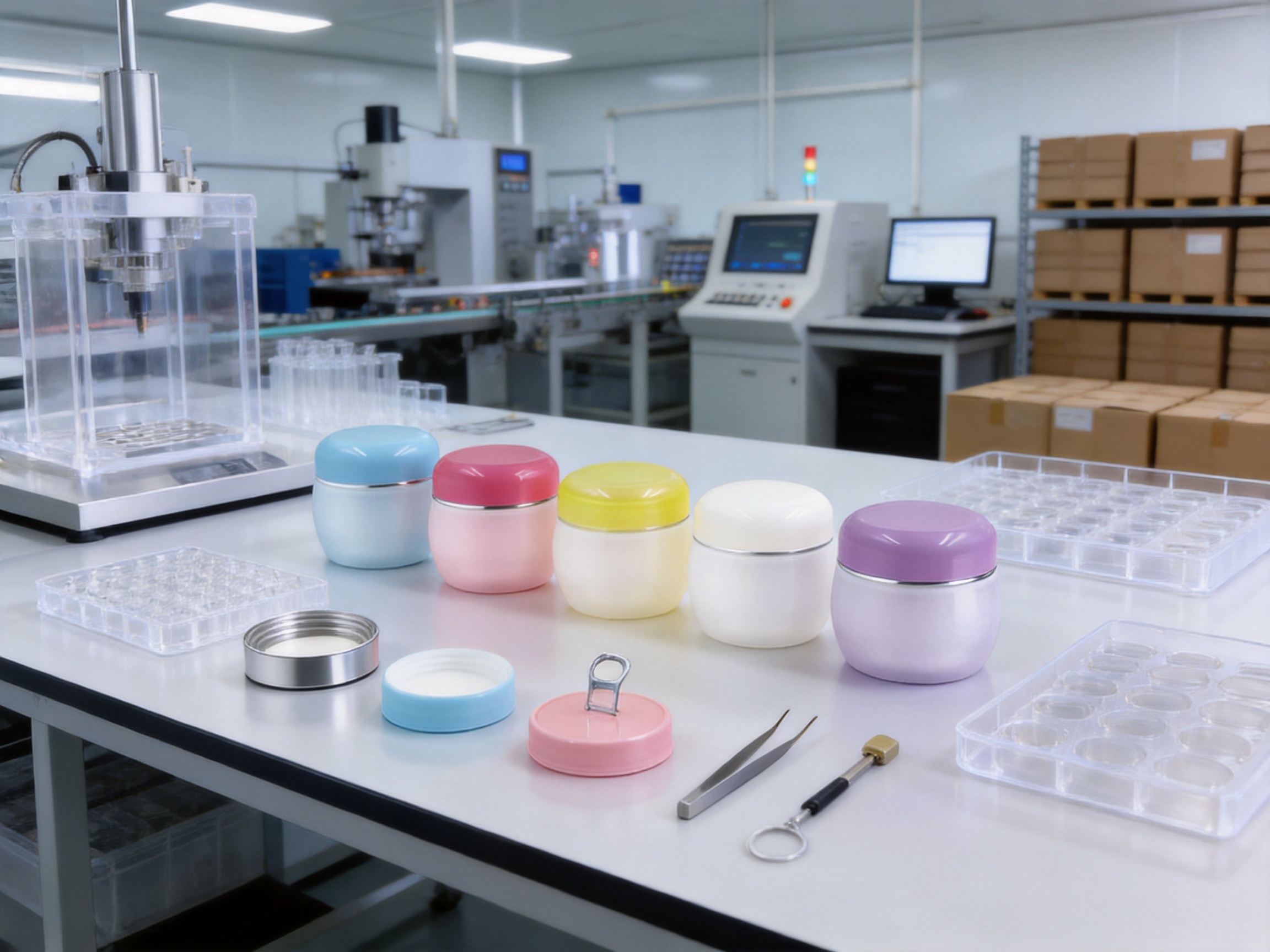
In the competitive skincare and personal-care market, packaging is no longer limited to protecting a formula. It must communicate safety, quality, usability, sustainability, and brand personality before the consumer opens the container. For baby care, teen skincare, family body care, and premium cosmetic products, the package must also create trust. A container that looks attractive but feels unsafe, leaks during transportation, or fails to protect its contents can quickly damage a brand’s reputation.
The exquisite cosmetic skincare packaging bottle presented in this article is a small deluxe cosmetic jar developed for modern skincare brands. Classified as PP Cosmetic Packaging, it combines a rounded spherical structure, an acrylic outer shell, a food-grade PP inner liner, a sealed inner stopper, and multiple decoration options. The result is a distinctive packaging solution for creams, lotions, balms, and other semi-solid skincare formulas.
Although the featured product is identified as a 20g cosmetic container for children, the same spherical packaging concept is also available in larger 70ml and 80ml versions for body-care applications. This makes the series suitable for different product categories, from small facial cream and travel-size treatments to baby body cream, diaper rash cream, and children’s moisturizing products.
A Packaging Concept Built Around the Perfect Sphere
The defining characteristic of this cosmetic jar is its rounded silhouette. Instead of relying on conventional cylindrical or square packaging, the bottle uses a near-perfect spherical form. Its appearance is soft, friendly, and highly recognizable, making it suitable for products intended for families, children, teenagers, and consumers who appreciate imaginative design.
The sphere has an important functional advantage as well as a visual advantage. Traditional cosmetic jars may have corners, projecting edges, or flat surfaces that can create uncomfortable contact points. The spherical container minimizes sharp transitions and presents a smooth, continuous exterior. In baby-care settings, this rounded profile can help reduce concerns about accidental bumps against hard corners during everyday handling.
The design also gives the package a playful roly-poly character. It can appear cheerful on a bathroom shelf, in a child’s room, or in a premium skincare display. This emotional quality is valuable because consumers often associate rounded forms with softness, comfort, friendliness, and gentleness. For brands serving mothers, babies, children, and young consumers, these associations can strengthen the product’s visual message.
At the same time, the spherical body does not make the package look ordinary or inexpensive. The clear acrylic outer shell creates a crystal-like visual effect, while the colored inner liner adds a rich and layered appearance. The package can therefore occupy a position between playful family care and luxury skincare packaging.
Why the 20g Format Is Valuable for Modern Skincare
The 20g version is designed for brands that need a compact, distinctive, and easy-to-use container. Small cream jars are especially useful for facial moisturizers, eye creams, lip treatments, spot-care products, travel-size skincare, sample programs, and children’s personal-care products. The size can support trial purchases and promotional sets while reducing the amount of product required for first-time consumers.
A compact container also allows brands to create coordinated gift boxes and discovery collections. For example, a skincare company may place several 20g jars in a seasonal set, with each jar containing a different cream or fragrance-free treatment. Because the container has a strong shape identity, it can help a small product look more substantial and premium on a retail shelf.
For baby and children’s products, a smaller format may be convenient for parents who want to carry skincare in a handbag, diaper bag, school bag, or travel case. It is suitable for short trips and for keeping a product within easy reach without carrying a large package. The rounded body can also be comfortable to hold during application.
It is important to distinguish the featured 20g model from the wider product family. The supplied product information also identifies 70ml and 80ml options intended for body-care applications. These larger sizes are more appropriate for products applied over broad areas of skin. Together, the available sizes give brands flexibility to build a complete packaging line around one recognizable design language.
Safe and Comfortable Handling Through Rounded Geometry
Packaging safety is particularly important when products are used around infants and young children. A conventional jar with a sharp corner may create a harder contact point if it falls or is handled carelessly. The spherical design addresses this concern by eliminating traditional sharp corners from the main body and cap structure.
The rounded shape is also comfortable for adults to hold. Parents may need to open a container while caring for a child, carrying another item, or working in a bathroom with wet hands. A smooth, curved package can provide a more approachable grip and reduce the visual impression of harshness associated with industrial containers.
The shape may also help a product stand out in a crowded category. Many skincare products use familiar round or rectangular jars, but a carefully developed sphere is much easier to recognize from a distance. The unusual silhouette becomes a form of visual identification. Even before the label is read, consumers may associate the product with a particular brand, product line, or care ritual.
Compared with packaging that depends entirely on graphic decoration, the spherical jar communicates its character through three-dimensional form. This is useful for brands that want a clean label, a minimalist logo, or a premium appearance without covering the entire surface with printed information.
Crystal-Like Acrylic Outer Shell
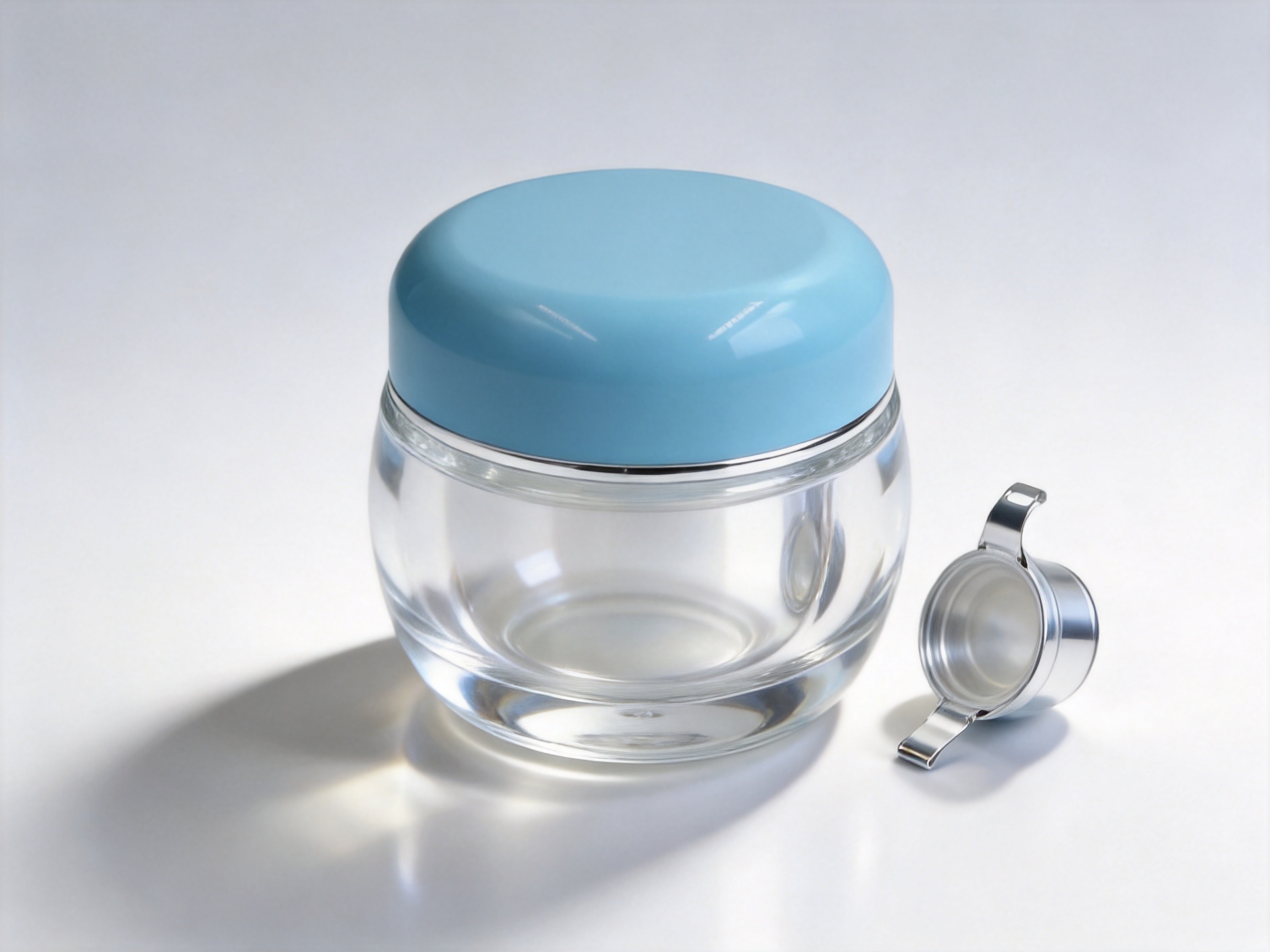
The outer shell is made from acrylic, a material widely used in premium cosmetic packaging because of its clarity, surface appearance, and ability to present color with depth. In this design, the acrylic exterior gives the jar a crystal-like visual quality. It allows the container to look polished and substantial while helping the inner liner remain the visual focus.
The thick outer wall can contribute to the package’s premium hand feel. Consumers often interpret weight, clarity, smoothness, and structural firmness as signs of quality. A well-made acrylic shell can provide a more refined experience than a thin, lightweight container that feels temporary or fragile.
The transparent or translucent quality of acrylic also creates opportunities for visual storytelling. A colored inner liner can appear suspended inside the clear outer body. This layered presentation can make pastel colors look brighter and more dimensional. Sky blue, cherry blossom pink, and lemon yellow can each produce a different emotional effect while retaining the same basic package structure.
In addition to appearance, the double-layer construction is intended to provide a degree of separation between the inner product container and the external environment. The outer structure can help reduce the impact of sudden external temperature changes on the inner packaging system. While packaging performance must always be evaluated according to the specific formulation, filling conditions, storage environment, and required regulatory standards, the double-layer concept offers a useful foundation for premium skincare development.
Compared with a single-wall jar, the layered design can create a stronger visual and tactile identity. It also enables brands to combine transparency, color, decoration, and structural protection in one coordinated package. This balance between appearance and function is one of the product’s main advantages over simpler cosmetic containers.
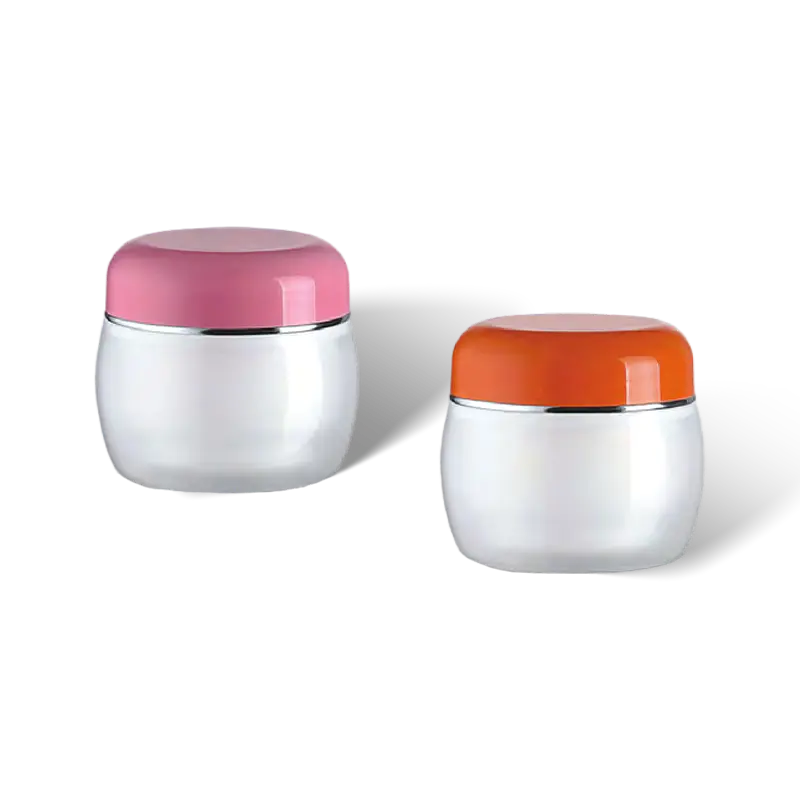
exquisite cosmetic skincare packaging bottle, 20g cosmetic container for children, small deluxe cosmetic jar
Food-Grade PP Inner Liner
The inner liner is made from food-grade PP material. Polypropylene is valued in packaging applications for its practical balance of chemical resistance, light weight, durability, and processability. In a skincare container, the inner liner forms the main contact area for the cream and supports the overall protection of the formula.
The use of PP is particularly relevant for baby-care and family-care products, where brands often prioritize material confidence and clean product contact. Packaging compatibility must still be verified for each specific formulation, fragrance, preservative system, oil phase, and storage condition. However, PP is a widely recognized material choice for many personal-care packaging applications.
The inner liner can also be finished with a high-gloss spray coating. This process allows the internal color to appear bright and consistent while remaining visually protected by the outer acrylic shell. The combination of inner color and clear exterior produces a layered effect that is difficult to achieve with a basic one-piece jar.
From a design perspective, the inner liner provides a controlled color surface. A brand can choose a gentle pastel shade for baby care, a vivid tone for youth skincare, or a more restrained color for premium facial products. Because the inner liner is visually framed by the acrylic shell, even a simple color choice can become a central part of the brand identity.
Macaron Colors for Family and Youth-Oriented Brands
The macaron-inspired color system is one of the product’s most distinctive aesthetic features. Soft colors such as sky blue, cherry blossom pink, and lemon yellow can give the jar a cheerful and optimistic character. These tones are suitable for products designed to look gentle, modern, and approachable.
Color selection can influence how consumers understand a product. Sky blue may suggest freshness, calmness, and cleanliness. Cherry blossom pink may communicate softness, care, and warmth. Lemon yellow can create an energetic and uplifting impression. A brand can assign different colors to different formulas, skin types, product benefits, or consumer age groups while maintaining a consistent package shape.
The color system is also suitable for product-line expansion. A company may launch a moisturizing cream in blue, a soothing balm in pink, and a daily body cream in yellow. The same structure allows the collection to look unified, while color coding helps shoppers identify the products quickly.
Customization is not limited to the colors listed in the initial range. The product information indicates support for in-depth color customization. This gives brands the opportunity to match a corporate palette, seasonal campaign, limited-edition theme, or specific product positioning. Custom color development should be discussed with the manufacturer because factors such as material transparency, coating thickness, light exposure, and production batch consistency can influence the final result.
Sealed Inner Stopper for Freshness and Transport Protection
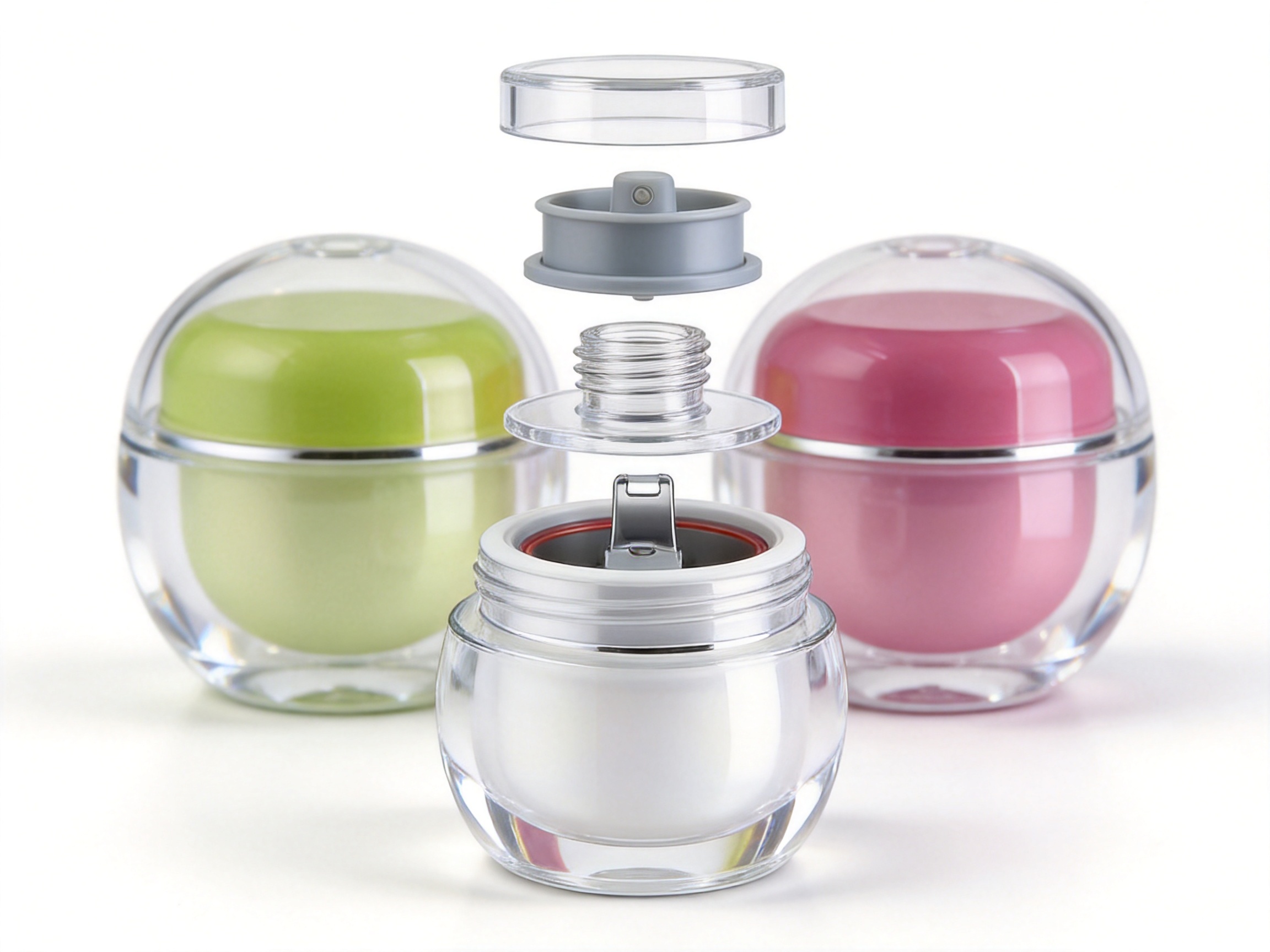
A cosmetic jar needs more than an attractive exterior. It must also protect the product during filling, storage, transportation, and repeated consumer use. This series includes a high-precision matching pull-tab inner stopper. The stopper is designed to improve sealing performance and help prevent product leakage.
The inner stopper forms an additional barrier beneath the main cap. This layered closure system can help reduce the movement of cream during long-distance transportation and limit the chance of leakage around the opening. It also helps separate the formula from external air and contaminants each time the cap is removed.
For skincare products, exposure to air can affect the appearance, texture, fragrance, or performance of a formulation over time. The inner stopper supports a more controlled opening system by reducing unnecessary contact between the product and the surrounding environment. Brands should still perform compatibility, leakage, migration, drop, torque, aging, and transport testing with the final formula and finished package.
The pull-tab format can also improve consumer confidence. A visible inner seal communicates that the product has not been opened before purchase. It provides a simple indication of product integrity and supports a more professional unboxing experience. For baby-care products and premium creams, this small feature can have a meaningful effect on perceived quality.
Compared with a basic open jar, the sealed design offers a more complete protection system. The cap provides the first closure, the stopper offers an additional internal barrier, and the acrylic shell supports the structural presentation. This combination makes the jar suitable for brands that want both decorative impact and practical protection.
Packaging Performance Compared with Conventional Cosmetic Jars
Many standard cream jars are functional but visually interchangeable. They may use common cylindrical bodies, plain plastic walls, or limited decoration options. The spherical acrylic and PP packaging system offers several points of differentiation.
| Packaging Feature | Spherical Acrylic and PP Jar | Basic Conventional Jar | Brand Benefit |
|---|---|---|---|
| Overall form | Rounded spherical structure with smooth contours | Usually cylindrical, square, or flat-sided | Stronger shelf recognition and softer visual identity |
| Material construction | Acrylic outer shell with PP inner liner | Often a single plastic body | Layered appearance and more premium presentation |
| Safety impression | Edgeless, anti-collision design | May include corners or harder edges | Better suited to family and child-oriented positioning |
| Color presentation | Macaron-colored inner liner protected by outer shell | Color normally appears on one visible surface | Greater visual depth and customization potential |
| Closure system | Cap combined with matching pull-tab inner stopper | May rely on cap alone | Improved leakage and freshness protection potential |
| Decoration options | Hot stamping, silkscreen printing, and color printing | Decoration may be more limited | More ways to express brand identity |
| Product range | 20g model plus 70ml and 80ml family options | Often limited to one standard size | Supports coordinated facial and body-care collections |
| Material positioning | Recyclable acrylic outer shell and PP inner liner | Depends on the specific construction | Supports sustainability communication when properly documented |
This comparison does not mean that every conventional jar is inferior. Different products require different packaging systems, and each format should be selected according to formula compatibility, filling method, cost, regulatory obligations, and consumer use. However, the spherical package offers a broader combination of safety-oriented design, premium appearance, and customization than a simple single-wall jar.
Applications for Baby, Children’s, and Teen Skincare
The packaging was developed with high-end baby and teen care brands in mind. These markets have different needs, but both benefit from a container that looks gentle, modern, and easy to recognize.
For baby care, the design can be used for moisturizing creams, protective balms, diaper rash products, face creams, and other semi-solid personal-care formulas. The rounded exterior supports a soft safety message, while the inner stopper adds a more professional closure system. A pastel color palette can make the package appear reassuring without looking overly clinical.
For children’s skincare, the playful spherical form can make daily care more engaging. Parents may appreciate the practical design, while children may respond positively to the friendly shape and bright colors. Product education and safety information should remain clear on the label, but the package can make the routine feel less formal and more enjoyable.
For teen skincare, the same jar can be presented in a more fashionable way. A brand may use a bold inner color, metallic hot stamping, or a clean logo to position the product as a premium treatment. The container can support products such as moisturizing creams, overnight masks, soothing gels with a cream texture, or targeted facial treatments.
The design is also suitable for family-care brands that want one recognizable package system across multiple age groups. A single shape can be adapted through color, decoration, size, and labeling. This allows the brand to build a coherent portfolio without making every product look identical.
70ml and 80ml Options for Body Care
In addition to the 20g model, the product family includes 70ml and 80ml capacity options for body-care products. These larger sizes respond to the practical needs of products applied over broad areas of skin. Infants and young children may require frequent moisturizing, especially when the skin is dry or exposed to challenging environmental conditions.
Body cream, children’s face cream, diaper-area care products, and protective moisturizing formulas can benefit from a package that provides a useful amount without becoming excessively large. The 70ml and 80ml sizes can support longer use between replacements and reduce the need for repeated repurchasing during a care routine.
The larger versions also allow brands to extend the product line while maintaining the recognizable spherical concept. A 20g facial cream can be paired with a 70ml body cream and an 80ml family-care product. When displayed together, the products can communicate a coordinated system rather than a collection of unrelated containers.
Capacity selection should be based on product density, filling tolerance, headspace requirements, usage frequency, and the intended retail environment. A manufacturer can help determine the most appropriate filling volume and confirm how the formula behaves inside the selected liner and closure system.
Decoration and Brand Customization
The wide, rounded cap and body provide several areas for brand communication. The package supports custom logo hot stamping, silkscreen printing, and color printing. These techniques can be used independently or combined, depending on the desired visual effect and production requirements.
Hot stamping is suitable for brands seeking a refined metallic accent. Gold, silver, rose gold, and other foil effects can highlight a logo or product name. On a soft-colored spherical package, a metallic mark can create a premium contrast without requiring a large printed label.
Silkscreen printing can provide strong and direct graphic results. It is useful for logos, short product names, simple illustrations, and clear decorative elements. The technique can be adapted to different color schemes and can help maintain a clean appearance on curved surfaces when the artwork is prepared correctly.
Color printing gives brands more freedom to communicate illustrations, patterns, ingredient stories, or campaign themes. It can be used to create a playful children’s design, a botanical image for a natural skincare line, or a minimalist composition for a luxury facial-care collection.
Because the container itself has a strong form, decoration should be carefully balanced. Excessive graphics may hide the visual depth created by the acrylic shell and colored liner. In many cases, a restrained logo, a short product descriptor, and a controlled color system will produce a more premium result than a crowded design.
Customization can also extend to the cap finish, liner color, surface treatment, printing layout, and packaging set configuration. Brands should confirm minimum order quantities, decoration tolerances, proofing procedures, color standards, and inspection requirements before mass production.
Manufacturing Capabilities of DEPRAG Plastic Products Co., Ltd.
DEPRAG Plastic Products Co., Ltd. specializes in the design and manufacture of packaging containers for cosmetics, medicines, and other plastic products. Its capabilities cover multiple stages of packaging development, allowing customers to work with one experienced supplier from the first concept through production and warehousing.
The company operates in Cixi, China, an area known for its developed plastic manufacturing industry. Its location provides access to convenient transportation networks and is close to the Hangzhou Bay Bridge. It is also within approximately one hour of Ningbo’s Beilun deep-water port and Hangzhou Xiaoshan International Airport. These logistical advantages can support domestic and international supply-chain planning.
A packaging project often requires coordination between industrial design, mold engineering, material selection, injection molding, decoration, assembly, testing, and logistics. A supplier with capabilities across these areas can reduce communication gaps and improve development efficiency. DEPRAG’s integrated production process is intended to support this type of coordinated project management.
Product Research and Development
The development of a spherical cosmetic jar begins with product research and structural planning. Engineers and designers must consider the external silhouette, internal capacity, wall thickness, closure fit, cap movement, liner dimensions, decoration area, and production method. The shape must be visually attractive while remaining suitable for consistent manufacturing.
Research and development also includes evaluating how the packaging interacts with the intended formula. Cream viscosity, oil content, fragrance components, preservatives, pigments, and active ingredients may affect material compatibility and long-term performance. A responsible packaging development process considers these factors before finalizing the design.
For the spherical container, special attention is needed around the opening, cap, and transition between the inner liner and outer shell. A visually perfect sphere must still provide enough stability for filling, assembly, storage, and consumer use. Engineering refinement helps balance the decorative concept with practical requirements.
Mold Manufacturing
Mold manufacturing is an important source of quality in plastic packaging. The accuracy of a mold influences the consistency of the finished container, including its dimensions, surface quality, wall thickness, assembly fit, and appearance. For a rounded package with a layered construction, mold precision is especially important.
DEPRAG provides mold manufacturing as part of its complete production process. This enables the company to coordinate mold design with injection molding and final assembly requirements. Proper mold development can help reduce defects such as uneven surfaces, mismatched components, visible flow marks, incomplete filling, deformation, or inconsistent closure fit.
For customized projects, mold engineering can also address logo areas, decoration positioning, material shrinkage, draft angles, ejection requirements, and production cycle efficiency. These technical considerations are essential when a brand wants a distinctive package that can still be produced reliably at commercial scale.
Plastic Injection Molding
Plastic injection molding forms the main structural components of the package. Molten plastic is injected into a precisely manufactured mold, cooled, and released as a finished component. The process supports repeatable production of acrylic outer shells, PP inner liners, caps, and related parts.
Injection molding quality depends on material preparation, temperature control, injection pressure, cooling conditions, mold maintenance, and machine stability. For transparent or translucent acrylic components, process control is particularly important because visual defects can be easy to notice. Scratches, bubbles, flow lines, discoloration, and uneven clarity may affect the premium appearance of the package.
For PP inner liners, dimensional stability and sealing accuracy are critical. The liner must fit correctly with the cap and inner stopper while providing the required filling volume. Consistent production helps ensure that the finished package behaves predictably during assembly and use.
Blow Molding and Broader Plastic Processing
DEPRAG also provides blow molding and other plastic processing capabilities. While the featured spherical jar is primarily associated with injection-molded components, access to multiple plastic manufacturing processes allows the company to support a broader range of cosmetic and daily-chemical packaging requirements.
This broader capability can be useful for brands developing an entire packaging portfolio. A customer may require jars for creams, bottles for lotions, containers for cleansers, or special shapes for promotional products. Working with a supplier experienced in several processes can simplify procurement and improve consistency across related packaging projects.
Gilding, Printing, and UV Coating
Decoration is a major part of premium cosmetic packaging. DEPRAG provides gilding and printing services, allowing brands to develop finished packages without necessarily coordinating with multiple external decoration vendors. The company also offers UV coating, which can contribute to surface appearance and finish protection depending on the selected process and application.
Gilding can provide a luxurious metallic detail, while printing can communicate brand information and product differentiation. UV coating may be used to create gloss contrast, protect selected printed areas, or establish a specific tactile and visual finish. These processes should be matched to the material, curvature, color, and intended handling conditions of the container.
Integrated decoration can help improve production coordination. Artwork approval, color matching, printing registration, coating inspection, and assembly planning can be managed as part of a connected workflow. This can reduce the risk of differences between the base package and decorated package.
Product Testing and Warehousing
Packaging quality does not end when the container is molded. Finished products require inspection and testing to confirm dimensional accuracy, appearance, closure performance, assembly quality, and transportation readiness. DEPRAG includes product testing and warehousing in its production capabilities.
Depending on the project, relevant evaluations may include visual inspection, dimensional measurement, cap torque testing, leakage testing, drop testing, pressure testing, aging studies, color checks, coating adhesion testing, and compatibility assessment. The exact test plan should be agreed upon according to the product formula, market requirements, shipping conditions, and customer quality standards.
Warehousing is also important because packaging components may need to be stored before filling, decoration, or shipment. Proper storage can help protect the components from dust, moisture, deformation, excessive heat, and accidental surface damage. A standardized warehouse process supports order accuracy and delivery planning.
Advantages of an Integrated Manufacturing Partner
An integrated supplier can offer several advantages over a company that only performs one production stage. When design, mold making, injection molding, decoration, testing, and warehousing are connected, technical decisions can be communicated more efficiently. Problems discovered during sampling can be addressed closer to their source.
For example, if a printing area is difficult to align on the spherical surface, the design and mold teams can review the geometry together. If the inner stopper does not provide the expected fit, engineers can evaluate the liner and cap as a combined system. If the acrylic shell shows an appearance issue, process specialists can examine material preparation, mold condition, cooling, and handling procedures.
This integrated model can also support customized molds. Standard packaging is useful for fast launches and controlled budgets, while a custom mold allows a brand to create a more exclusive shape or size. DEPRAG offers both standard products and customized molds, enabling customers to choose the development route that best matches their market strategy.
The company’s stated product range includes thousands of daily chemical packaging designs. This broad experience can help customers compare different structures, closures, finishes, and decoration options before selecting a final package. It may also help brands identify opportunities for coordinated product families.
Sustainability Considerations
The supplied product information identifies the PP inner liner as food-grade material and the acrylic outer shell as recyclable. These characteristics can support a brand’s sustainability communication, but responsible environmental claims should be based on the exact material grade, local recycling infrastructure, component composition, and applicable regulations.
Packaging sustainability involves more than selecting one recyclable material. Brands should consider the complete package system, including the acrylic shell, PP liner, cap, inner stopper, coatings, inks, adhesives if used, decoration layers, and secondary packaging. A multi-material structure may offer performance and visual advantages, but it can also require clear separation or specialized recycling processes.
The rounded design can potentially support efficient material planning when the structure is optimized for wall thickness and strength. Lightweighting should be approached carefully because reducing material without sufficient testing could compromise durability, closure performance, or transport protection. The best solution balances material efficiency with the product’s safety and quality requirements.
Brands should request appropriate material documentation and confirm recycling claims for the target market. They should also communicate disposal instructions clearly to consumers where necessary. DEPRAG’s technical team can assist with material and packaging discussions during product development.
Quality Control from Concept to Finished Package
Premium packaging depends on consistency. A single attractive prototype is not enough if mass-produced units show inconsistent color, poor cap fit, surface marks, or uneven printing. A structured quality-control program should therefore be applied throughout the development and production process.
At the design stage, the package should be reviewed for usability, stability, filling access, closure behavior, label or decoration placement, and transport requirements. During mold development, critical dimensions should be identified and monitored. During molding, process conditions should be controlled to maintain component consistency.
After molding, visual inspection can identify scratches, contamination, discoloration, bubbles, deformation, and other appearance issues. Dimensional checks can confirm that the liner, stopper, cap, and shell fit together as intended. Closure testing can help verify that the package remains sealed under appropriate conditions.
Decoration quality should be inspected for position, clarity, adhesion, color accuracy, and resistance to expected handling. Because the spherical form creates curved decoration surfaces, artwork positioning and printing consistency require special attention. A defined approval sample and quality limit can help establish clear expectations before mass production.
Finished packaging should also be protected during storage and transportation. Individual components may require suitable separators, protective bags, cartons, or other packing methods to reduce abrasion and impact. This is particularly important for clear acrylic surfaces and decorated components.
How Brands Can Develop a Successful Product Line
A successful product line begins with a clear relationship between formula, consumer, size, color, decoration, and usage environment. The spherical jar provides a strong starting point, but the final result depends on how these elements are coordinated.
For a baby-care collection, a brand may select soft macaron colors, simple typography, a clear logo, and a gentle product name. The 20g size can be used for facial cream or travel care, while the 70ml and 80ml versions can hold body-care products. A pull-tab inner stopper can reinforce the message of cleanliness and product integrity.
For a teen skincare collection, the same structure may use brighter colors, contrast printing, metallic details, and a more expressive graphic system. A small 20g jar can be positioned as a targeted treatment or overnight product. The spherical shape can create a distinctive social-media and retail presentation.
For a luxury skincare brand, the package can emphasize crystal-like transparency, restrained color, precise hot stamping, and a minimalist logo. The layered structure can suggest refinement, while the rounded silhouette differentiates the product from conventional prestige jars.
For a family body-care line, the larger 70ml and 80ml options can provide practical capacity. Different colors can identify moisturizing cream, soothing cream, protective balm, and seasonal formulas. A consistent package form helps consumers recognize the products as part of one trusted range.
Recommended Development Process for Buyers
Define the Formula and Application
Before choosing the final package, buyers should define the formula type, viscosity, fragrance profile, oil content, active ingredients, filling temperature, and intended use. A cream for infants may have different packaging requirements from a highly fragranced body butter or an active facial treatment.
Select the Appropriate Capacity
The 20g model is suitable for compact skincare, trial products, travel formats, and targeted treatments. The 70ml and 80ml options are more appropriate for larger-area body-care use. Buyers should also consider product density, headspace, filling tolerance, and the expected number of applications per package.
Confirm Material Compatibility
The acrylic outer shell and PP inner liner should be evaluated with the actual formula. Compatibility testing can help identify changes in color, odor, texture, weight, leakage, stress cracking, or other performance issues. Testing should reflect expected storage temperatures and time periods.
Develop Color and Decoration Samples
Brands should approve physical samples rather than relying only on digital artwork. The transparency of acrylic, the coating on the inner liner, the curvature of the container, and the selected printing process can all affect the final appearance. Color standards and decoration tolerances should be established before production.
Test the Complete Package
The final formula should be filled into the final decorated package and tested as a complete system. Testing may include sealing, leakage, drop, transport simulation, aging, opening and closing cycles, and consumer-use evaluation. This step helps ensure that the package performs as expected after all components and processes have been combined.
Confirm Production and Logistics
Before issuing a purchase order, buyers should confirm minimum order quantities, lead times, mold ownership, sampling schedules, inspection standards, packaging methods, shipping terms, and warehouse arrangements. Clear documentation helps reduce misunderstandings and supports a smoother commercial launch.
Frequently Asked Questions
What type of packaging is this product?
It is a spherical cosmetic skincare jar classified as PP Cosmetic Packaging. It uses a PP inner liner and an acrylic outer shell, with a cap and matching inner stopper designed to support sealing and product protection.
Is the featured product 20g or 70ml/80ml?
The featured product is identified as a 20g cosmetic container for children. The same design family also includes 70ml and 80ml options intended primarily for body-care products. Buyers should confirm the exact model, capacity, dimensions, and filling volume during quotation and sampling.
What products can be filled into the jar?
The container is suitable for many cream-based skincare products, including facial creams, moisturizing creams, children’s creams, body creams, protective balms, diaper rash creams, and other semi-solid personal-care formulas. Compatibility testing is required for each formula.
Why is the spherical shape useful?
The spherical shape eliminates sharp traditional corners, creates a soft and approachable appearance, and provides strong shelf recognition. It is especially suitable for baby care, children’s skincare, family care, and brands seeking a playful yet premium package identity.
What materials are used?
The inner liner is made from food-grade PP material, and the outer shell is made from acrylic. The acrylic shell provides a crystal-like appearance, while the PP liner forms the primary internal container for the cream.
Does the package include an inner seal?
Yes. The design includes a high-precision matching pull-tab inner stopper. It is intended to help prevent leakage during transportation and reduce unnecessary exposure of the formula to air and external contaminants.
Can the colors be customized?
Yes. The series offers colors such as sky blue, cherry blossom pink, and lemon yellow, and it supports further color customization. Final color results should be confirmed through physical samples and agreed production standards.
Can a brand add its logo?
Yes. Available decoration options include hot stamping, silkscreen printing, and color printing. The broad rounded surfaces of the cap and body provide areas for logo placement and product identification.
Is the acrylic outer shell recyclable?
The product information identifies the acrylic outer shell as recyclable. However, recycling availability depends on local systems and the complete package construction. Brands should obtain relevant material documentation and provide disposal guidance appropriate to their target market.
What manufacturing services does DEPRAG provide?
DEPRAG provides product research and development, design, mold manufacturing, plastic injection molding, blow molding, gilding, printing, UV coating, product testing, warehousing, standard packaging products, and customized mold development.
Where is the manufacturer located?
DEPRAG Plastic Products Co., Ltd. is located in Cixi, China, at No. 10-18, Gaoxiakeng, Dongputou Village, Zhangqi Town. The company is situated in a developed plastic industry area with access to transportation links near the Hangzhou Bay Bridge, Ningbo’s Beilun port, and Hangzhou Xiaoshan International Airport.
How should buyers begin a custom project?
Buyers should provide the formula type, target capacity, preferred color, logo artwork, expected order quantity, application, market destination, and required delivery schedule. The manufacturer can then advise on the suitable model, sampling process, decoration method, testing plan, and production arrangement.
Conclusion
The spherical cosmetic skincare packaging bottle offers a distinctive combination of safety-oriented form, premium appearance, practical closure design, and brand customization. Its rounded anti-collision silhouette makes it particularly suitable for baby, child, teen, and family-care products, while the acrylic outer shell and macaron-colored PP liner create a layered visual effect for luxury skincare positioning.
The 20g format provides a compact solution for targeted facial care, travel products, sample sets, and children’s skincare. The related 70ml and 80ml options extend the concept into body-care applications where larger capacity is required. This size range allows brands to create a coordinated packaging family without abandoning a recognizable design language.
The package is further strengthened by its inner stopper, decoration options, recyclable acrylic outer shell, and food-grade PP liner. When combined with appropriate formula compatibility testing and quality control, these features can help brands develop packaging that is attractive, comfortable to use, and suitable for modern personal-care markets.
DEPRAG Plastic Products Co., Ltd. supports the product with a broad manufacturing system covering research and development, mold production, injection molding, blow molding, printing, gilding, UV coating, testing, warehousing, standard products, and customized molds. This integrated capability gives buyers access to both creative packaging development and industrial production support.
For brands seeking luxury cosmetic packaging, skincare packaging, or luxury skin care packaging with a friendly and memorable identity, this spherical container provides a flexible platform. Its success ultimately depends on selecting the correct size, confirming material compatibility, approving physical decoration samples, and testing the complete filled package before launch.
References
1. Product specification and supplied technical description for the spherical 20g cosmetic skincare packaging bottle and related 70ml/80ml packaging series.
2. DEPRAG Plastic Products Co., Ltd. company information concerning cosmetic packaging design, mold manufacturing, plastic injection molding, blow molding, printing, coating, testing, and warehousing.
3. General principles of cosmetic packaging development, including material compatibility, closure performance, transport protection, decoration quality, and consumer-use evaluation.
4. General technical information concerning polypropylene packaging components and acrylic cosmetic packaging structures.
5. General packaging sustainability principles relating to recyclable materials, multi-material construction, lightweighting, recycling infrastructure, and responsible environmental claims.
Product: exquisite cosmetic skincare packaging bottle, 20g cosmetic container for children, small deluxe cosmetic jar

-
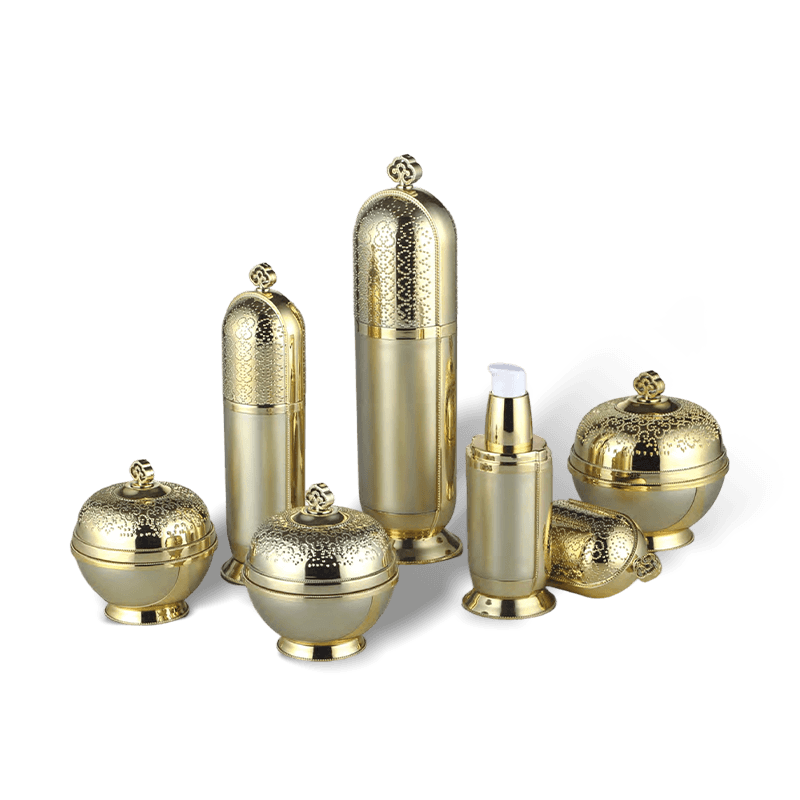 DP-A-018 Acrylic jars for whitening and anti-aging cosmetic creams
-
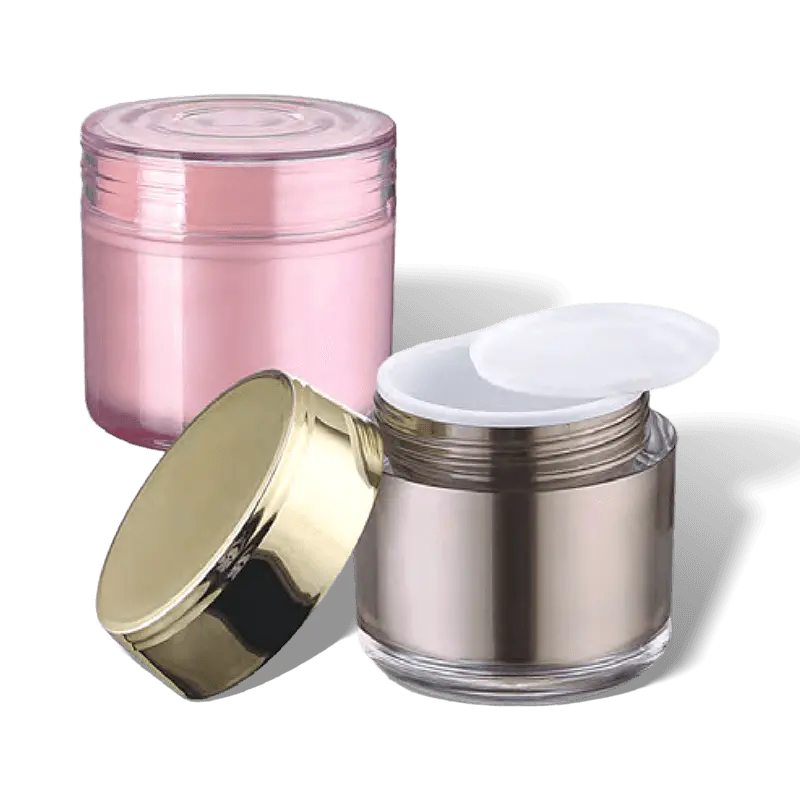 DP-A-009 Body Cream Jar 80ml Container 70ml Cosmetic Packaging Body Butter Plastic Jar
-
 Luxury glass perfume bottles 30ml/50ml/100ml/200ml
-
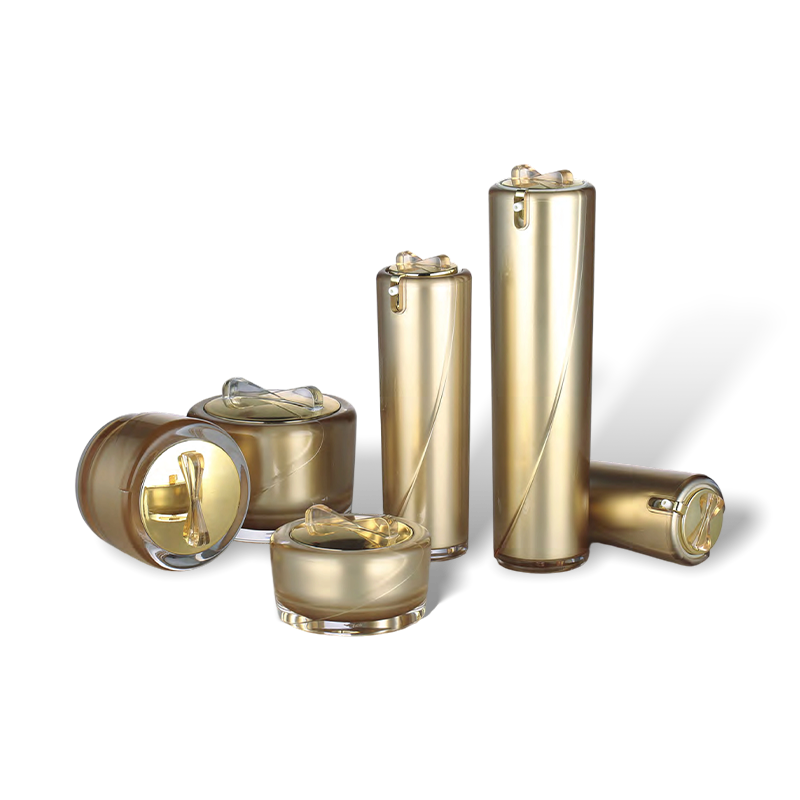 DP-A-020 120ml Green Acrylic Cream Bottle 50g Blue Acrylic Cosmetic Container 50ml Acrylic Jar and Bottles
-
 Luxury 100ml Round Perfume Bottle
-
 DP-A-021 50g/30g/20g Skin Whitening Cream Packaging Cosmetic Jars
- +86 13968274500
- +86 13764345885
- ysgl@vip.163.com
- No. 10-18, Gaoxiakeng, Dongputou Village, Zhangqi Town