English
 中文简体
 Français
 Español
 عربى



50g Luxury Cosmetic Skincare Packaging: Design, Performance, and Manufacturing Excellence
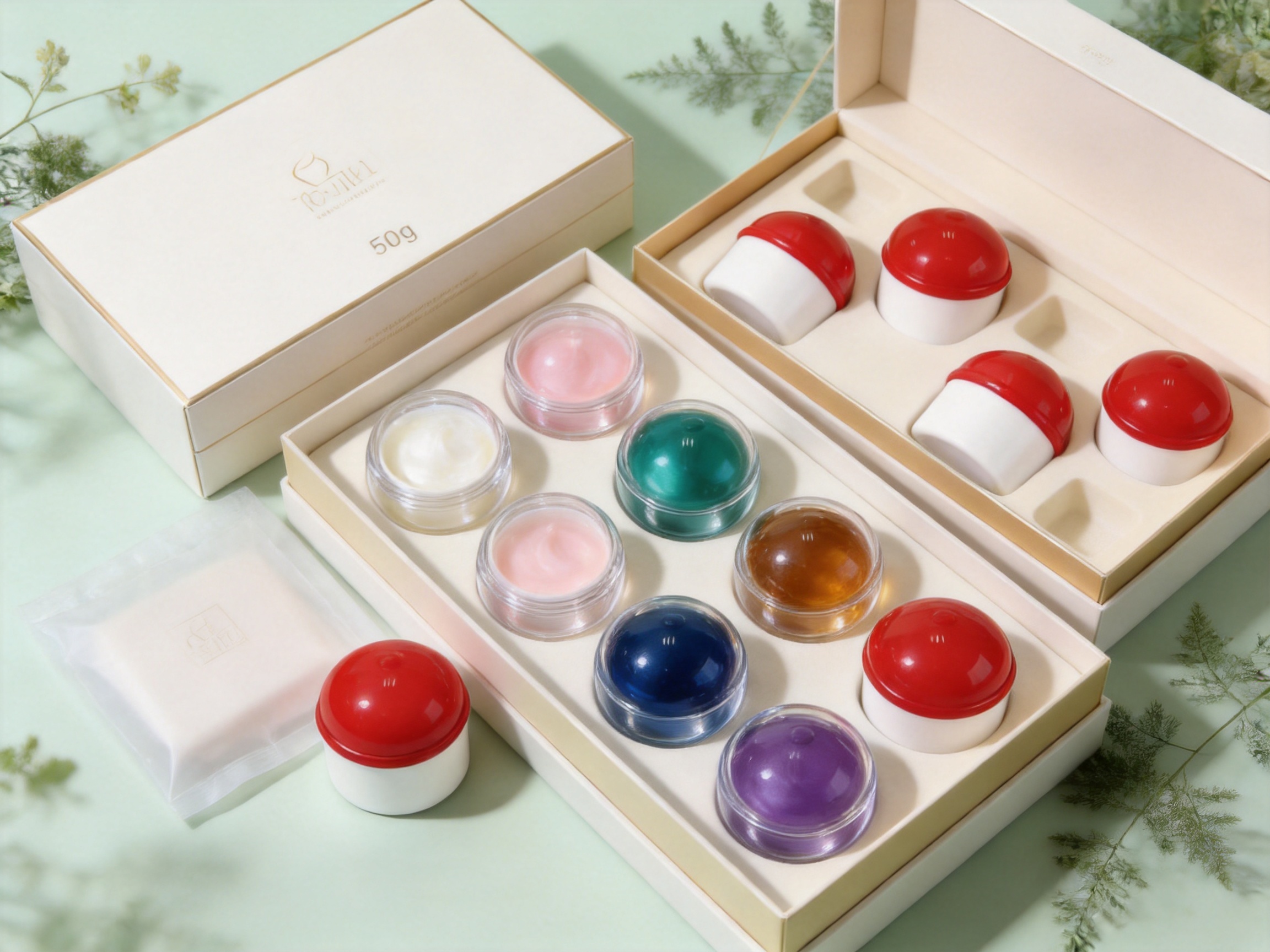
In the premium skincare market, packaging is no longer only a protective container. It is a visual statement, a tactile experience, and an important part of the customer’s perception of product quality. A well-designed package can communicate luxury before the consumer opens the cap, preserve the condition of the formula during storage and transportation, and help a skincare brand establish a recognizable identity in a competitive marketplace.
The 50g deluxe cosmetic skincare packaging bottle is designed for brands that want to combine distinctive appearance, practical protection, and high-end presentation. Its dynamic spherical structure, transparent acrylic exterior, colorful inner liner, and dedicated sealing system create a packaging solution that is visually memorable and technically functional. Developed for creams and other premium skincare formulas, this package is especially suitable for luxury skin care packaging collections, body care products, facial creams, spa products, and daily chemical brands seeking a refined presentation.
Manufactured by DEPRAG Plastic Products Co., Ltd., the package reflects the company’s experience in cosmetic packaging design, mold development, plastic injection molding, surface finishing, product testing, and warehousing. The result is more than a decorative container. It is a coordinated packaging platform that supports product protection, brand differentiation, supply-chain efficiency, and customized development.
A New Perspective on 50g Skincare Packaging
The 50g format is widely used in skincare because it offers a practical balance between product volume, portability, shelf presence, and perceived value. It is large enough for daily use while remaining compact for travel, retail displays, gift sets, and professional treatment programs. For premium creams, the size also creates an appropriate relationship between the formula value and the packaging experience.
What makes this packaging different is its spherical form. Instead of relying on a conventional cylindrical jar or a rectangular bottle, the design uses a near-perfect rounded profile with flowing lines and a smooth silhouette. The shape immediately attracts attention on a retail shelf and creates a softer visual language for the product. It can make a cream appear more approachable, more contemporary, and more luxurious without depending on excessive decoration.
The transparent acrylic outer wall adds another level of visual interest. It allows the user to see the inner liner, producing a layered appearance similar to a colorful pearl enclosed in crystal. This double-layer effect gives the package depth and brightness. Depending on the chosen liner color, cap treatment, label design, or decoration process, the same basic structure can support a wide range of brand styles, from clean and clinical to vibrant, youthful, elegant, or botanical.
For luxury cosmetic packaging, visual impact is particularly important because the customer often evaluates the product before experiencing the formula. Color, proportion, transparency, weight, surface smoothness, and opening action all influence the perceived value of a skincare product. This package brings these elements together in one cohesive design.
Key Product Advantages
360-Degree Rounded Aesthetics
The most recognizable feature of the package is its rounded structure. A near-spherical form offers visual continuity from every angle, allowing the product to look attractive whether it is displayed facing forward, turned slightly to the side, or placed in a gift box. The lack of hard corners gives the package a softer and more refined presence than many traditional cosmetic containers.
The rounded profile can also contribute to a more comfortable user experience. Smooth edges are easy to hold, and the absence of sharp corners helps reduce the risk of uncomfortable contact during handling. This feature may be especially appropriate for home care, family-oriented personal care, mother-and-baby-adjacent product concepts, and wellness collections where softness and safety are part of the brand message.
From a design perspective, a spherical package communicates fullness, smoothness, and continuity. These associations can work particularly well for creams, moisturizers, body balms, masks, and nourishing formulas. Instead of presenting a rigid industrial appearance, the container creates a sense of softness that corresponds naturally with the texture and benefits of skincare products.
Transparent Acrylic with a Premium Visual Effect
Acrylic is valued in cosmetic packaging because it can provide high transparency, attractive surface quality, and a glass-like appearance while offering the practical advantages of a plastic material. The acrylic outer wall of this package creates a clear visual frame around the inner liner. Light can pass through the transparent layer and emphasize the color, shape, and dimensionality of the container.
Compared with ordinary opaque plastic packaging, the transparent wall offers greater flexibility in visual storytelling. A brand can use the inner liner as a key part of its identity. Soft pink may support a romantic or moisturizing concept. Pearl white can create a clean and premium image. Deep blue, green, amber, or violet can suggest botanical, calming, restorative, or advanced-care positioning. The exterior remains visually elegant while the inner color provides differentiation.
The transparent acrylic surface can also support premium decoration techniques. Depending on the final design, brands may combine printing, gilding, UV coating, labels, or other surface treatments with the clear structure. These treatments can highlight a logo, product name, formulation story, or decorative pattern without overwhelming the layered appearance of the package.
Double-Layer Construction for Added Protection
The double-layer structure is one of the package’s most important functional features. The outer acrylic wall contributes to the premium appearance while the inner liner provides a dedicated space for the cream or skincare formula. This separation can help create a more stable and protective package architecture than a simple single-wall container.
The two-layer design is intended to improve resistance to everyday handling and accidental drops. No cosmetic package should be considered indestructible, but a robust structure can provide greater confidence during filling, packing, transportation, retail handling, and consumer use. It can also help maintain a solid, substantial feeling in the hand, which is important for premium skincare positioning.
The layered construction may additionally help reduce the direct effect of external temperature fluctuations on the inner product area. Skincare formulas should always be tested in their final package under appropriate stability conditions, but a thoughtfully designed container can contribute to a more controlled packaging environment. This is valuable for products whose texture, fragrance, color, or performance may be sensitive to changes in storage conditions.
Multi-Dimensional Freshness-Locking Sealing System
The package is equipped with a transparent pull-ring inner stopper positioned beneath the screw cap. This dedicated inner closure forms a secondary barrier between the product and the external environment. When properly fitted, it helps reduce the possibility of leakage and supports a cleaner experience when the package is transported or stored.
For online beauty sales and international distribution, leakage prevention is a major packaging concern. Products may experience vibration, pressure changes, repeated movement, and different orientations during shipping. A well-designed inner stopper can provide an additional layer of protection beyond the primary screw cap. It may also help reduce the risk of contamination caused by repeated exposure during normal use.
The pull-ring design offers a clear opening experience. The user can identify the inner seal and remove it in a controlled manner before first use. This can support a sense of freshness and product integrity. For premium products, the first-opening moment is important because it influences the customer’s confidence in the quality and care behind the product.
How the Package Compares with Conventional Cosmetic Containers
Many standard cream jars are based on a simple cylindrical structure with a single outer wall and a conventional screw lid. These designs can be economical and practical, but they may offer limited visual differentiation when placed among competing products. A spherical, transparent, double-layer package creates a stronger shelf presence and gives a brand more opportunities to express its identity.
Traditional packaging may also use an opaque wall that hides the inner product area. Although opacity can be appropriate for certain formulas, it does not offer the same dimensional effect as a transparent exterior and colored inner liner. The layered construction of this 50g package creates a more decorative appearance without requiring complex external shapes or excessive graphic decoration.
Another difference is the combination of rounded aesthetics and secondary sealing. Some highly decorative packages prioritize appearance but provide only basic closure systems. Others focus on functionality but look generic. This design aims to balance both priorities: the container is designed to attract attention while the pull-ring stopper and screw cap support product protection and transport reliability.
| Feature | 50g Spherical Acrylic Package | Conventional Single-Wall Cream Jar | Potential Brand Benefit |
|---|---|---|---|
| Overall shape | Near-perfect rounded structure | Usually cylindrical or rectangular | Stronger visual differentiation and softer product character |
| Exterior appearance | Transparent acrylic outer wall with visible inner liner | Often opaque or simply colored plastic | Greater visual depth and premium presentation |
| Construction | Double-layer design | Commonly single-wall construction | Additional structural presence and packaging protection |
| Sealing | Screw cap with transparent pull-ring inner stopper | May use only a screw cap or basic inner seal | Improved leakage control and freshness communication |
| Customization potential | Inner liner color, surface decoration, printing, gilding, and coating options | Usually depends more heavily on labels or standard color options | More flexibility for developing a recognizable product family |
| Typical positioning | Luxury skincare, body care, gift sets, and premium daily chemical products | Mass-market and standard skincare applications | Supports higher-value brand presentation |
The comparison does not mean that every conventional jar is unsuitable. Different formulas, price points, filling lines, and distribution models require different packaging decisions. However, for brands seeking a premium appearance and a distinctive consumer experience, the spherical acrylic design offers advantages that a basic container may not provide.
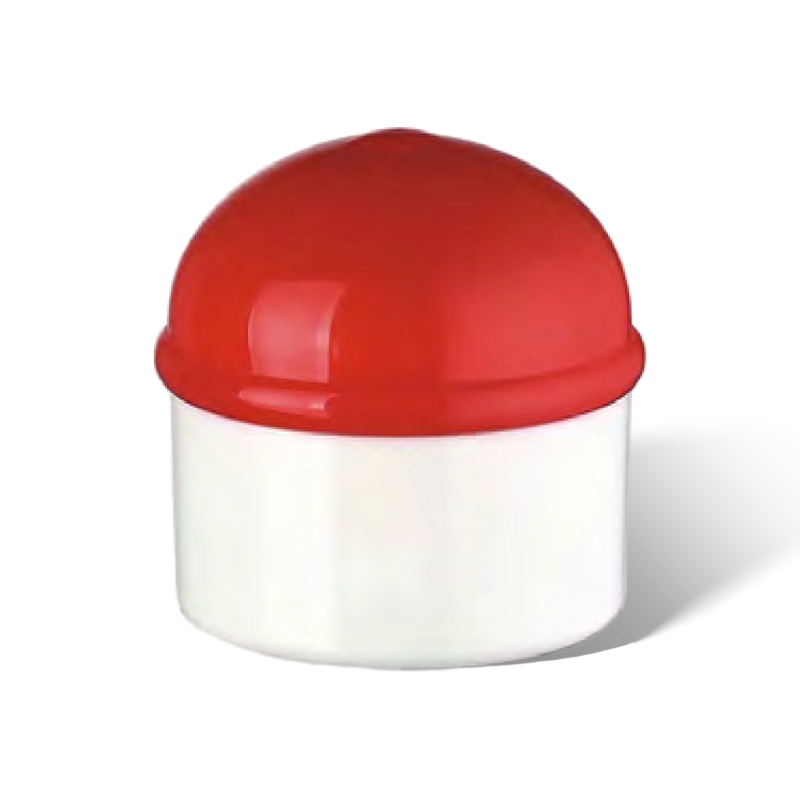
50g deluxe cosmetic skincare packaging bottle
Creating a Stronger Luxury Brand Experience
Luxury is communicated through consistency. A product cannot rely only on a high-quality formula or an attractive logo. The packaging shape, opening method, surface finish, color system, secondary box, and product communication should work together. The 50g package can serve as a central visual element in this system.
The transparent outer wall creates an opportunity for controlled contrast. A brand may pair a clear exterior with a vibrant inner liner to create a jewel-like appearance. Alternatively, a subtle liner color can produce a quiet and sophisticated effect. The same package may therefore support a broad range of market positions without losing its basic identity.
The spherical form is also suitable for collections. A skincare line can use different liner colors to distinguish day cream, night cream, eye cream, mask, or body treatment products. The consistent exterior shape creates family recognition, while carefully selected interior colors help consumers identify individual products. This approach can strengthen shelf organization and encourage collection-based purchasing.
For gift sets, the rounded package can create a more sculptural presentation. When placed inside a fitted carton, tray, or molded insert, the container can become the visual centerpiece of the set. Its shape can also support premium unboxing photography and social media presentation, both of which are increasingly relevant to beauty purchasing behavior.
The package is not limited to one geographical market. Its clean, contemporary form can be adapted to different cultural preferences through color, typography, decoration, and secondary packaging. Brands can develop a unified product identity while adjusting the visual details for different regions or consumer groups.
Applications for Skincare and Daily Chemical Products
Facial Creams and Moisturizers
The 50g volume is well suited to facial creams, moisturizing creams, brightening creams, nourishing creams, and other daily-use skincare products. The package’s smooth form corresponds naturally with products associated with hydration, softness, and skin comfort. Its premium appearance can also help a new formulation compete in a crowded facial-care category.
Night Treatments and Intensive Care Products
Night creams, repair creams, sleeping masks, and intensive treatments often require packaging that communicates richness and performance. A substantial acrylic container can support this positioning. The inner liner may be coordinated with a darker or more dramatic color palette, while metallic printing or gilding can reinforce an advanced-care image.
Body Care and Spa Products
The product description specifically presents the package as suitable for high-end body care. Its rounded form makes it appropriate for body creams, hand creams, massage balms, spa treatments, and wellness products. The soft geometry can support a relaxing and sensorial brand identity, while the 50g size may function well for concentrated treatments, trial formats, or travel collections.
Gift Sets and Seasonal Collections
Premium gift packaging benefits from visual novelty. A spherical package can provide a distinctive alternative to standard jars and bottles, particularly during holiday campaigns, limited editions, or brand anniversaries. Special inner liner colors, decorative printing, or metallic accents can help create seasonal versions without requiring a completely new package concept.
Professional and Hospitality Use
Luxury spas, hotels, salons, and beauty clinics may also use a refined 50g package for selected treatments or guest amenities. In these settings, packaging needs to look polished and communicate care. The compact format can be practical for individual use, promotional programs, and premium welcome sets.
Material and Structural Considerations
When selecting luxury cosmetic packaging, brands must evaluate more than appearance. The material should be appropriate for the formula, filling process, closure system, transportation conditions, and expected consumer usage. Acrylic can provide an attractive transparent effect, but compatibility testing remains essential for each formula and decoration combination.
Formula compatibility testing may include observation of color change, odor change, weight variation, surface stress, leakage, and interaction between the product and the inner liner. The final package should be evaluated with the actual formula rather than only with a generic sample. Different oils, solvents, fragrances, active ingredients, and preservatives can behave differently in contact with packaging materials.
Brands should also consider the relationship between the package and the filling line. The inner liner, cap, stopper, and outer structure must be assembled accurately and consistently. Filling procedures should be reviewed to confirm that the product reaches the correct fill weight, the sealing components are properly installed, and the finished package meets the brand’s appearance standards.
The 50g format can be specified according to the brand’s filling requirements and product density. While nominal capacity is a useful starting point, actual fill performance should be confirmed through production trials. A reliable manufacturing partner can support sampling, dimensional review, mold consultation, and packaging tests before mass production.
Advanced Manufacturing Capabilities
DEPRAG Plastic Products Co., Ltd. provides a complete manufacturing process for cosmetic packaging and related plastic products. Its capabilities cover product research and development, industrial design, mold manufacturing, plastic injection molding, blow molding, gilding and printing, UV coating, product testing, and warehousing.
Product Research and Development
Product development begins with understanding the packaging objective. A brand may need a container that looks luxurious, supports a specific fill volume, fits an existing carton, or communicates a particular product benefit. Research and development teams translate these requirements into a workable structure.
For the spherical 50g package, development considerations may include wall thickness, transparency, dimensional balance, cap engagement, inner stopper performance, assembly tolerances, filling access, and visual consistency. A development process that considers these elements together can reduce the risk of discovering important problems after tooling or mass production has begun.
Industrial and Packaging Design
Design is not limited to drawing the outside shape. It includes the relationship between every component. The outer acrylic wall, inner liner, stopper, screw cap, decoration area, and secondary packaging must be considered as one system. Proportion is particularly important for a spherical design because small changes in diameter, cap size, or component height can significantly affect the overall appearance.
Professional packaging design also considers handling. The package should be visually impressive but remain practical for filling, capping, packing, transportation, and customer use. A successful design balances creativity with production feasibility.
Mold Manufacturing
Mold quality has a direct effect on cosmetic packaging quality. A carefully produced mold helps control dimensional accuracy, surface smoothness, part alignment, and repeatability. For transparent acrylic components, mold surface quality is especially important because imperfections may be visible in the final product.
Accurate mold manufacturing also supports stable assembly. When the outer wall, inner liner, stopper, and cap are produced within suitable tolerances, the finished components can fit together more consistently. This helps improve appearance, closure performance, and production efficiency.
Plastic Injection Molding
Injection molding is a key process for producing consistent plastic packaging components at scale. It allows manufacturers to form complex geometries with controlled dimensions and repeatable output. For a rounded package, process control is important to achieve a uniform visual surface and minimize defects that could affect transparency or appearance.
Production parameters may include material drying, temperature control, injection speed, holding pressure, cooling time, and mold temperature. The appropriate settings depend on the material, component design, and equipment. Consistent process management helps reduce variation among production lots.
Blow Molding and Broader Plastic Expertise
In addition to injection molding, DEPRAG offers blow molding capabilities for suitable packaging applications. This broader technical base allows the company to support different container structures and product categories. Although the 50g spherical package is associated primarily with acrylic cosmetic packaging and molded components, access to multiple plastic processes can be valuable for brands developing a wider packaging portfolio.
Printing, Gilding, and UV Coating
Surface decoration is a major part of luxury packaging development. Printing can add product information, brand marks, patterns, or functional instructions. Gilding can introduce metallic details that enhance the perception of value. UV coating can provide a specialized surface effect or improve the visual contrast between decorated and undecorated areas.
These processes should be selected according to the package material, surface geometry, design complexity, and expected handling conditions. The rounded shape may require careful positioning of graphics so that text remains readable and decorative elements maintain visual balance. DEPRAG’s combination of molding and decoration capabilities can help simplify coordination between structural production and finishing.
Product Testing
Testing is essential for confirming whether the package performs as intended. Relevant evaluations may include appearance inspection, dimensional checks, closure testing, leakage testing, assembly verification, drop or impact evaluation, and transportation simulation. Formula compatibility and stability testing should be conducted with the customer’s actual product under appropriate conditions.
Testing requirements vary by product and market. A premium skincare brand may establish additional standards for transparency, color consistency, surface marks, logo position, cap torque, and opening force. Clear quality specifications help the manufacturer and customer evaluate the same criteria throughout sampling and production.
Warehousing and Supply Support
Warehousing is another important part of packaging supply. Finished components and decorated products should be stored in conditions that help protect them from dust, damage, excessive heat, and unnecessary handling. Organized warehousing supports production scheduling, order preparation, and delivery coordination.
For brands managing multiple products or seasonal launches, reliable storage and supply support can reduce operational pressure. It may also help customers coordinate packaging deliveries with formula filling, carton production, and marketing campaigns.
Customization Opportunities
Customization allows a standard package structure to become a distinctive brand asset. The 50g spherical design offers several areas for development, subject to technical review and minimum order requirements.
Color is one of the most visible customization tools. The inner liner can be developed in a selected color or used as part of a product-family coding system. The outer acrylic component may remain transparent to preserve the layered effect, or additional surface treatment can be considered where appropriate.
Cap appearance is another important choice. A cap may be coordinated with the inner liner, presented in a contrasting tone, or finished with a metallic or gloss effect. The final combination should maintain a clear hierarchy so that the package looks elegant rather than visually crowded.
Brand marks and product names can be applied through printing, gilding, labels, or other approved decoration methods. The available decoration area should be reviewed early, especially because a curved spherical surface can affect text placement and reading direction. Artwork should be prepared according to the manufacturer’s technical specifications.
Secondary packaging can further extend the customization. A fitted carton, molded tray, paper sleeve, or gift box can be developed to protect the rounded container and reinforce the premium presentation. The package may also be integrated into a complete product system that includes spatulas, outer cartons, instruction cards, and promotional inserts.
Custom molds may be considered for brands seeking a unique silhouette or a proprietary component. Standard products can often shorten development time and reduce initial tooling investment, while customized molds may create stronger long-term differentiation. The right choice depends on projected volume, launch schedule, budget, and strategic importance of the package.
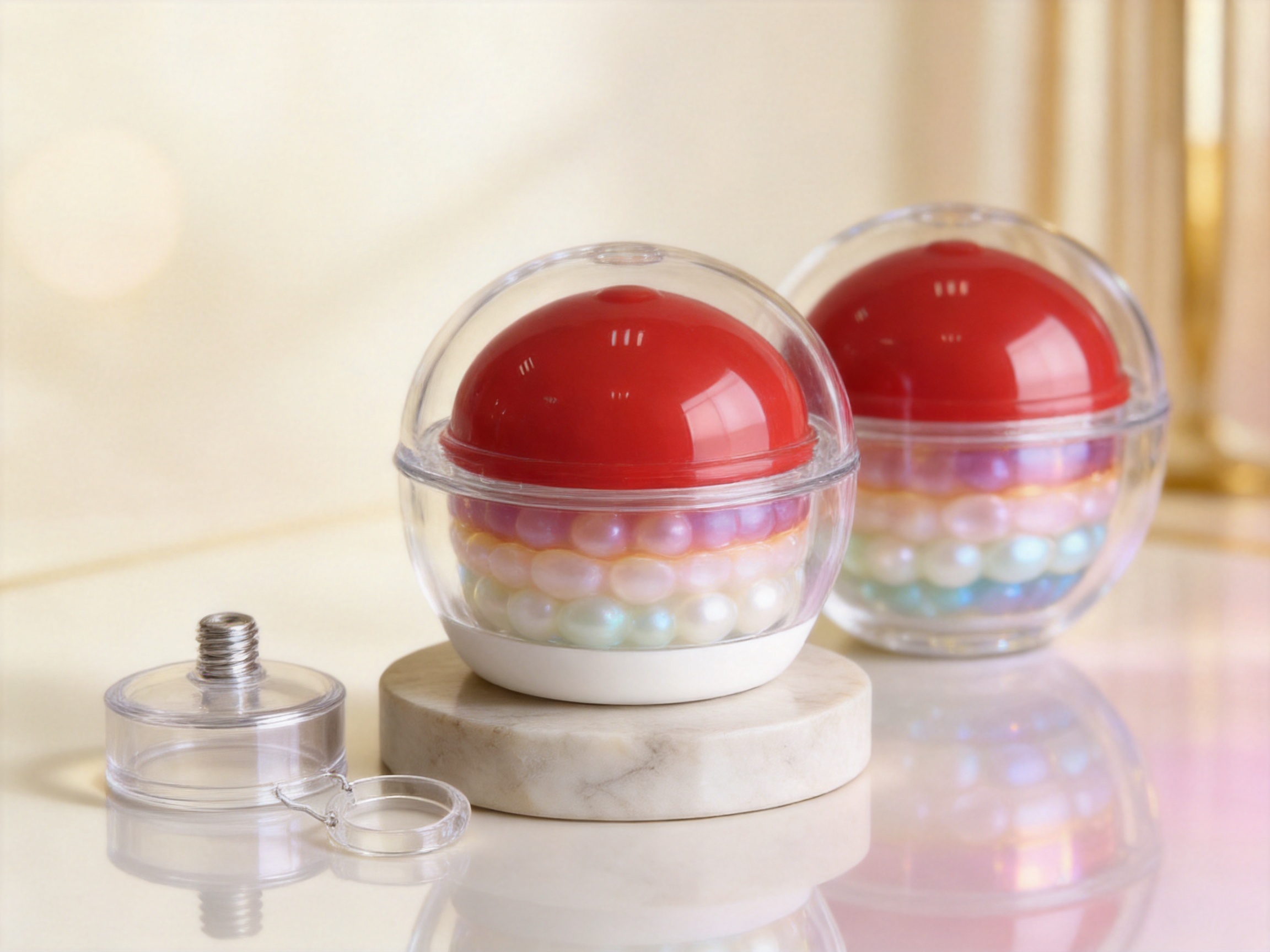
Quality, Logistics, and Commercial Value
Packaging quality affects more than the appearance of a finished product. It can influence filling efficiency, shipping loss, customer complaints, return rates, retail presentation, and brand reputation. A package with a reliable closure, stable components, and consistent decoration can support smoother operations from the factory to the end consumer.
The screw cap and inner stopper are especially relevant to logistics. During express delivery and international transportation, packages may be placed in different orientations and exposed to repeated movement. The secondary barrier is designed to help reduce leakage risk, although finished products should still undergo suitable transportation and sealing tests.
The acrylic outer structure also contributes to perceived product value. Consumers often associate clarity, smoothness, and substantial construction with quality. When the package feels carefully made and opens cleanly, it can improve the overall experience of using the product.
For B2B buyers, commercial value also comes from supply reliability. DEPRAG’s location in Cixi, China, within a developed plastic manufacturing area, provides access to established industrial resources and transportation networks. The company is near the Hangzhou Bay Bridge and within approximately one hour by road of Ningbo’s Beilun deep-water port and Hangzhou Xiaoshan International Airport. These connections can support domestic and international logistics planning.
A packaging supplier that combines design, tooling, molding, decoration, testing, and warehousing may also reduce the number of separate vendors involved in a project. Fewer handoffs can make communication more direct and help improve control over the final result. It can be particularly useful for brands that need assistance from initial concept through production delivery.
Why Choose DEPRAG as a Manufacturing Partner?
DEPRAG Plastic Products Co., Ltd. specializes in packaging containers for cosmetics, medicines, and other plastic products. This focus gives the company experience with the requirements of daily chemical packaging, including appearance, assembly, filling compatibility, decoration, and supply coordination.
The company offers thousands of daily chemical packaging designs, including standard products and customized mold solutions. This broad selection allows customers to compare different shapes, capacities, structures, and decoration possibilities before committing to a final development route.
Its integrated production capabilities are another important strength. Product research and development, design, mold manufacturing, injection molding, blow molding, gilding, printing, UV coating, testing, and warehousing are available within the company’s broader manufacturing system. This integrated approach can help customers move from concept to production with fewer external interfaces.
Technical support is also important for professional skincare brands. Packaging development may involve questions about material selection, component fitting, mold feasibility, decoration durability, filling procedures, and transportation performance. A supplier with an experienced research and development team can provide practical input during these stages.
DEPRAG’s business philosophy emphasizes long-term cooperation and the idea that customer success contributes to company success. For brands building a packaging range rather than purchasing one isolated item, this approach can support continuing development, product updates, seasonal editions, and future customized projects.
Recommended Development Process for Brand Buyers
Define the Product and Market Position
Before requesting samples, the brand should clarify the formula type, nominal fill size, target market, retail price, product positioning, expected annual volume, and desired launch date. A facial cream for a luxury department-store line may require different decoration and testing priorities from a travel-size spa treatment.
Review the Structure and Sample
The next step is to examine the package sample in person whenever possible. Buyers should evaluate transparency, color, surface quality, weight, dimensional proportion, cap engagement, inner stopper fit, opening force, and overall hand feel. Sample review is also an opportunity to assess how the package works with the intended formula.
Confirm Formula Compatibility
The actual formula should be filled into representative samples for observation. Testing should consider appearance, odor, texture, weight, leakage, and long-term interaction. If the formula contains strong fragrance components, oils, alcohols, solvents, or active ingredients, additional compatibility evaluation may be appropriate.
Develop Artwork and Decoration
Once the structure is approved, the brand can finalize colors, logos, typography, printing, gilding, coatings, and secondary packaging. Artwork should account for the package’s curved surface. Physical decoration samples are recommended because digital artwork alone cannot fully show how the design will appear on a transparent, rounded component.
Establish Quality Standards
Before mass production, the buyer and manufacturer should agree on reference samples, acceptable color ranges, decoration position, surface inspection criteria, component tolerances, closure performance, and packaging requirements. Clear standards can help reduce disagreement during production inspection.
Plan Production and Delivery
Production planning should include mold lead time, sampling, approval, material preparation, molding, decoration, assembly, inspection, packing, and shipping. Buyers should also confirm carton dimensions, pallet requirements, storage conditions, and delivery schedules. Early planning is particularly important for seasonal products and international orders.
Sustainability and Responsible Packaging Decisions
Luxury presentation should be balanced with responsible packaging planning. Brands should avoid unnecessary components, excessive secondary packaging, and designs that are difficult to process after use. The package structure, decoration, and material combination should be reviewed with the intended market’s collection and recycling conditions in mind.
Responsible development begins with using the appropriate amount of material for the required performance. Structural strength, product protection, and visual quality should be balanced rather than pursued through unnecessary thickness or decorative complexity. A durable package that protects the formula and reduces product loss may provide value throughout its life cycle.
Brands should also communicate clearly about disposal where appropriate. Local recycling infrastructure varies, and the combination of acrylic, inner liner, cap, stopper, coatings, and decoration may affect sorting. Packaging claims should be based on verified material and market information rather than assumptions.
DEPRAG’s design and manufacturing capabilities can support discussions about structure, decoration, and production efficiency at the development stage. By evaluating these factors early, brands can make more informed packaging decisions while maintaining a premium appearance.
Frequently Asked Questions
What is the capacity of this cosmetic package?
The package is designed for a nominal 50g skincare application. The final filling quantity should be confirmed according to the density and filling characteristics of the customer’s formula.
What type of products can use this package?
It is suitable for many cream-based products, including facial creams, moisturizers, night treatments, sleeping masks, body creams, hand creams, spa products, and other premium daily chemical formulations. Formula compatibility testing should be completed before mass production.
What makes the spherical design different from a standard cream jar?
The near-perfect rounded structure provides a distinctive 360-degree appearance, softer visual lines, and a more sculptural shelf presence. It can help a brand stand apart from conventional cylindrical or rectangular containers.
Why is the outer wall transparent?
The transparent acrylic outer wall creates a layered, glass-like visual effect and allows the inner liner to become part of the package design. Brands can use the inner color to communicate product identity, benefits, or collection differences.
Does the package include an inner seal?
Yes. The package is equipped with a transparent pull-ring inner stopper beneath the screw cap. This secondary barrier is intended to support leakage control, freshness protection, and a clear first-opening experience.
Can the package be customized?
Customization may include inner liner color, cap appearance, printing, gilding, UV coating, labels, secondary packaging, and potentially customized molds. Specific options depend on design requirements, order volume, material compatibility, and production feasibility.
Can the transparent acrylic package be decorated?
Yes. Printing, gilding, UV coating, and other decoration methods may be considered. The final method should be selected according to the artwork, surface geometry, durability requirements, and desired visual effect.
Is acrylic suitable for premium skincare packaging?
Acrylic is commonly selected for premium cosmetic packaging because it can provide high transparency, smooth appearance, and a glass-like visual effect with the practical advantages of plastic. The suitability of the package must still be verified with the specific formula and application.
How does the package support transportation?
The double-layer structure and inner pull-ring stopper are designed to provide additional protection during handling and shipping. Finished products should undergo appropriate leakage, drop, closure, and transportation testing based on the intended distribution conditions.
What manufacturing services does DEPRAG provide?
DEPRAG provides product research and development, packaging design, mold manufacturing, plastic injection molding, blow molding, gilding, printing, UV coating, product testing, and warehousing. These capabilities allow the company to support packaging projects from concept through production and delivery.
Where is DEPRAG located?
DEPRAG Plastic Products Co., Ltd. is located in Cixi, China, a developed plastic manufacturing area. The company is near the Hangzhou Bay Bridge and within convenient driving distance of Ningbo’s Beilun deep-water port and Hangzhou Xiaoshan International Airport.
How can a buyer begin a project?
A buyer can begin by sharing the product type, required capacity, formula information, target market, desired colors, decoration preferences, estimated quantity, and delivery schedule. The manufacturer can then help evaluate samples, customization options, testing requirements, and production planning.
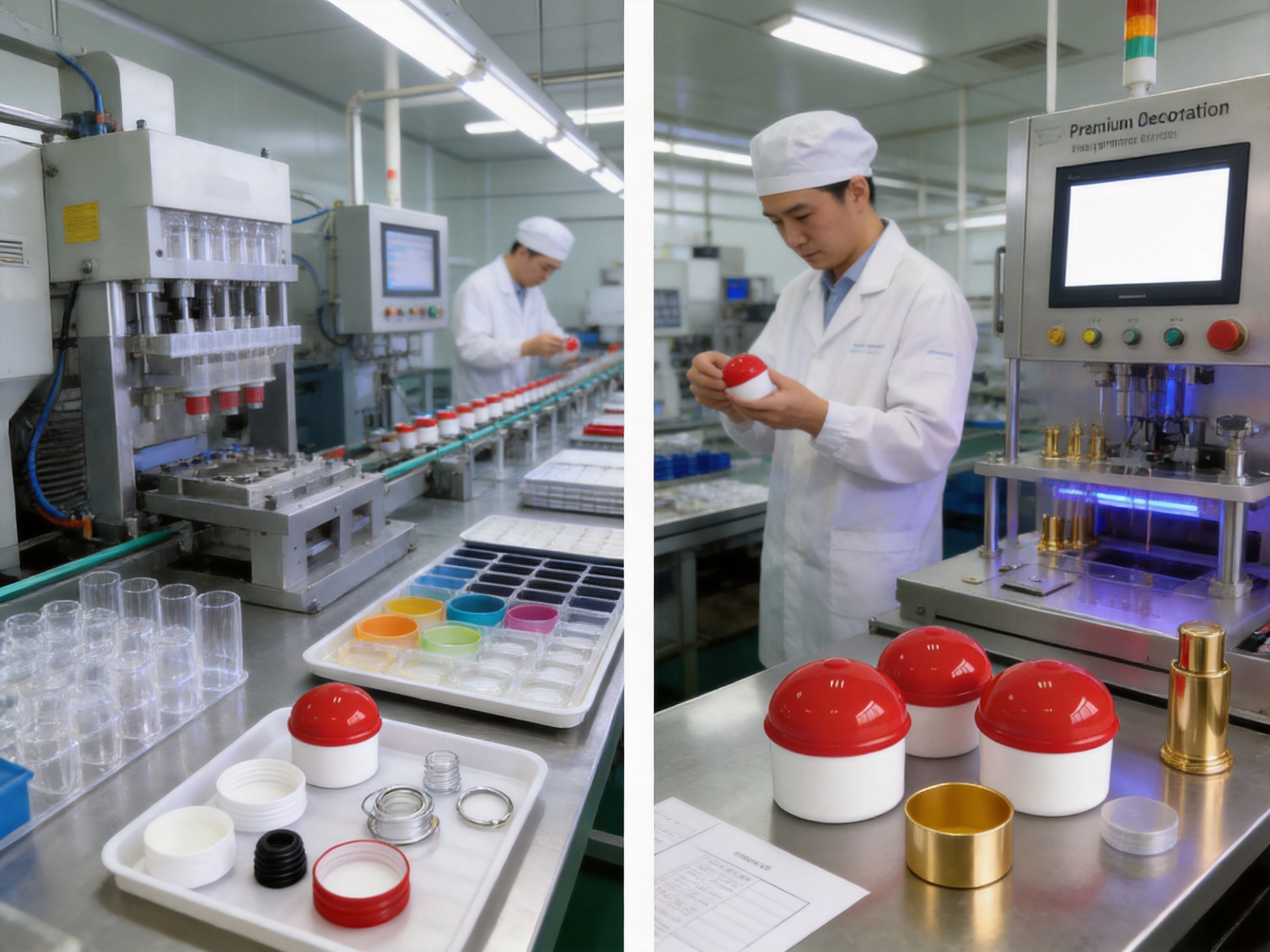
Conclusion
The 50g deluxe cosmetic skincare packaging bottle combines a memorable spherical silhouette with the refined appearance of transparent acrylic and the practical benefits of a double-layer structure. Its rounded geometry creates a soft, premium visual identity, while the visible inner liner gives brands an effective way to use color and depth as part of their packaging strategy.
The transparent pull-ring inner stopper adds a functional layer beneath the screw cap, supporting leakage control, freshness communication, and a more reassuring opening experience. Together, the structural design and sealing system make the package suitable for facial skincare, body care, spa products, gift collections, and other premium daily chemical applications.
For brands looking for luxury cosmetic packaging, the product offers a stronger alternative to generic single-wall jars. It provides opportunities for distinctive product presentation without sacrificing attention to closure, protection, manufacturing feasibility, and customization. Its 50g format is practical for daily skincare, travel, gift sets, and high-value treatments.
Supported by DEPRAG Plastic Products Co., Ltd.’s integrated capabilities in research and development, design, mold manufacturing, injection molding, blow molding, decoration, testing, and warehousing, the package can serve as the foundation for both individual product launches and broader skincare packaging systems. For buyers seeking experienced skincare packaging suppliers and long-term technical cooperation, this design offers a combination of visual differentiation, manufacturing expertise, and commercial flexibility.
References
1. DEPRAG Plastic Products Co., Ltd. Product Information: 50g Deluxe Cosmetic Skincare Packaging Bottle.
2. DEPRAG Plastic Products Co., Ltd. Company Information and Manufacturing Capability Summary.
3. General Principles of Cosmetic Packaging Design, Product Protection, and Consumer Experience.
4. General Considerations for Plastic Packaging Material Compatibility with Cosmetic Formulas.
5. General Packaging Quality-Control Practices for Injection-Molded Cosmetic Containers.
Product: 50g deluxe cosmetic skincare packaging bottle

-
 DP-A-021 50g/30g/20g Skin Whitening Cream Packaging Cosmetic Jars
-
 DP-A-020 120ml Green Acrylic Cream Bottle 50g Blue Acrylic Cosmetic Container 50ml Acrylic Jar and Bottles
-
 Luxury glass perfume bottles 30ml/50ml/100ml/200ml
-
 50g baby care round plastic bottle
-
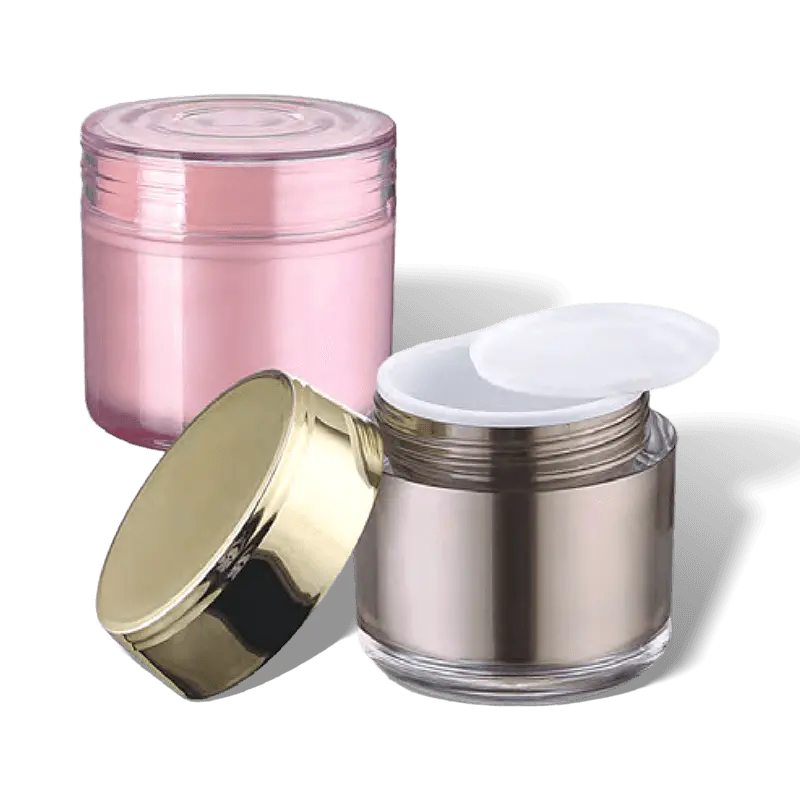 DP-A-009 Body Cream Jar 80ml Container 70ml Cosmetic Packaging Body Butter Plastic Jar
-
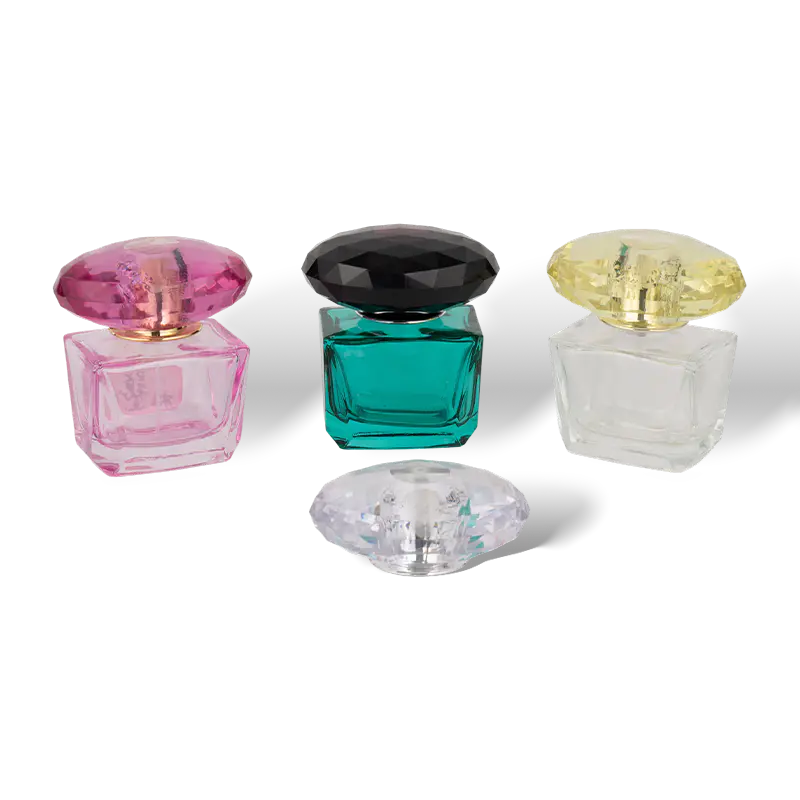 30ml/50ml/100ml/200ml Luxury perfume glass spray bottles
- +86 13968274500
- +86 13764345885
- ysgl@vip.163.com
- No. 10-18, Gaoxiakeng, Dongputou Village, Zhangqi Town